
In Saudi Arabia, history is not treated as a closed book. It is a living source of identity visible in city walls, family stories, and the way a nation gathers in celebration. Saudi Founding Day carries that spirit. It honors a beginning tied to leadership, place, and the steady building of a state that would shape the Arabian Peninsula.
What Is Saudi Founding Day in Saudi Arabia?
Saudi Founding Day (يوم التأسيس) is a public holiday observed every year on February 22. It marks the beginning of the First Saudi State in 1727 (1139 AH), when Imam Mohammed bin Saud began establishing a state from Diriyah, which became its capital.
The day reflects nearly three centuries of Saudi history, honoring the Kingdom’s deep roots, its diverse cultural heritage, and the generations of leaders and citizens who helped build and protect the nation. The date was chosen because Imam Mohammed bin Saud assumed leadership in Diriyah in 1139 AH, and 30 Jumada II 1139 AH aligns with February 22, 1727.
1727: The Political Start in Diriyah
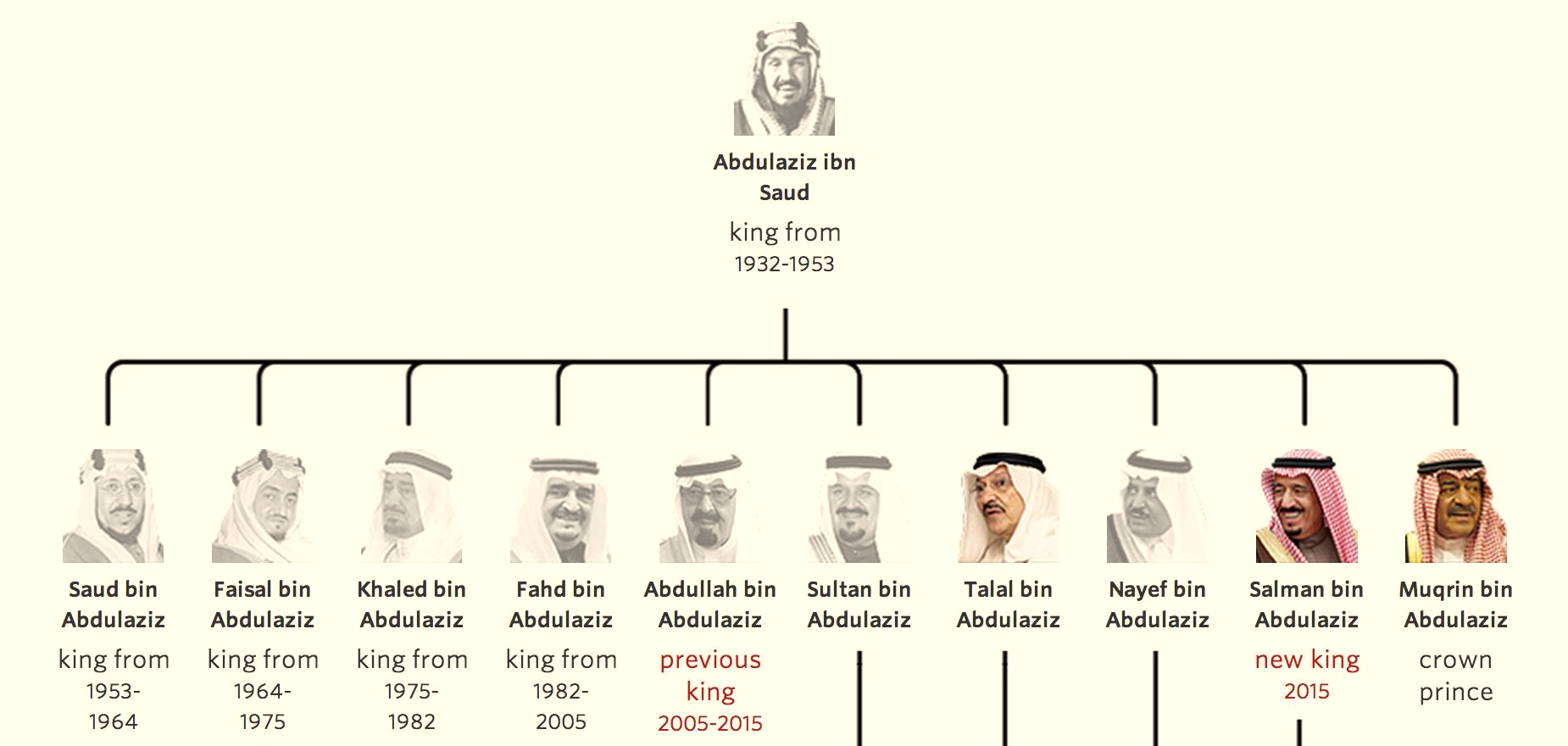
Saudi Founding Day is anchored to 1727, the beginning of the First Saudi State under Imam Mohammed bin Saud in Diriyah. This framing treats the “founding” as a political start: leadership, governance, and the emergence of a state centered in Diriyah. It is the moment the Saudi narrative identifies as the beginning of state-building that would continue through later eras.
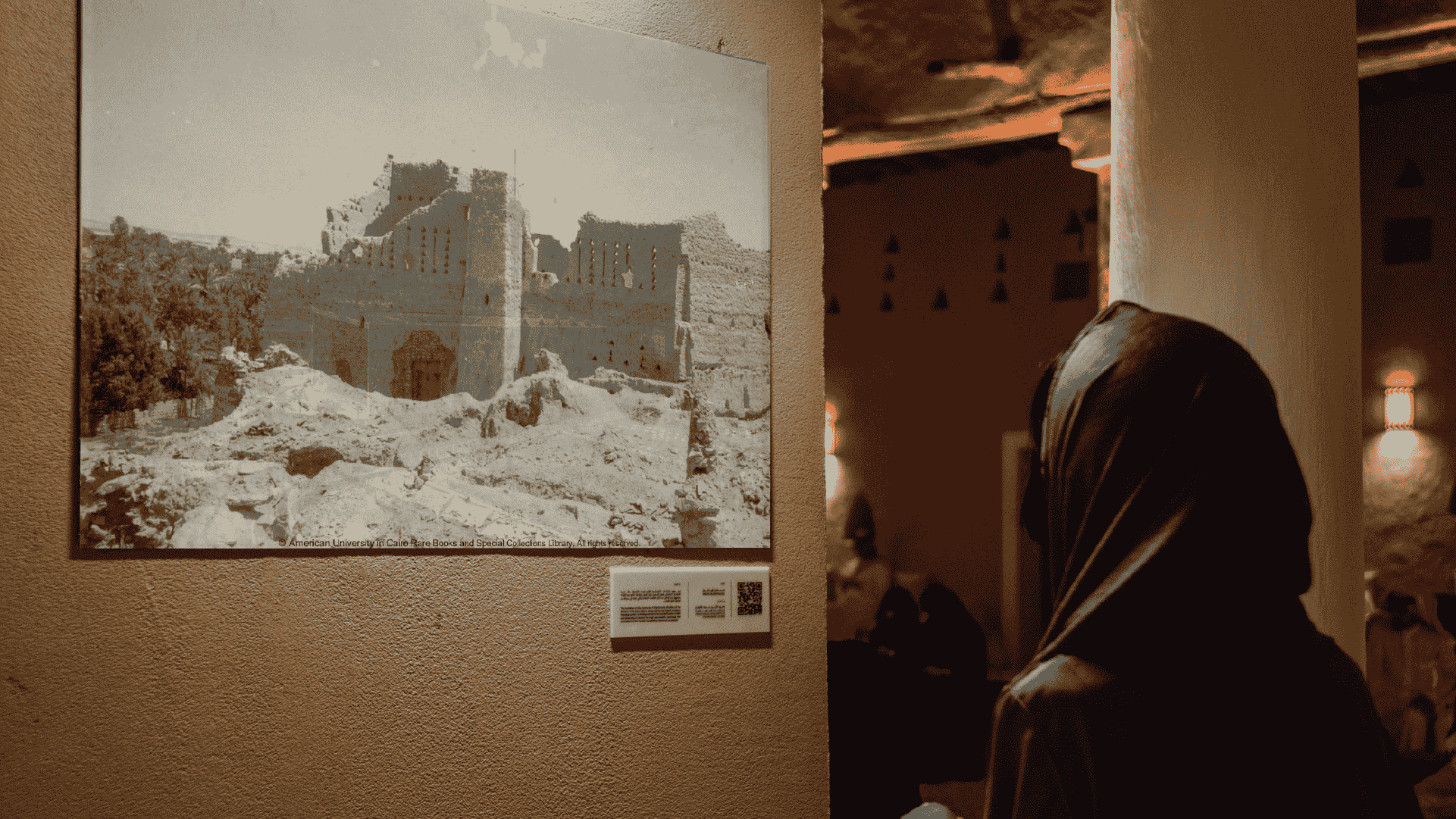
The First Saudi State (1727) predates the founding of the United States by decades, an example often used to illustrate the depth of the Saudi timeline.
Diriyah’s Location and History
Where the Story Began
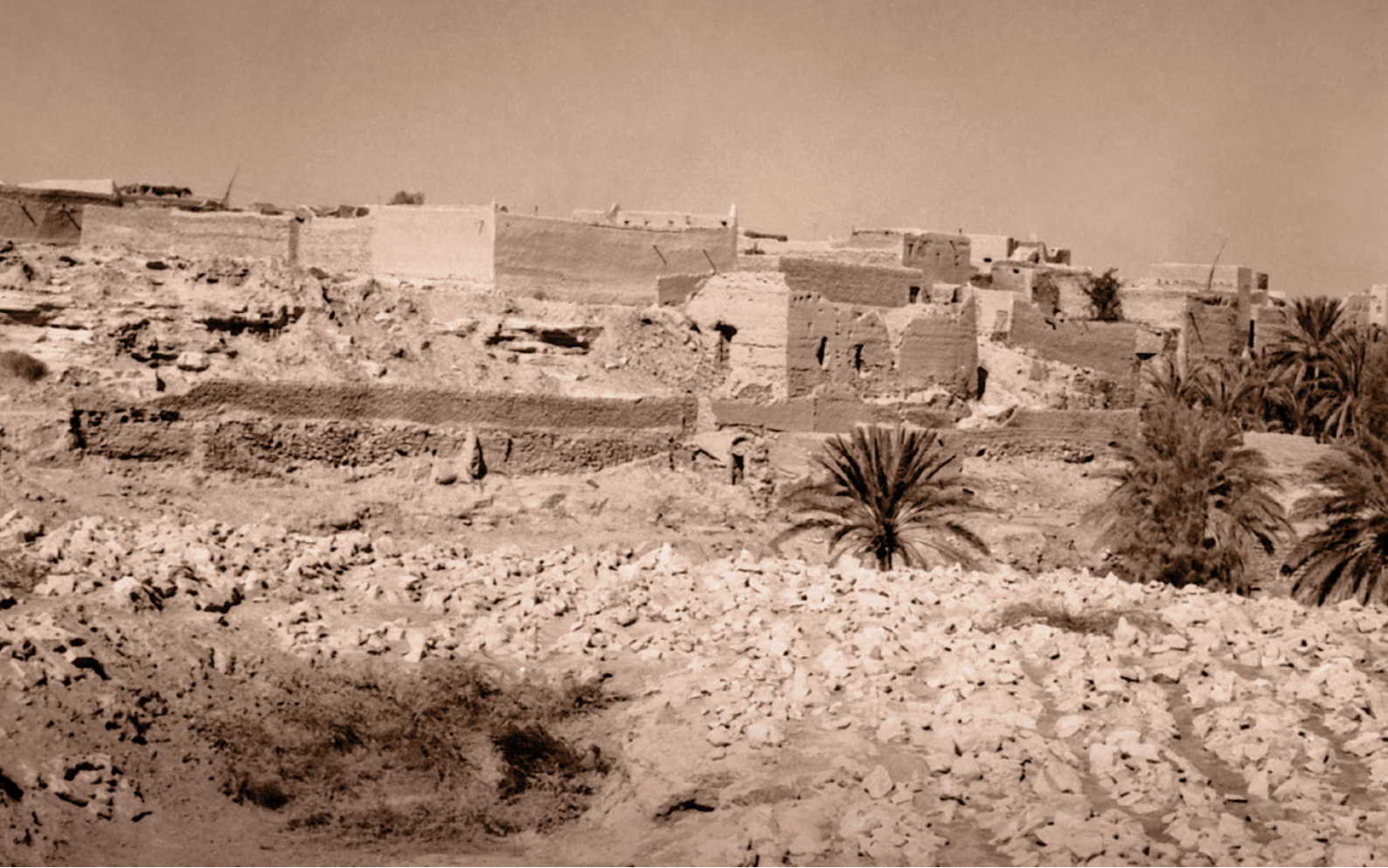
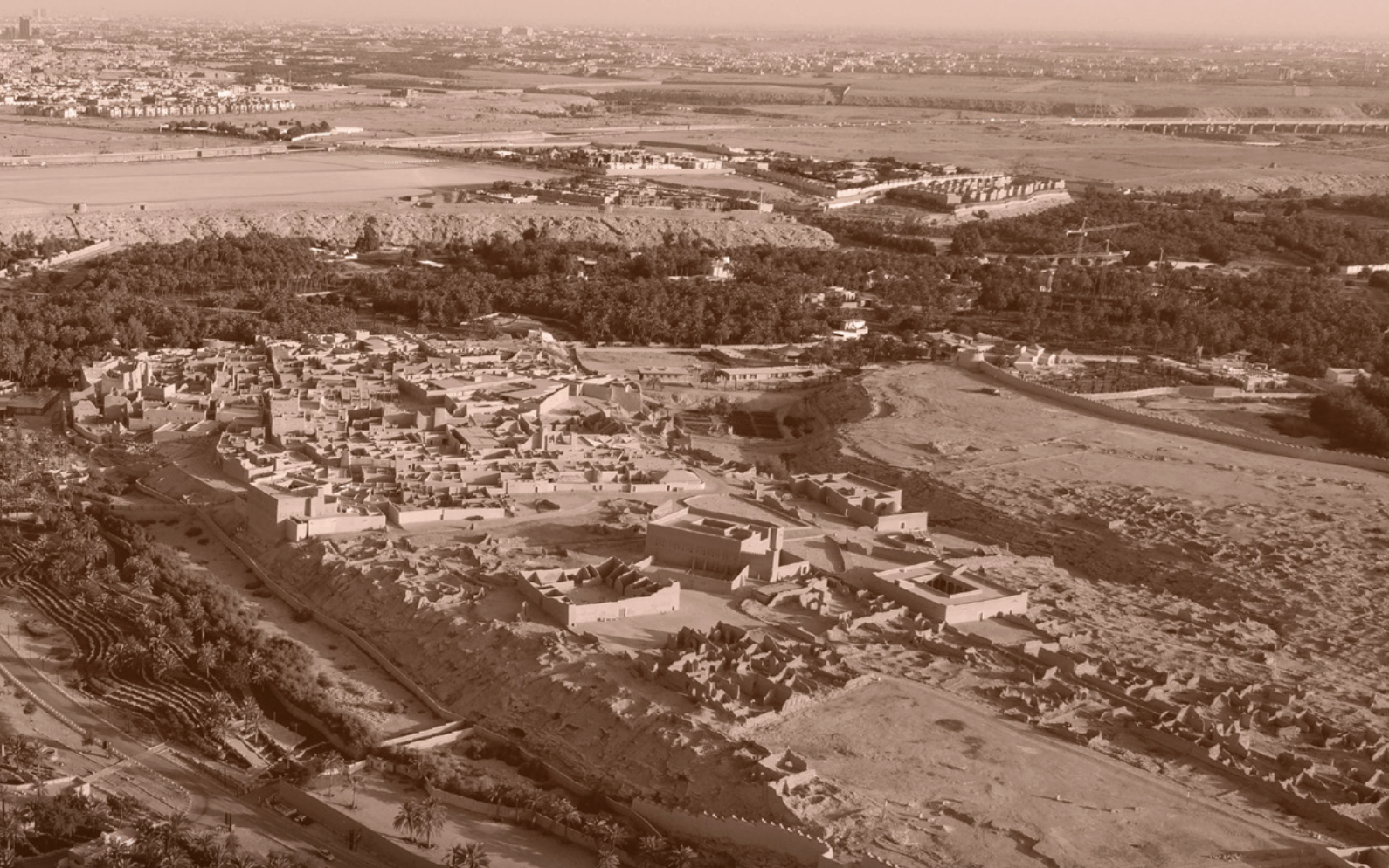
Diriyah’s roots go back to the 15th century. In 1446 CE (850 AH), Mani’ bin Rabiah Al-Muraydi arrived with his people and established the Emirate of Diriyah. He settled in Ghasayba and Al-Mulaybeed, two places that became the city’s first core. Ghasayba grew as the seat of rule, while Al-Mulaybeed supported agriculture and daily life.
Wadi Hanifah: The Valley That Sustained a Capital
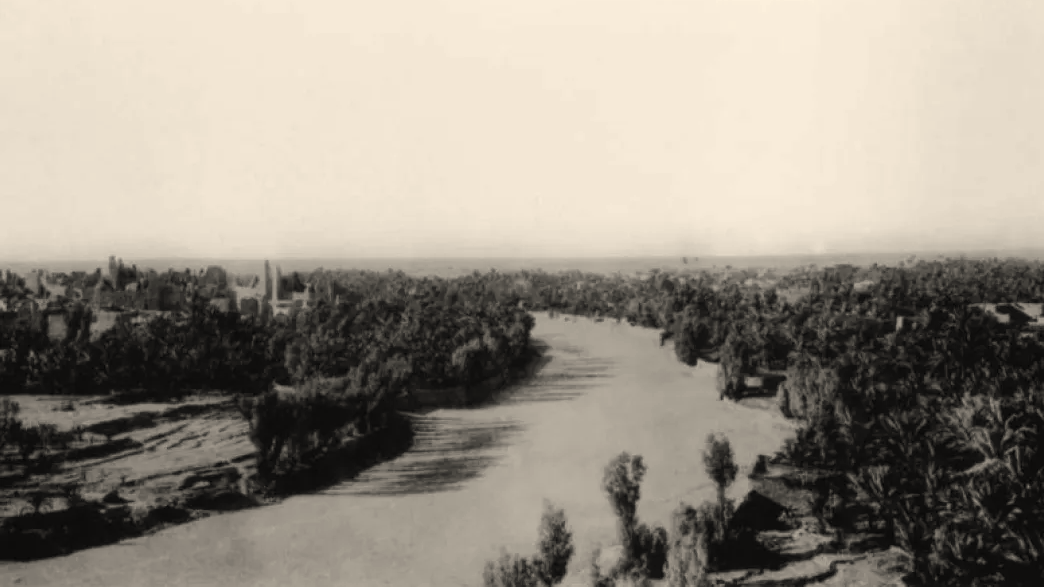
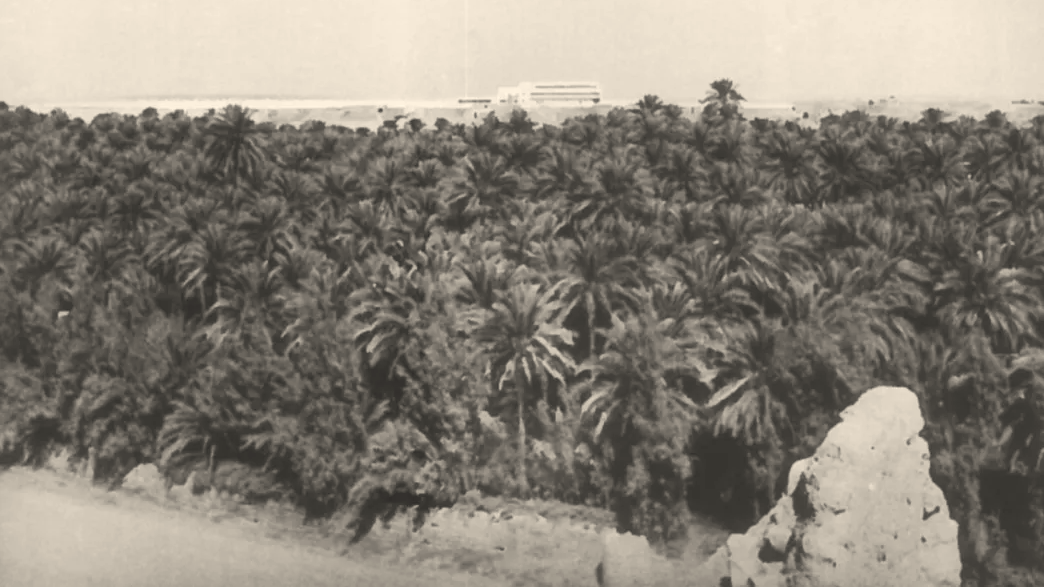
Diriyah rose along Wadi Hanifah, a valley whose water and fertile land supported farming, settlement, and movement. The setting mattered: a city with water, food, and a stable base could grow beyond a small town. Over time, Diriyah became a place where community life strengthened through markets, gatherings, and traditions that made it more than a political center.
1727: The Capital of the First Saudi State
In the 18th century, Diriyah’s story became national history, but it did not change overnight. In February 1727, Imam Mohammed bin Saud assumed leadership in Diriyah at a time of instability and division. His early focus was to unify the city, restore order, and set a clearer direction for governance and security.
From there, the First Saudi State took shape step by step. Between 1727 and 1745, Diriyah was strengthened from within: its two main parts were unified under one rule, public life and administration became more organized, and the state’s economy was regulated more clearly. The city also expanded with the development of a new district (Samhan/Tarafiyah), and the seat of leadership later shifted there after Ghasayba had long been the center of power. This is why Diriyah is remembered as the capital of the First Saudi State—it became the administrative heart where governance was consolidated and the foundations of statehood were firmly set.
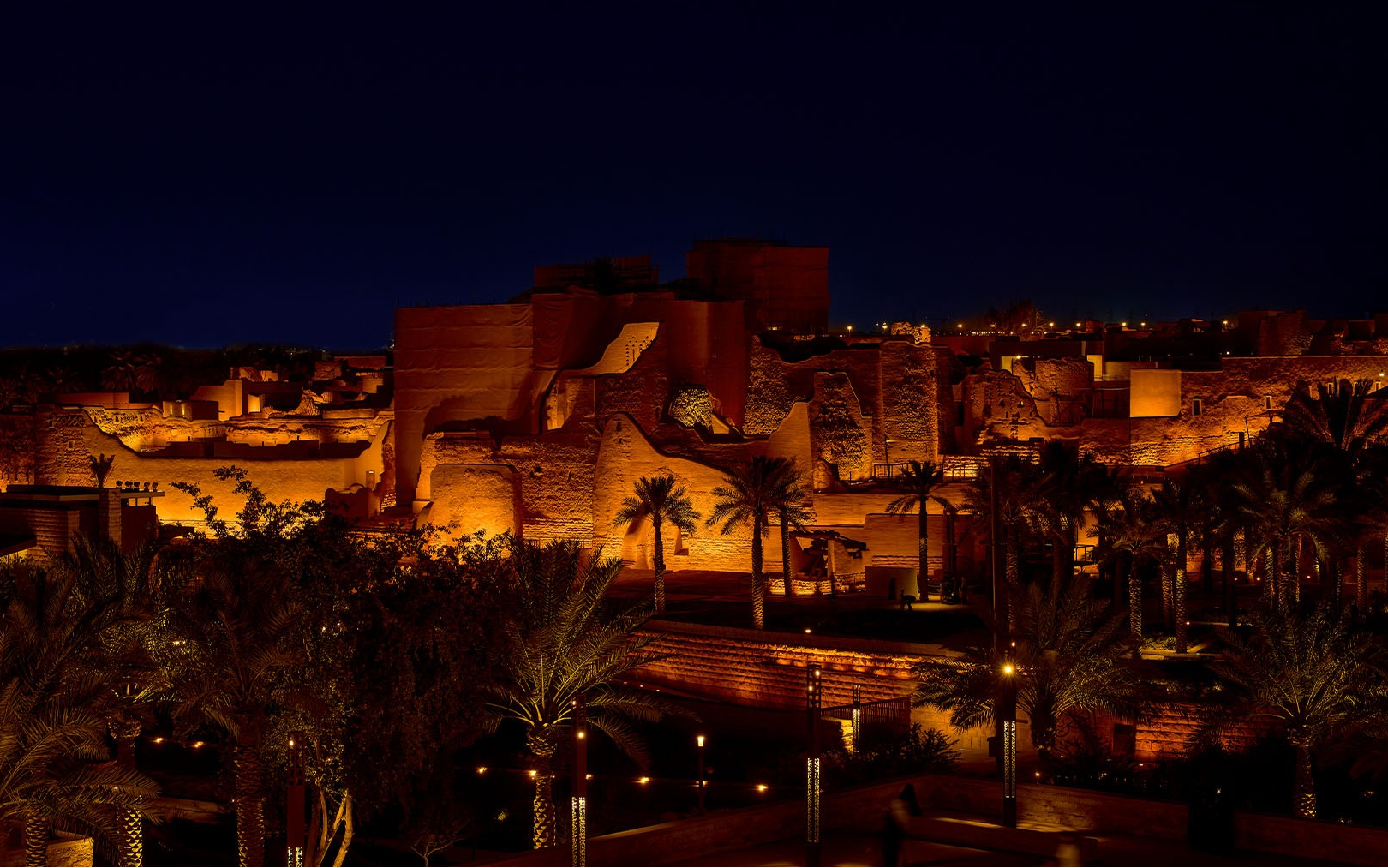
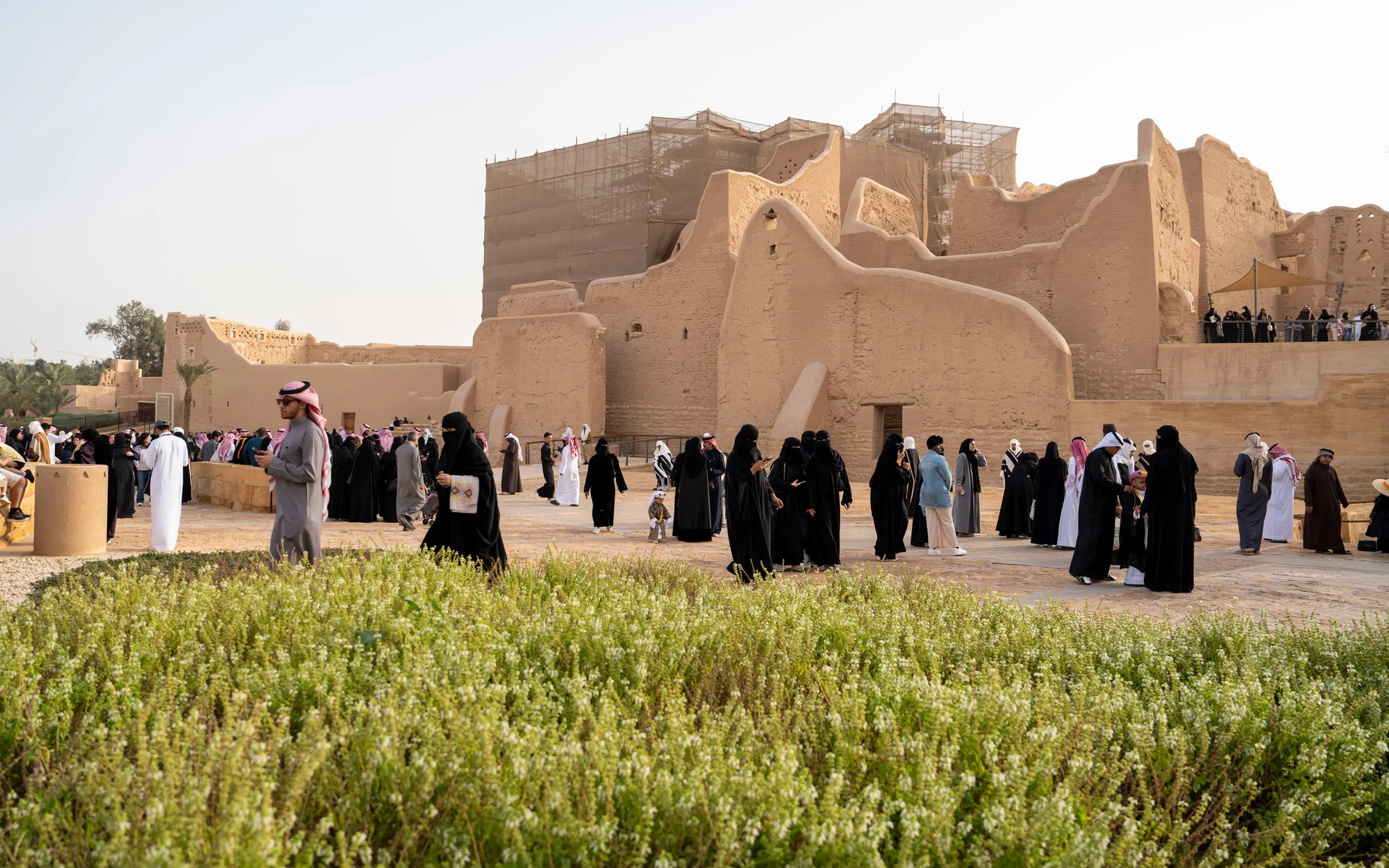
Today, Diriyah’s mudbrick walls and historic districts still carry meaning because they tie place, leadership, and memory into one origin point.
Why Diriyah Was also a Strategic Choice for a Capital
Diriyah was not only a strong settlement. It was also a smart location. It sat on Wadi Hanifah and on a major ancient trade route that ran from the south of the Peninsula through Najran and Al-Yamamah, passing through Diriyah on the way north to Dumat Al-Jandal, then branching east toward Iraq and west toward Hejaz.
It also lay on an old pilgrimage route used by caravans coming from Persia, Iraq, and Central Asia on their way to Makkah. From the city’s early days, its leaders worked to secure and serve this route, and by Imam Muhammad bin Saud’s era, the route’s prominence grew through policies based on security agreements and services for travelers.
Founding Day’s Visual Identity: Five Symbols, One Story
The Founding Day logo is built around five heritage symbols: the Saudi flag, the palm tree, the falcon, the Arabian horse, and the souq (market). The symbols were chosen because each one points to a real, long-standing part of Saudi life and the founding era’s identity.
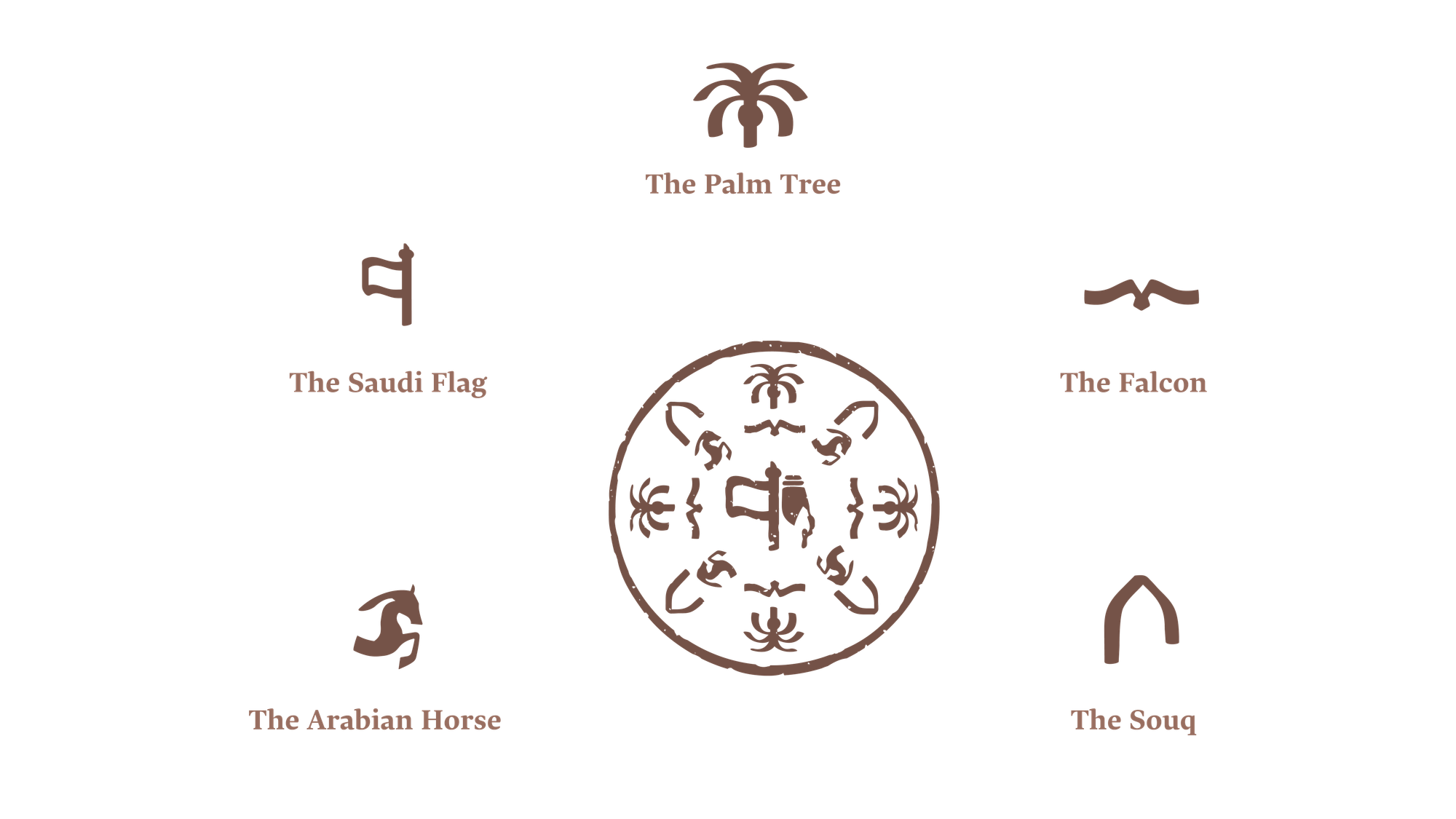
- The Palm Tree: Life + Generosity
The palm tree is presented as deeply rooted in Saudi identity and a “source of life” through dates (a staple of hospitality) and through materials used for everyday needs like mats, baskets, and tools. - The Falcon: Heritage Skill + Honor
Falconry is described as one of the Peninsula’s most famous pastimes, practiced for sustenance and recreation, and during the First Saudi State era falcons were even exchanged as gifts among tribal elders to symbolize reconciliation. - The Arabian Horse: Chivalry + Leadership Culture
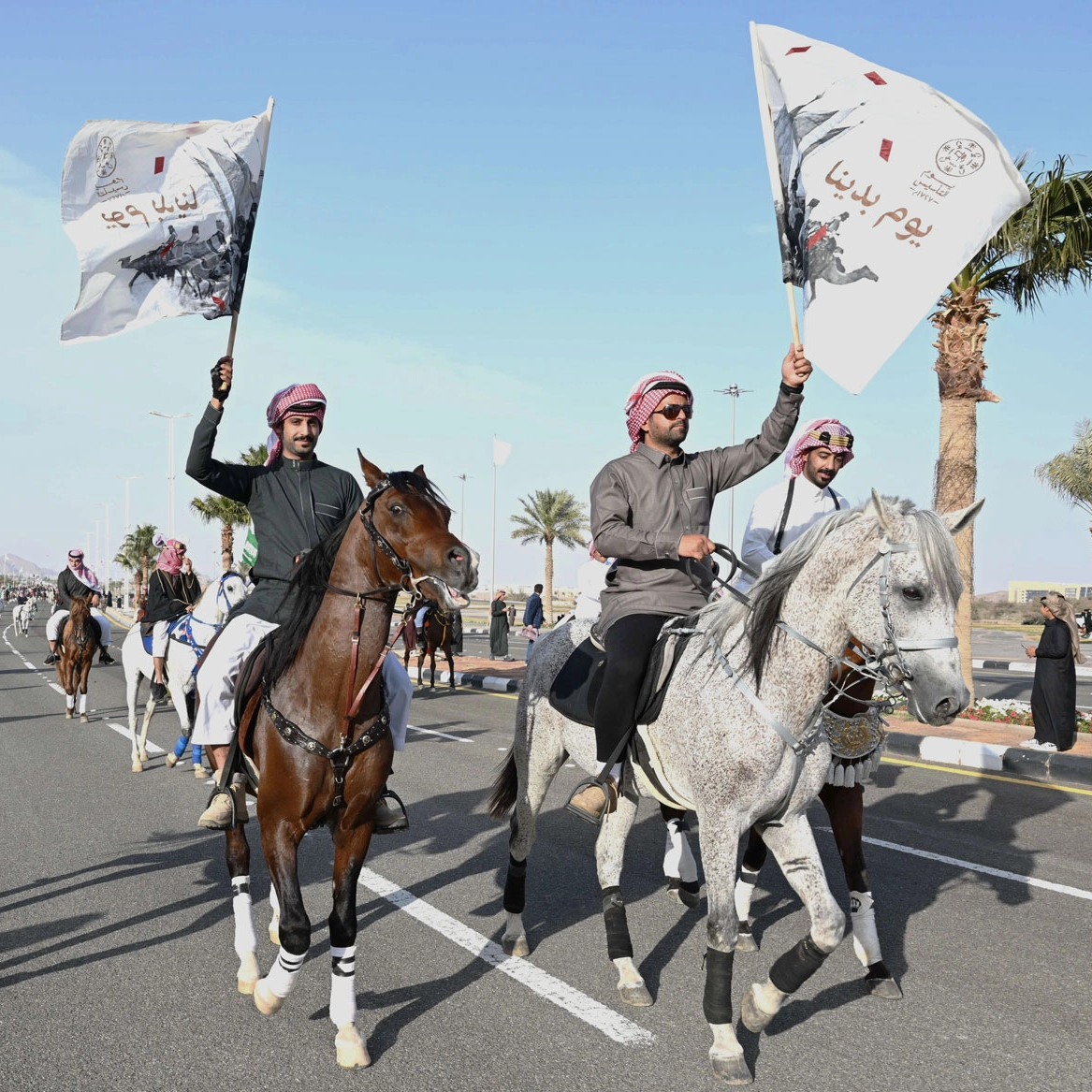
The horse reflects horsemanship and chivalry woven into the Peninsula’s history. Leaders of the First Saudi State valued Arabian horses and maintained large stables, including extensive horse ownership in Diriyah and beyond. - The Souq: Community + Economic Life
The souq represents trade and social movement. Markets in the First Saudi State supported livelihoods, attracted traders and craftsmen to Diriyah, and took the form of permanent “mawsim” markets crowded with shoppers and travelers.
And even the Arabic lettering is symboliche logo font is inspired by historical manuscripts that record events of the First Saudi State, linking the design directly back to written history.
The Evolution of the Saudi Flag
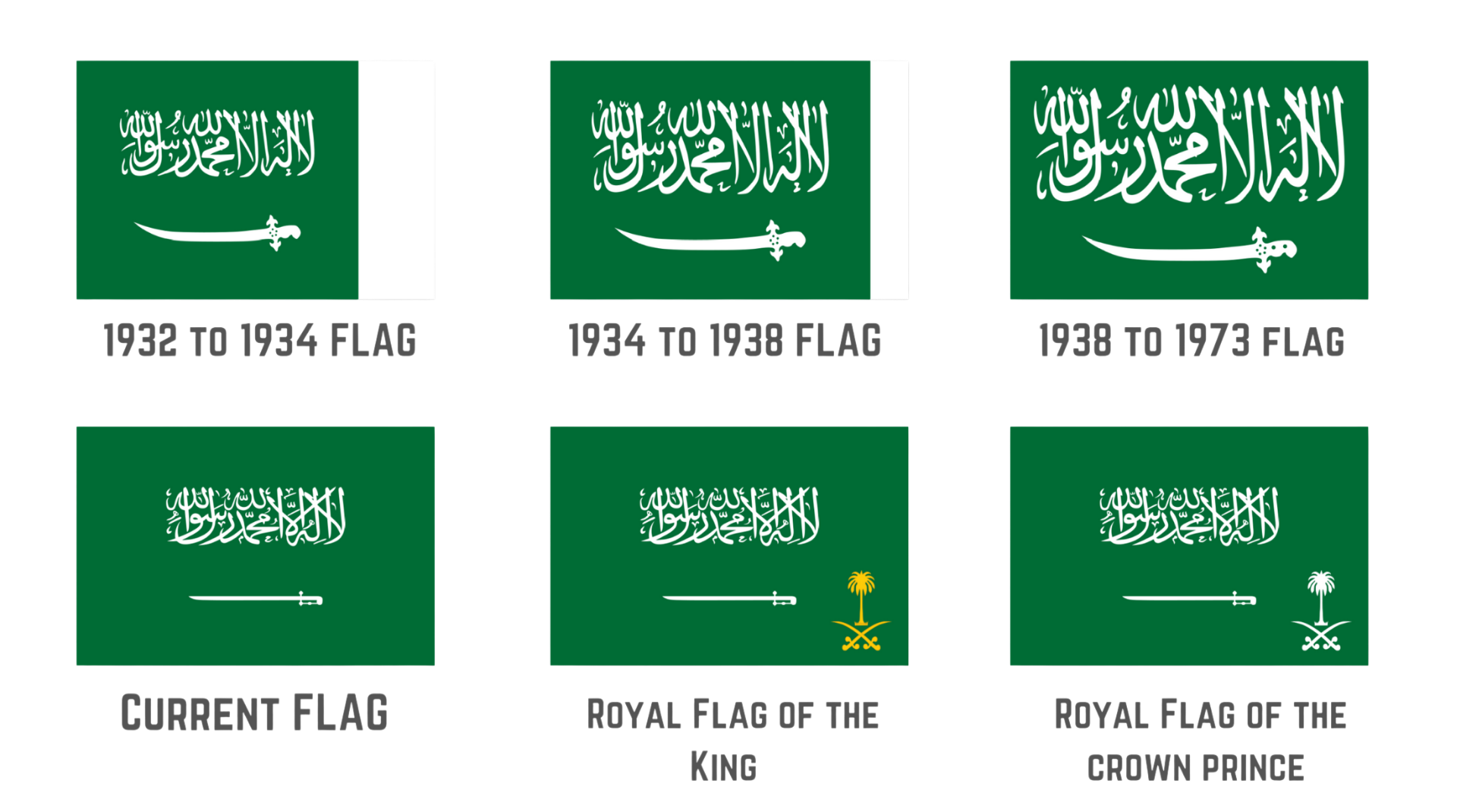
The Saudi flag’s story also connects directly to the founding era. The earliest flag of the First Saudi State was a green banner (muslin and silk), with a white section near the bearer, and the shahada written at its center. This form continued until the Second Saudi State. Later, during King Abdulaziz’s reign, a sword was added beneath the shahada, forming the core design recognized today.
Ardah: The Dance That Carries National Meaning
No Founding Day celebration feels complete without cultural expressions that people recognize instantly. The Saudi Ardah is one of the most iconic. Ardah is a traditional Najdi performance that brings together rhythmic drumming, chanted poetry, and coordinated movement, often performed in a line with a strong, unified tempo. It appears at major national moments because it reflects collective pride.
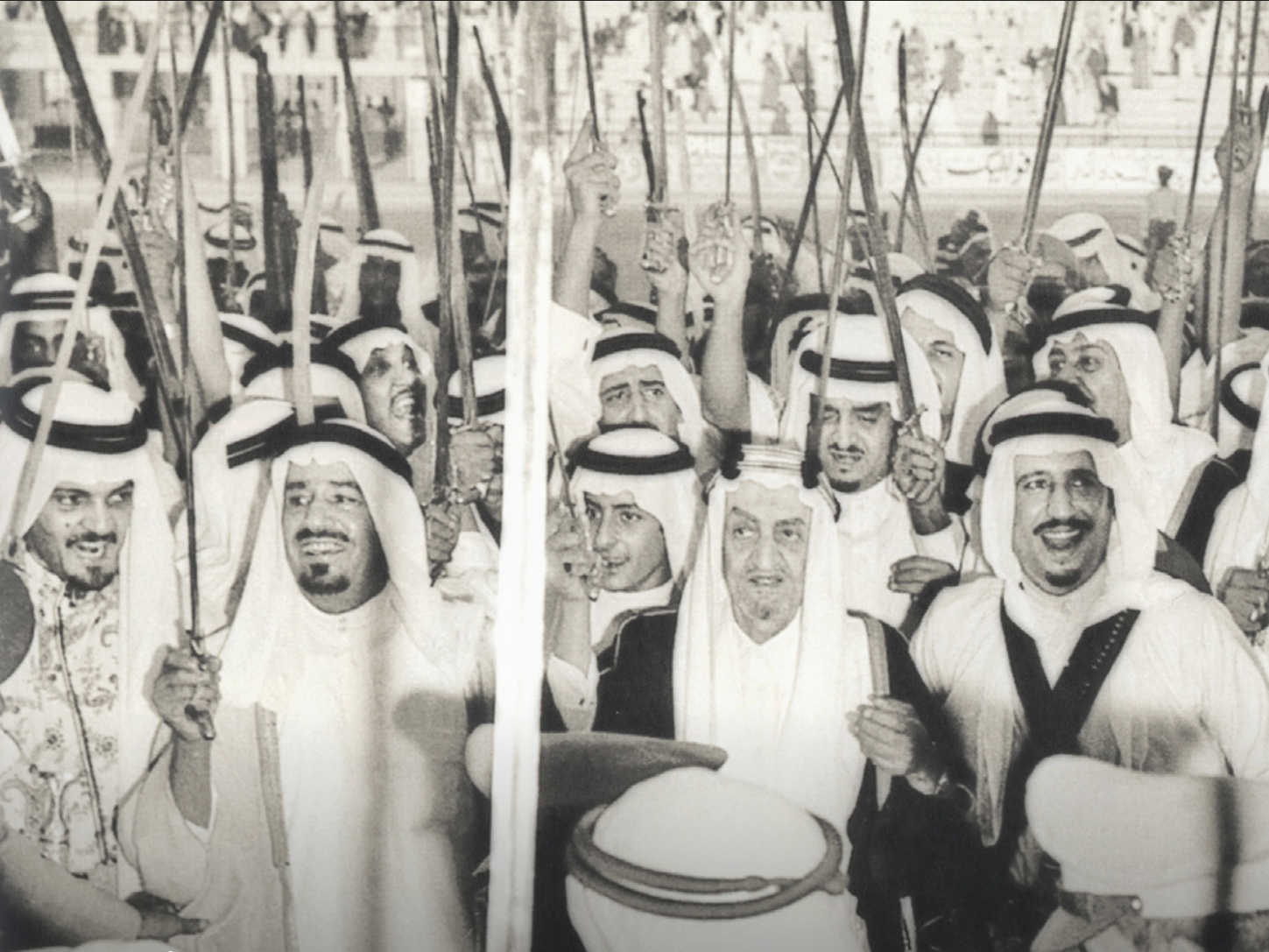
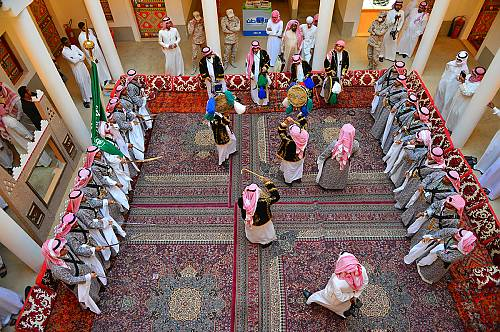
Traditionally performed by men standing shoulder to shoulder, participants carry swords and move in synchronized steps while verses of poetry are recited. The poetry often speaks of loyalty, courage, leadership, and the history of the homeland. Large drums set the rhythm, creating a steady pulse that guides both the movement and the chanting. Ardah was historically associated with moments of mobilization and solidarity. Today, it carries that same spirit, but as a cultural expression of national identity rather than conflict.
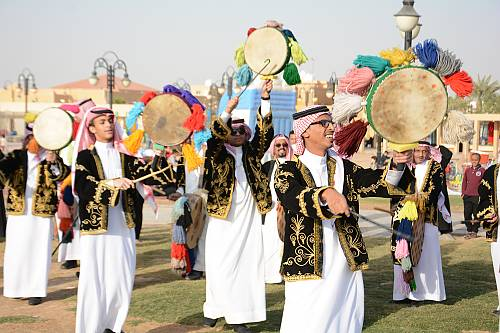
The Clothes of the People: Heritage You Can Wear
Across the Kingdom, people choose traditional dress to honor where they come from, and that is what makes the day visually powerful. Men often wear a thobe with a heritage outer layer such as a daglah or bisht, plus a ghutra or shemagh secured with an iqal. Women wear colorful embroidered dresses that vary by region, some styles are associated with Najd and others with Hejaz, and the look is usually completed with a head covering, traditional jewelry, and often henna. The details differ from region to region, but the message is the same: wearing heritage is a way of showing pride in roots and identity.
Also Read: Saudi Traditional Clothing: A Living Heritage of Craft, Culture, and Identity
Saudi Arabia Today: Where the Story Stands in 2026
On February 22, 2026, Saudi Arabia marks its 299th Founding Day anniversary. It is one of the Kingdom’s most striking contrasts: a story that began in a mudbrick capital along Wadi Hanifah has grown into a country measured today by global-scale numbers.
Here are a few verified snapshots that help frame “where it is now”:
- Record Low Unemployment: Saudi national unemployment reached a historic low of 6.3% in Q1 2025
- Non-oil GDP Dominance: Non-oil activities reached 56% of total GDP by mid-2025
- Regional Hubs: Over 660 companies have established regional HQs in Riyadh
- Tourism Boom: Ranked first globally for highest growth in receipts in Q1 2025 vs 2019
- Digital Government: Climbed to 6th globally in the UN E-Government Development Index
- Cultural Recognition: As of February 2026, Saudi Arabia has 8 UNESCO World Heritage Sites with 14 on its Tentative List (potential future nominations)
These are not just numbers. They capture how Saudi Arabia is building for the future, with heritage continuing to shape how the country presents itself.
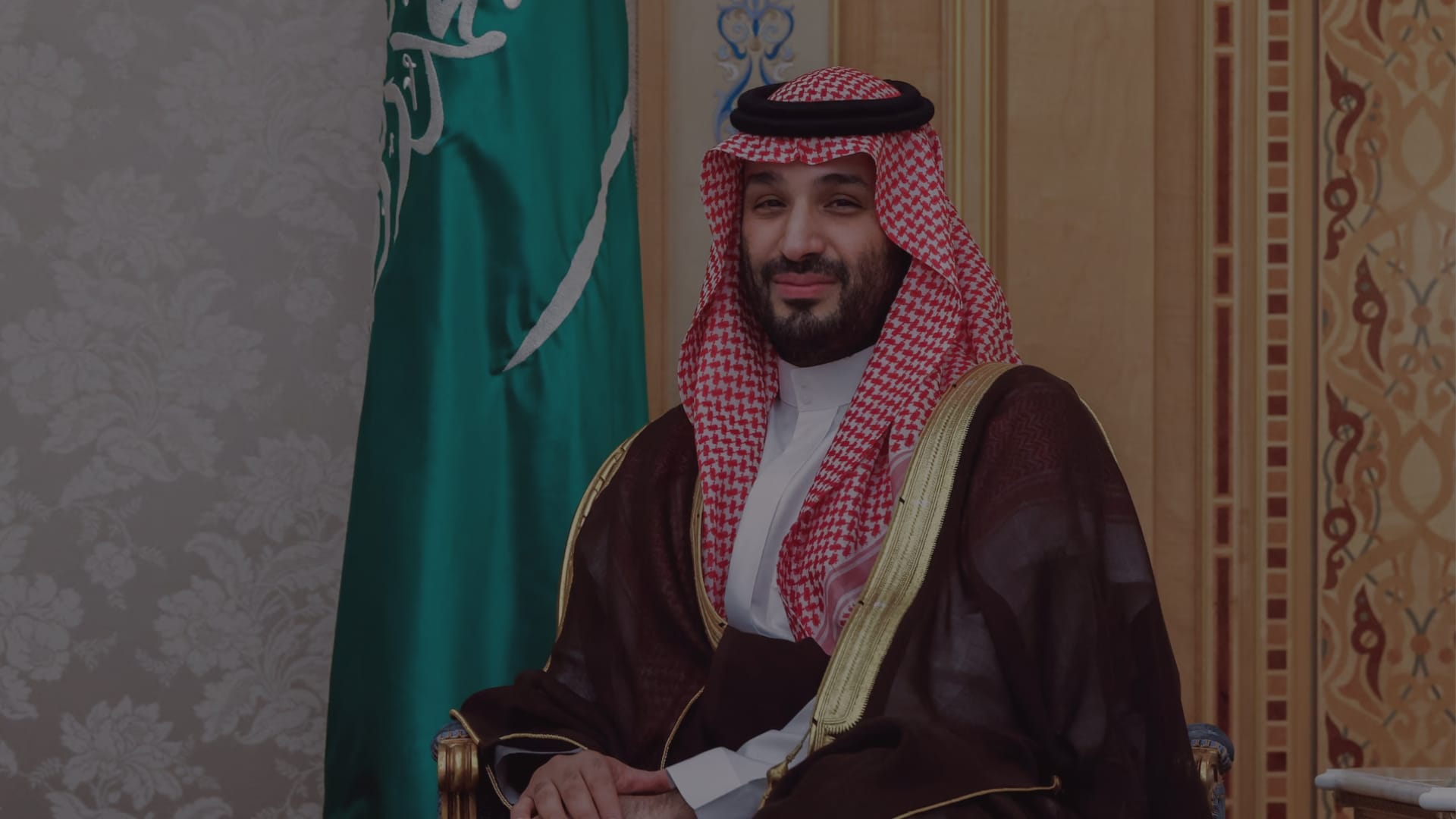
“We have very important historical roots, since time immemorial, that converge with many civilizations. Many think that the history of the Arabian Peninsula only goes back a short time. However, we know that the opposite is true, that we are a nation since time immemorial.”
— Mohammed bin Salman Al SaudCrown Prince of Saudi Arabia
Where It’s Going: Vision 2030 and the Mega Projects Shaping the Future
From mud-brick foundations to cities imagined at a global scale, Saudi Arabia’s journey has always been rooted in building with purpose. Vision 2030 turns that legacy outward, transforming history, landscape, and ambition into projects that carry the Kingdom from its origins into its future.
Below is a snapshot of the projects shaping where the country is headed next.
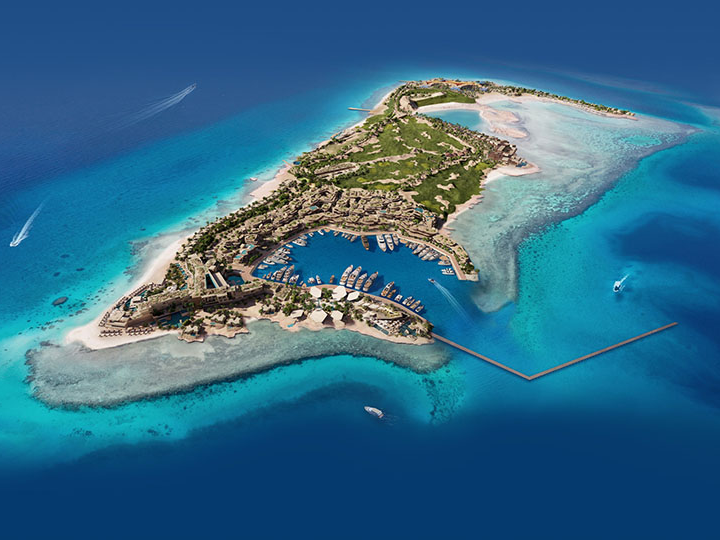
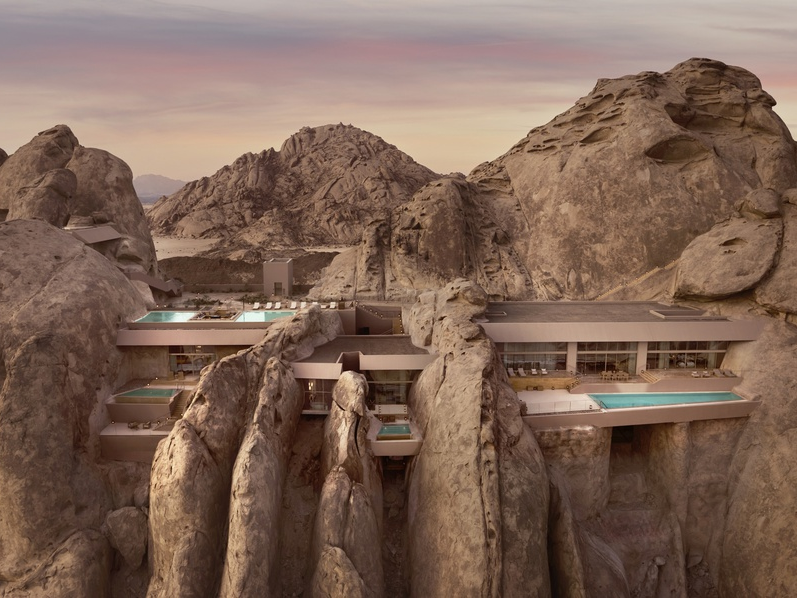
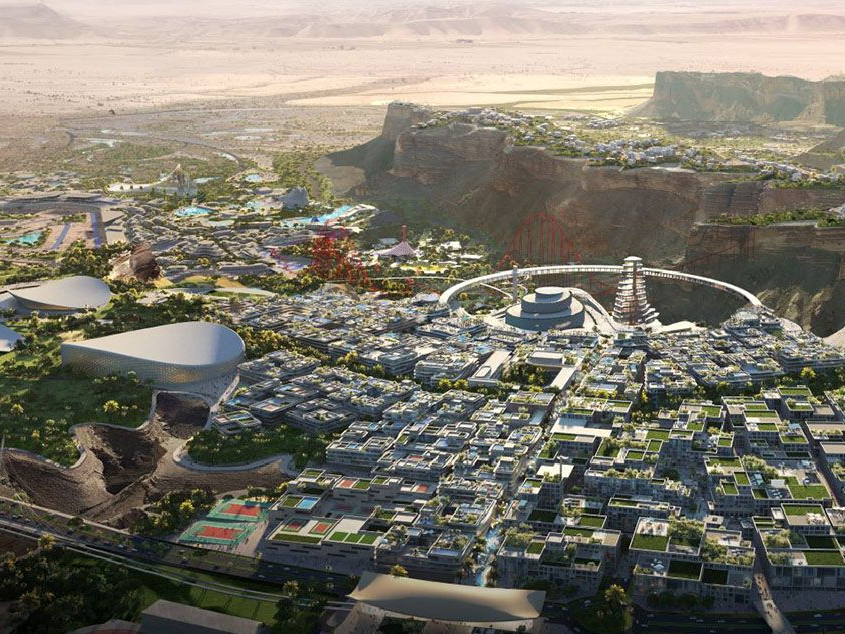
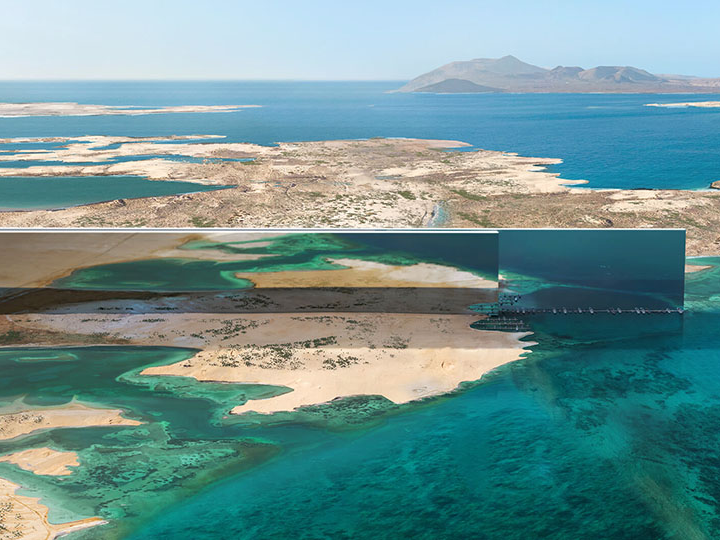
- NEOM: A future-facing region redefining life across land and sea, including The Line, Trojena, Sindalah, and Desert Rock
- Diriyah: Preserving the birthplace of the Saudi state while evolving it into a world-class cultural destination
- Qiddiya: Positioning entertainment, sport, and lifestyle as pillars of a modern Saudi identity
- The Red Sea Developments: From luxury coastal resorts to sustainable desert retreats, blending tourism with environmental care
- Riyadh’s Urban Transformation: King Salman Park, Riyadh Art, Sports Boulevard, and Green Riyadh Project reshaping the capital into a global city
- ROSHN & Mohammed bin Salman Nonprofit City: Redefining community living, social impact, and urban sustainability
- Global Milestones: Expo 2030 and the FIFA World Cup 2034, placing Saudi Arabia at the center of international culture and sport
Whatever form these projects take over time, their cultural relevance is clear: What began in Diriyah continues. Built bigger, but on the same values.
The Past in Our Hands, the Future in View
On Founding Day, the past is not distant. It is present in the way Diriyah is spoken of, in the way traditions are worn, and in the way heritage is displayed with confidence. And just beyond that pride is a horizon: a country expanding its global role and building a future at scale. The celebration makes a clear point: Saudi Arabia’s story has deep roots, and it is still unfolding.

Curious for More Cultural Gems Like This?
Subscribe to Saudi Cultures for deep dives into traditions, regional stories, and voices from across the Kingdom.
FAQs
What is Founding Day in Saudi Arabia?
Saudi Founding Day is celebrated on February 22 each year. It marks the establishment of the First Saudi State in 1727 by Imam Muhammad bin Saud in Diriyah and honors the Kingdom’s deep historical roots.
What is the difference between National Day and Founding Day?
Founding Day (February 22) commemorates the beginning of the First Saudi State in 1727. National Day (September 23) celebrates the unification of the Kingdom of Saudi Arabia in 1932 by King Abdulaziz.
Why is Founding Day celebrated?
Founding Day is celebrated to recognize nearly three centuries of Saudi history, leadership, and cultural heritage, beginning with the founding of the First Saudi State.
Who founded Saudi Arabia?
The First Saudi State was founded by Imam Muhammad bin Saud in 1727. The modern Kingdom of Saudi Arabia was unified and established in 1932 by King Abdulaziz.
What are the colors of Saudi Founding Day?
Green and White. The Founding Day identity uses heritage-inspired earthy tones reflecting history and tradition, along with national symbols representing unity and cultural pride.
How is Founding Day celebrated in Saudi Arabia?
Founding Day is celebrated with cultural performances, traditional dress, heritage events, fireworks, educational activities, and public gatherings across the Kingdom.