In Saudi Arabia, some crafts do more than survive. They continue to carry memory, identity, and place across generations. Al sadu is one of those traditions: a Bedouin weaving practice shaped by desert life and refined by the hands of women who turned necessity into beauty. In its bold lines, rhythmic geometry, and durable fibers, sadu weaving preserves a story of skill, belonging, and cultural continuity.
The History of Al Sadu Weaving
The story of Al sadu begins in the life of the Bedouin, where woven textiles were essential to daily survival. In the deserts of the Arabian Peninsula, communities needed strong and portable materials for tents, floor coverings, animal gear, cushions, and storage pieces. From that need emerged a weaving tradition that was practical, portable, and visually striking.
In Saudi Arabia, sadu history is closely tied to Bedouin communities in regions such as Tabuk, Al-Jawf, Al-Qassim, and the Eastern Province. The craft developed as part of a wider desert culture, but it took on local identities through regional styles, tribal tastes, and inherited techniques. Each woven piece served a purpose, yet it also carried the visual language of the people who made it.
Over time, Al sadu became more than a domestic craft. It became a record of Bedouin life itself. The weaving reflected movement across open land, adaptation to climate, and the values of a society built on resilience, hospitality, and cooperation. Today, that history still lives in every band of color and every repeated geometric form.
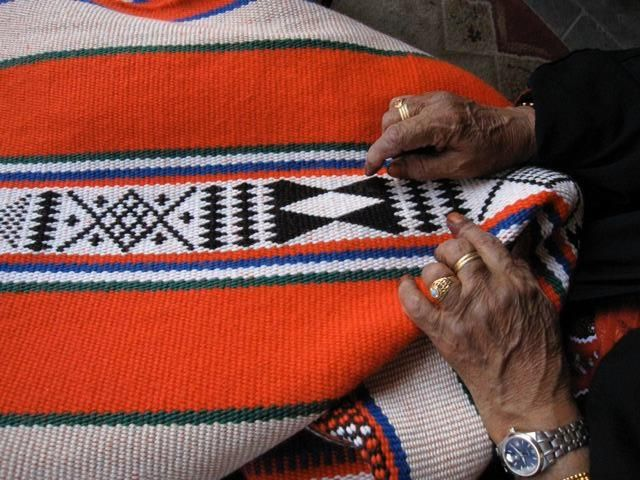
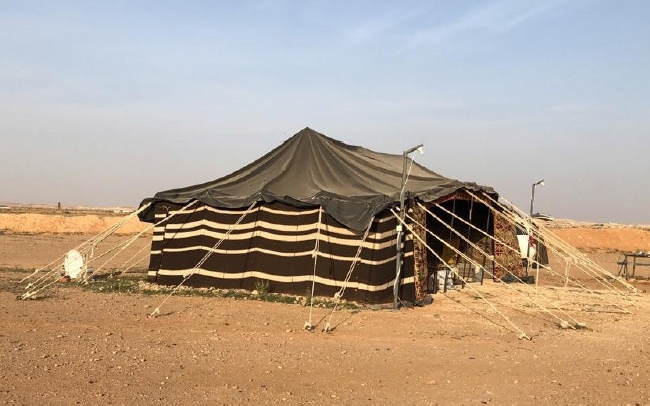
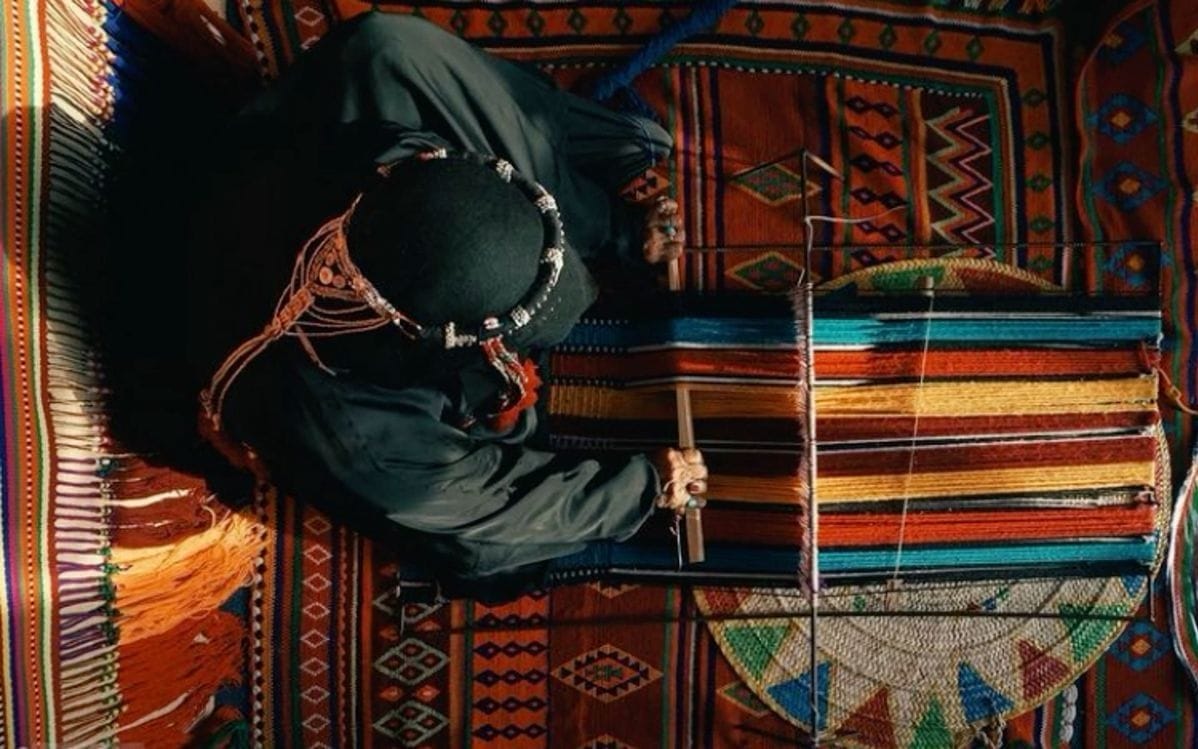
The word Al sadu refers to weaving done in a horizontal style, a direct link to the ground loom used by Bedouin weavers.
Cultural Significance of Al Sadu in Arabian Society
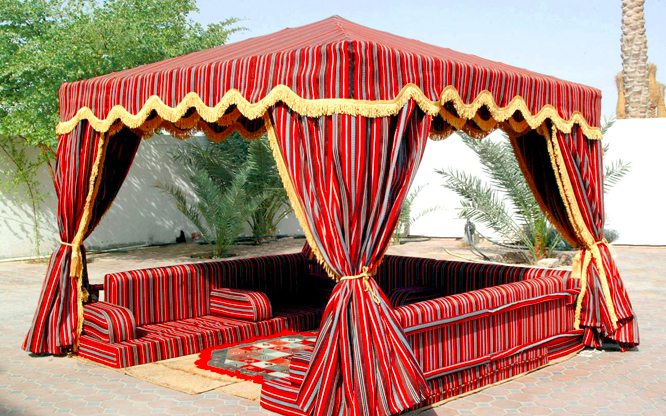
The importance of Al sadu in Arabian society goes far beyond decoration. It is a cultural expression rooted in identity, memory, and shared life. For Bedouin communities, textiles were not only household objects. They were part of the space where families gathered, welcomed guests, and marked the rhythms of everyday life. A woven tent panel or cushion was not seen as a separate art object. It belonged to the lived environment of the desert home. Through color, form, and repetition, Al sadu reflected tribal taste and individual skill. It gave visible character to domestic spaces and helped define the atmosphere of Bedouin hospitality.
The tradition also carried strong social meaning. Weaving sessions often brought women together in a shared space of work, exchange, and teaching. Knowledge moved from one generation to the next through observation, practice, and conversation. In this way, sadu weaving helped preserve not only a craft, but also a social fabric.
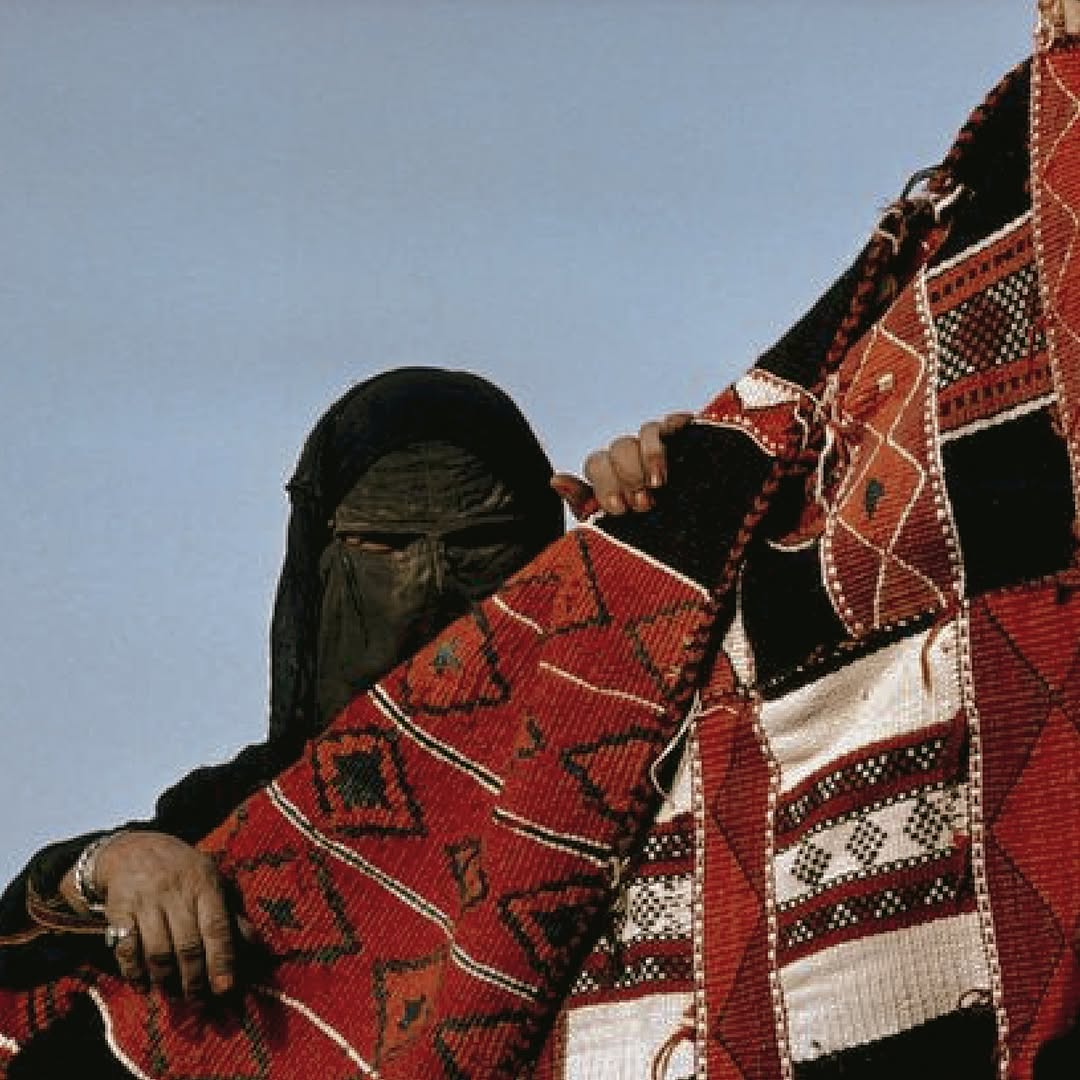
Materials Used in Al Sadu Weaving
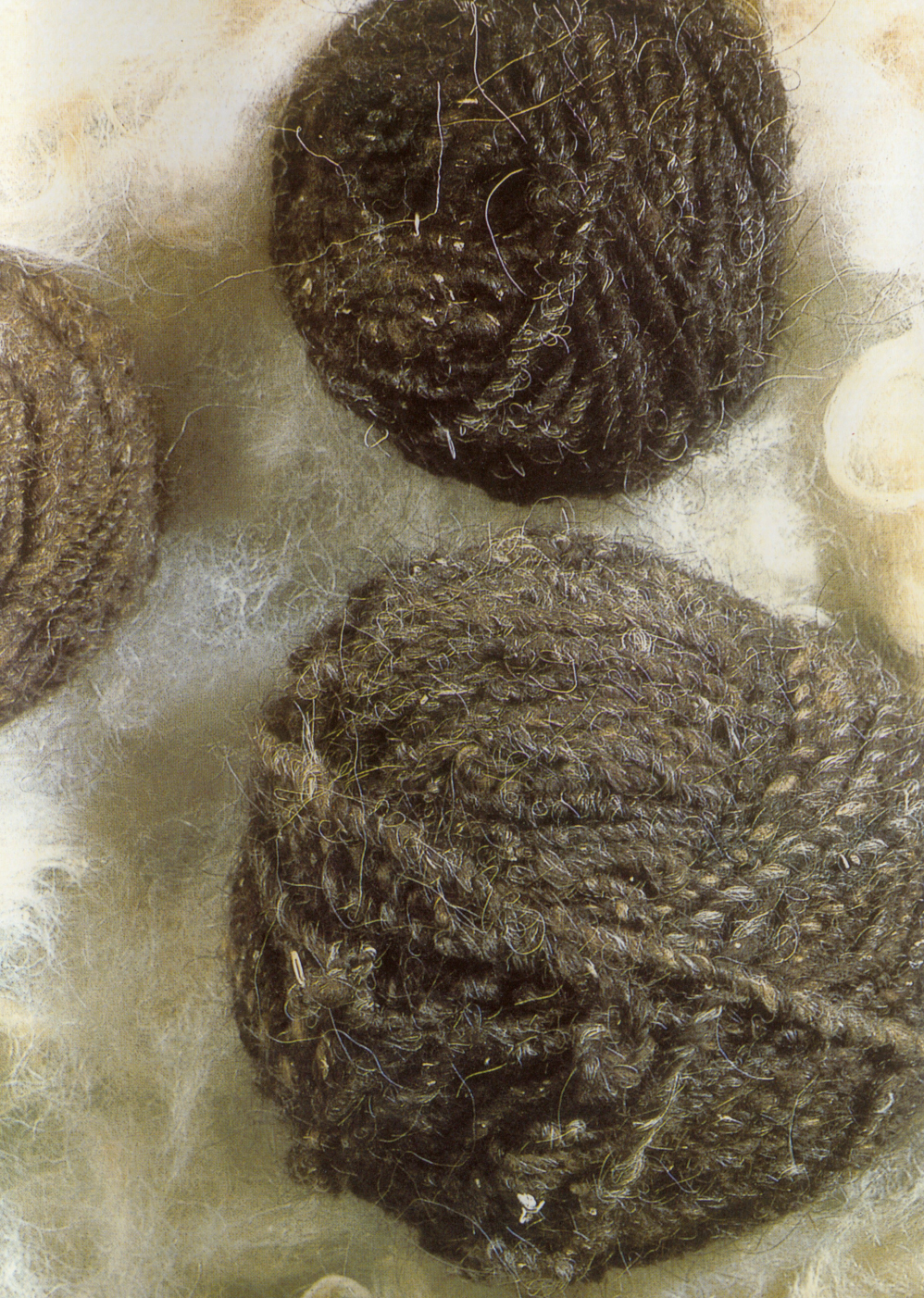
The materials used in Al sadu came directly from the Bedouin environment. Traditional weavers worked mainly with sheep’s wool, goat hair, and camel hair, all of which were valued for their strength and suitability for desert use. These fibers could be spun by hand and woven into textiles that were both durable and adaptable.
Before the spread of synthetic coloring, dyes were drawn from natural sources. Bedouin weavers used materials such as pomegranate husks, onion skins, roots, stems, and local plants to create warm, earthy shades. These colors gave Al sadu its distinctive visual depth while keeping the process closely tied to the natural world around it.
The selection of materials mattered on both practical and cultural levels. Goat hair and camel hair were especially useful in the harsh climate, while wool added softness and warmth. The finished textile was never random. Its fiber, texture, and color all worked together to suit the needs of nomadic life.
Techniques and Patterns of Al Sadu
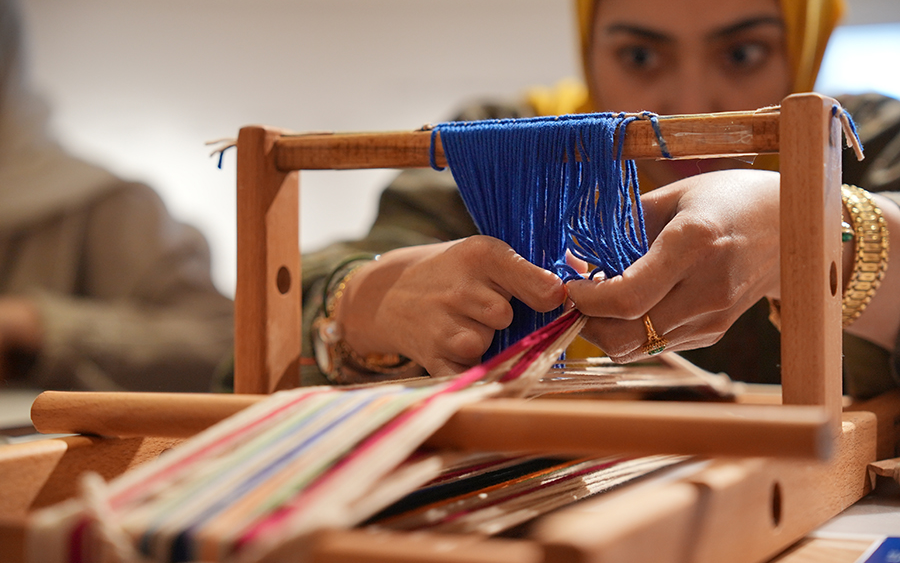
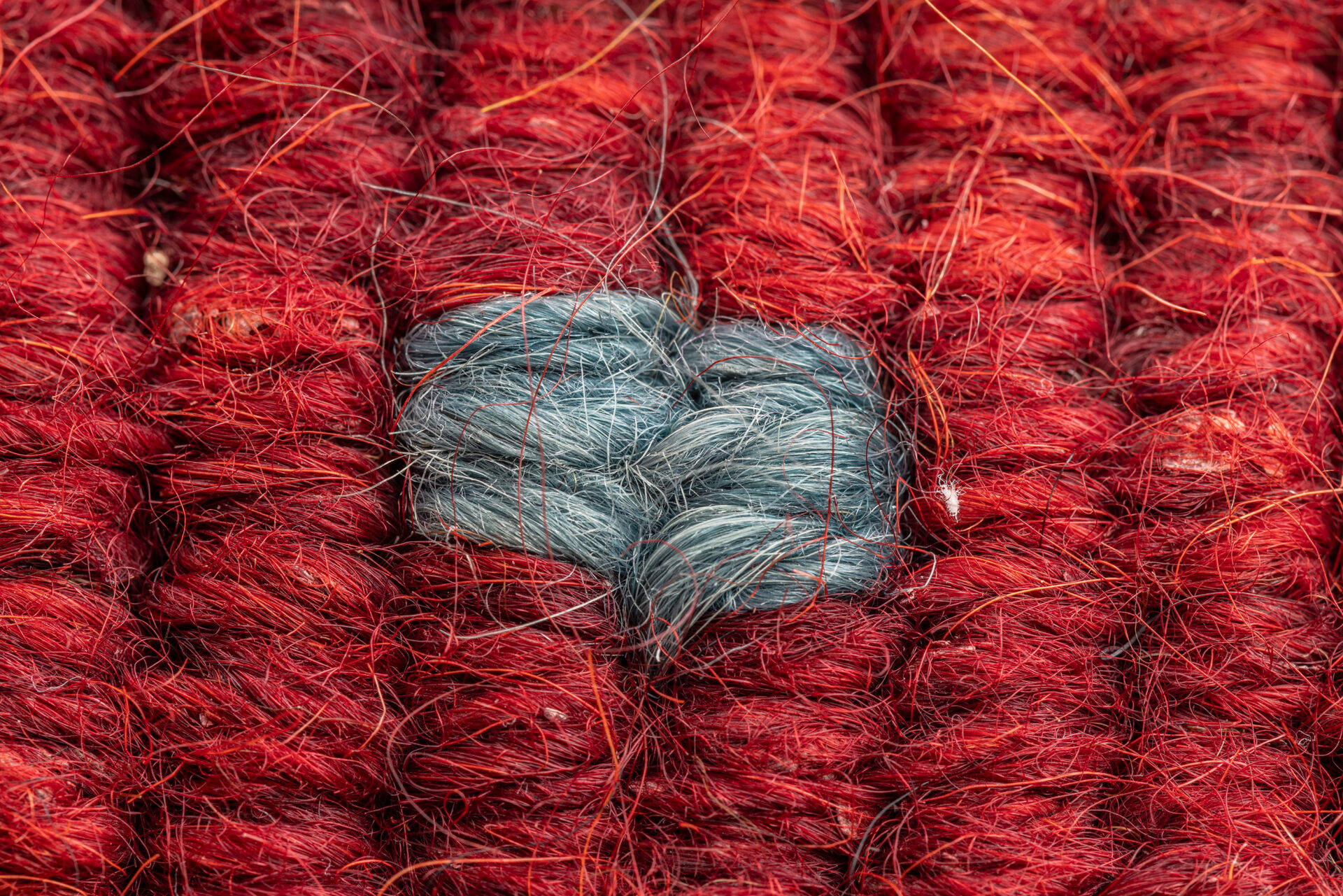
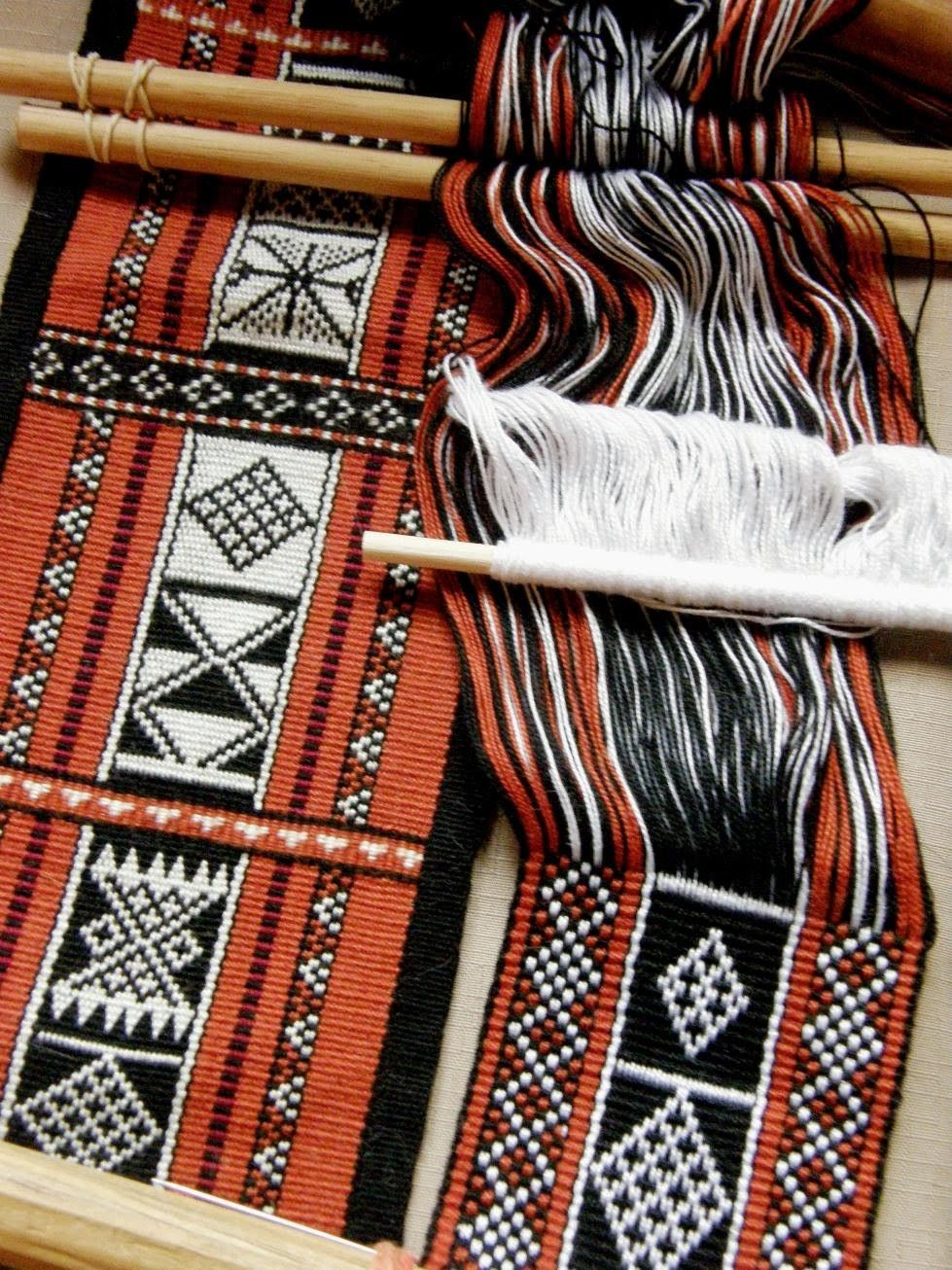
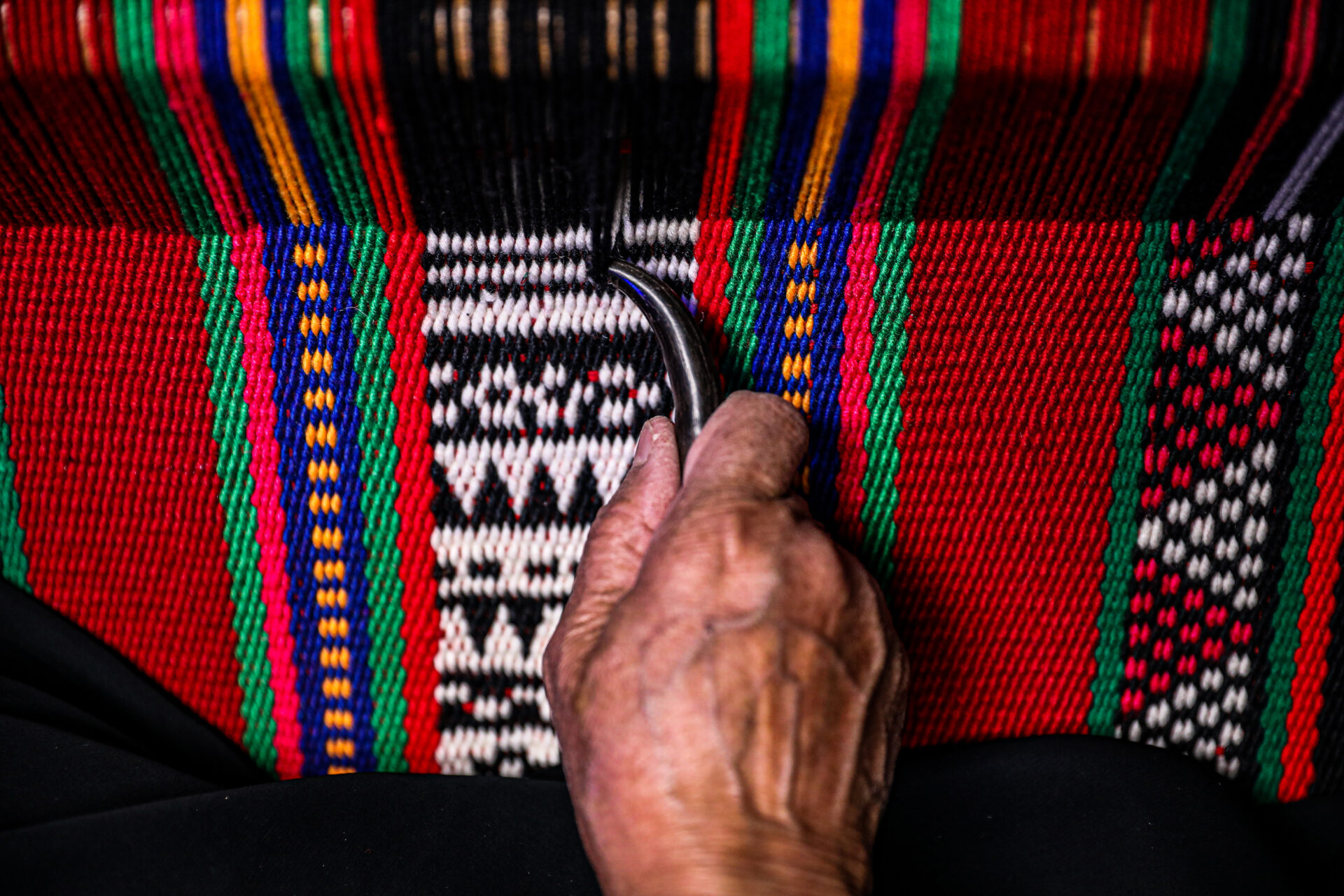
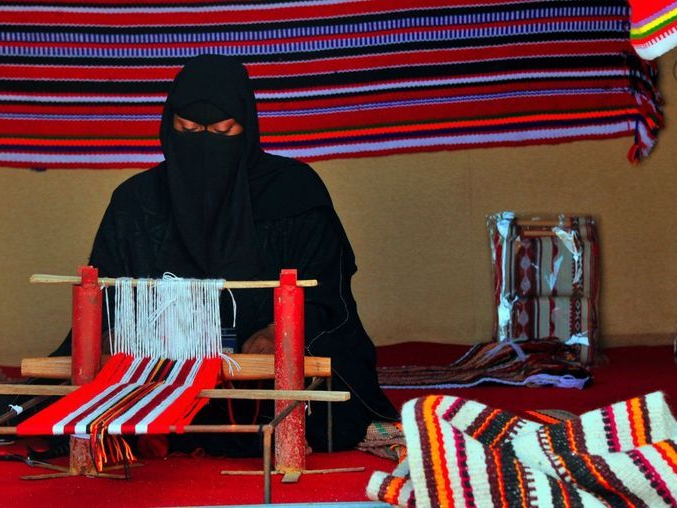
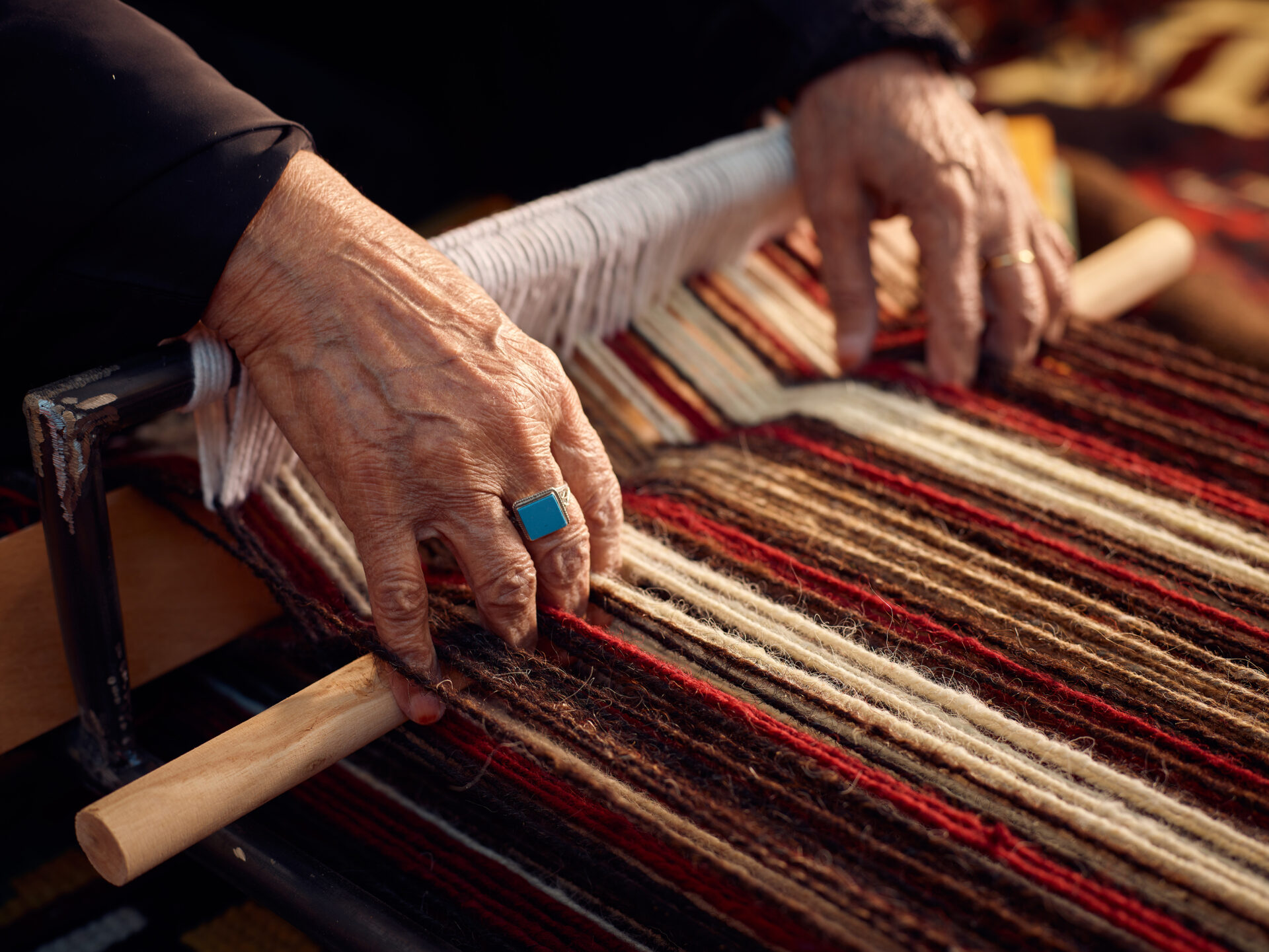
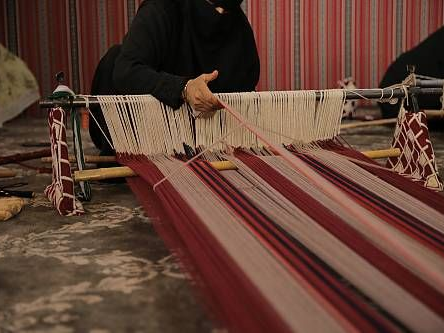
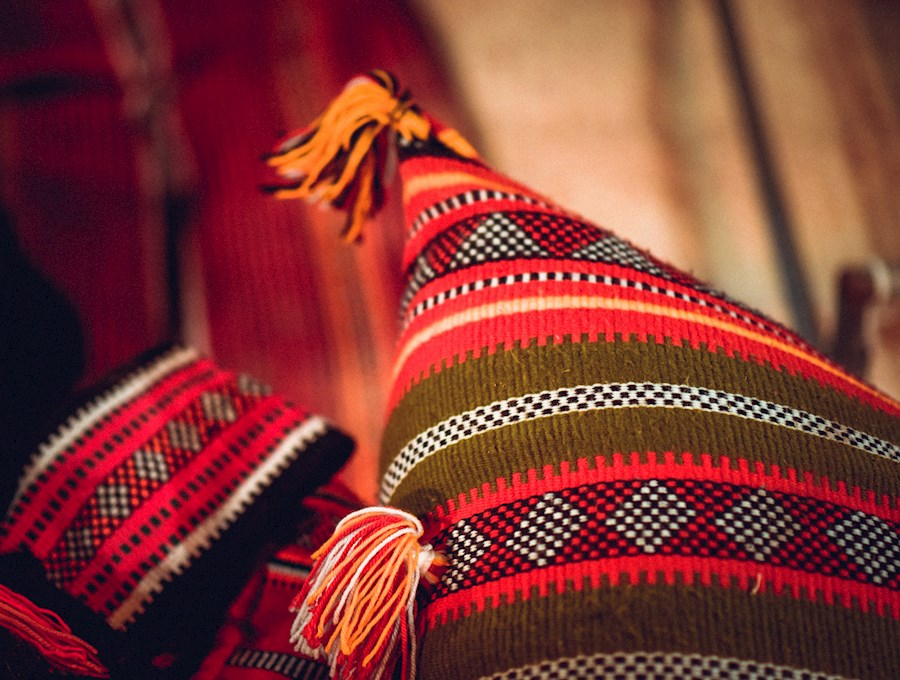
What makes sadu weaving so distinctive is the precision of its structure. Traditional Al sadu is woven on a horizontal ground loom using a warp-faced plain weave. This method creates a strong surface with a clear linear rhythm, making the textile ideal for both everyday use and decorative effect.
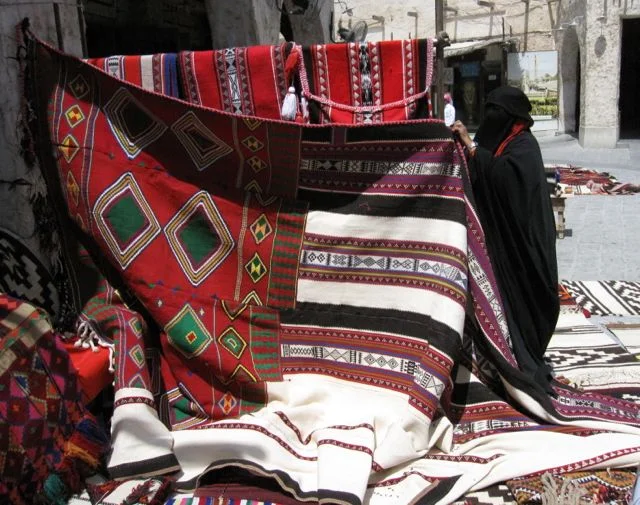
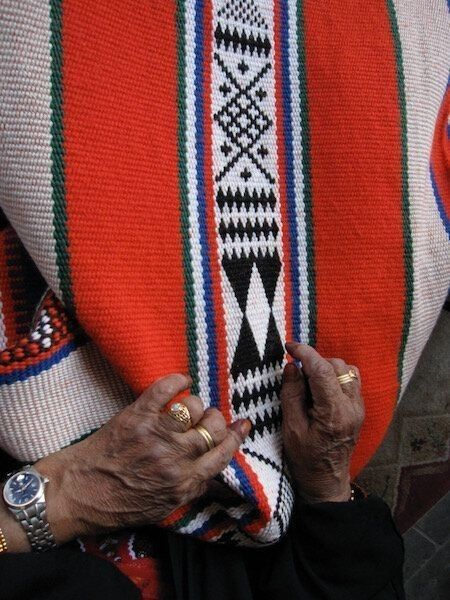
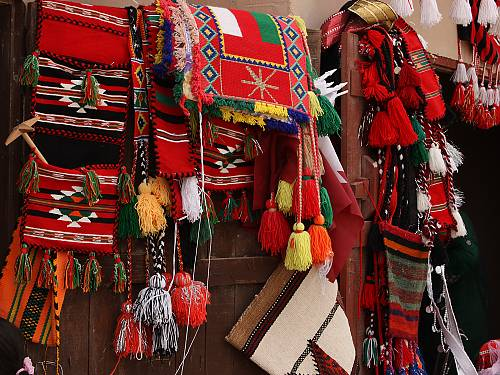
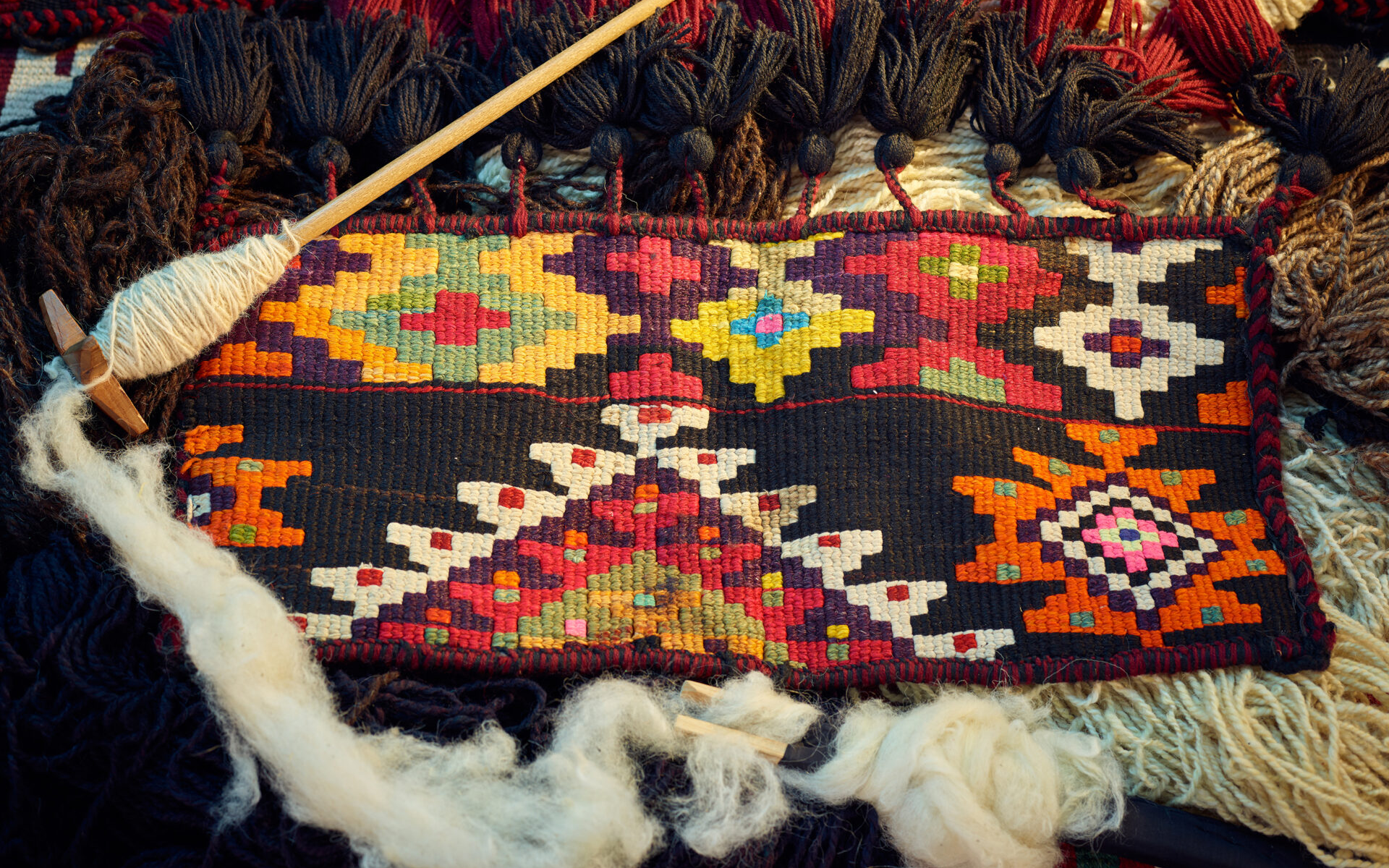
A classic sadu pattern is built through repetition. Stripes, triangles, dots, stepped forms, and geometric bands appear in carefully arranged sequences that feel both disciplined and expressive. Color plays a major role in shaping the identity of each textile. Red, black, white, orange, and green are among the shades often associated with Al sadu, creating a vivid contrast against the muted tones of the desert environment. Together, color and geometry give the sadu pattern its bold character.
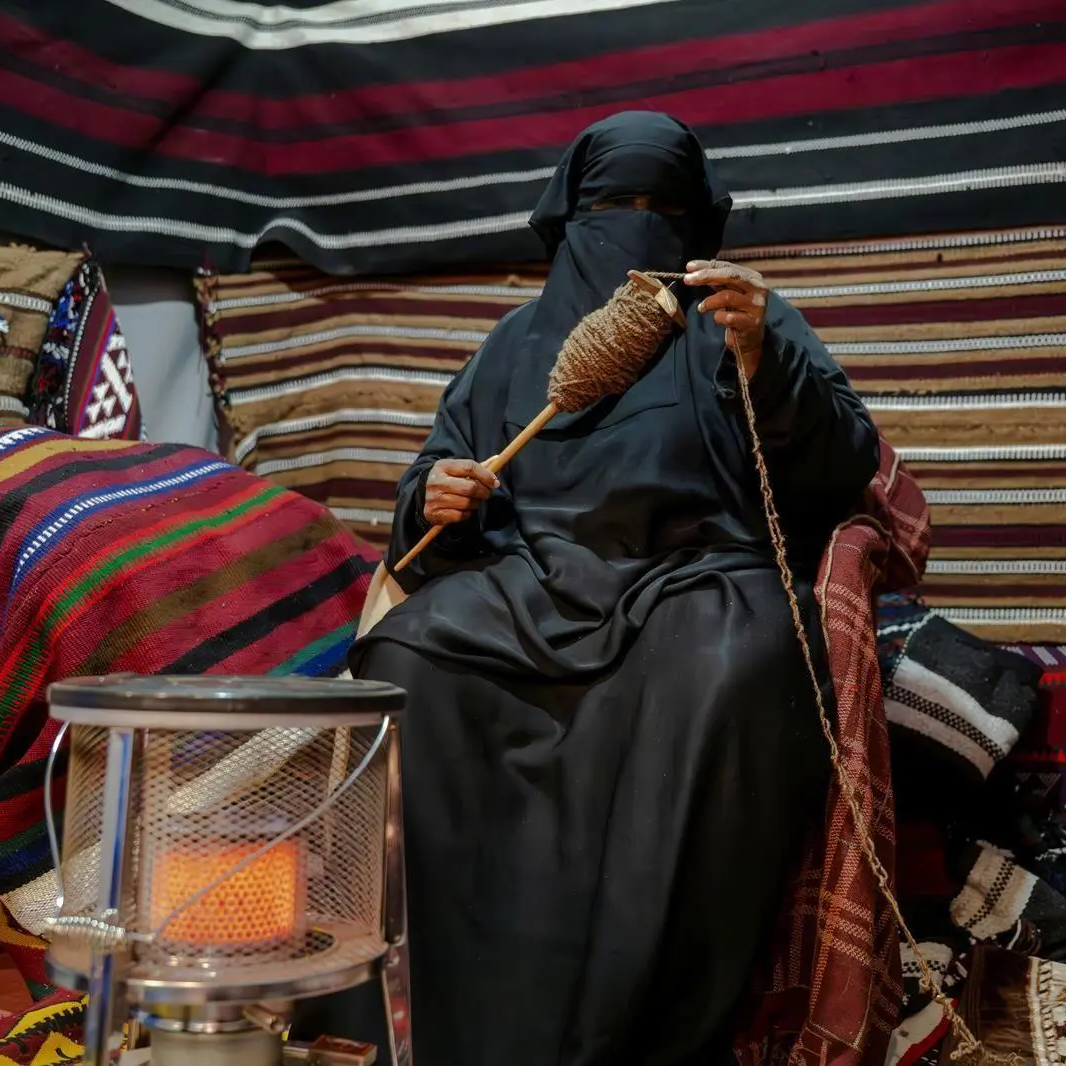
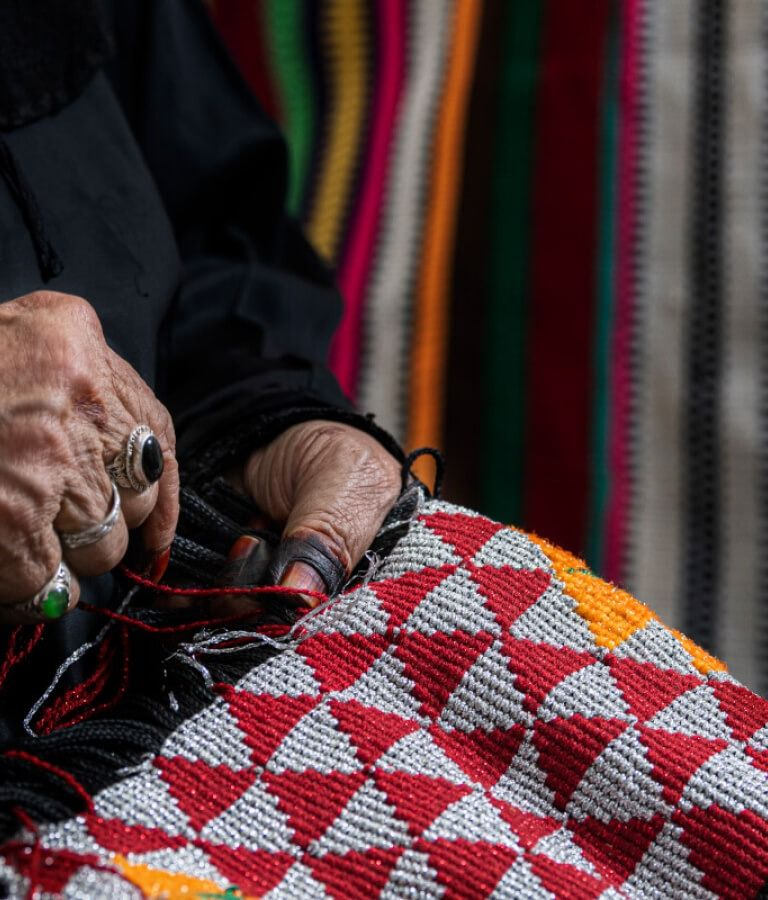
The making of Al Sadu follows a careful process that turns raw fibre into a finished woven textile:
- The raw materials were gathered first.
Sheep’s wool and goat hair were commonly used, while camel hair was usually collected after it fell naturally rather than being sheared. - Men often helped at the first stage.
They assisted by shearing the wool of sheep and the hair of goats. - Women then prepared the fibres.
They removed dirt and twigs, washed the fibres, and dried them in the sun. - The fibres were combed using a tool called 'al kirdash'.
This helped separate and balance the fibres before spinning. - Spinning was done with 'al meghzal'.
The fibres were placed on this spindle and spun into yarn, then wound into balls. - Dyeing came next.
White sheep’s wool was often dyed, while camel and goat hair were usually left in their natural colours. - Natural materials were used for dyeing in the past.
Desert herbs and plants gave the wool its colour, while synthetic dyes are more common today. - The weaving itself was built through vertical and horizontal threads.
Yarn was laid vertically, while horizontal threads were passed through to form the textile. - Patterns were shaped through different thread choices and arrangements.
This process, sometimes referred to as al hatty or al shanf, helped create the distinctive visual language of Al Sadu. - The woven lines were pressed tightly together to keep the textile compact, durable, and even.
The Role of Women in Al Sadu Weaving
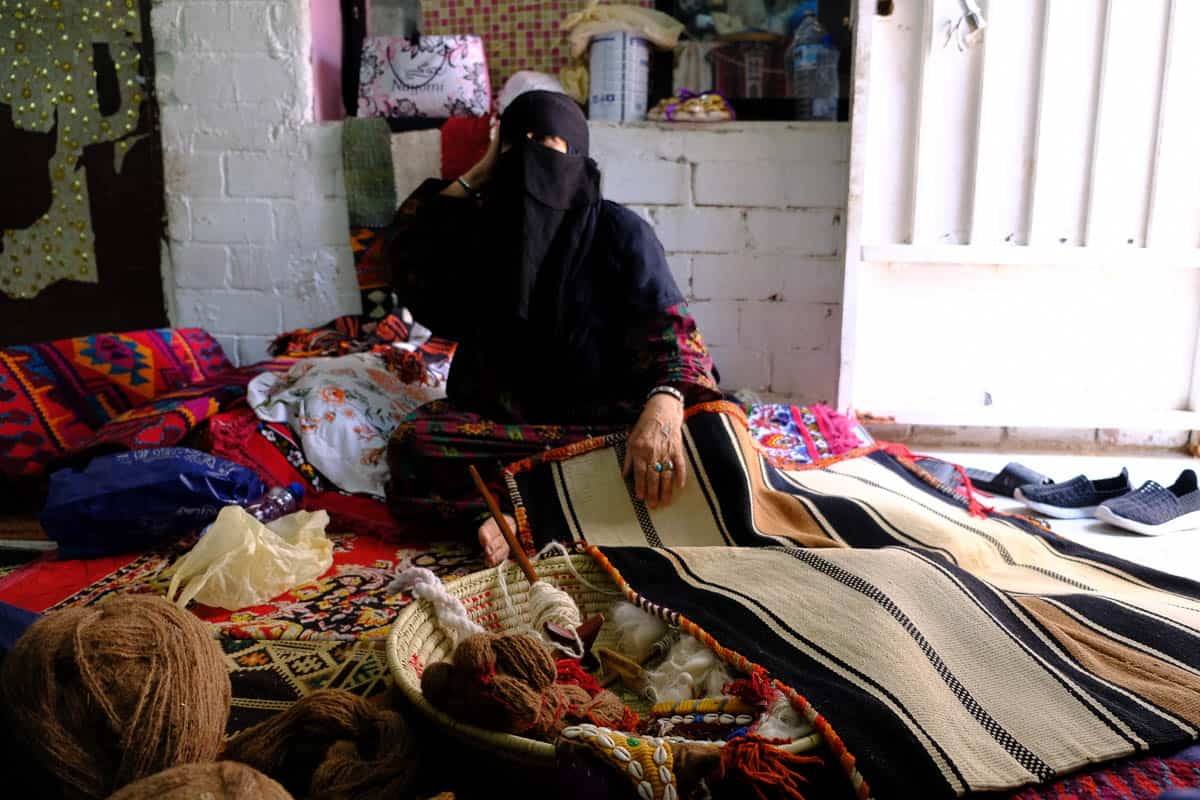
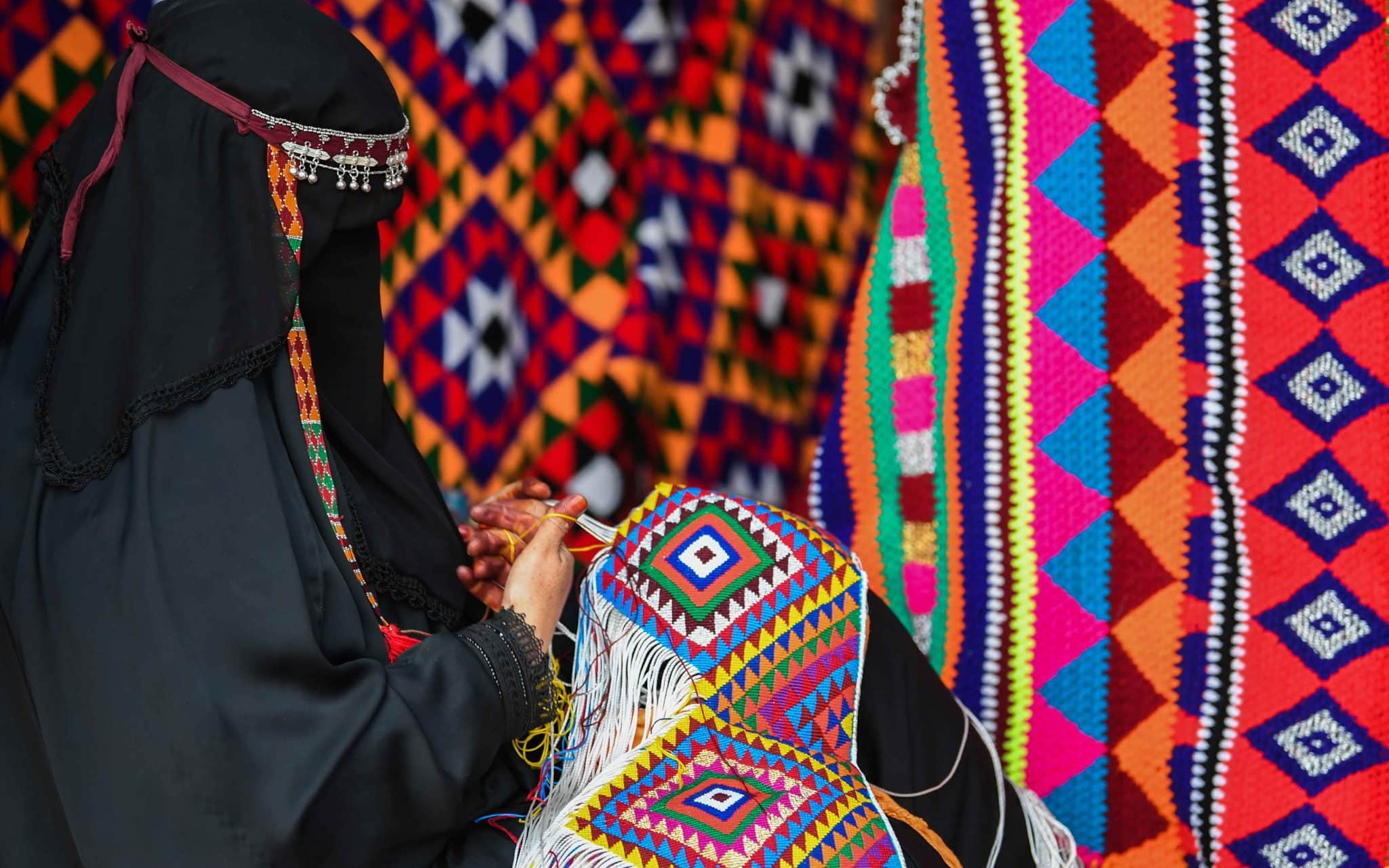
Women have always stood at the center of Al sadu. In Bedouin life, they were the primary bearers of the craft, responsible for spinning, dyeing, designing, and weaving textiles that shaped the home. Their work was practical, but it was also creative and culturally important.
Traditionally, Al Sadu was closely tied to women’s shared labour and everyday life. When a girl was preparing for marriage, her mother would often invite neighbours and relatives to gather for lunch or dinner and help prepare the household items the bride would need. Each woman would take on a different role:
- Some fluffed and prepared the wool.
- Others spun the yarn.
- Some began weaving the Al Sadu itself.
- Others designed and made household items such as bags, baskets, decorations, and woven sheets.
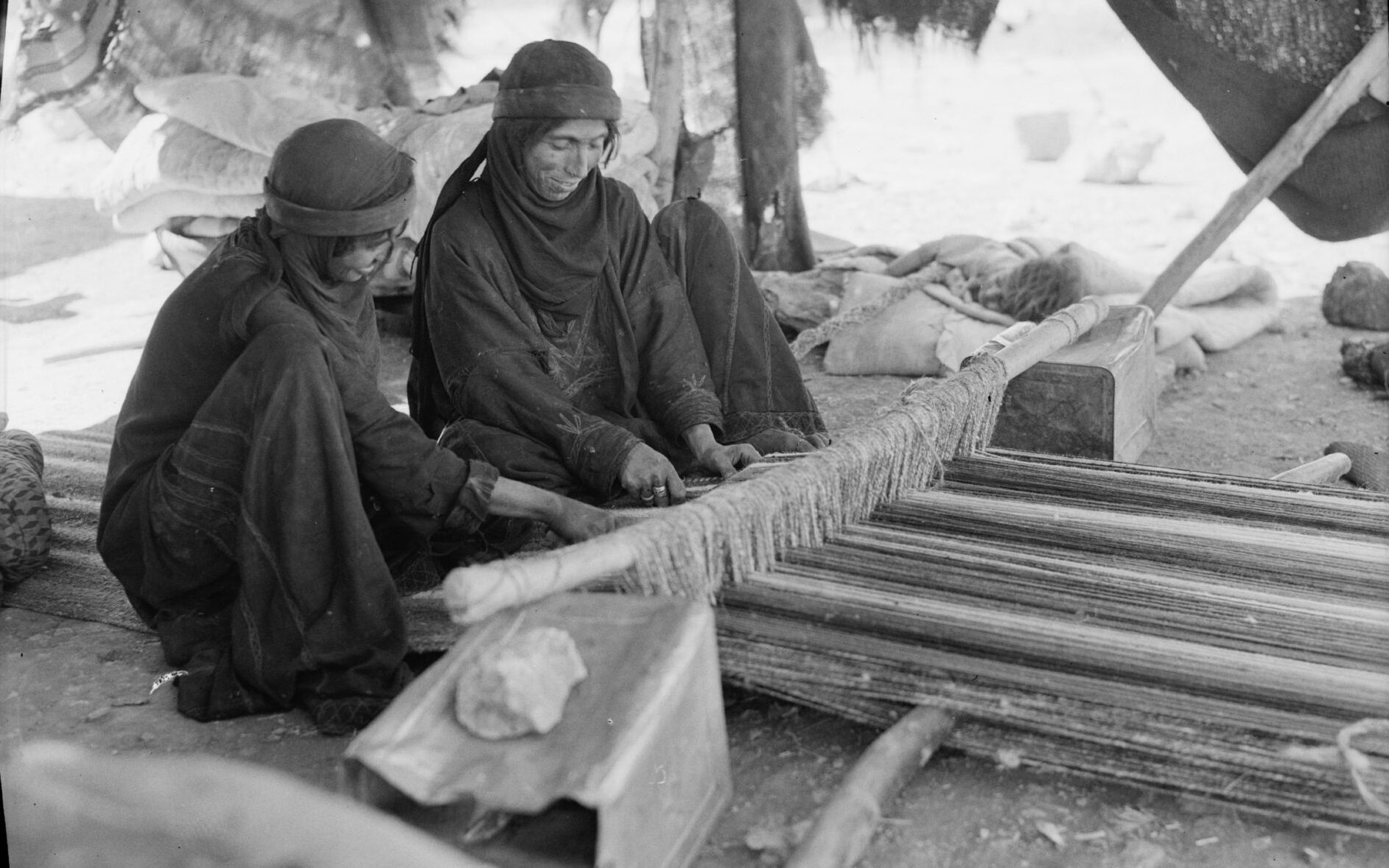
These gatherings were not just about making useful objects. They were also about cooperation, generosity, and the passing down of skill from one generation to the next. A skilled weaver held real value within Bedouin society. Her work furnished the tented home and carried the marks of memory, tribe, and taste. Through women, sadu history remained alive not in books, but in handwork, routine, and inheritance.
Contemporary Applications of Al Sadu
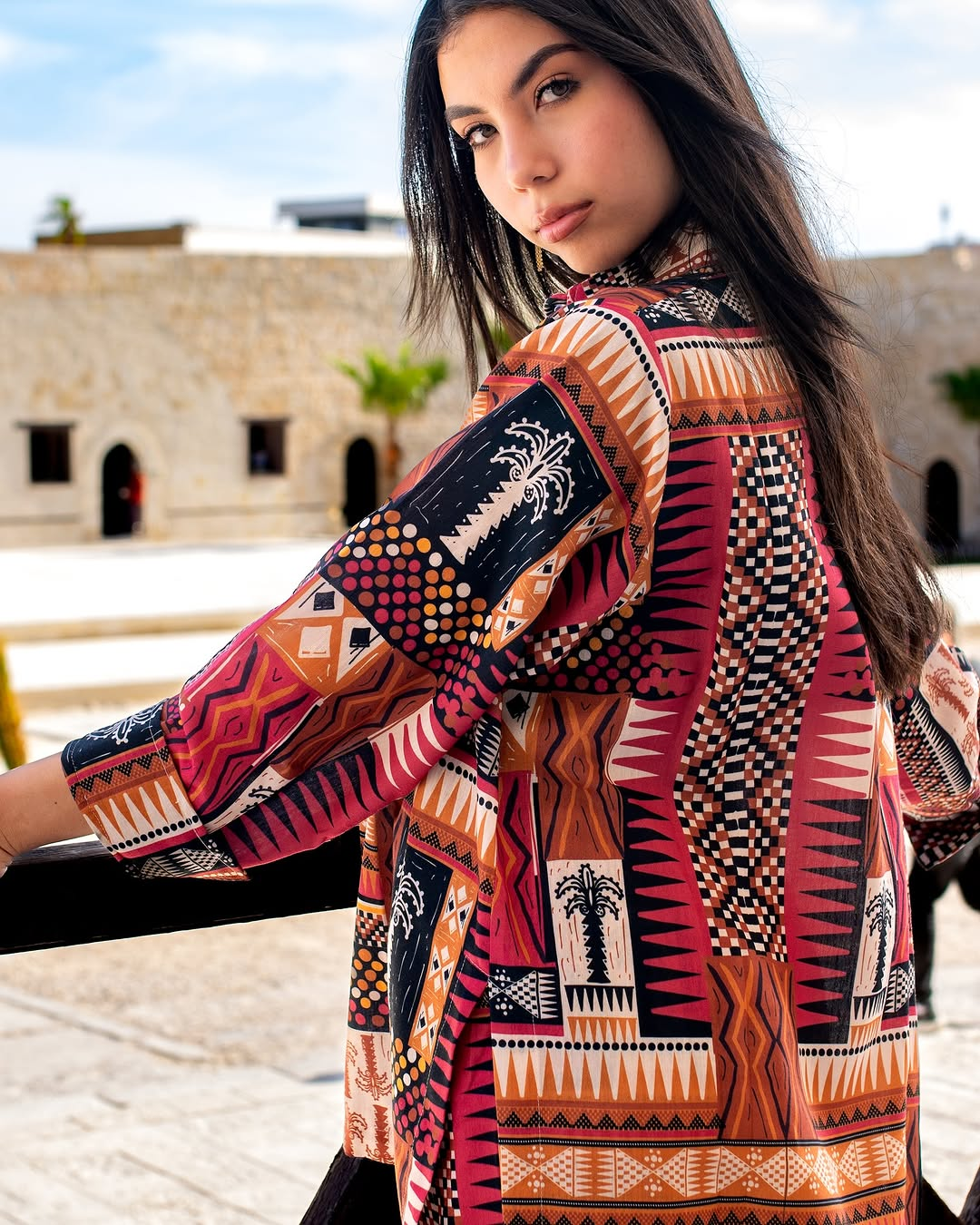
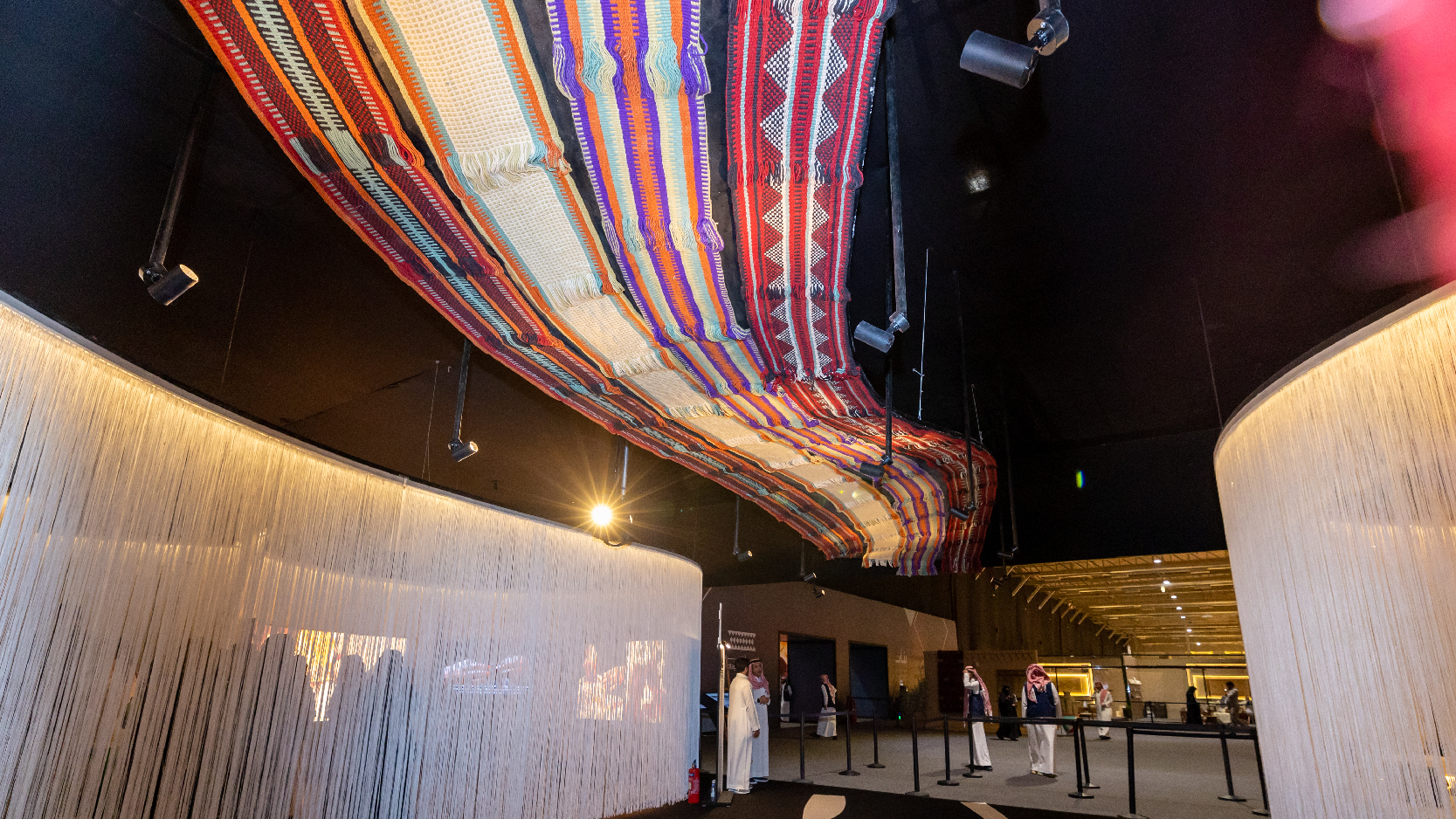
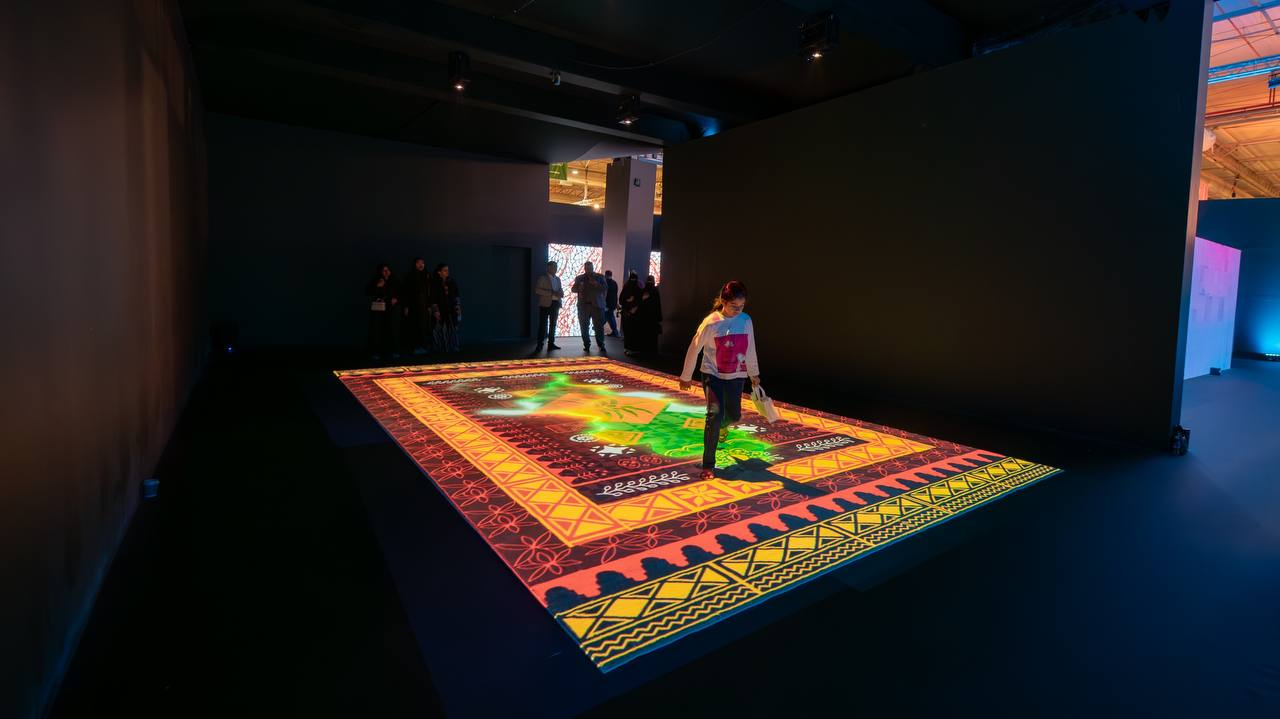
Today, Al sadu continues to evolve while staying rooted in heritage. Its patterns and weaving language now appear in fashion, accessories, interiors, exhibitions, and contemporary design projects. This modern presence has helped bring the craft to new audiences without separating it from its origins.
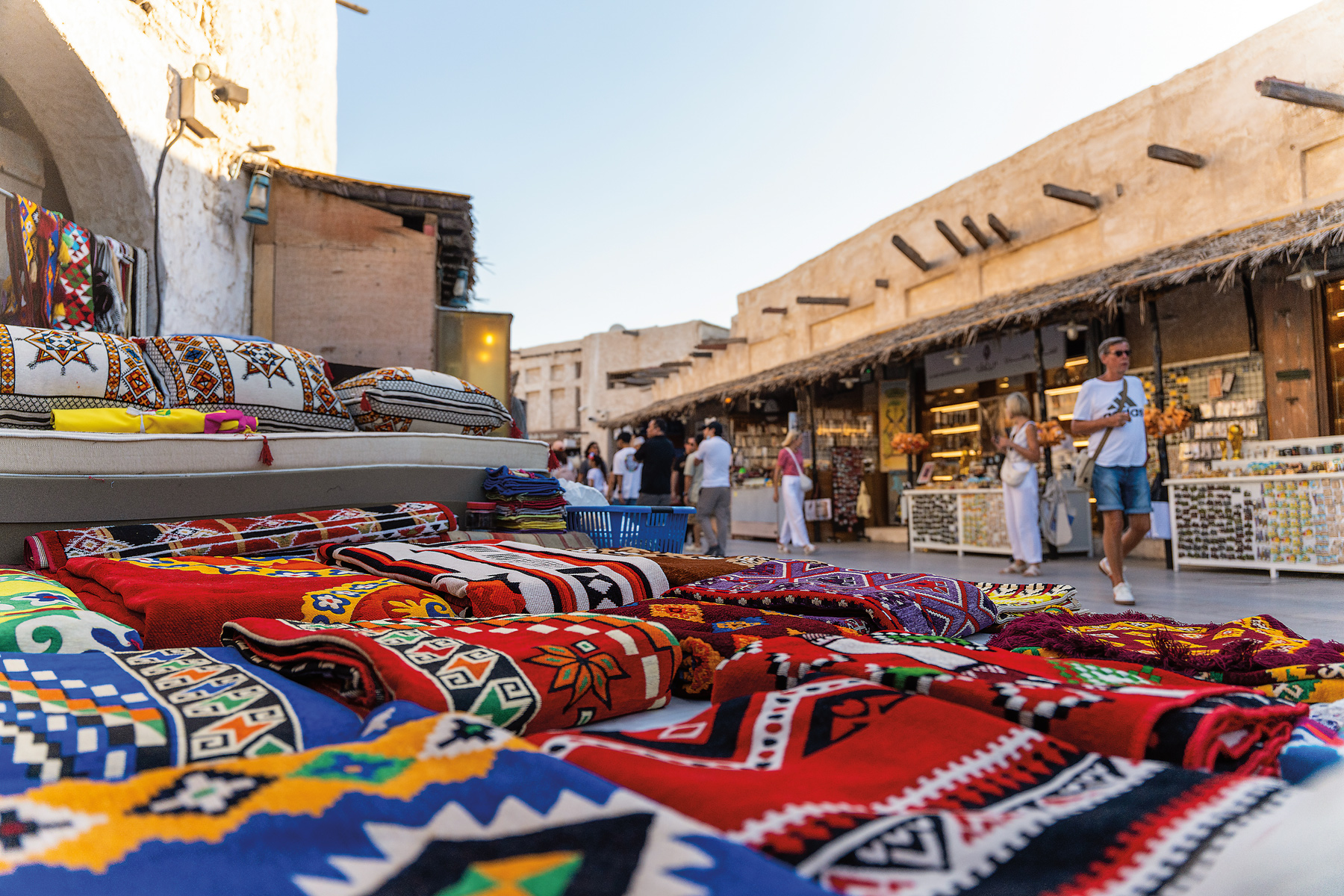
In Saudi Arabia, the visual identity of Al sadu has also entered major public cultural spaces. One of the most notable examples was the Saudi G20 Presidency logo in 2020, which drew inspiration from Al sadu motifs. That moment showed how a traditional weaving language could also represent the Kingdom on a global stage. Designers and cultural institutions have also brought sadu weaving into new formats through cushions, rugs, garments, wall pieces, and exhibition displays. These adaptations do not replace traditional practice. Instead, they show how heritage can remain visible and relevant in modern life.
Preservation Efforts for Al Sadu Traditions
The preservation of Al sadu has become an important cultural effort in Saudi Arabia and across the Gulf. As lifestyles changed and nomadic life declined, the need to protect inherited crafts became more urgent. Cultural institutions, heritage programs, and exhibitions have all played a role in keeping the tradition active.
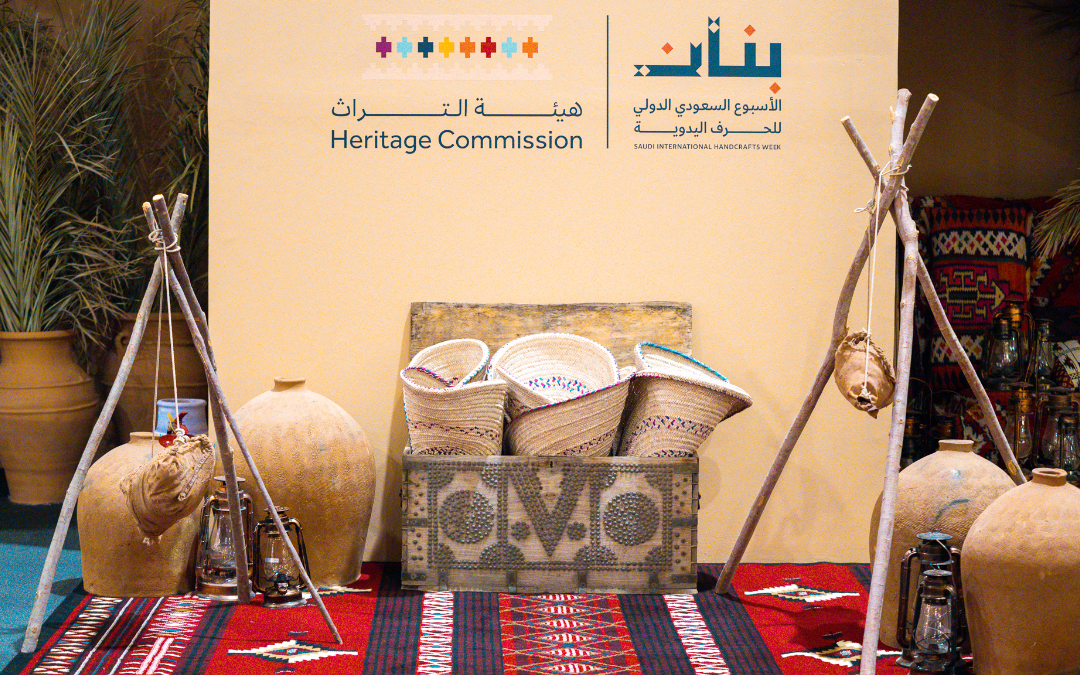
A major milestone came in 2020, when the traditional weaving of Al sadu in Saudi Arabia and Kuwait was inscribed on UNESCO’s Representative List of the Intangible Cultural Heritage of Humanity. This recognition highlighted the craft as a living tradition, not a relic of the past. Saudi Arabia has continued to reinforce the value of handicrafts through national cultural initiatives. The growing public celebration of traditional arts, including the designation of 2025 as the Year of Handicrafts, reflects a wider commitment to preserving skills such as sadu weaving while giving them fresh cultural visibility.
The Future of Al Sadu and Its Cultural Legacy
The strength of Al sadu lies in its continuity. It began as a practical response to the needs of Bedouin life, yet it grew into one of the most recognizable expressions of desert heritage in Saudi Arabia. Its lines are simple, but its meaning runs deep. As Saudi Arabia continues to celebrate and invest in its cultural heritage, sadu weaving stands as a powerful example of how tradition can remain relevant without losing its character. It belongs to the past, but it also belongs to the present.
In every preserved textile and every renewed sadu pattern, there is a reminder that heritage is not only remembered. It is practiced, protected, and carried forward.
Curious for More Cultural Gems Like This?
Subscribe to Saudi Cultures for weekly updates on events, heritage, and voices across the Kingdom.