For centuries, the camel was more than just an animal in Saudi Arabia. It was a partner for survival. While the world may see the camel as a rugged icon of the desert, in Saudi Arabia, it is a masterpiece of nature.
Camel pageantry is far more than a quirky competition. It is a multi-billion-dollar industry and a premier cultural spectacle. It is where the ancient instincts of Bedouin heritage collide with the precision of modern regulation, creating a living gallery of national pride.
What is a Camel Pageant?
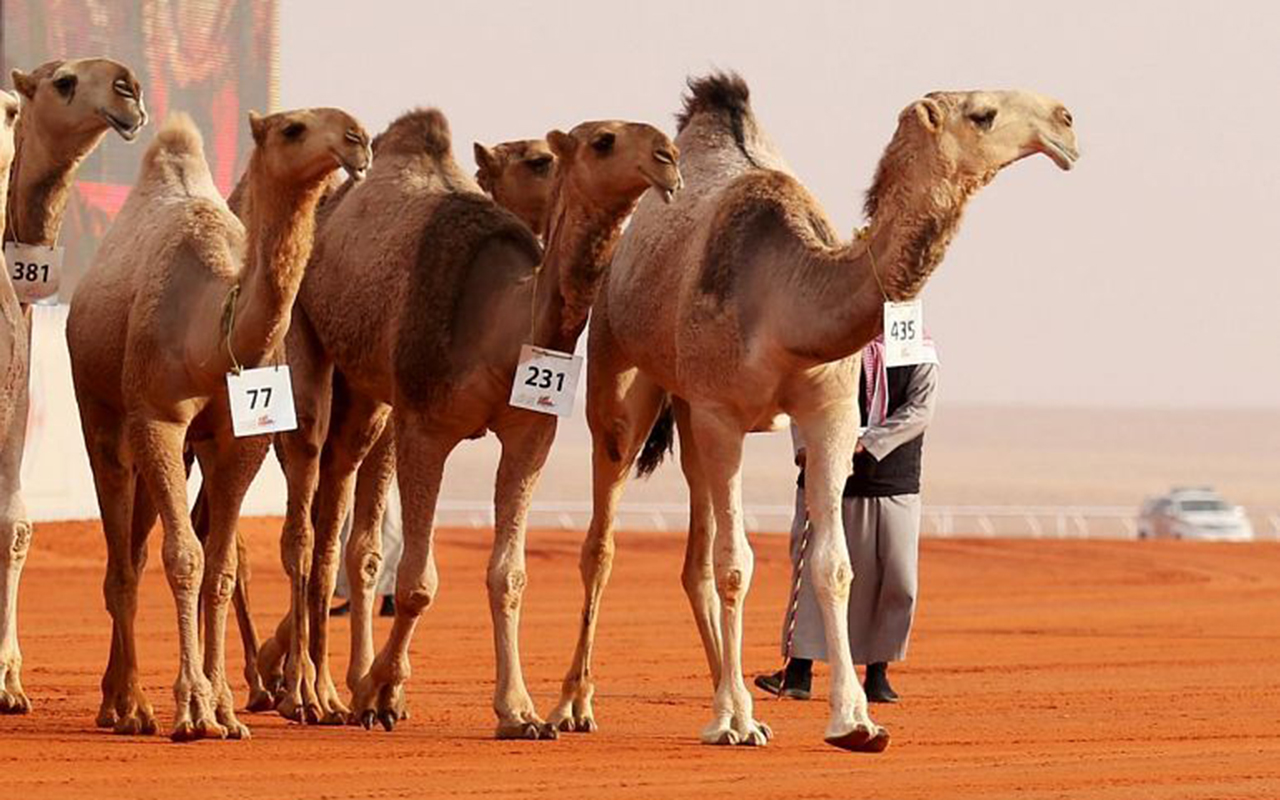
At its core, a camel beauty contest, or Mazayen Al-Ibl, is a rigorous evaluation of physical perfection. The grandest stage for this is the King Abdulaziz Camel Festival, a month-long extravaganza that transforms the desert of Rumhiya, located on the outskirts of Riyadh, into a bustling hub of heritage.
These are not casual displays. They are high-stakes tournaments with strict age divisions and breed categories. For a breeder, entering the pageant ring is the culmination of years of selective breeding and daily devotion. The stakes are immense: one festival alone featured 75 distinct competitions with a total prize pool reaching SR100 million ($26.6 million).
Beyond the trophies, the festivals serve as massive cultural crossroads. They are part auction house, part family reunion, and part diplomatic summit, where the air is thick with the scent of oud, the steam of Arabic coffee, and the electric tension of high-stakes trading.
A Special Bond: The History of Camels and People
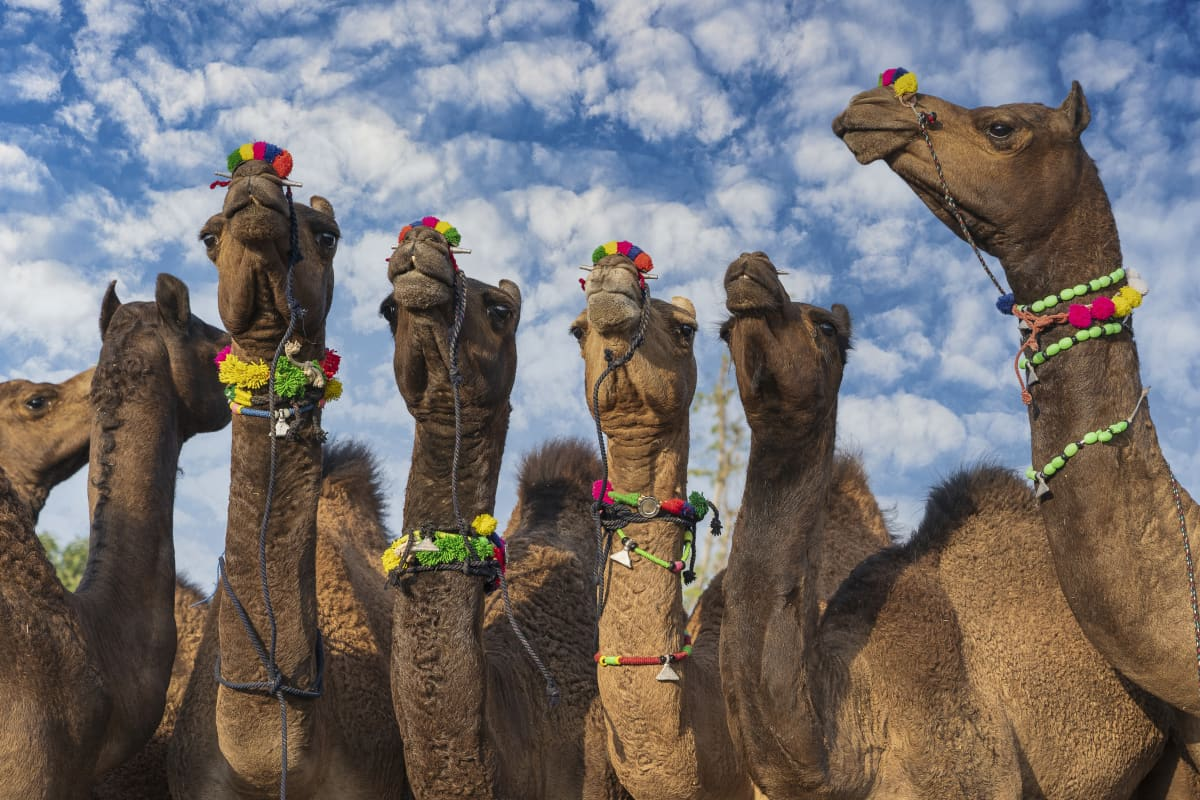
To understand the passion behind these pageants, one must understand the "Ship of the Desert." For centuries, the camel was the difference between life and death. It provided milk, meat, wool, and the only means of traversing the scorching dunes. Even as Saudi Arabia has transformed into a global G20 economy with gleaming skyscrapers and high-speed rail, the camel has remained the Kingdom's spiritual anchor. It represents resilience and desert wisdom.
The Anatomy of Perfection: How Beauty is Judged
To the untrained eye, one camel might look much like another. To a judge, the differences are as stark as those between a high-fashion model and an amateur. The evaluation is a meticulous "head-to-tail" audit of the animal’s anatomy.
1. The Head and Neck
The head is the "capital" of camel beauty. Judges look for long, drooping lips and a high, curved nose. Broad cheeks and a full, pronounced beard add "masculinity" and character. The neck should be long, tapering gracefully and set forward to give the animal a regal silhouette.
2. The Upper Body
The hump is a critical focal point. In many categories, a hump that is large and sloped toward the back is highly prized. Even the ears have standards: some breeds require short ears that slope backward, while others favor long ears angled forward like alert sentinels.
3. The Finish
The legs should be sturdy and well-proportioned, sometimes with a slight inward curve that denotes elegance. The tail must be the right length and shape to balance the animal’s massive frame.
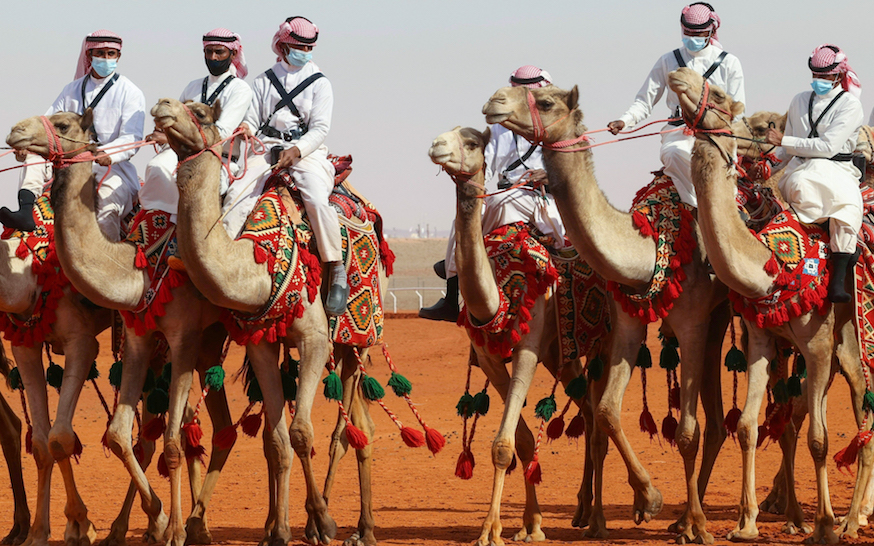
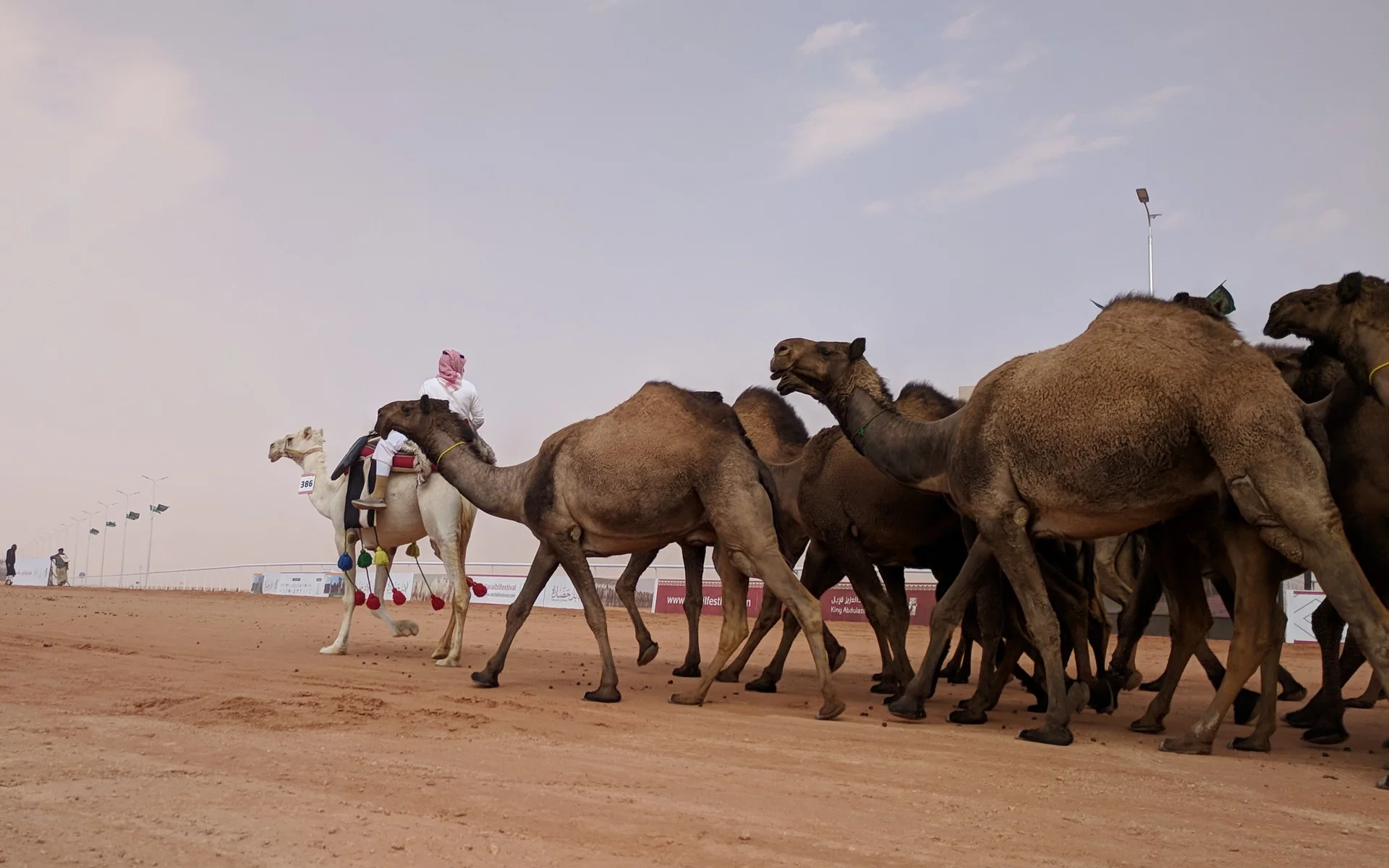
Trainers parade their camels during the during the sixth edition of the King Abdulaziz Camel Festival.
Categories and Colors
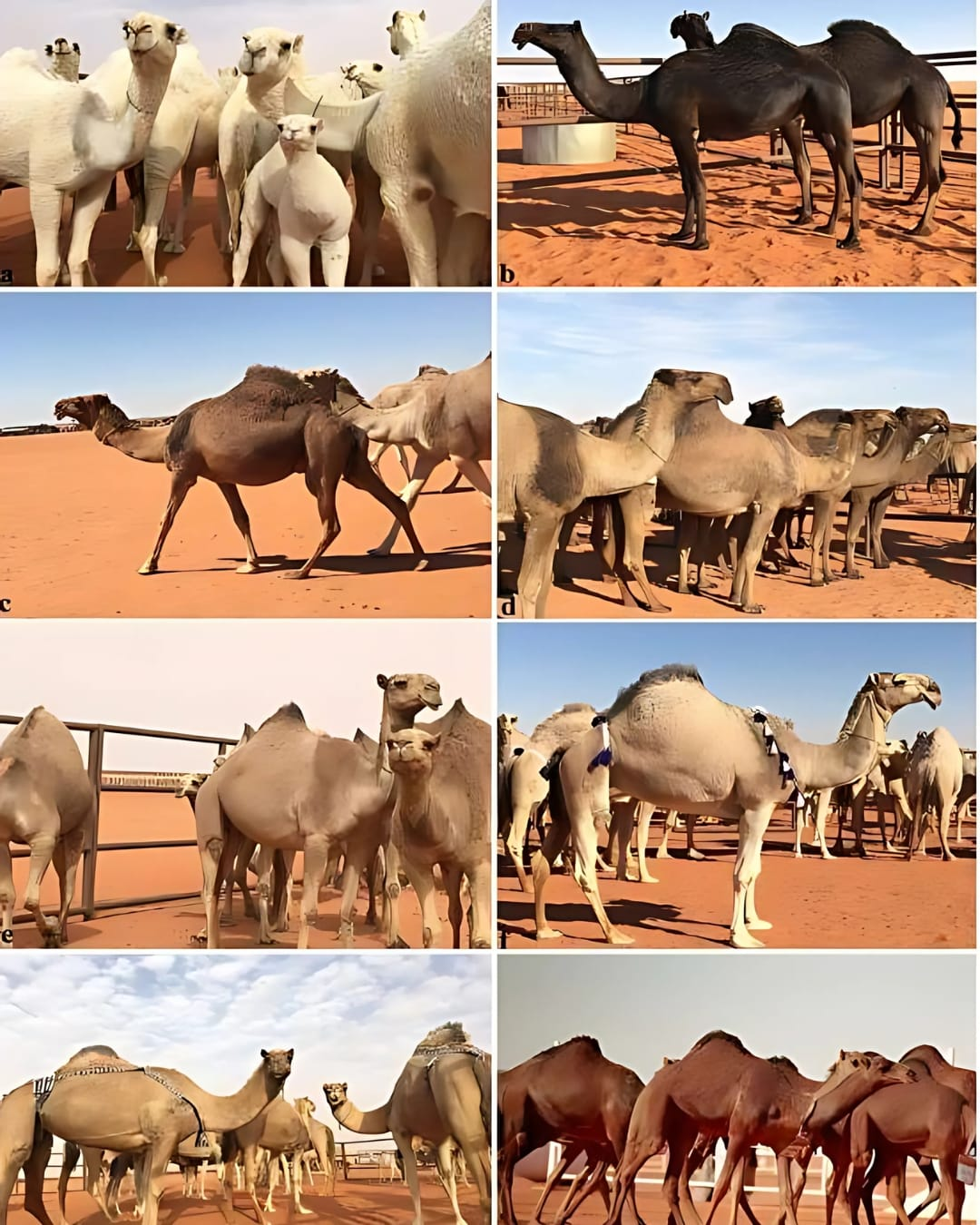
The vocabulary of camel pageantry is a linguistic treasure trove. Competitions are primarily divided by coat color and breed type:
- Mijahim: The "Black Camels." These dark-skinned beauties are admired for their size and imposing presence.
- Maghateer: The "Light Camels." This category is a spectrum of desert hues, further broken down into:
- Wodh: Bright white (highly coveted).
- Sofor: Golden-yellow.
- Sheal: Honey-colored.
- Homor: Reddish-brown.
- Asayel: Purebred camels often celebrated for their athletic build and racing pedigree.
The Ritual of Preparation
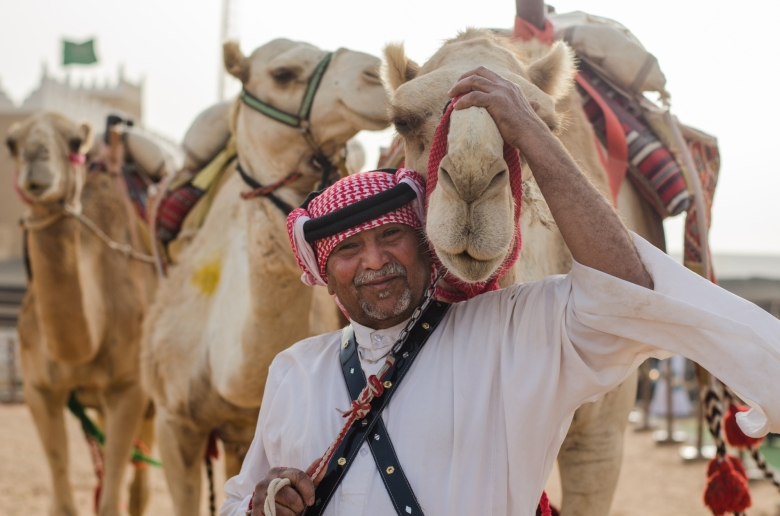
The transition from the range to the ring requires an Olympic level of preparation. A prize-winning camel doesn't just "show up." They are washed, shaved, and combed with obsessive care.
Breeders have been known to spend 12 hours a day tending to a single animal. They use specialized soaps to make the coat shine and even hair-fixing sprays to ensure the mane stays thick and perfectly styled. This ritual is a labor of love; it is the moment the breeder showcases their respect for the animal that carries their family’s reputation.
The Economics of Prestige: Multi-Million Riyal Deals
While the heart of the pageant is heritage, the engine is money. A win at the King Abdulaziz Camel Festival can skyrocket a camel’s value overnight.
The financial scale is staggering. During one festival, a deal was recorded where 17 deq camels (young camels) were sold for a jaw-dropping SR80 million ($21.3 million). In the first few weeks of the auction season, it is common to see over 70 high-end camels change hands, with the "Wodh" (white) and "Sofor" (yellow) varieties fetching the highest premiums. Breeding a champion is not just a hobby; it is a high-yield investment.
A Modern Shift: Women in the Arena
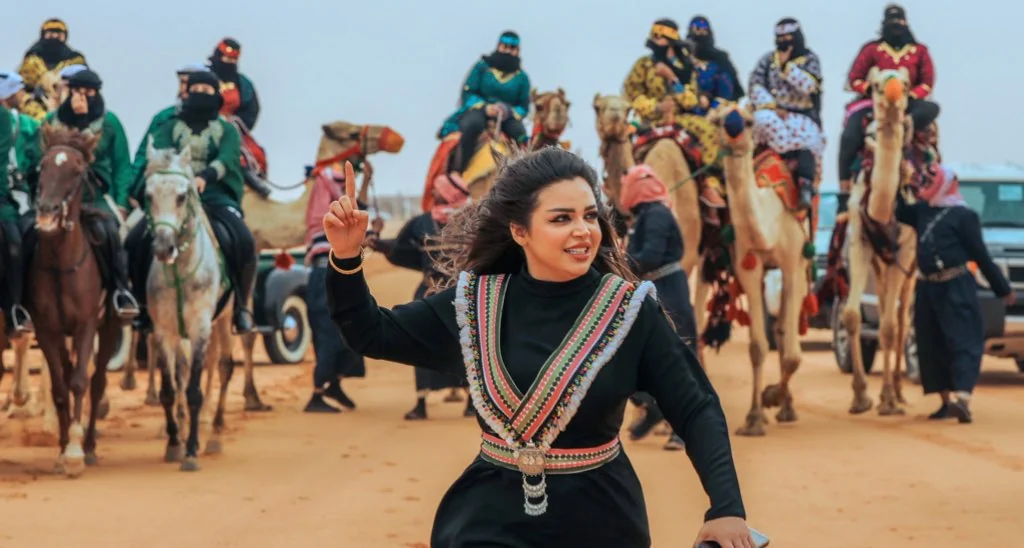
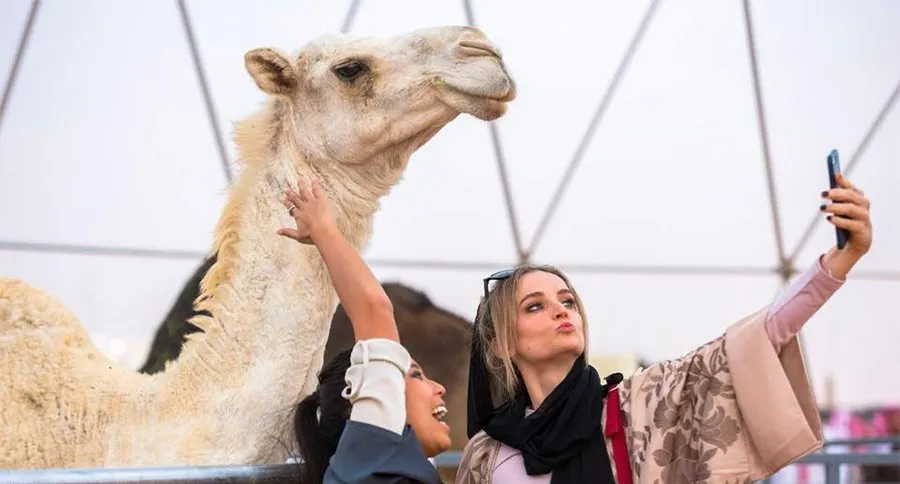
The world of camels is changing in an exciting way as more women join the tradition. In the past, camel racing and pageants were mostly for men, but today, women are making history and winning top prizes. At the 6th King Abdulaziz Camel Festival in January 2022, female owners were allowed to present their camels in a beauty contest for the first time, marking a notable moment in the festival’s history. The results made clear that this was not a symbolic gesture, but a fully competitive event, with Haya Al-Askar taking first place, followed by Rasma Al-Dosari, Malath bint Aoun, Lamia Al-Rashidi, and Dalal bint Abdullah Al-Otaibi.
By the 7th edition in January 2023, women were reported to be showing their camels for the second time, suggesting that their presence had already begun to settle naturally into the festival’s evolving identity. Rather than changing the spirit of the event, this development reflects how Saudi heritage continues to open itself to wider participation while holding firmly to its cultural core.
The Question of Authenticity
With millions of riyals on the line, the temptation to "cheat" can be high. In a bizarre twist of modern technology meeting ancient tradition, some breeders have attempted to use Botox, fillers, and silicone to enhance a camel’s lips or hump. The battle for authenticity reached a major turning point between 2018 and 2021, when the Saudi Camel Club launched a massive crackdown on "beauty fraud." During the 2021 King Abdulaziz Camel Festival, over 40 camels were disqualified in the largest scandal to date after judges discovered they had been injected with Botox and fillers to artificialy enhance their lips and heads. Owners were using these medical tricks to chase the massive $66 million prize pool, as features like "drooping lips" can increase a camel's value by millions of dollars.
Today, every camel must pass through a high-tech "medical tent" where veterinarians use X-rays and sonar (ultrasound) to detect hidden silicone or plastic surgery. Those caught cheating face heavy fines and long bans, ensuring that winning remains a matter of natural breeding and "desert wisdom" rather than modern medicine.
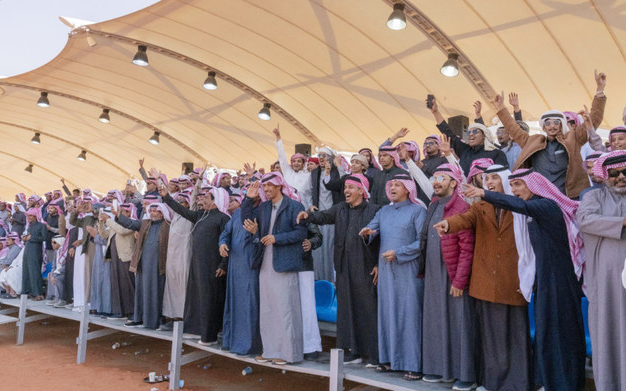
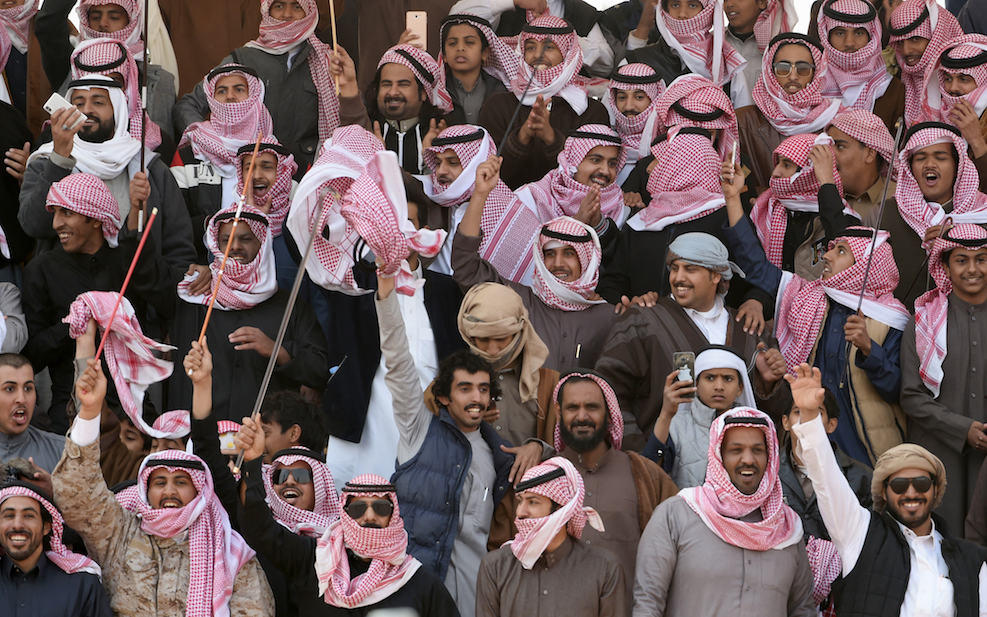
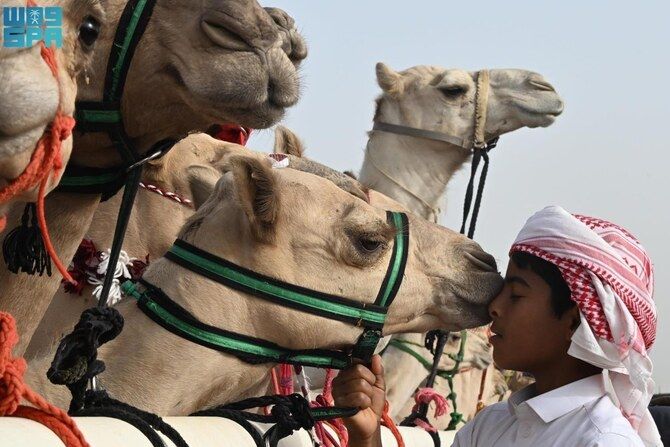
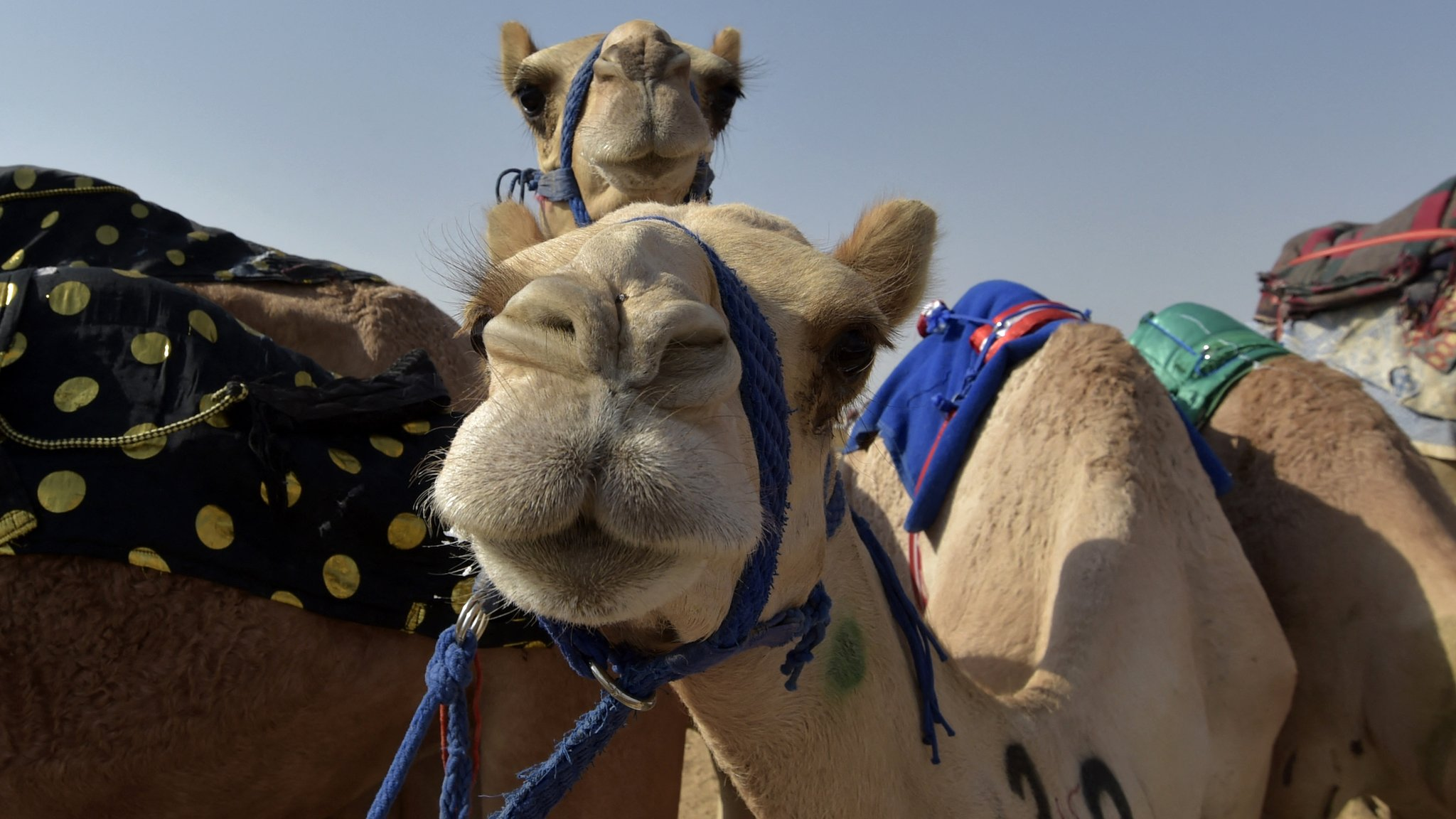
Camel owners enthusiastically participate in contests to parade their camels.
A Global Stage
The King’s festival is no longer a local secret. It now attracts participants from Iraq, Egypt, Yemen, Libya, Britain, and even India. In a recent international category, an Iraqi entry took the top prize, proving that the language of camel beauty is becoming a global dialect.
Final Reflection
In Saudi Arabia, the beauty of a camel is never only visual. It is tied to lineage, patience, care, and the dignity of desert tradition. That is why camel pageants continue to matter. They give public form to a relationship that has shaped life on this land for generations.
In the pageant arena, heritage does not stand still for admiration. It moves, breathes, and gathers new meaning with every season. And as long as that happens, the camel will remain far more than a symbol of the past. It will continue to walk at the center of a living culture.
Curious for More Cultural Gems Like This?
Subscribe to Saudi Cultures for weekly updates on events, heritage, and voices across the Kingdom.