In northern Saudi Arabia, clothing carried the memory of desert routes, tribal movement, and women’s craft. Here, Al-Shamal refers to the northern cultural region that includes areas such as Tabuk, AlUla, Al-Jawf, Sakaka, Arar, Turaif, Hail, and nearby northern desert communities. Its garments were practical enough for daily movement, yet rich with color, embroidery, and careful detail. The best-documented pieces show a clothing culture shaped by family life, climate, mobility, modesty, and regional pride.
What Made Northern Saudi Clothing Distinct?
Traditional clothing in Al-Shamal was shaped by desert life and movement. Long, loose cuts allowed comfort and mobility, while embroidery, beads, ribbons, and metallic threads added beauty and identity.
Northern women were especially known for their skill in coordinating fabrics, colors, and decorative details. Their clothing used silk, cotton, sheep wool, goat hair, and camel hair. Some fabrics were soft and fine, while others were stronger and better suited to outdoor life.
The north also carried visible links with tribes moving across wider desert routes. Some clothing forms, especially the maḥwathal, were known in northern areas such as Tabuk and AlUla and connected to tribal traditions extending toward Jordan.
Fabrics, Colors, and Decoration
Northern clothing was rarely plain. Decoration was part of the garment’s identity. Women used silk threads, cotton threads, wool threads, gold and silver metallic threads, ribbons, braids, and beads. These details appeared on dresses, outer garments, and head coverings. The result was clothing that combined function with visual richness.
The fabrics themselves were varied. Northern garments could be made from Yemeni silk, soft silk, pure black silk, handspun cotton, sheep wool, goat hair, and camel hair. Belts were often woven from cotton or wool, adding both structure and decoration to long garments.
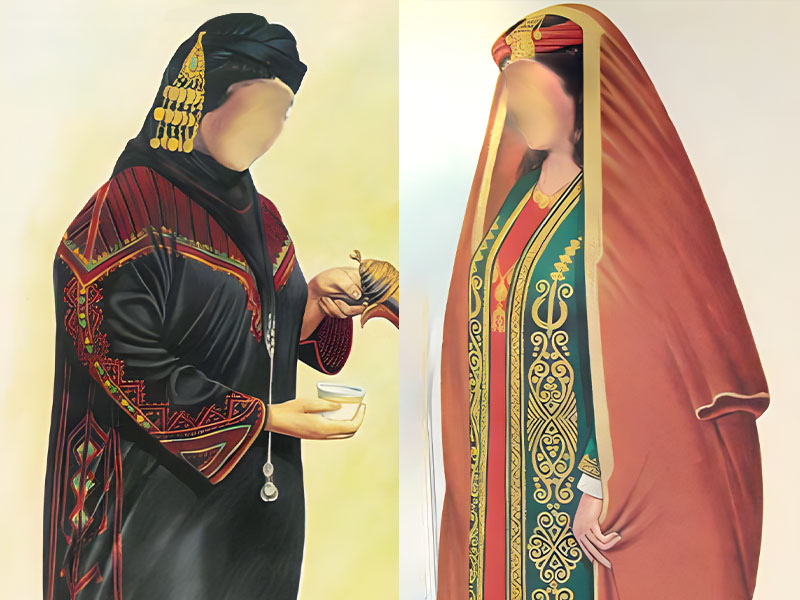
In northern Saudi Arabia, ornament was not limited to special occasions. Everyday garments could also include embroidery, beads, ribbons, and colored details.
Men’s Traditional Clothing in Al-Shamal
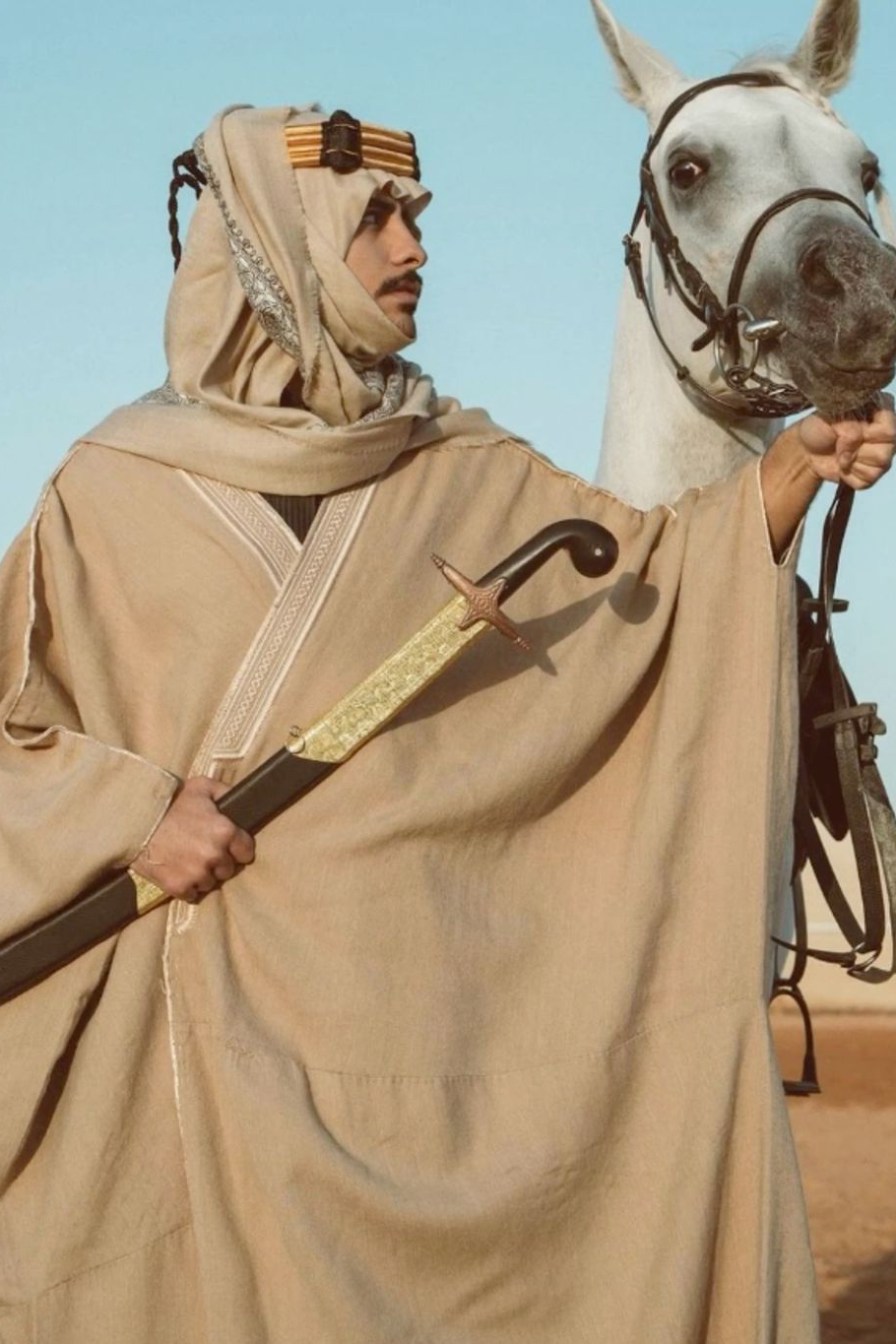
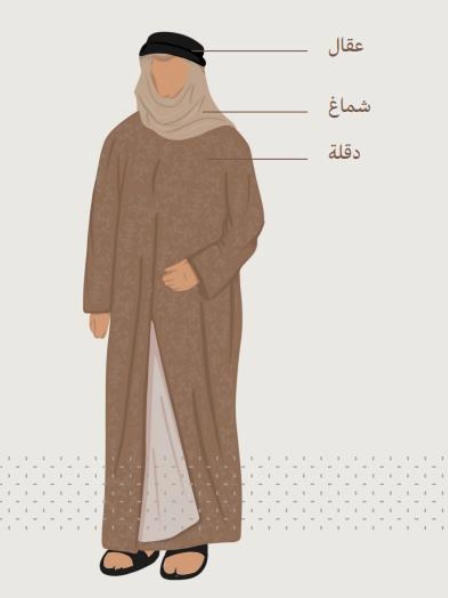
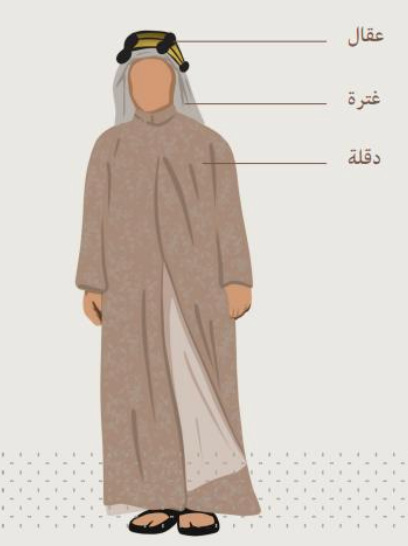
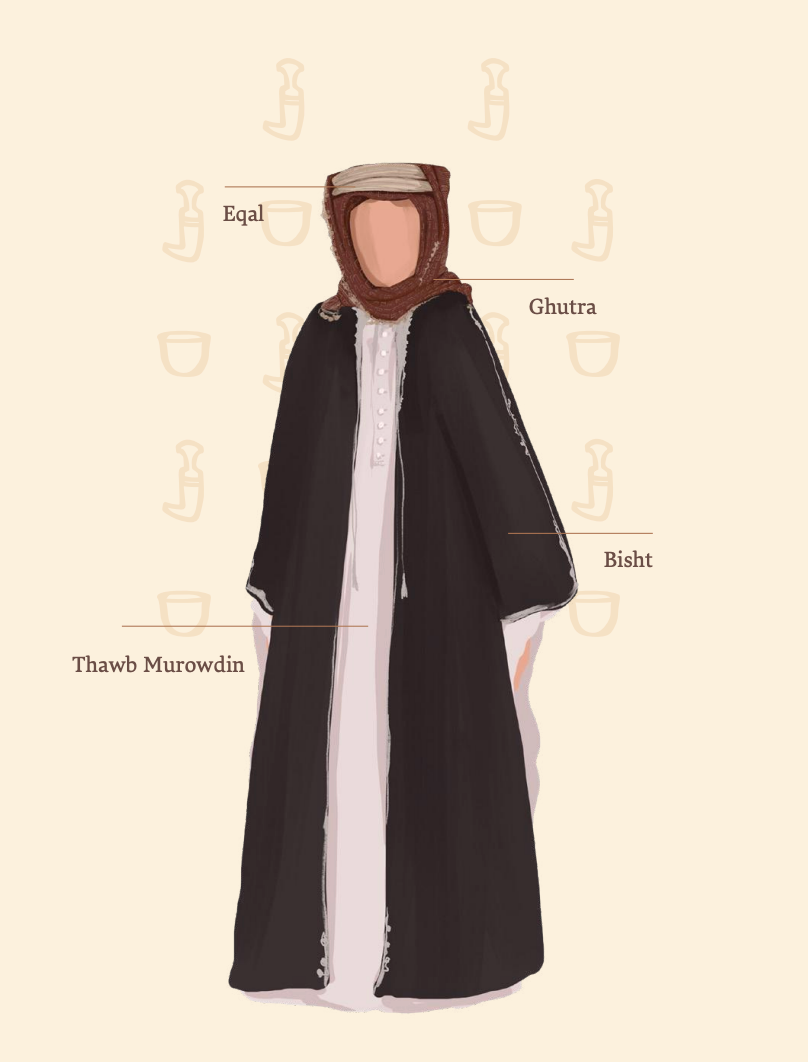
Men’s northern dress followed the wider Saudi tradition of layered clothing, while keeping a regional look through styling and use. A traditional northern male outfit could include the thobe murodan, worn as the main garment, with a bisht layered over it for formality, warmth, or public presence.
On the head, men wore the ghutra, secured with the agal. Together, the thobe murodan, bisht, ghutra, and iqal created a dignified northern outfit suited to climate, movement, and social occasion.
The thobe murodan is especially important because the murodan form is known for its long, extended sleeves. In Saudi clothing more broadly, this sleeve style appears in different regions and contexts, showing how one garment form could move across local traditions while keeping regional character.
Boys’ Clothing in the North
Boys’ clothing reflected adult male dress in smaller form. A boy could wear the thobe murodan with a bisht, along with a ghutra and iqal. This shows how clothing introduced boys to the visual language of men’s dress from an early age. Through these garments, boys were connected to family identity, public customs, and the northern style of formal appearance.
Al-Maḥwathal: The Signature Northern Women’s Dress
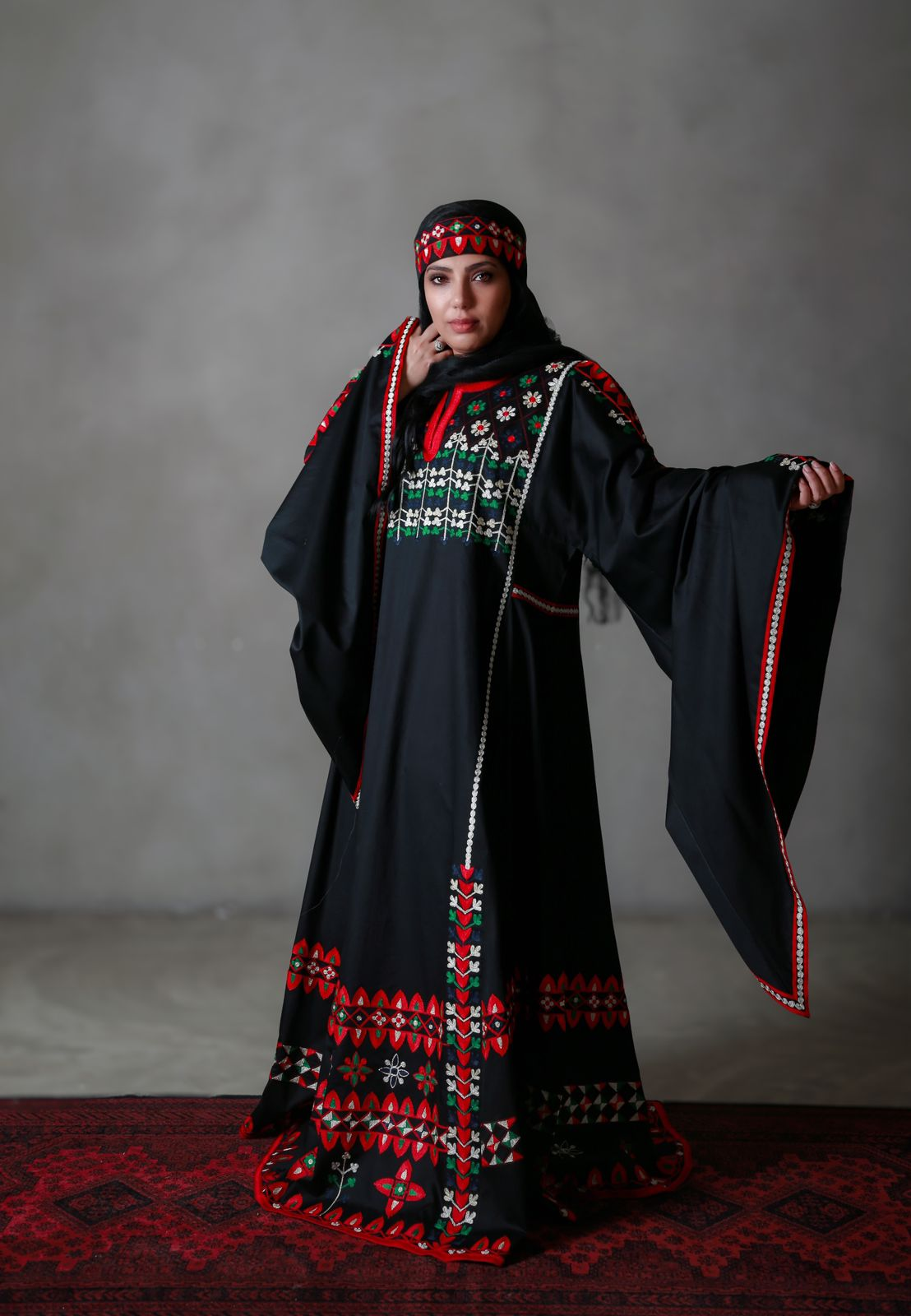
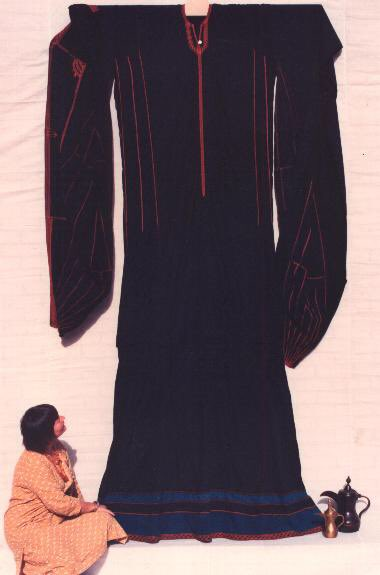
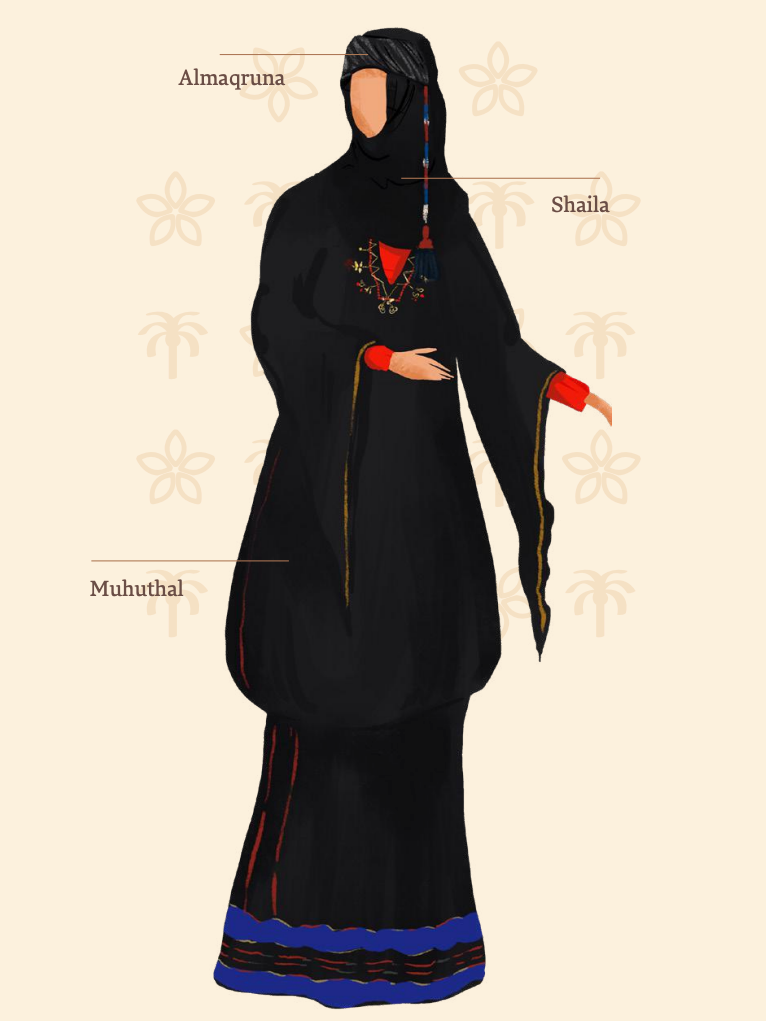
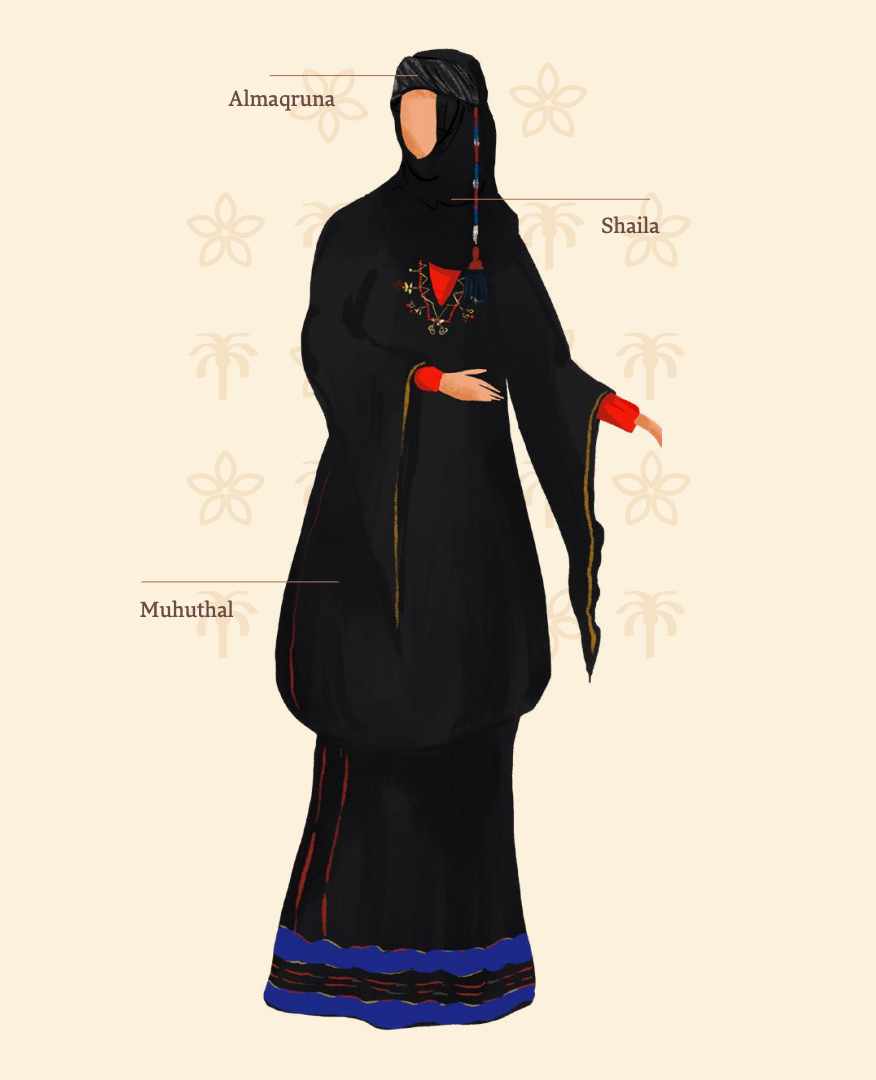
The maḥwathal was one of the most important garments worn by Bedouin women in northern Saudi Arabia. It was a long, wide dress, often remembered for bright colors and varied patterns. Its name is linked to al-ḥathl, meaning the folding of a garment. Women folded the long dress at the waist and tied it with a woven belt made from red or black cotton or wool threads. This gave the garment shape while keeping it practical for movement.
The maḥwathal reflects the intelligence of traditional dressmaking. A long garment could be adjusted to the body, secured for work, and still remain elegant through color, pattern, and embroidery.
Women’s Traditional Clothing in Al-Shamal
Northern women’s clothing differed between Bedouin communities and settled townswomen, but both traditions valued loose cuts, practical movement, and decorative detail. Garments were shaped by daily work, occasion, modesty, and the fabrics available in the region. Among Bedouin women, the maḥwathal was one of the most recognizable garments. Other important pieces included the sharsh, also called al-midraqa, a loose ankle-length garment with long sleeves. It was often worn over the maḥwathal during work, and over time some women began wearing it instead of the maḥwathal itself.
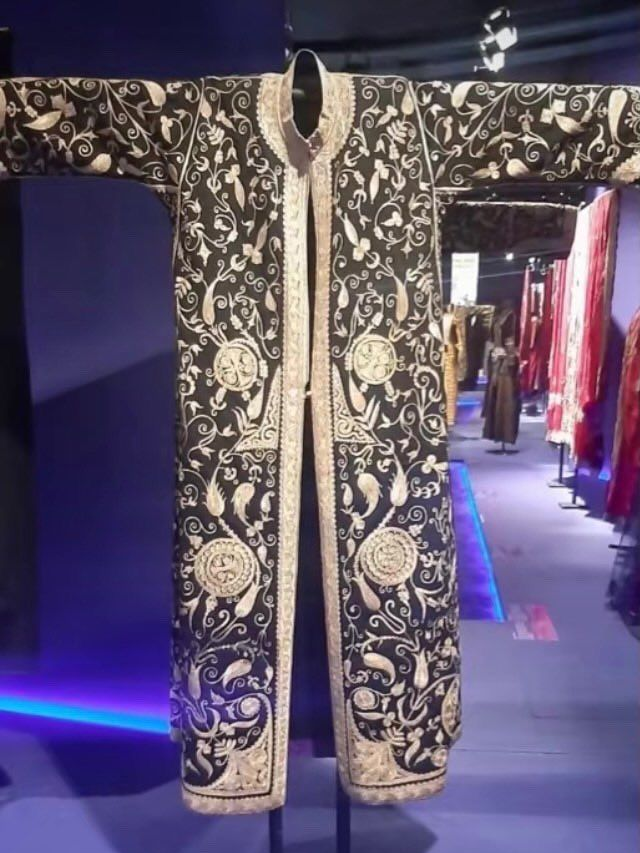
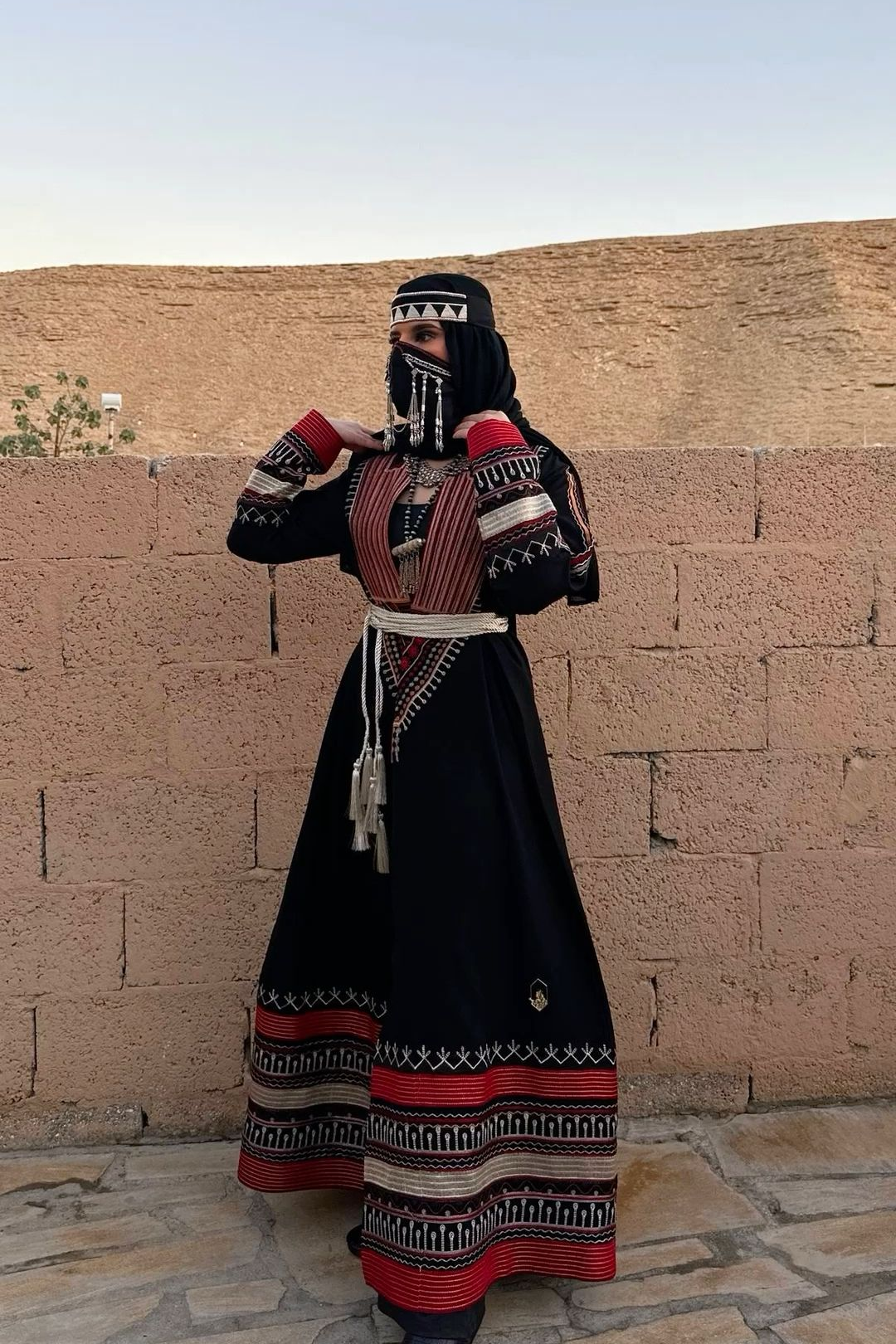
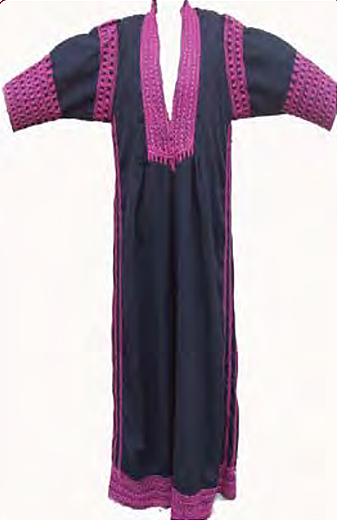
The zabun also appeared in Bedouin women’s dress. Decorated versions were worn for weddings and occasions, while simpler versions were used for work. The jubbah, also known as damirah, resembled the zabun but was shorter, usually reaching the hips or slightly below. For settled women in northern towns, the maqtaʿ was the main garment. It was wide and long, with a circular neckline and a vertical opening. The kirtah developed from the maqtaʿ and was distinguished by stitching around the waist. Women also wore the mufarraj over the maqtaʿ; it was very wide and had square-shaped sleeves.
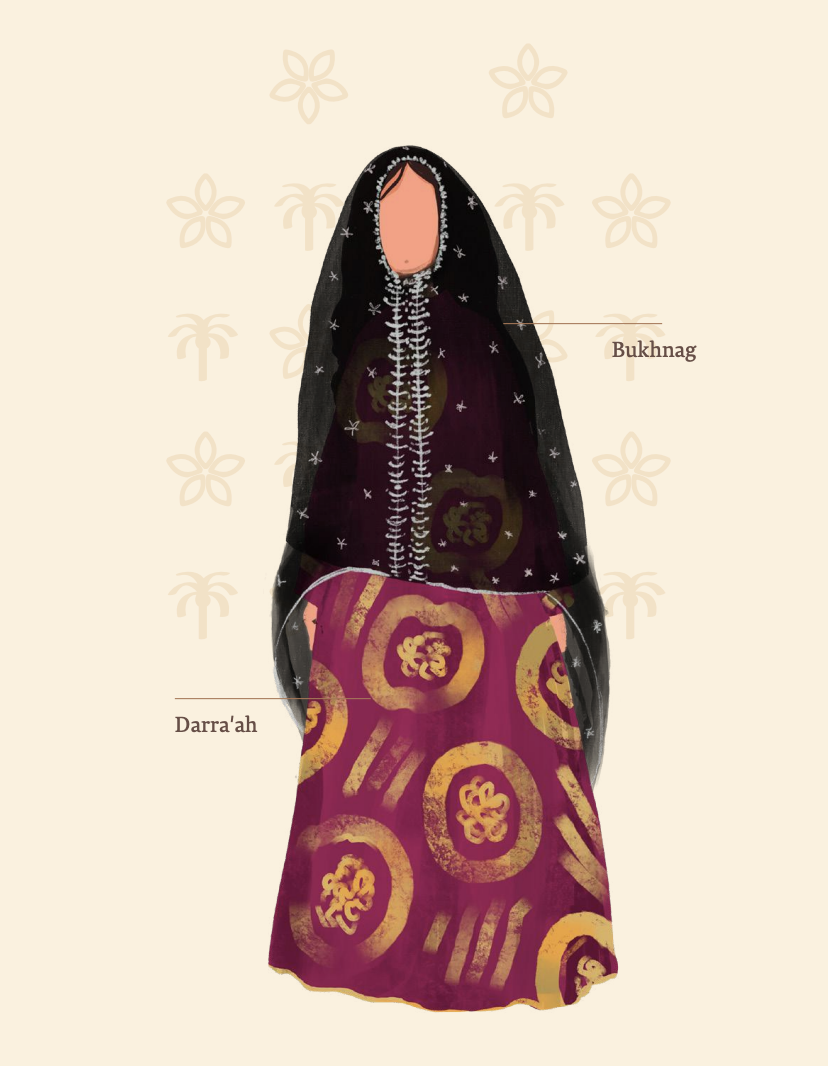
Another important garment was the murodan, also known as Abu Rudnayn. It was long, colorful, and decorated, with very long triangular sleeves that could hang near the ground. The sleeve ends were often tied together and lifted behind the neck. The daraʿah was also worn as a long, loose dress with wide sleeves, sometimes in colors such as orange or crimson.
Girl's Clothing in the North
Girls’ clothing had its own place within northern dress. A girl could wear the daraʿah with the bukhnag, a head covering associated with girls’ traditional clothing. Age could also be marked through color: young girls wore a red shilah, while adult women commonly wore versions made from black silk or light cotton.
Outdoor Clothing for Northern Women
When leaving the home, northern women wore outer garments that balanced modesty, simplicity, and elegance. The abayah al-muzawiyah was worn over the head and fell to the feet. It was usually made from wool, often in black or dark beige, with narrow sleeves covering the arms to the wrists.
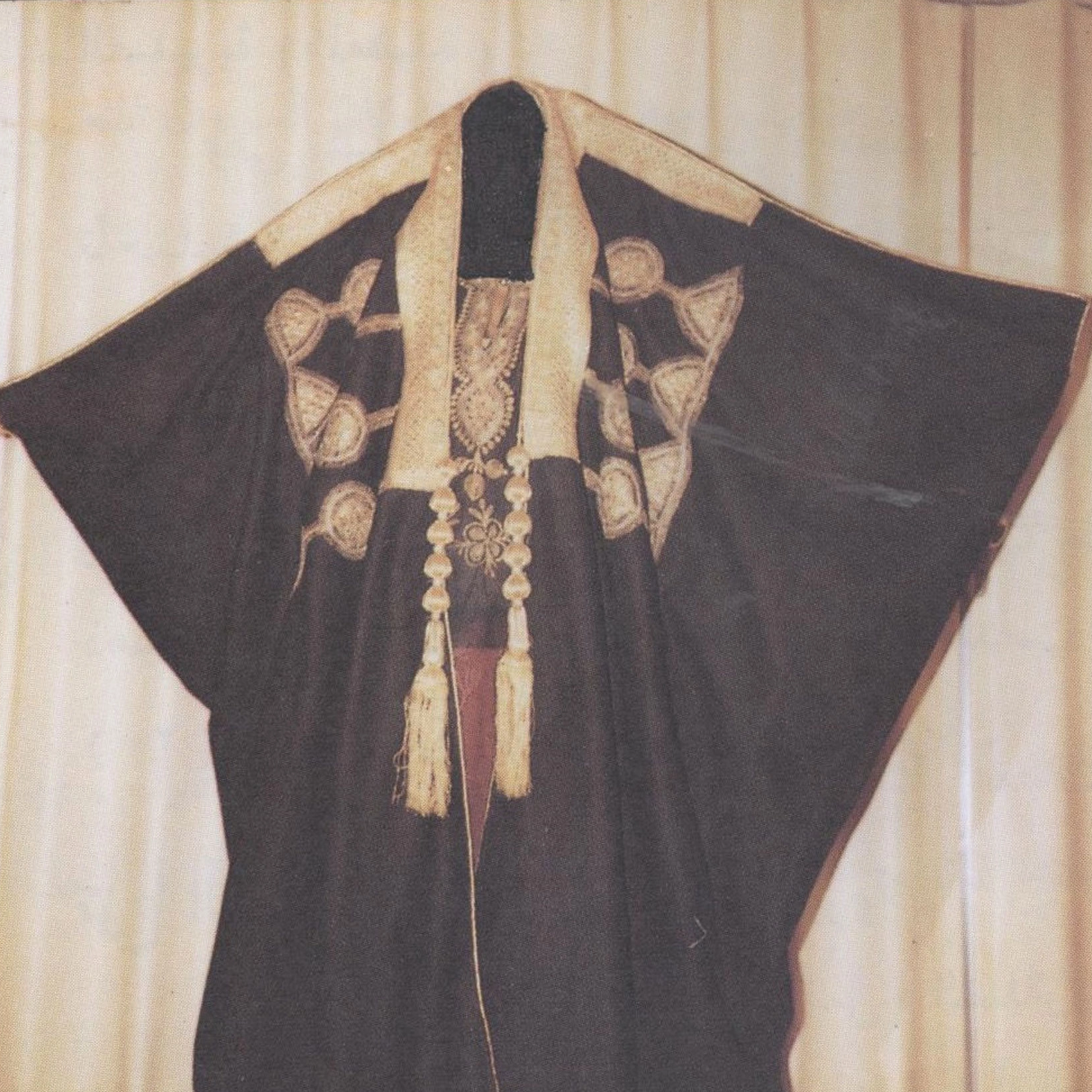
For bridal wear, the marshadah stood out as a special abayah made from soft wool and embroidered with gilded zari. Decorative round elements covered in zari threads hung on both sides of the front opening, giving it a ceremonial quality.
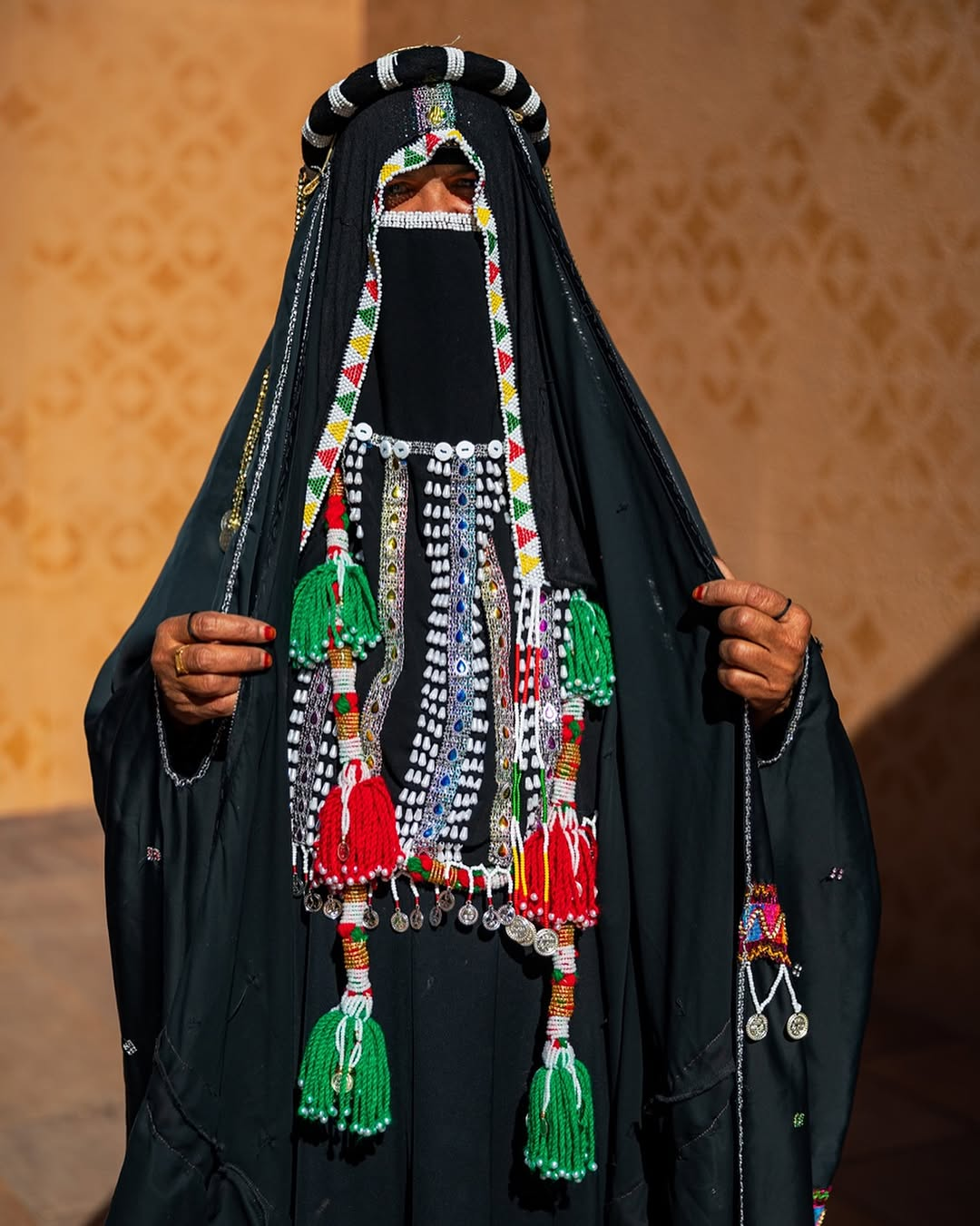
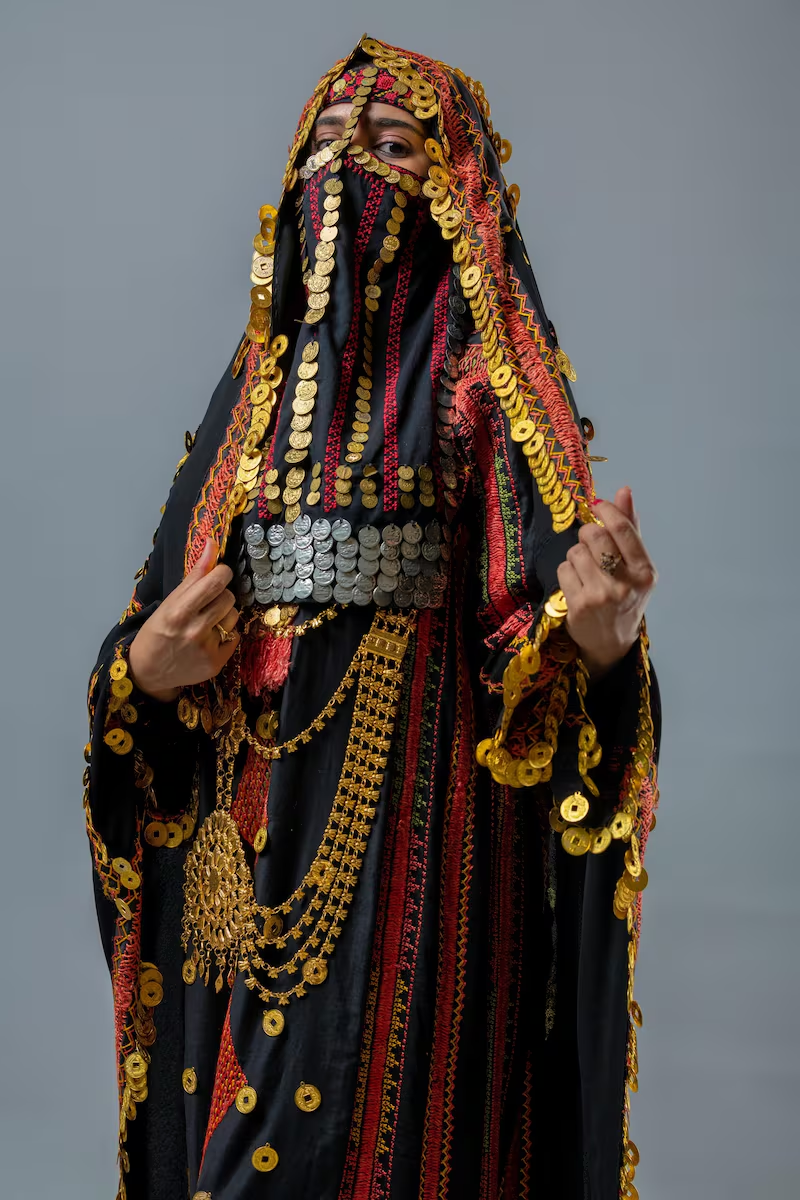
The marshadah was a bridal outer garment, showing how northern women’s public dress could combine modesty with celebration.
Northern Head Coverings
Head coverings were an important part of northern women’s dress. They completed the outfit and often carried their own decorative details.
Al-Shilah
The shilah was made from light cotton fabric or black silk. Young girls wore a red shilah, adding age and social meaning to color.
Al-Maqruna
The maqruna was a large black scarf. It was folded from the middle into a triangle and wrapped around the head.
Al-Shambar
The shambar was a long black-dyed head covering that could be more than three meters long. Red strips were sometimes left at the ends. It was tied with a folded scarf around the forehead and head, and it could be raised from the front to cover the chin. It was associated with wealthy women.
Al-ʿIsabah
The ʿisabah was a loosely woven cloth wrapped around the head. It added structure and helped secure the head covering.
Craft, Identity, and Movement
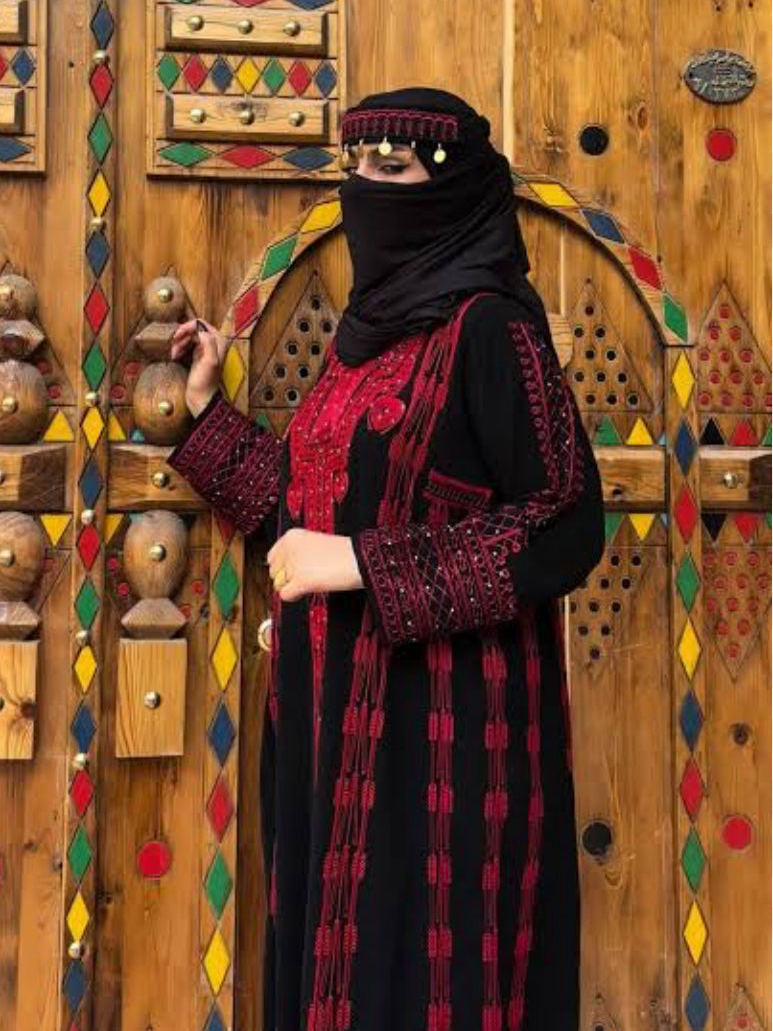
Northern clothing tells a story of movement and belonging. The maḥwathal, with its folded waist and woven belt, shows how clothing adapted to a mobile way of life. The decorated maqtaʿ, murodan, and daraʿah show how settled women developed their own clothing language. Men’s thobe murodan, bisht, ghutra, and iqal reflect dignity, layering, and continuity in northern male dress.
Children’s clothing completed this family picture. Boys wore smaller versions of men’s formal garments, while girls wore the daraʿah and bukhnag. In this way, clothing connected generations to the same visual heritage.
The north also reminds us that Saudi dress was never isolated within strict borders. Tribes, trade, travel, and family memory carried clothing styles across landscapes. Yet each region gave these garments its own character through names, colors, materials, and ways of wearing.
Northern Clothing Today
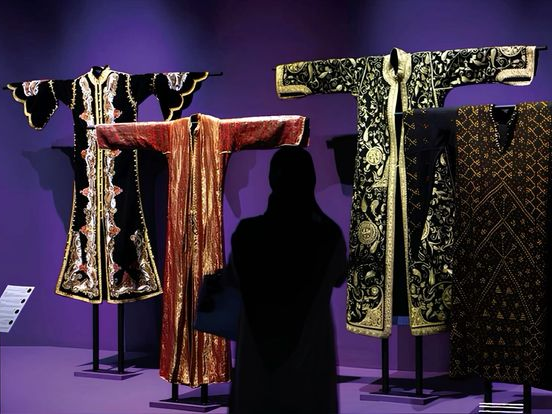
Today, traditional clothing from Al-Shamal is part of Saudi Arabia’s wider heritage revival. Garments such as the maḥwathal, marshadah, murodan, shambar, thobe murodan, bisht, and bukhnag help preserve the visual memory of northern communities. They also offer inspiration for designers, museums, cultural events, and national celebrations.
Modern fashion can borrow from these garments, but the original forms remain important. They show how northern families shaped fabric into identity, practicality, beauty, and pride.
A Living Heritage of the North
Traditional clothing in northern Saudi Arabia was made for life. It moved with women, men, and children through work, travel, ceremony, and family memory. Its folds, belts, sleeves, head coverings, and embroidery were not decorative afterthoughts. They were part of how people lived, adapted, and belonged.
In Al-Shamal, dress became a map of movement and meaning. Every garment carried the quiet strength of family heritage and the cultural depth of Saudi Arabia’s northern identity.
Disclaimer: This article draws on Saudipedia entries, the Saudi Traditional Fashion in the First Saudi State publication, official Kingdom dress guidelines and heritage craft documentation, and publicly available talks and research by Prof. Dr. Laila bint Saleh Al-Bassam, a Saudi scholar of traditional clothing and textile history known for her decades of field research documenting Saudi regional dress.