itselfThe Royal Institute of Traditional Arts is doing something quietly radical, turning what Saudi Arabia has always known into what it can build next.
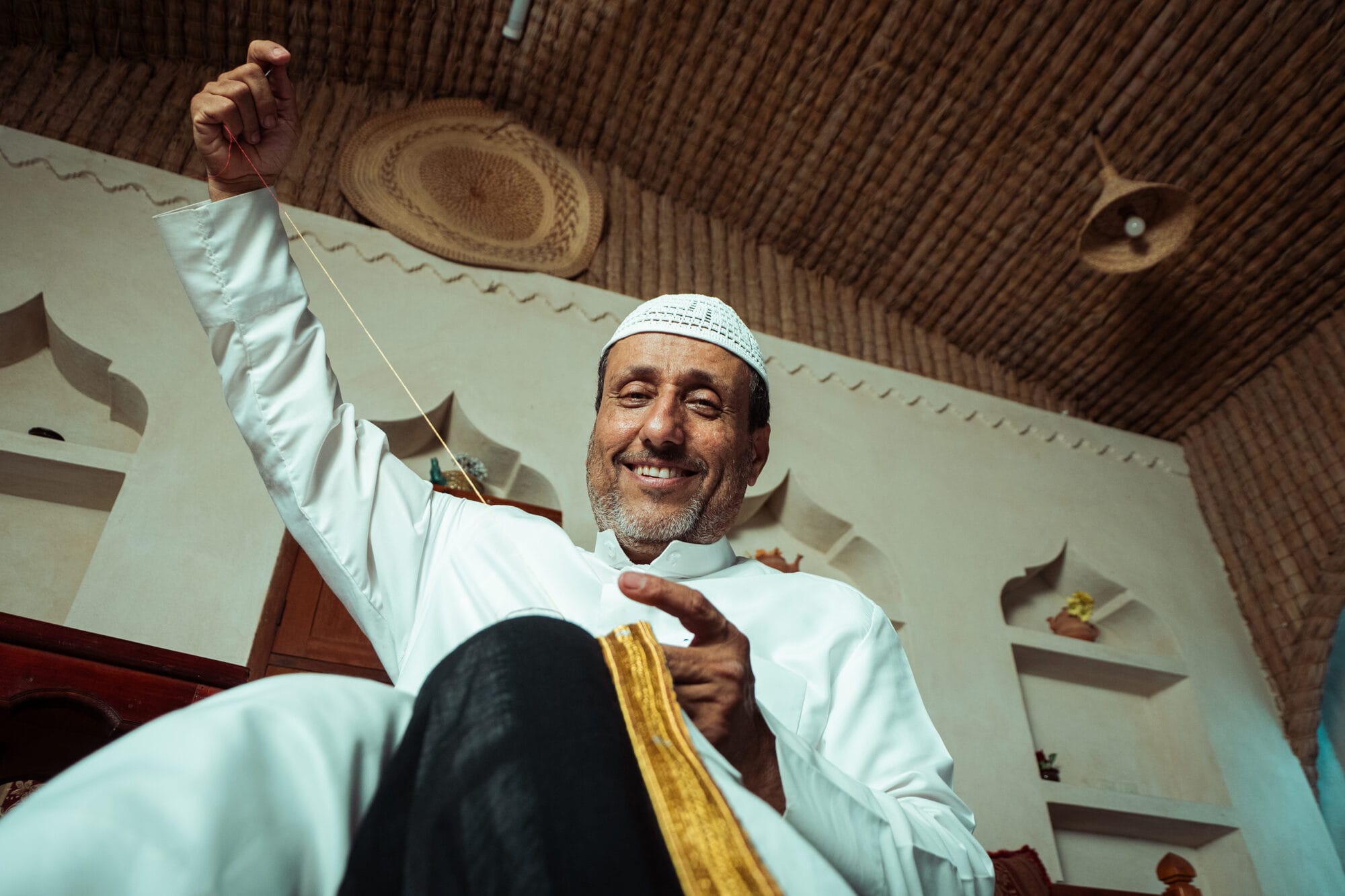
There is a man in Riyadh who grew up crawling on bishts before he could walk. Mohammed Al-Ameer did not choose his craft. It chose him — through the threads under his hands as a child, through the weight of fabric that carried meaning long before he understood what meaning was. Today, he is one of the Kingdom's foremost craftsmen in the art of Al-Bisht Al-Hasawi, the elaborately embroidered ceremonial cloak that has signalled dignity and status across the Arabian Peninsula for generations. He says: "Whoever wears it becomes another person... in dignity and in character."
He is also one of the artisans whose work was taken to London Craft Week, where Najdi door carvings and handwoven textiles stood in conversation with contemporary craft from across the world — a moment that would have been difficult to imagine five years ago.
What changed?
Part of the answer is Wrth (وِرث): the Royal Institute of Traditional Arts, headquartered in Riyadh near the King Abdulaziz Historical Center, with branches in Jeddah, Al Ahsa, and Al Qassim. Established in 2021 by a Council of Ministers resolution, Wrth is a non-profit, financially and administratively independent institution that sits within the Ministry of Culture's broader cultural development agenda and Vision 2030's Quality of Life Program. It is the Kingdom's most deliberate institutional answer to one of the harder questions of this era: how do you keep a living tradition alive when the world it belonged to is being remade at speed?
The Word Itself Is a Statement
The institute’s name is not incidental.
Wrth — وِرث — means heritage in Arabic. But not the static kind. The word describes the act of inheritance: the movement of something from one person to another, from one generation to the next. It implies an obligation. You do not merely receive. You carry.
In February 2024, the institution introduced its visual identity under this name, a rebrand that drew directly on traditional Saudi artistic elements — most notably Arabic calligraphy, which forms the architectural core of the logo. The new identity was a deliberate signal. This is not an archive. It is not a display case. It is an institution that treats traditional arts as living, transmissible, and with a future as well as a past.
The tagline that emerged from that repositioning captures the philosophy precisely: heritage as the power of legacy; the passing of skills and knowledge from generation to generation.
What Wrth Actually Does
The institute’s work operates across four distinct educational tracks.
Higher Education offers academic programs, diplomas, and in collaboration with leading international universities and academies, master's degrees in disciplines that sit at the intersection of traditional knowledge and contemporary application. In 2025, Wrth opened registration for six new programs including master's degrees in traditional furniture design, performance costume design, and digital heritage and museum curation, as well as a higher diploma in traditional product development and an intermediate diploma in choreography. These programs run for one to two academic years, are delivered in person at the Riyadh campus, and carry no tuition fees.
Specialized and Short Courses offer accessible entry points into traditional disciplines. The institute's catalogue spans Diwani calligraphy, traditional pottery arts, traditional Saudi fashion, embroidery on leather, bookbinding, and training programs in performing arts. These are not introductory hobby classes. They are structured knowledge transfers, often led by expert practitioners.
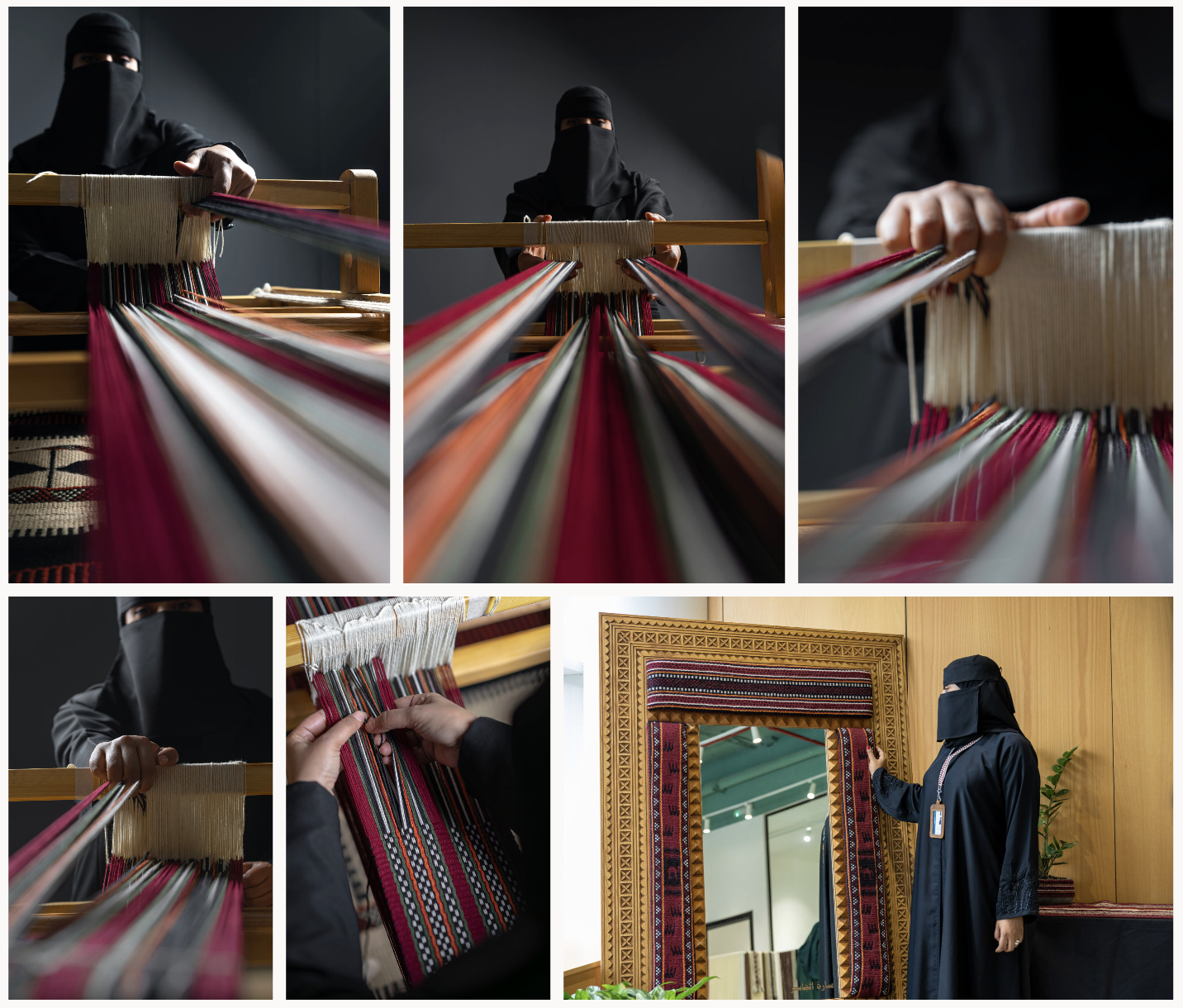
Apprenticeship Programs are perhaps the most structurally important stream. These are the initiatives where the institute functions most like the traditional knowledge systems it is trying to preserve — master and apprentice, hands-to-hands, technique embedded in a relationship. Current programs include the Traditional Weaving (Al Sadu) Apprenticeship, Stone Masonry, Al-Bisht Al-Hasawi, Mud Building, and Najdi Door Construction. Each apprenticeship is conducted under the supervision of specialists who practice these crafts in their authentic form. The goal is not demonstration. The goal is transfer.
Community Programs bring Wrth's work into public life — events, exhibitions, storytelling, and public engagement that position traditional arts as part of everyday Saudi cultural experience rather than something encountered only in institutional settings.
Since opening in 2021, the institute has delivered 340 educational and training programs across these tracks, with 353 trainers working under the supervision of 164 expert craftsmen. More than 3,600 individuals from across the Kingdom have participated.
The Breadth of What Is Being Preserved
The disciplines Wrth works across are wide, and deliberately so. Saudi traditional arts do not belong to a single region or tradition. They are plural, geographically distributed, and tied to distinct communities, climates, and ways of life.
The institute's subject areas include weaving (Al Sadu), metalwork, building, pottery, woodwork, stonework, calligraphy, bookbinding, embroidery, textiles, and performing arts — a range that reflects the Kingdom's cultural geography from the weaving traditions of the Eastern Province to the architectural techniques of Najd, from the musical instruments of the coastal Hejaz to the jewellery forms of the south.
Some of these traditions were genuinely at risk. Mud building — the traditional earthen architecture that shaped the built form of Najd for centuries — requires specialist knowledge that was becoming rare as modern construction materials displaced it entirely. Wrth's apprenticeship in mud building, and its investment in training local cadres to inventory, document, and digitally archive cultural heritage, are among its most urgent preservation efforts. An artisan named Abdullah Al-Saeed, who transformed a childhood love for clay into mastery of authentic earth building, went on to contribute to architectural projects and lead teams at Wrth Camp.
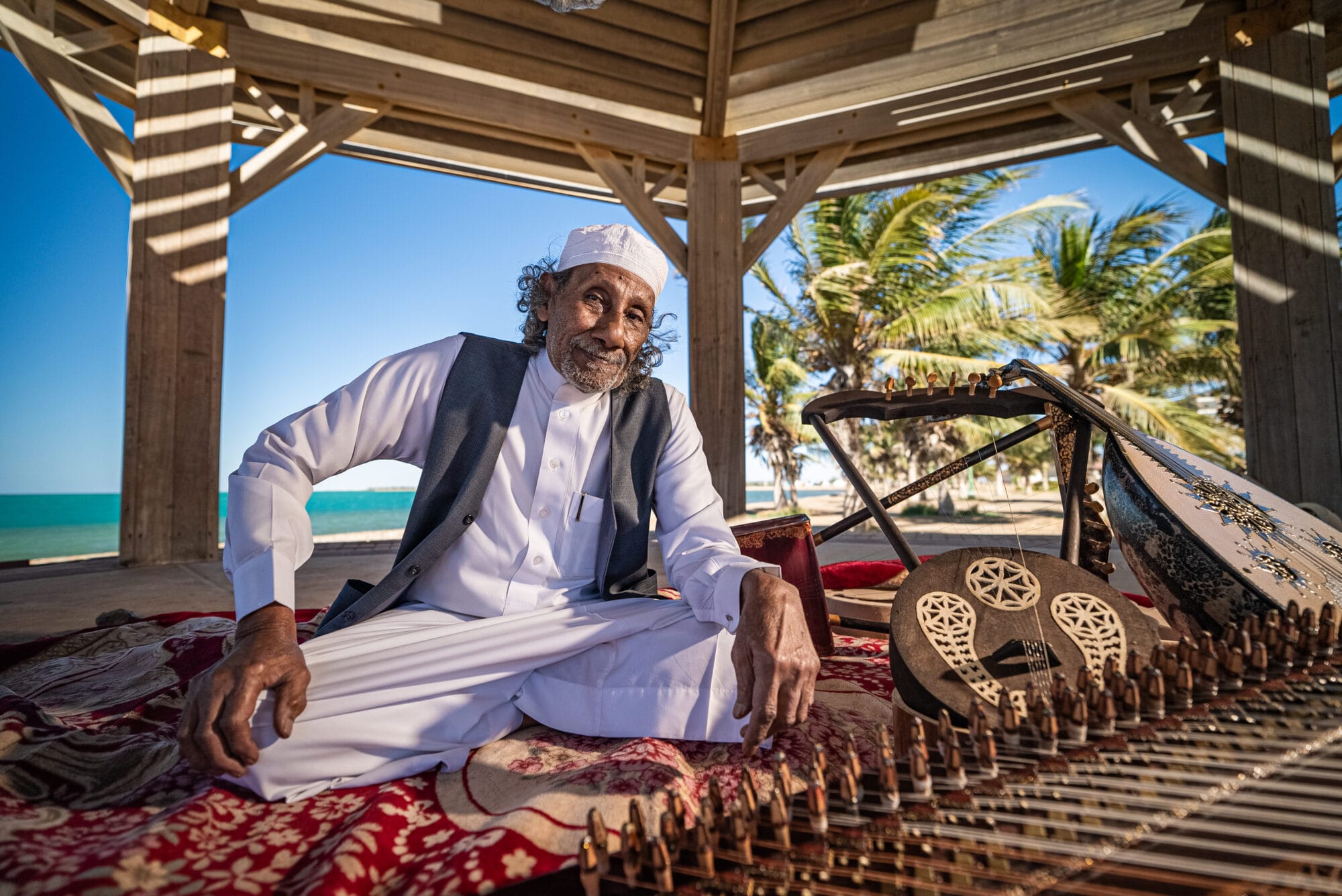
The story of Salem Al-Sayed moves in a similar register. Salem does not perform music. He builds the instruments that carry it. The Qanun, the Oud, the Simsimiyya — instruments he brings from wood, each carrying the memory of the sea communities where they once provided the sound of human company on long nights away from shore. He says his craft is not just about building instruments, but about keeping heritage alive through a note heard, a form seen, a message passed down.
These are not anecdotes. They are the mechanism by which traditional knowledge survives.
Beyond Preservation: The Economic Argument
Wrth’s approach is not simply conservationist. It is also an economic argument.
The institute operates a Wrth Store, business incubators and accelerators, and business consultation services for artisans — infrastructure that treats traditional crafts not only as cultural assets but as viable enterprises. Its work explicitly positions traditional arts as a sustainable cultural and economic resource, and the programs Wrth offers are designed to produce graduates capable of turning their disciplines into livelihoods.
This is in direct alignment with the Vision 2030 framework, which recognizes culture not only as a dimension of national identity but as a component of economic diversification. The Year of Handicrafts 2025 — of which Wrth's new academic programs are a direct expression — signals that this ambition has government weight behind it.
The international dimension of this strategy is visible in Wrth's partnerships. As of 2022, the institute had established 18 local and 9 international institutional collaborations. In 2024, more than 140 Saudi artisans participated in Artigiano in Fiera in Milan. In 2025, Wrth joined Saudi Cultural Week at Expo 2025 Osaka — where, in a remarkable moment of cultural exchange, Saudi artisan Salman Al-Hamad and Japanese artisan Yuho Ohkota collaborated live, combining Al-Ahsa Bisht embroidery with a traditional Japanese kimono. Seventy years of diplomatic relations distilled into two craftspeople at a shared table, their hands making something neither tradition had made before.
This is the logic Wrth is pursuing: traditional arts as a vehicle for cultural diplomacy, for industry, for identity, and for the kind of soft power that no press release can manufacture.
The Cumulus Question
In June 2022, Wrth became the first Saudi institution to join the Cumulus Association, the global network connecting design and arts education institutions across more than 350 member organizations.
This is a significant move. Cumulus is not a symbolic membership. It positions Wrth within a global conversation about arts education and cultural identity, and it creates the infrastructure for collaborative research, international student exchange, and faculty partnerships that purely domestic institutions cannot access.
That Wrth pursued this affiliation in its first year of operation signals something about the institution's ambitions. It is not building a local archive. It is building a globally connected centre of excellence.
The Deeper Argument
It is worth stepping back from the programs and the numbers to ask what Wrth is ultimately asserting.
Saudi traditional arts date back to prehistory. They vary significantly across the Kingdom's diverse regions. They were once woven into the fabric of daily life — not as art objects but as the material culture of ordinary existence. The bisht was not worn for display. The Sadu weaving was not made for galleries. The mud house was not built for heritage tourism.
These things existed because they were useful, beautiful, and expressive of who particular communities were in particular places.
Modernity — global modernity, not just Saudi modernity — put many of these traditions at risk. Not through malice but through displacement: new materials, new forms, new economies, new aspirations. The traditional construction technique did not disappear because anyone decided to end it. It became inaccessible because the people who knew it grew older, and the conditions that made it self-perpetuating no longer existed.
Wrth's response is to create new conditions. Not to freeze tradition in amber, but to give it enough institutional support that it can continue to evolve through living practitioners rather than being consigned to documentation alone. The institute's research arm — which includes a Wrth Library and documentation and preservation programs — provides the archival dimension. But the educational programs, the apprenticeships, and the commercial infrastructure provide the thing archives cannot: the possibility that this knowledge will continue to live in hands, not just in records.
This is a meaningful distinction. A culture that can only remember its traditional arts has already partially lost them. A culture that still practises them — that has trained people who can teach others and make things — has preserved something qualitatively different.
A Living Cultural Legacy
Mohammed Al-Ameer makes each bisht as if it were the first. Not because the technique changes, but because the attention does not. Every stitch is calculated. Every piece carries a part of itself.
Salem Al-Sayed builds instruments so the music can continue, so the sound of the sea does not fall silent in the cities it once accompanied.
Somewhere in Al Ahsa, an apprentice is learning to spin and dye and weave Al Sadu under the guidance of a craftsperson who learned from another craftsperson, in a chain that runs back beyond the reach of institutional records.
Wrth does not make these things happen. The people do. What Wrth makes possible is the continuation of the conditions — educational, economic, social, and institutional — that allow the transfer to keep occurring.
In that sense, the institute is not preserving Saudi heritage. It is ensuring that Saudi heritage continues to be made.
That is a harder thing to do. And a more important one.
The Royal Institute of Traditional Arts (Wrth) is headquartered in Riyadh with branches in Jeddah, Al Ahsa, and Al Qassim. Applications for programs are open at wrth.edu.sa