In Hejaz, clothing carried the movement of mountains, cities, tribes, markets, and sacred routes. Across Makkah, Madinah, Jeddah, Taif, and the tribal lands of western Arabia, traditional dress became a rich language of fabric, color, beadwork, and layered identity. Some garments spoke of urban refinement. Others carried the marks of tribal belonging, mountain life, and women’s handcraft. Together, they show Hejaz as one of Saudi Arabia’s most visually diverse cultural regions.
What Made Hejazi Clothing Distinct?
Hejaz has always been a meeting place. Its clothing reflected city life, tribal identity, trade connections, pilgrimage routes, and the region’s varied landscape. Coastal towns, mountain areas, and inland communities each shaped dress in different ways.
In many parts of western Arabia, the basic garment form could be shared with other Saudi regions, but the decoration made it distinctly Hejazi. Embroidery, beadwork, head coverings, silver ornaments, appliqué, indigo dyeing, and layered fabrics gave the region’s clothing its recognizable character. Traditional clothing across Saudi Arabia was also shaped by climate, movement, available materials, and local craft knowledge.
Urban Hejaz also benefited from long-standing textile trade. Jeddah’s merchants dealt in Indian cashmere, fine muslin, Turkish and French textiles, Indonesian silk and satin, indigo-dyed Egyptian cotton, and wool. This access to fine fabrics helped shape the refined style of townswomen in Makkah, Jeddah, Madinah, and other urban centers of the west.
Urban Clothing in Makkah and Jeddah
Urban Hejazi dress in cities such as Makkah and Jeddah had its own elegance. Women’s garments often followed familiar Saudi clothing structures, but the fabrics, finishing, and head coverings reflected western urban taste.
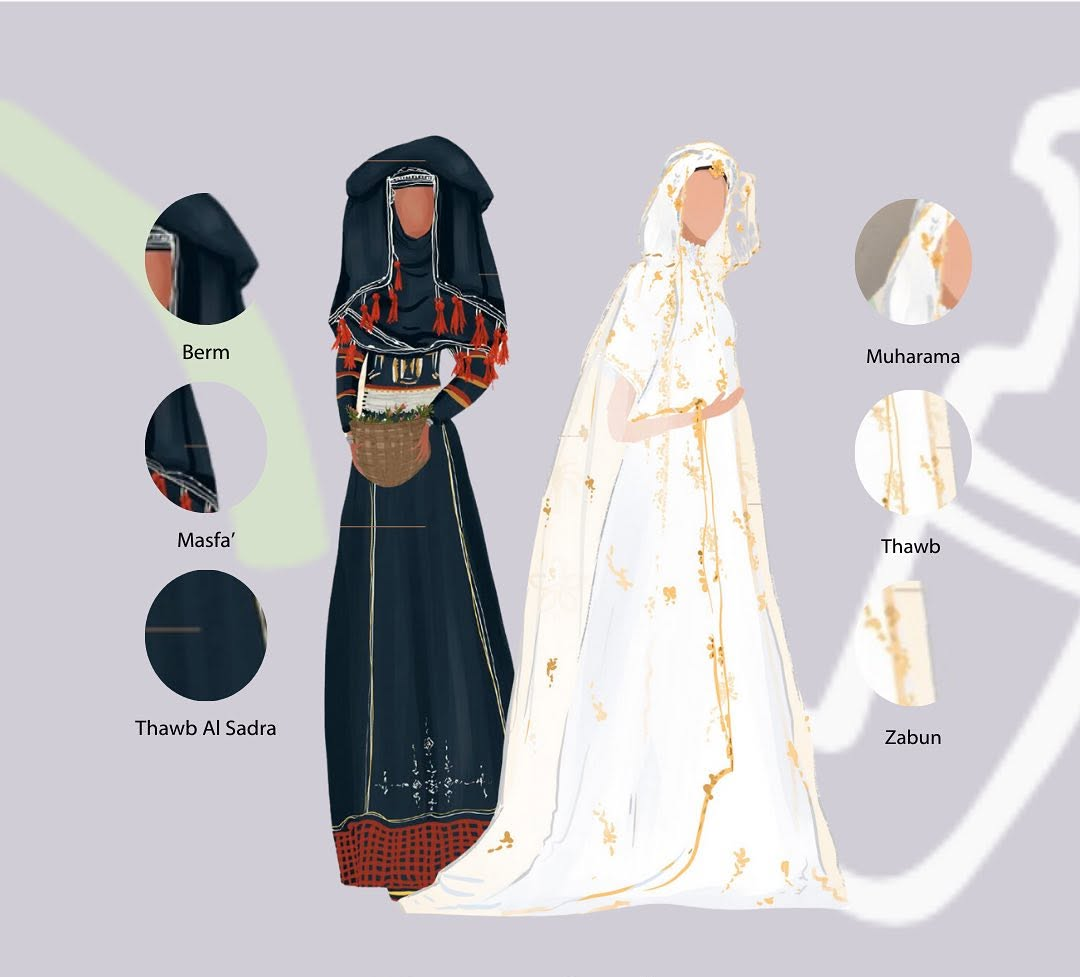
Among urban women, head coverings could include:
- Mihramah: The base layer of the headgear. It is typically a rectangular piece of fabric worn under the other layers, draped over the head and chest to cover the hair and neck.
- Shambar: Worn over the Mihramah, this is a triangular piece or folded scarf that frames the face and secures the head covering.
- Mudawwarah: The final outer layer. It is a square piece or veil draped over the top of the head and shoulders.
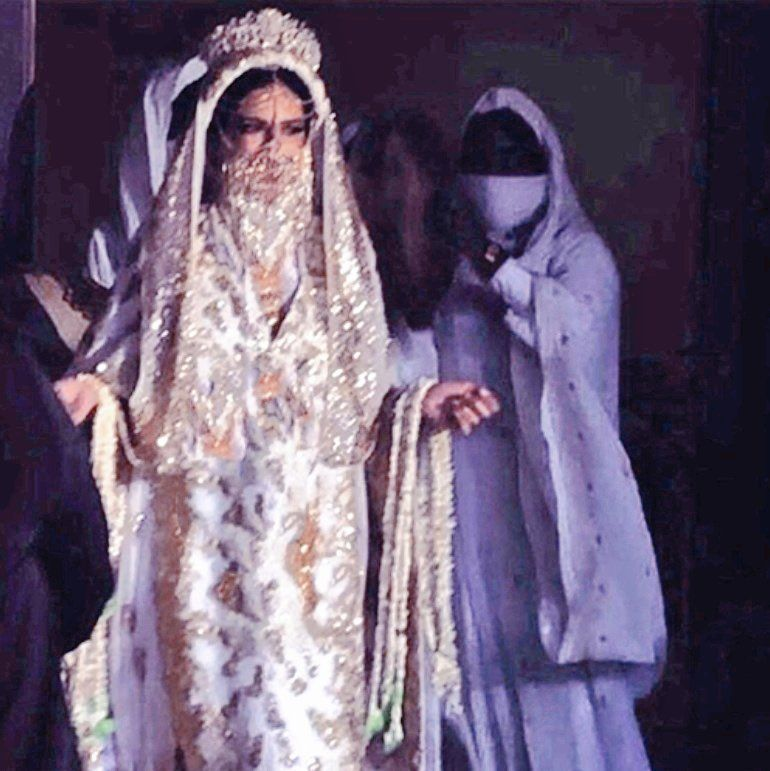
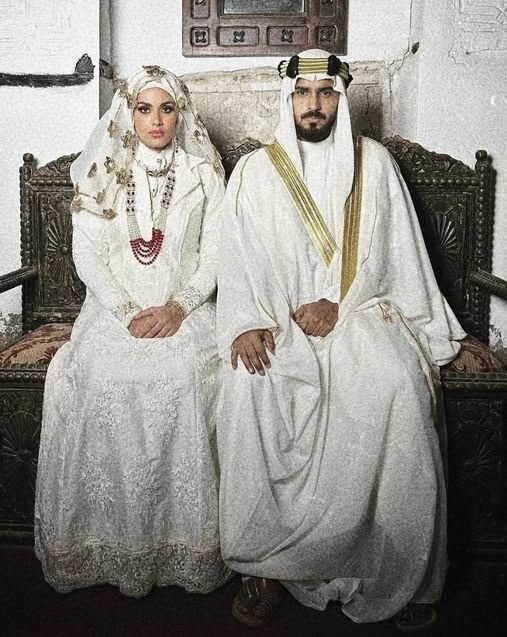
This traditional setup was heavily favored in cities like Makkah and Madinah. For special occasions and weddings, the fabric was typically made of fine muslin, silk, or lace and highly embellished with diamond-studded brooches and gold ornaments.
Tribal Clothing in Hejaz
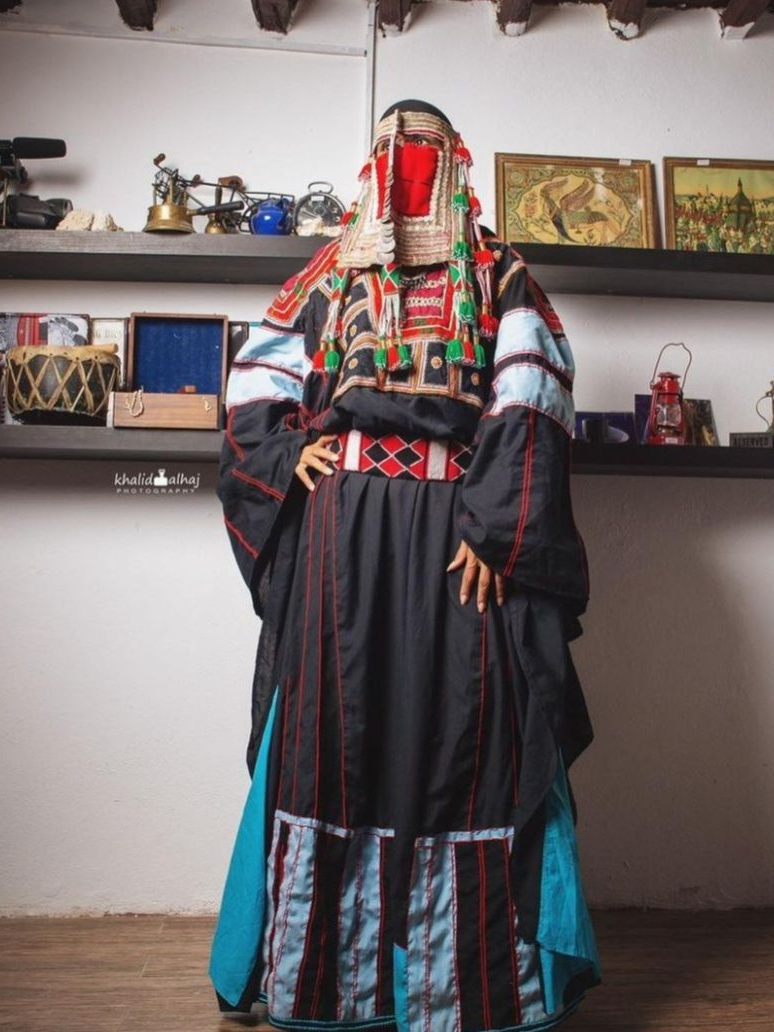
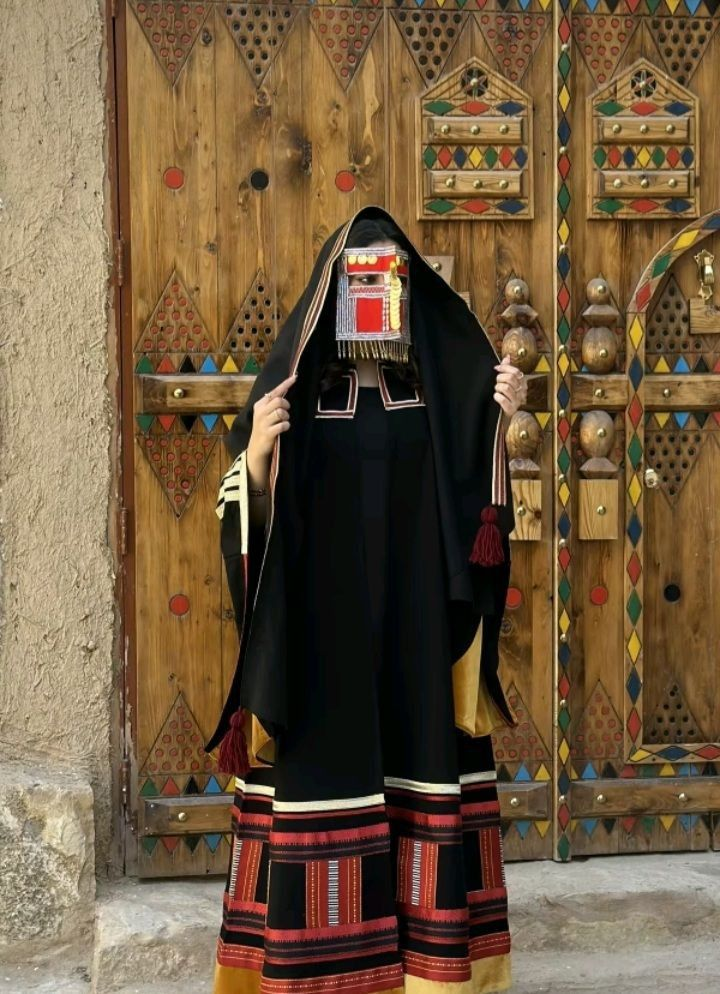
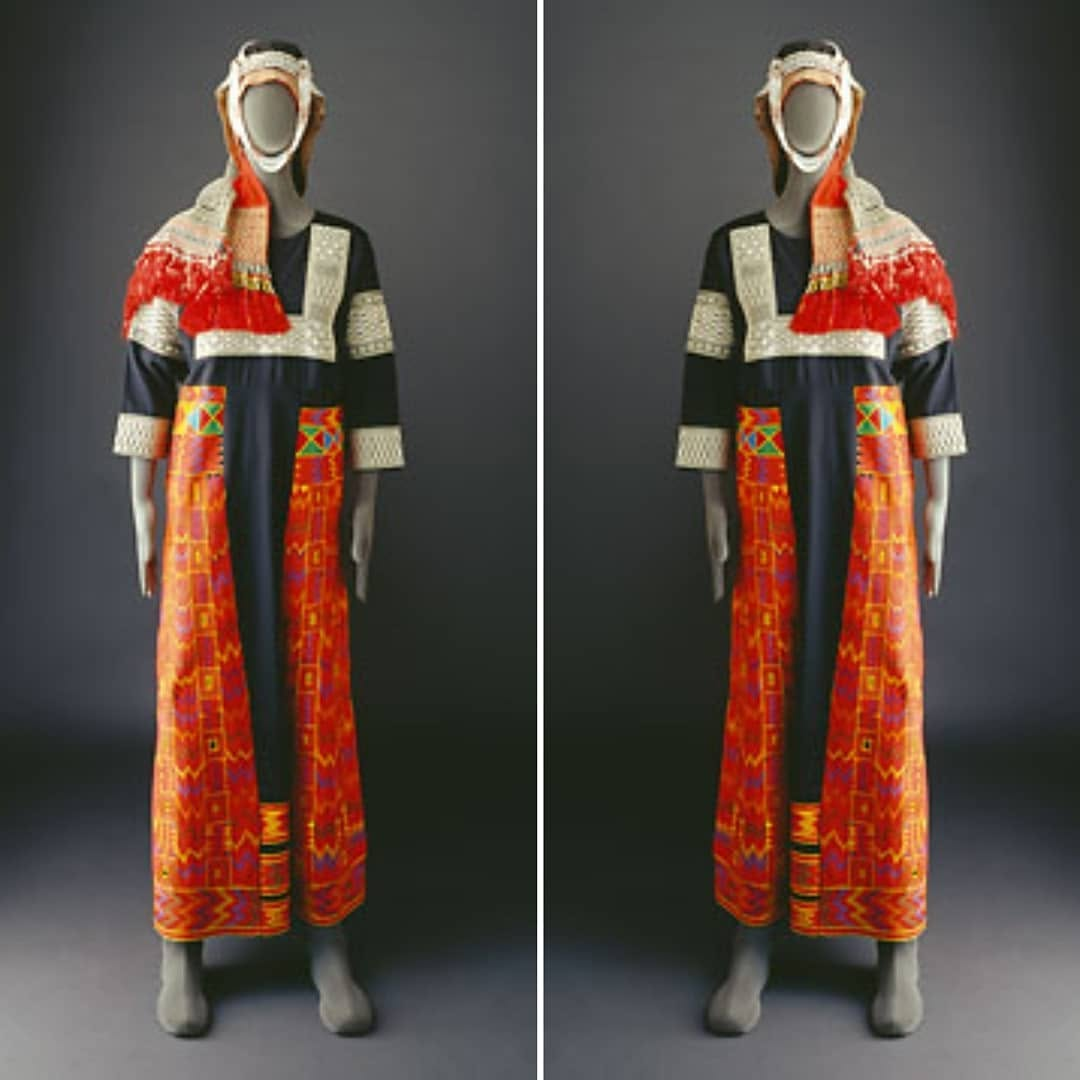
Tribal clothing in Hejaz was especially diverse. Even neighboring tribes could have different clothing styles, colors, embroidery patterns, and head coverings. A woman’s dress could indicate her tribal belonging, not only her region. Groups and areas connected with distinctive western-region garments include Huthayl, Bani Saad, Bani Malik, Harb, Sulaym, Juhadilah, Balharith, and Shalawi. Each had its own visual identity through garment shape, decoration, color, and headwear.
This makes Hejazi clothing especially important for understanding Saudi regional identity. In the west, clothing was not only “Hijazi” in a general sense. It could be highly local, sometimes tied to a tribe, a valley, or a mountain community.
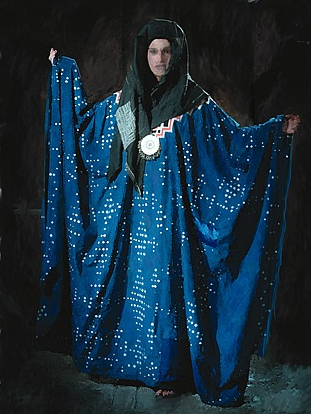
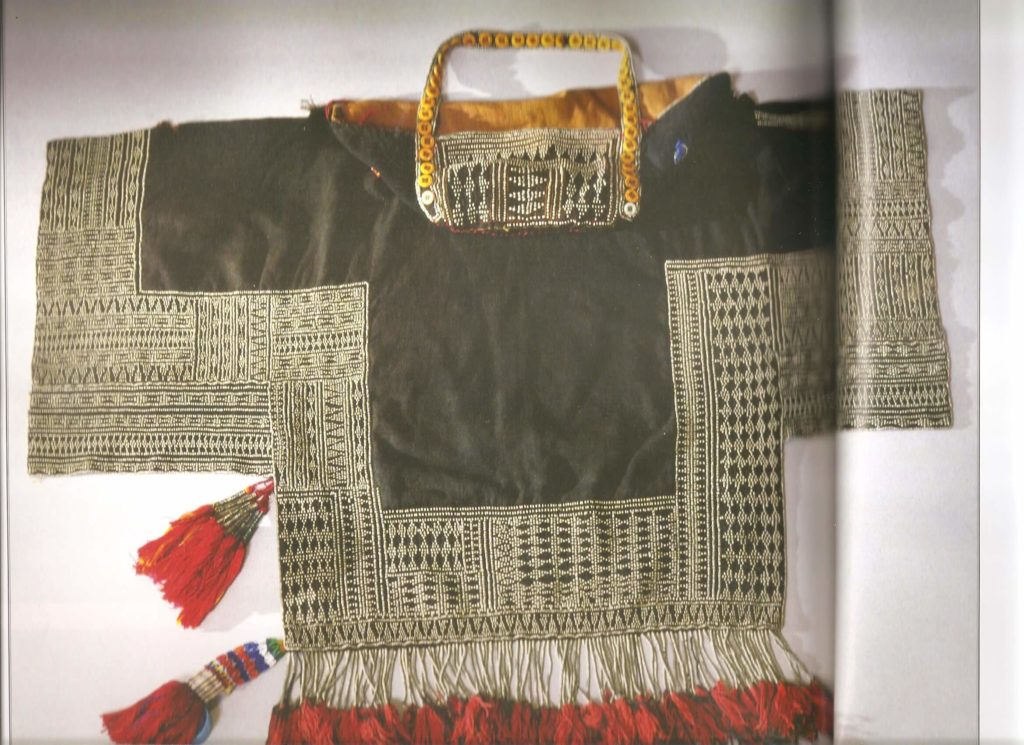
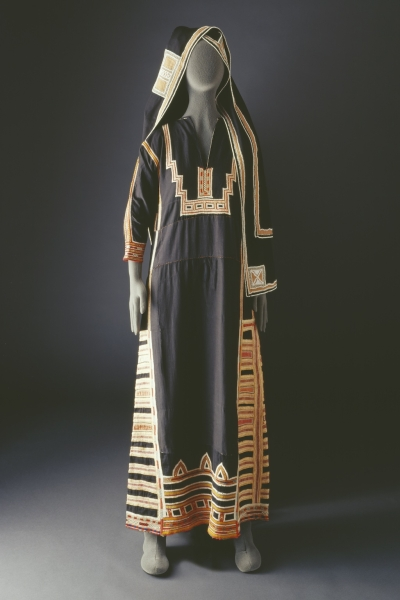
In parts of Hejaz, women’s clothing could be so distinctive that the wearer’s tribe or community could be recognized through the dress, head covering, or decoration style.
Women’s Head Coverings in Hejaz
Hejazi women’s head coverings were among the most layered and expressive elements of the region’s dress. In tribal communities, women could wear several pieces together, with each layer adding structure, protection, and beauty. Important headwear terms include:
- Qarqush — a head covering used in some tribal styles.
- Masfaʿ — another head covering layer, often worn with other pieces.
- Qubaʿ — a cap-like or structured head piece, depending on local style.
- Bani Sulaym colored burqa — a richly decorated face covering associated with Bani Sulaym.
- Women’s agal — used in some western tribal styles to secure the head covering or abayah.
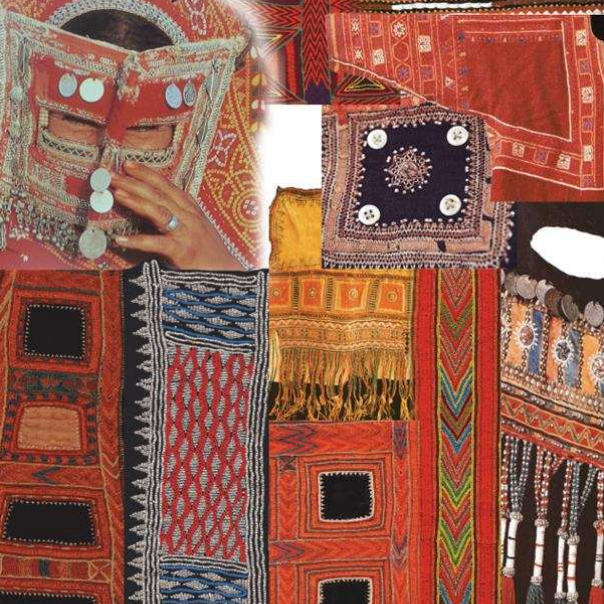
Some head coverings included embroidery, beadwork, silver ornaments, and multiple fabric layers. The result was practical and beautiful at the same time. For festive or wealthier use, the burqa could become highly ornamental, with embroidery worked into the fabric and, in some examples, gold thread and pearls.
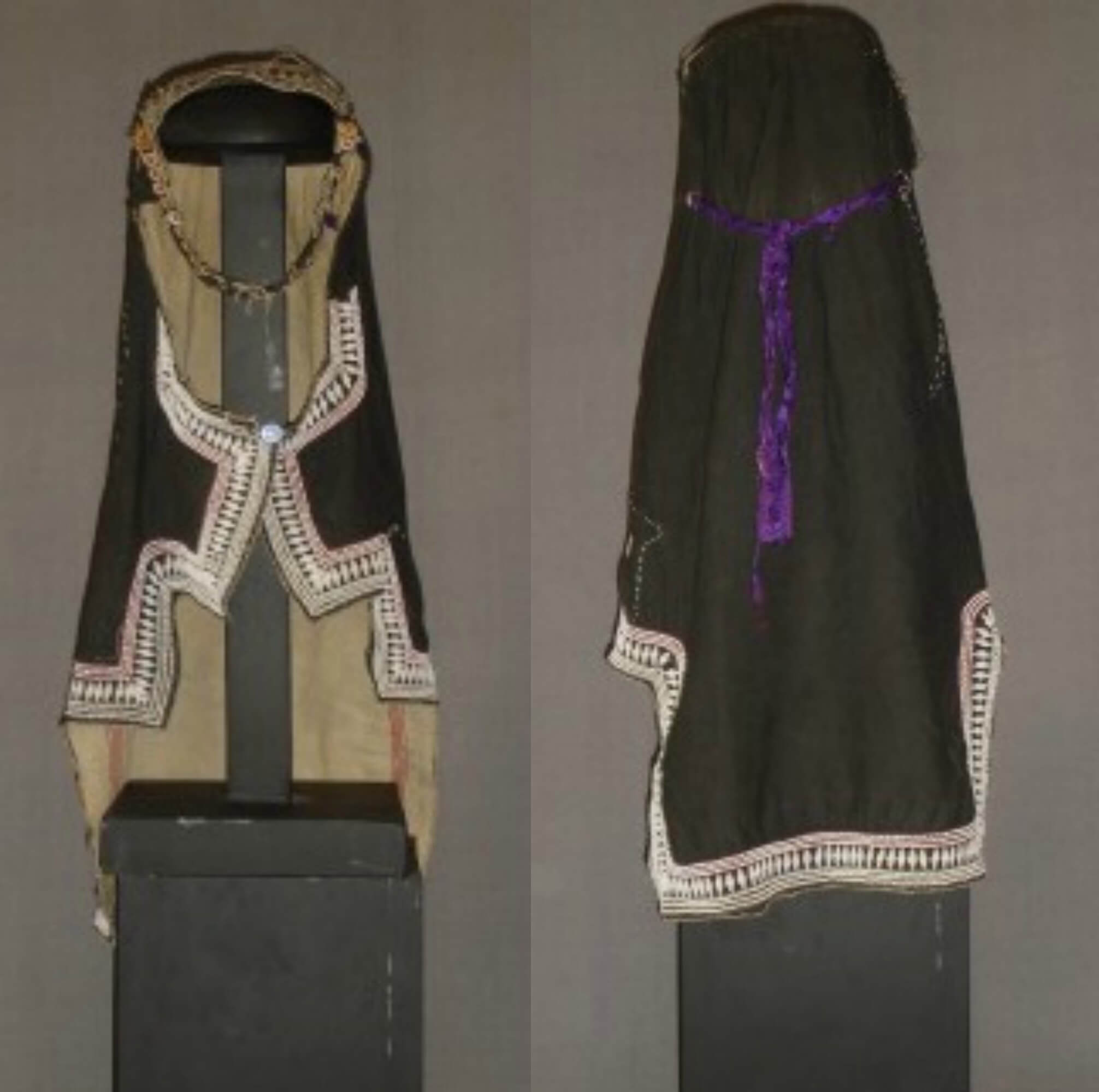
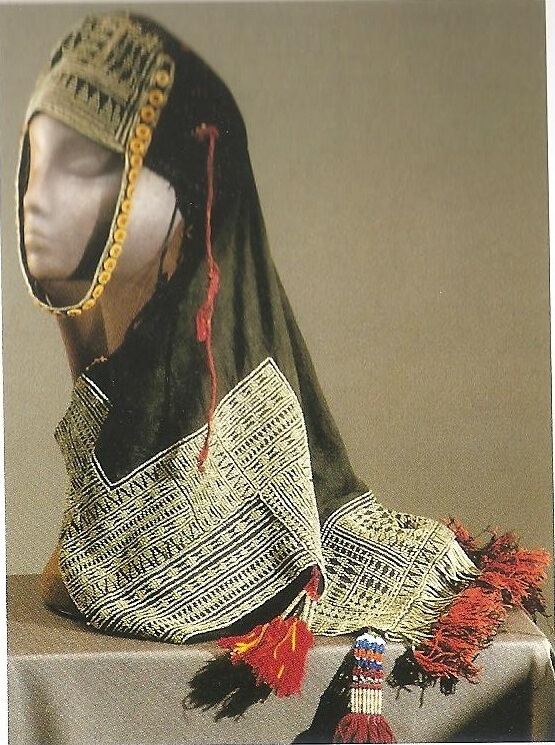
Women's Outdoor Dress: The Burka Milayah and Mantle
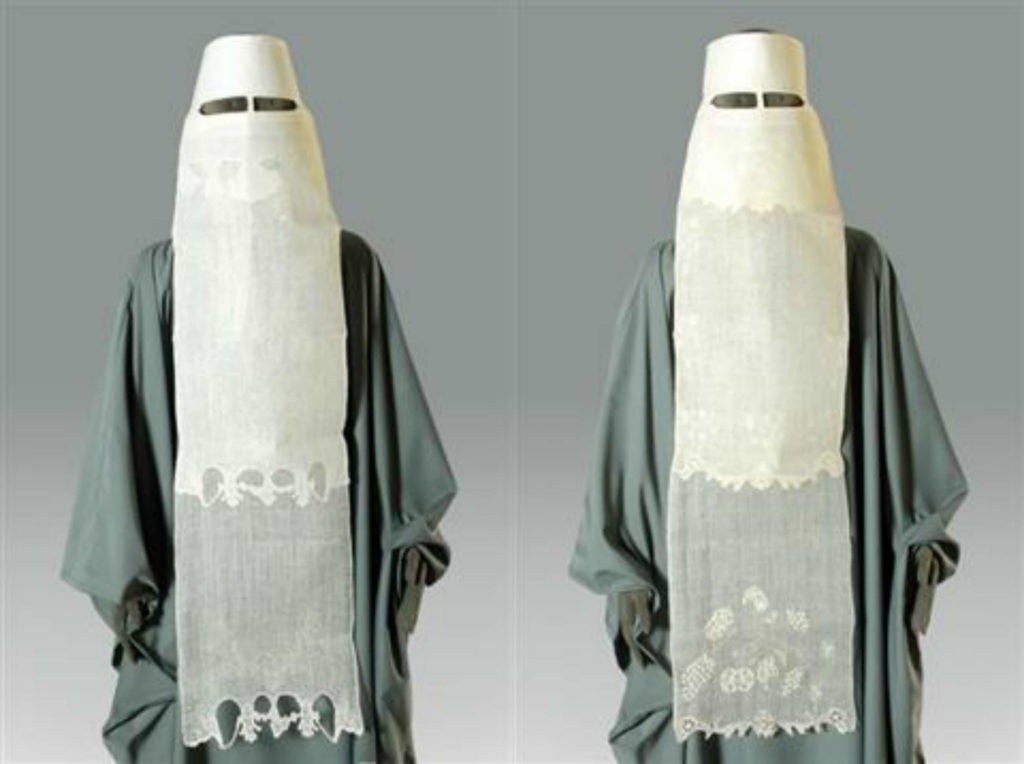
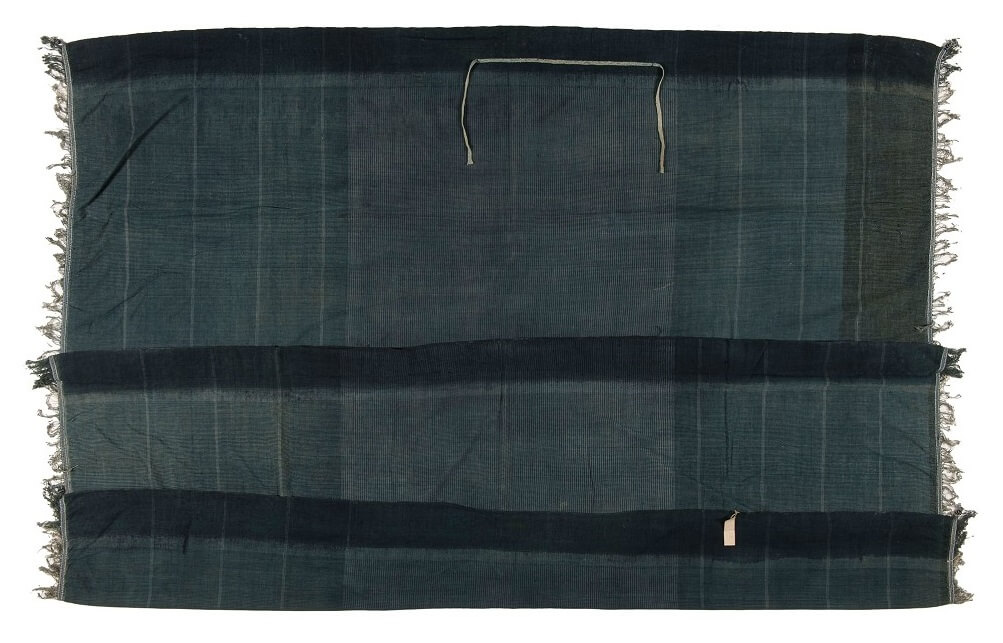
Urban women in Hejaz wore a distinctive layered outfit when leaving the home. One of its most important pieces was the burka milayah, sometimes called the Makkah veil. It was a long, heavily starched veil made from fine white linen or cotton, designed to cover the head and extend down the body. Some examples were long enough to reach close to the hemline, with a headband, button, and loop to hold the veil in place.
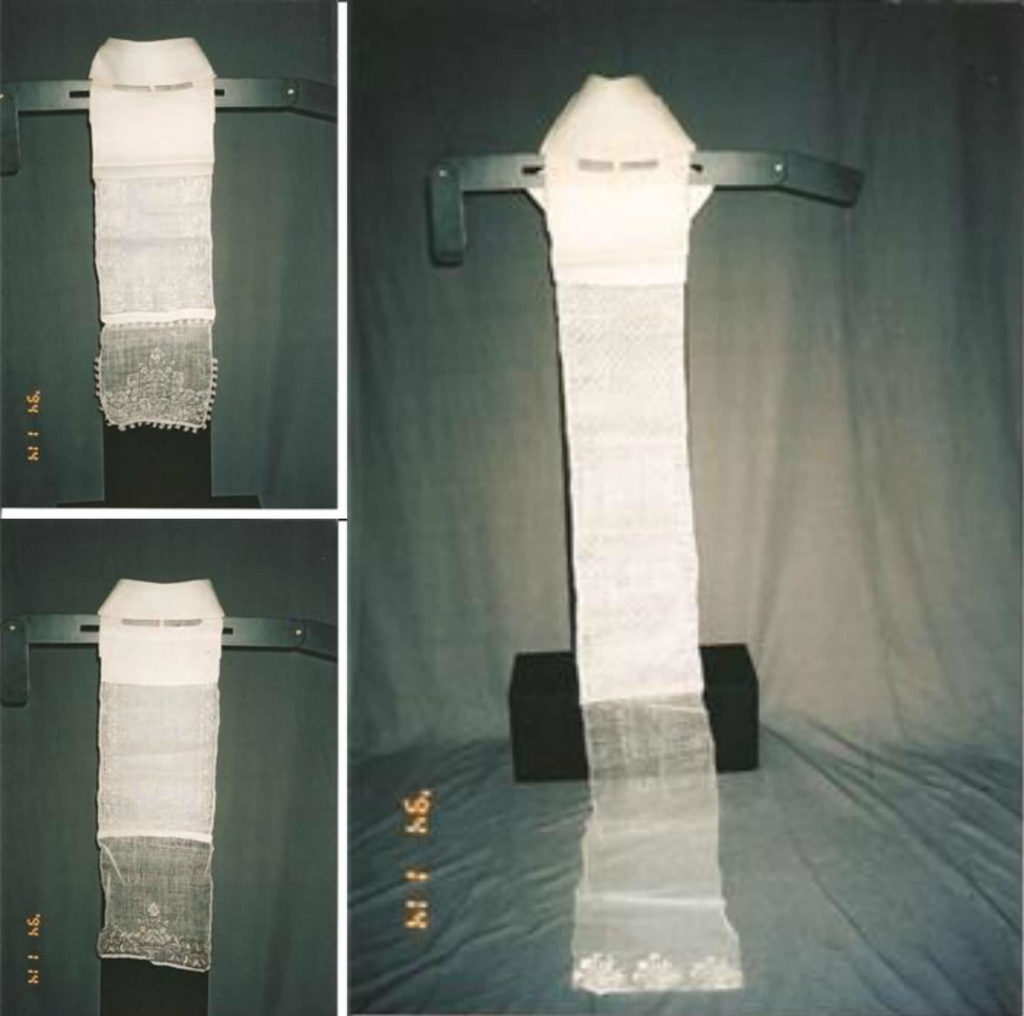
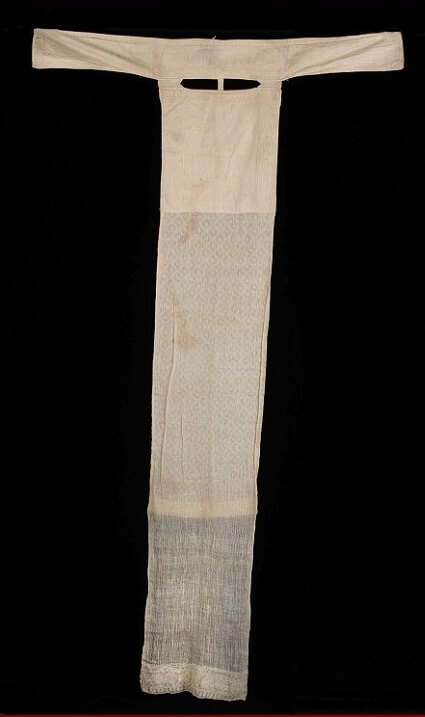
When visiting other homes, a woman could throw the long tail of the veil back over her head to uncover her face. More elaborate versions were embroidered on both sides so the decoration remained visible when folded back. Festive examples could include gold embroidery and pearls.
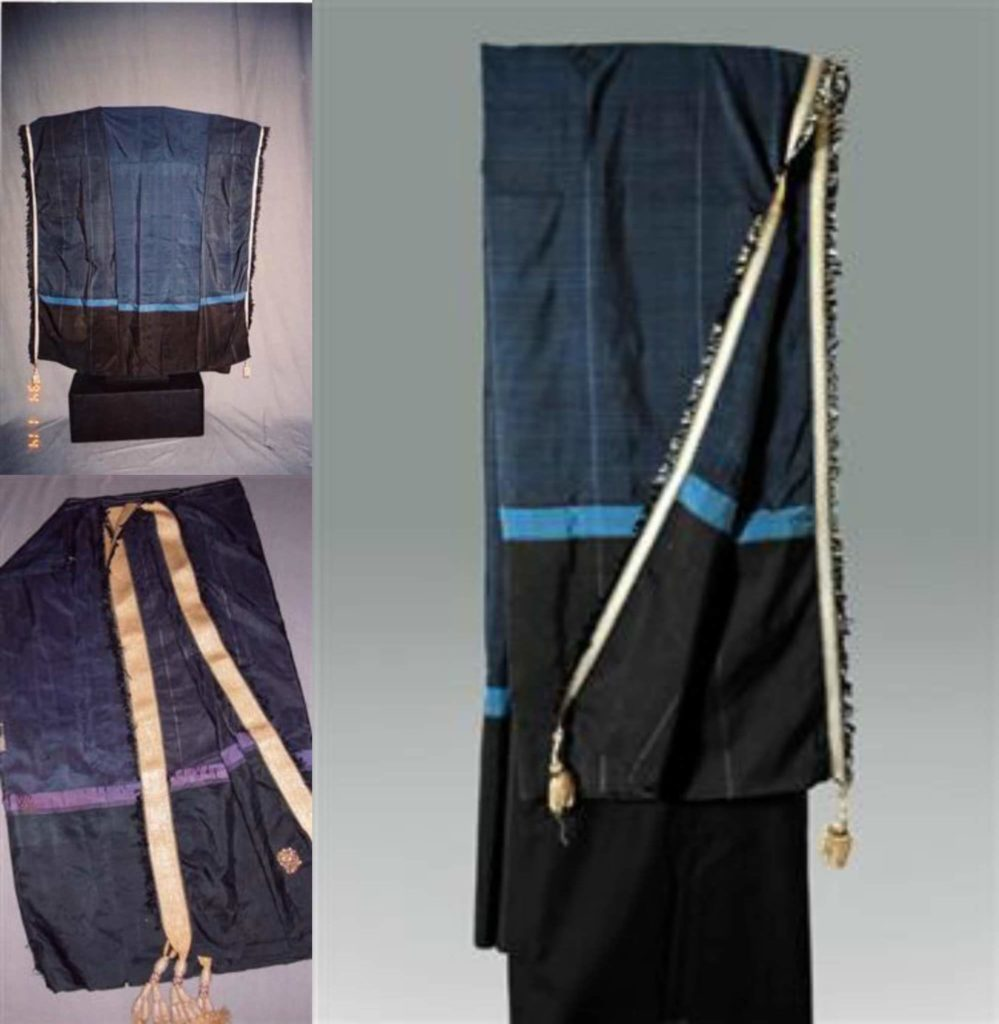
Alongside the burka milayah, Hijazi townswomen wore a heavy outdoor mantle. Some were made from expensive Indonesian silk taffeta in navy-blue or gray, decorated with braids and tassels, and embroidered with silver metal thread. Leather slippers, sometimes made from gazelle skin in yellow, cream, or pale lemon shades, completed the outfit.
Beadwork, Silver, and Lead Decoration
Decoration was one of the strongest features of Hejazi clothing. Women used embroidery, beads, silver pieces, and sometimes lead beads to create garments that were visually rich and deeply local. In the Taif area, women were known for making bead-like decorations from lead. The process involved heating the metal until it formed small rounded pieces, then cooling and shaping them for use in embroidery. These decorated garments are described as rare artistic pieces because of the labor, precision, and local knowledge involved.
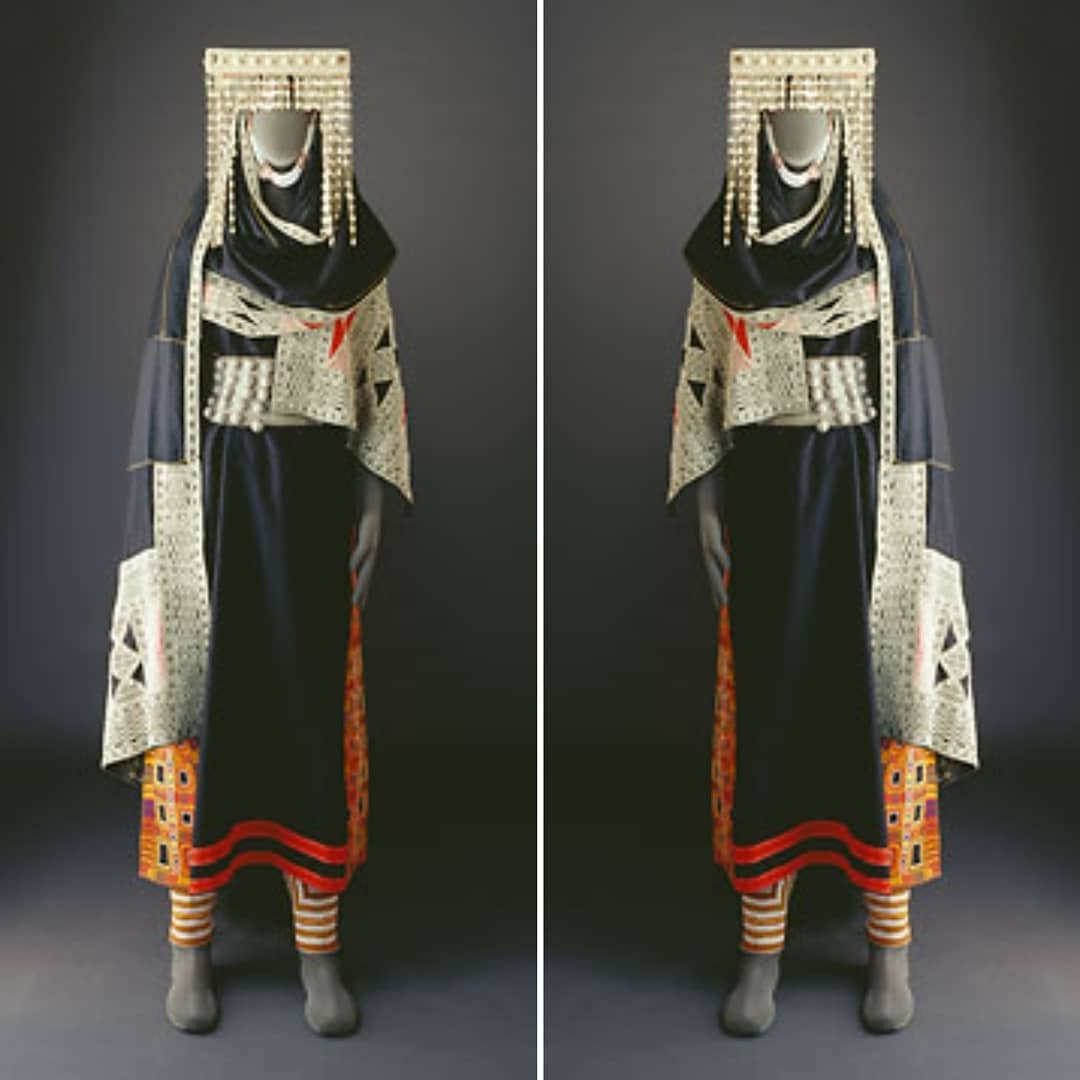
Silver ornaments also played an important role in women’s dress. They could appear on the head, chest, waist, or other parts of the outfit, turning clothing into a complete visual statement.
Thobe Al-Sidrah and Indigo-Dyed Clothing
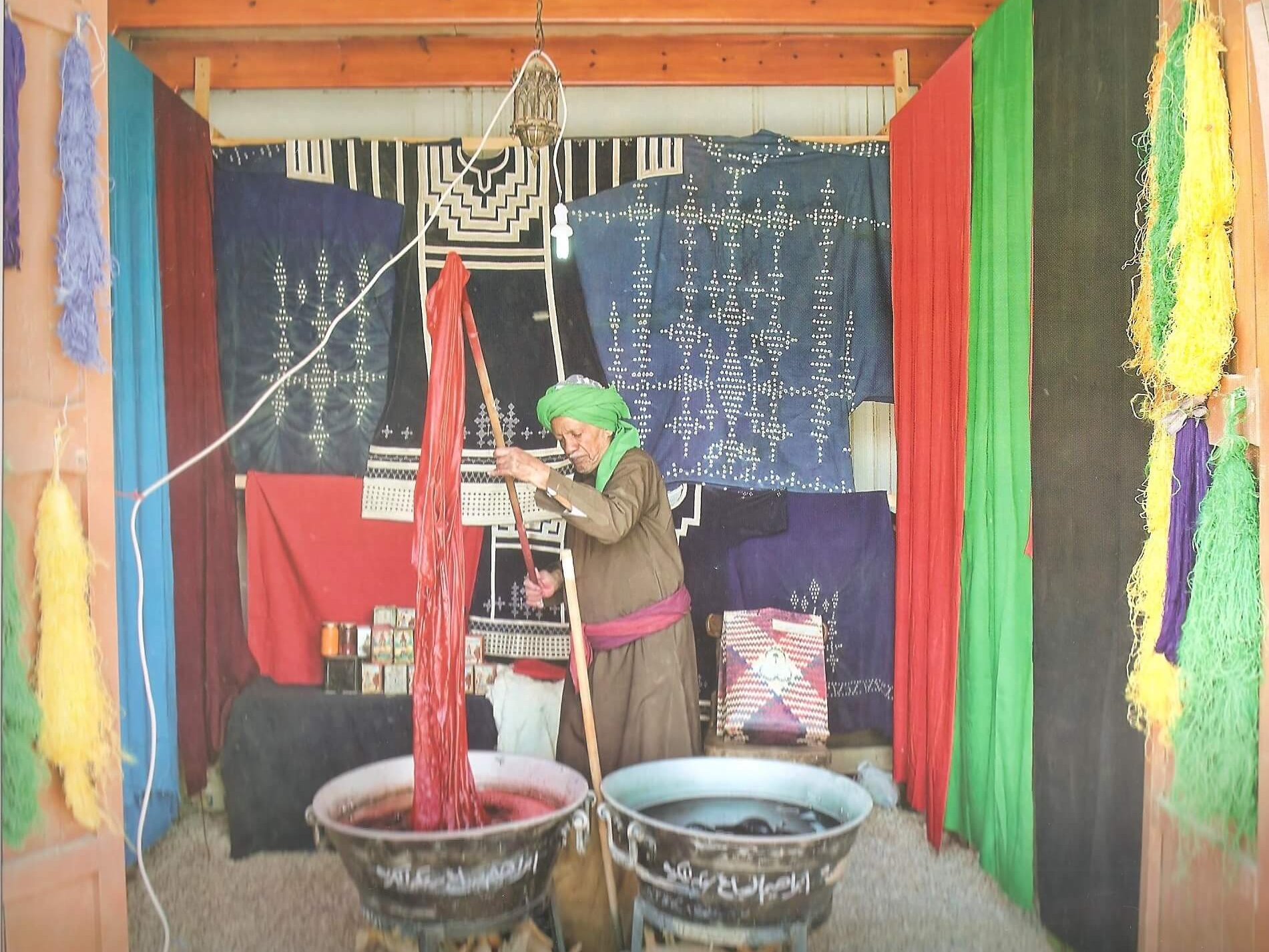
One of the striking western-region garments is thobe al-sidrah, especially connected with the Taif area. It was created using a resist-dye process, where white cloth was tied or bound in certain areas before dyeing. After dyeing, the tied sections remained lighter, producing decorative patterns against the darker dyed fabric.
Indigo was one of the important dyes used in this process. The result was a garment where color and pattern came from both technique and patience. This style connects Hejazi clothing to a wider world of dyeing knowledge while keeping its own local identity.
Al-Masdah, Mubaggar, and Musarrar Styles
Western-region clothing also included garments recognized through their dyeing, coloring, and decorative treatment. Thobe al-masdah was one of the upper garments known in the region. Mubaggar referred to a garment with darker blue and black coloring, while muṣarrar was linked to the tying process used before dyeing. These styles show how western-region dress used dyeing as decoration, not only as color.
Appliqué and Added Fabric Decoration
Some Hejazi garments were decorated with appliqué, or added pieces of fabric sewn onto the garment. This technique appeared in highly detailed forms, especially among some tribal garments. The work associated with Bani Sulaym is especially notable for its fine added-fabric decoration. The designs required great precision, with small pieces arranged and attached to create complex visual patterns. This kind of craft shows how women transformed simple fabric into a regional artwork.
Dress was also connected to personal adornment. Women lined their eyes with kohl and used traditional oils, completing the public appearance with beauty practices rooted in local custom.
Men’s Traditional Clothing in Hejaz
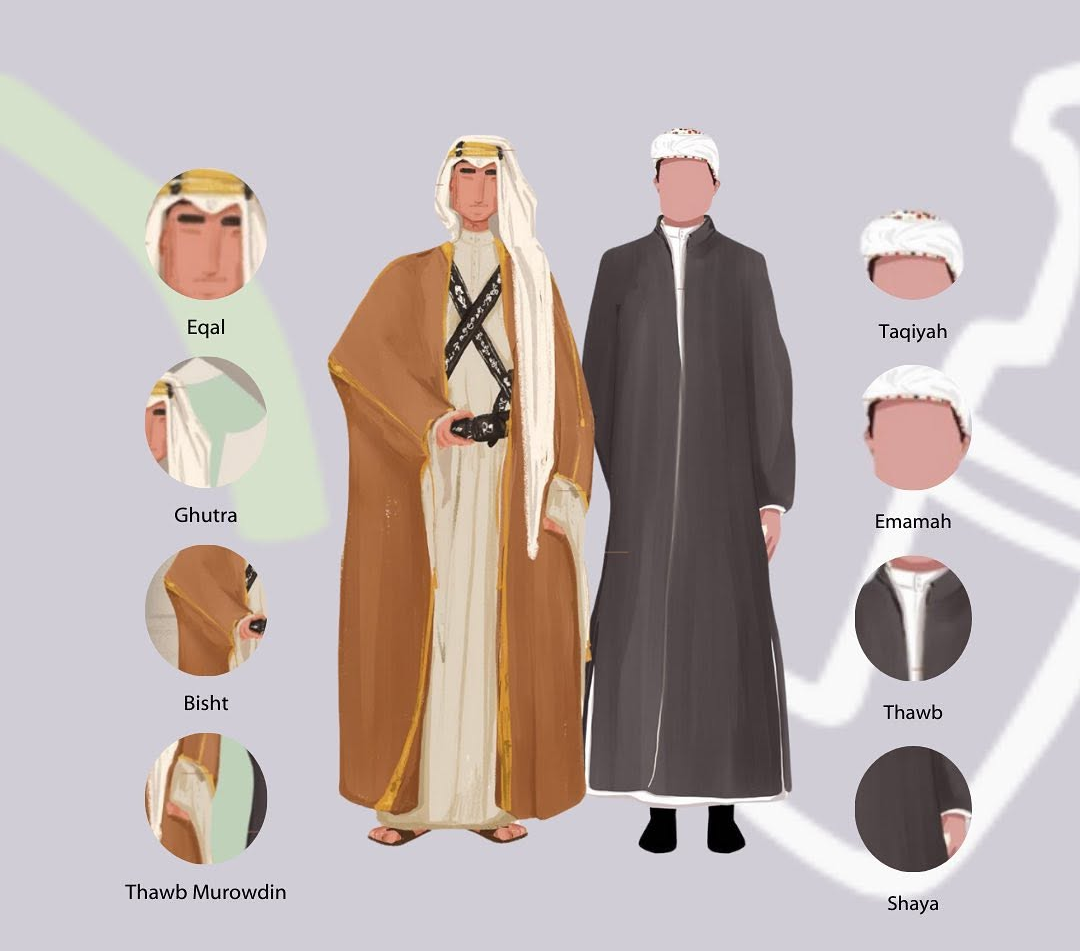
Men’s clothing in the western region shared some elements with wider Saudi dress, but local forms, fabrics, and occasions gave it a Hejazi identity. Men wore garments suited to daily life, climate, and social setting. In the broader Saudi context, men’s dress could include the thobe, outer robes, head coverings, and cloaks. Hejazi men’s clothing also appeared in cultural displays representing different Saudi regions, showing the western region as part of the broader national clothing map while retaining its own details.
Clothing, Tribe, and Place
What makes Hejazi clothing especially powerful is its close relationship with place. Urban dress in Makkah and Jeddah differed from tribal dress in the mountains and valleys. Taif had garments and dyeing traditions that reflected its own environment. Tribal communities developed visual codes through headwear, beadwork, embroidery, and garment structure.
This variety does not weaken the identity of Hejaz. It strengthens it. The region’s clothing shows how one part of Saudi Arabia can contain many local worlds.
Hejazi Clothing Today
Today, Hejazi traditional clothing is being appreciated again through heritage events, national celebrations, exhibitions, fashion inspiration, and cultural documentation. Modern designers may draw from its colors, lines, and embroidery, while researchers and heritage institutions help preserve the original forms.
This distinction matters. Heritage-inspired fashion can bring Hejazi beauty into the present, but original garments remain essential for education, museums, and official representation. They show the depth of Saudi dress before modern fashion changed daily clothing habits.
A Living Heritage of Western Arabia
In Hejaz, traditional clothing was never one single style. It was urban and tribal, coastal and mountainous, simple in structure yet rich in detail. A head covering, a silver ornament, a dyed thobe, or a line of beadwork could carry memory, place, and belonging.
The clothing of Hejaz reminds us that Saudi heritage is not flat or uniform. It is layered, regional, and alive. In every stitch, it holds the story of women’s craft, community identity, and the cultural richness of western Arabia.
Disclaimer: This article draws on Saudipedia entries, the Saudi Traditional Fashion in the First Saudi State publication, official Kingdom dress guidelines and heritage craft documentation, and publicly available talks and research by Prof. Dr. Laila bint Saleh Al-Bassam, a Saudi scholar of traditional clothing and textile history known for her decades of field research documenting Saudi regional dress.