In Saudi Arabia, falconry carries the memory of a time when success in the desert could help feed a family. A falcon was a hunter, a valuable possession, a source of prestige, and part of a body of knowledge passed from father to son. Today, Saudis no longer depend on falcons for food, yet the bird remains deeply connected to the Kingdom’s cultural identity. Falconry survived because its purpose changed while the relationship between the falcon, the falconer, and the desert endured.
Falconry Began With a Practical Purpose
The exact beginnings of falconry are lost in time. Saudi heritage sources connect falcons and hunting culture in the Arabian Peninsula with archaeological evidence stretching back thousands of years, while hunting with birds of prey was known in the region in antiquity. Its original purpose was practical.
A human on foot could not match the speed, eyesight, or aerial reach of a falcon. By learning to work with a bird of prey, hunters gained access to quarry that would otherwise be difficult to catch. In desert societies, this could contribute directly to sustenance. Falconry was not simply entertainment. A successful bird could help provide food for a household or hunting party.
In medieval Europe, falconry became known as the “sport of kings.” In Arabia, it could be a survival skill, helping families secure food in the desert. While falconry declined in parts of Europe with the spread of firearms, it remained deeply rooted in Arabian life.
The Annual Migration Brought Falcons Across Arabia
The landscape itself helped shape the tradition. During the cooler months, large numbers of migratory birds moved south across and around the Arabian Peninsula ahead of winter. Predators followed the same ecological routes, including eagles, hawks, buzzards, peregrines, and saker falcons. Falconers understood when these migrations took place and where birds were likely to appear.
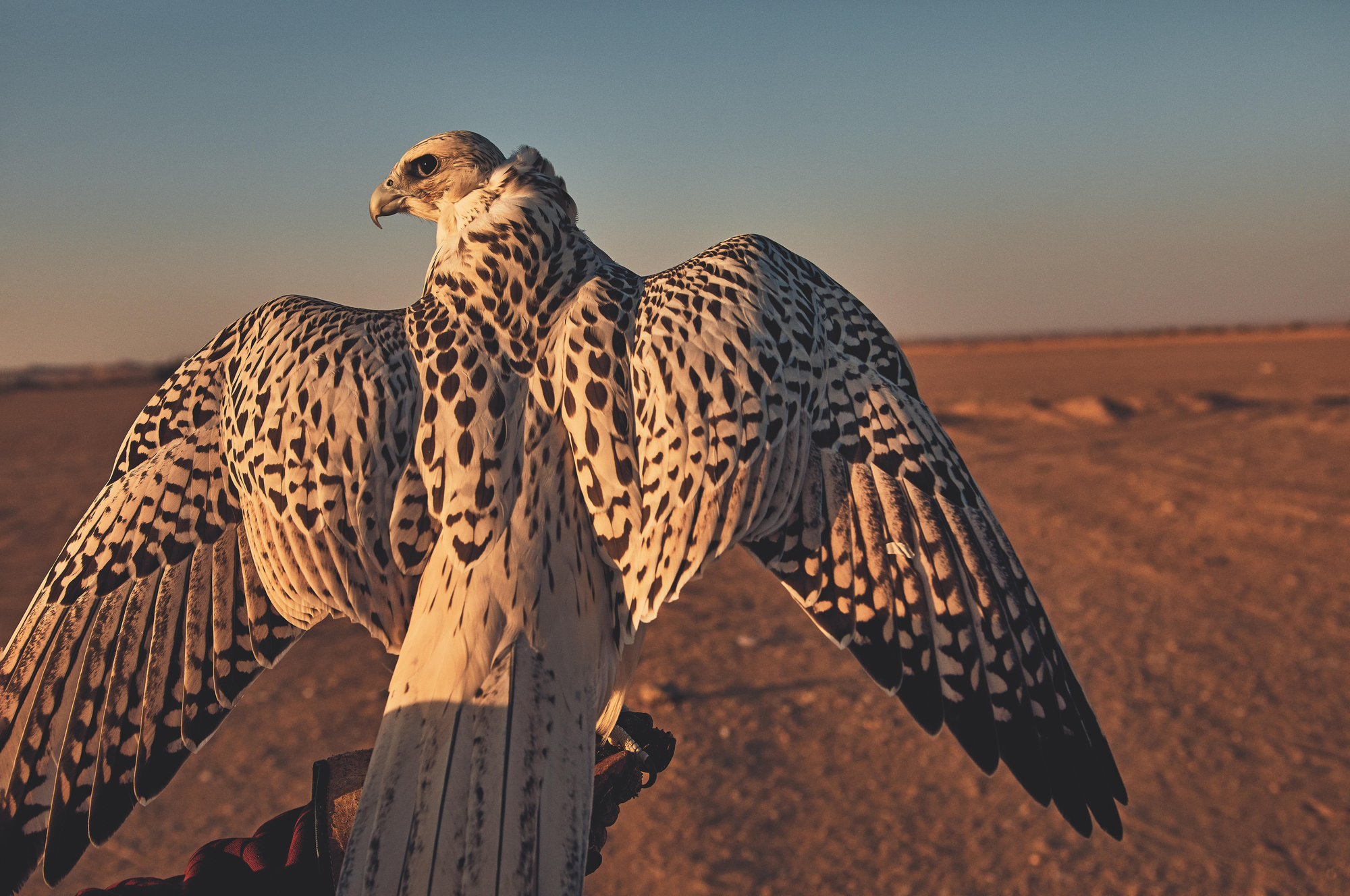
Historical trapping parties established camps along migration routes in northern Saudi Arabia, while similar activity occurred across parts of Syria, Jordan, and Iraq. They often left camp before sunrise and searched broad, open terrain, hoping to find a falcon resting after its overnight movement. What might look like an empty horizon to someone unfamiliar with the desert contained information for an experienced falconer: tracks, movement, wind, terrain, prey, and the possibility of a passing bird.
Falcon Trapping Required Patience and Ingenuity
Traditional falcon trapping developed its own highly specialized techniques. One method involved fitting a pigeon with small loops designed to catch the toes of a falcon when it attacked. Falconers could release or position the pigeon near a bird they had spotted and then withdraw, waiting to see whether the falcon would strike. Other methods placed a quail safely inside a small cage surrounded by loops. Some falconers used smaller birds as decoys, taking advantage of the falcon’s instinct to steal prey.
In very open landscapes, traps could even be positioned around the shade of a shrub, where a falcon might seek relief from the heat. There was no single guaranteed technique. Falconers experimented continuously, adapting methods to the terrain, season, and behavior of individual birds. Catching the falcon was only the beginning.
What Saudi Falconers Looked for in a Bird
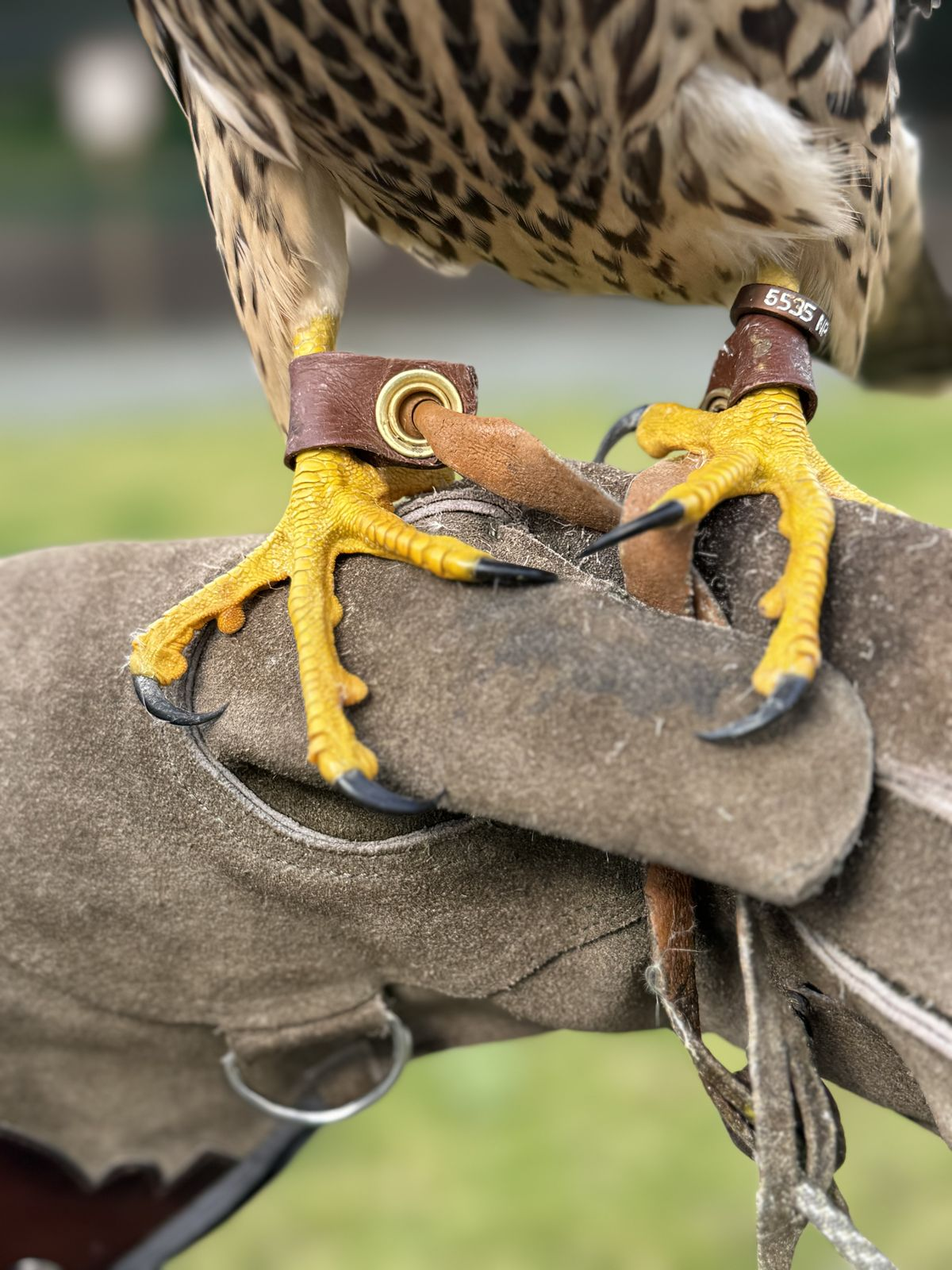
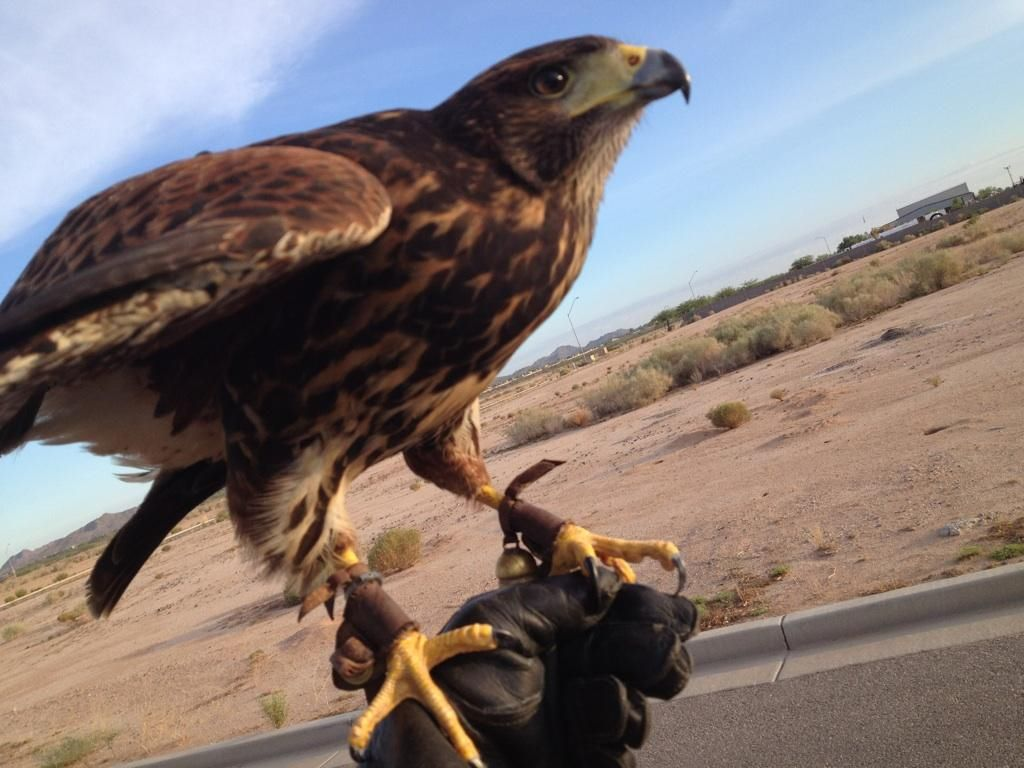
Once captured, the bird was examined carefully. Traditional Saudi falconers developed detailed criteria for evaluating potential hunting falcons. Body size, coloration, shoulders, beak, talons, age, and experience could all matter. Large female falcons were particularly valued because females are bigger than males and better able to handle large quarry.
Among sakers, experienced falconers looked for a strong hooked beak, broad shoulders, powerful feet, and sharp talons. Wild experience could increase a bird’s appeal as well. A falcon that had already survived a season independently had proven that it knew how to hunt and survive. Such a bird might be harder to handle initially, but its experience could become an advantage in the field.
The Saker Falcon Was a Favorite Saudi Hunter
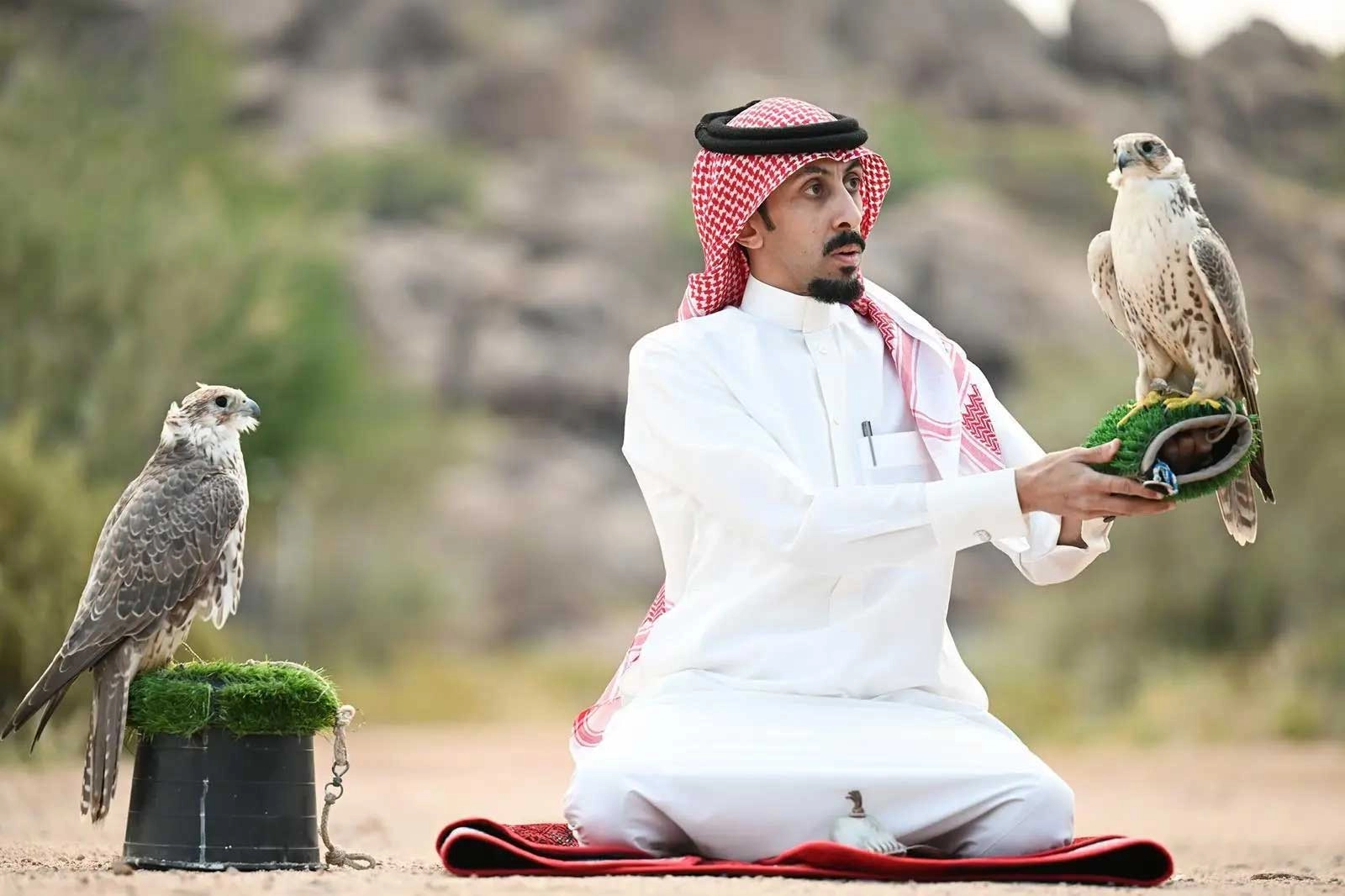
The saker falcon became one of the birds most closely associated with traditional Saudi falconry. Large and versatile, it was valued for its ability to attack substantial quarry both in flight and on the ground. Its strength made it particularly suited to traditional hunting in open desert environments. The saker also became closely associated with the pursuit of the houbara bustard, one of the most important quarry birds in Arabian falconry. For generations of falconers, choosing a good saker was therefore about far more than appearance. Its size, courage, experience, physical condition, and hunting ability all mattered.
The Peregrine Brought Exceptional Speed
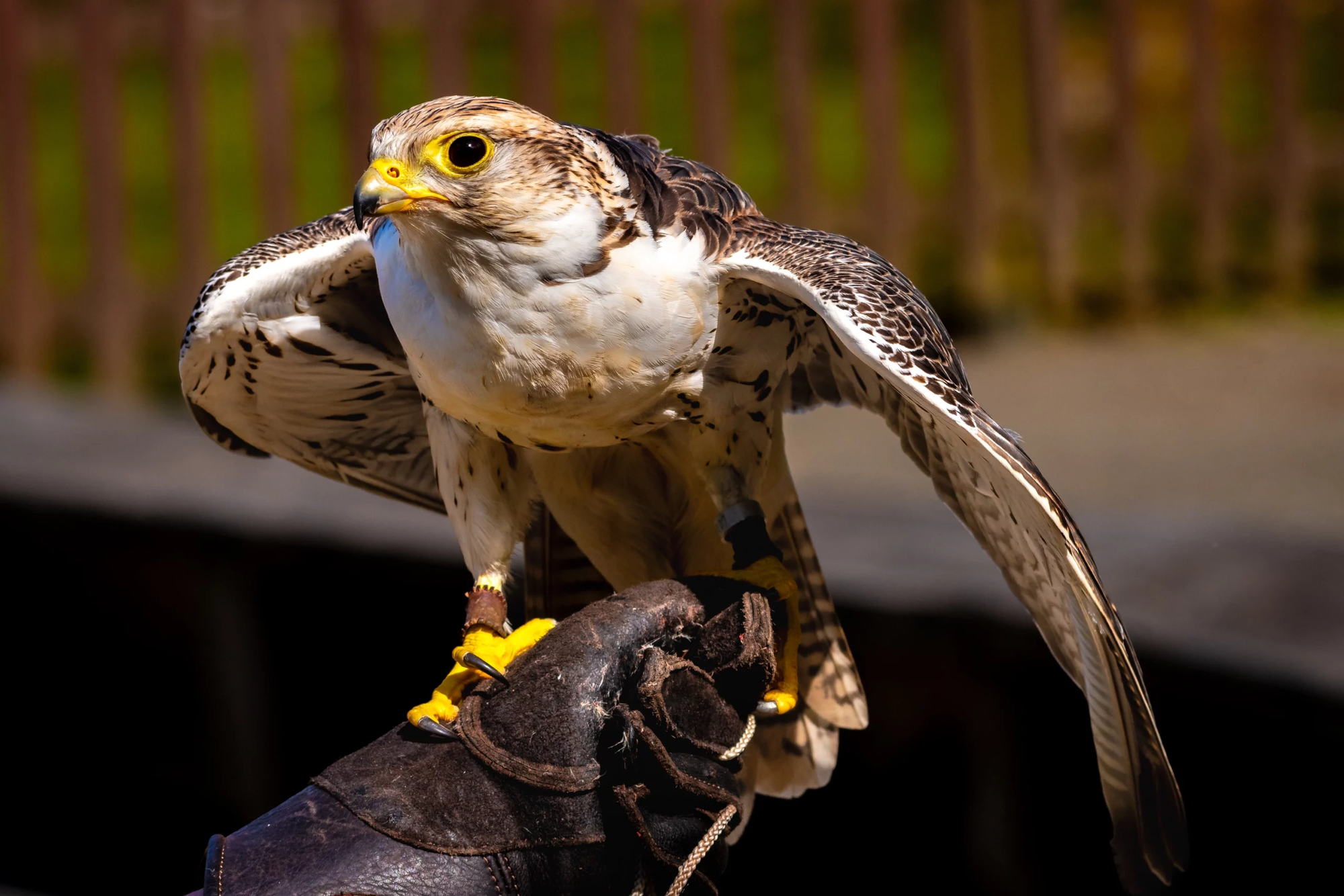
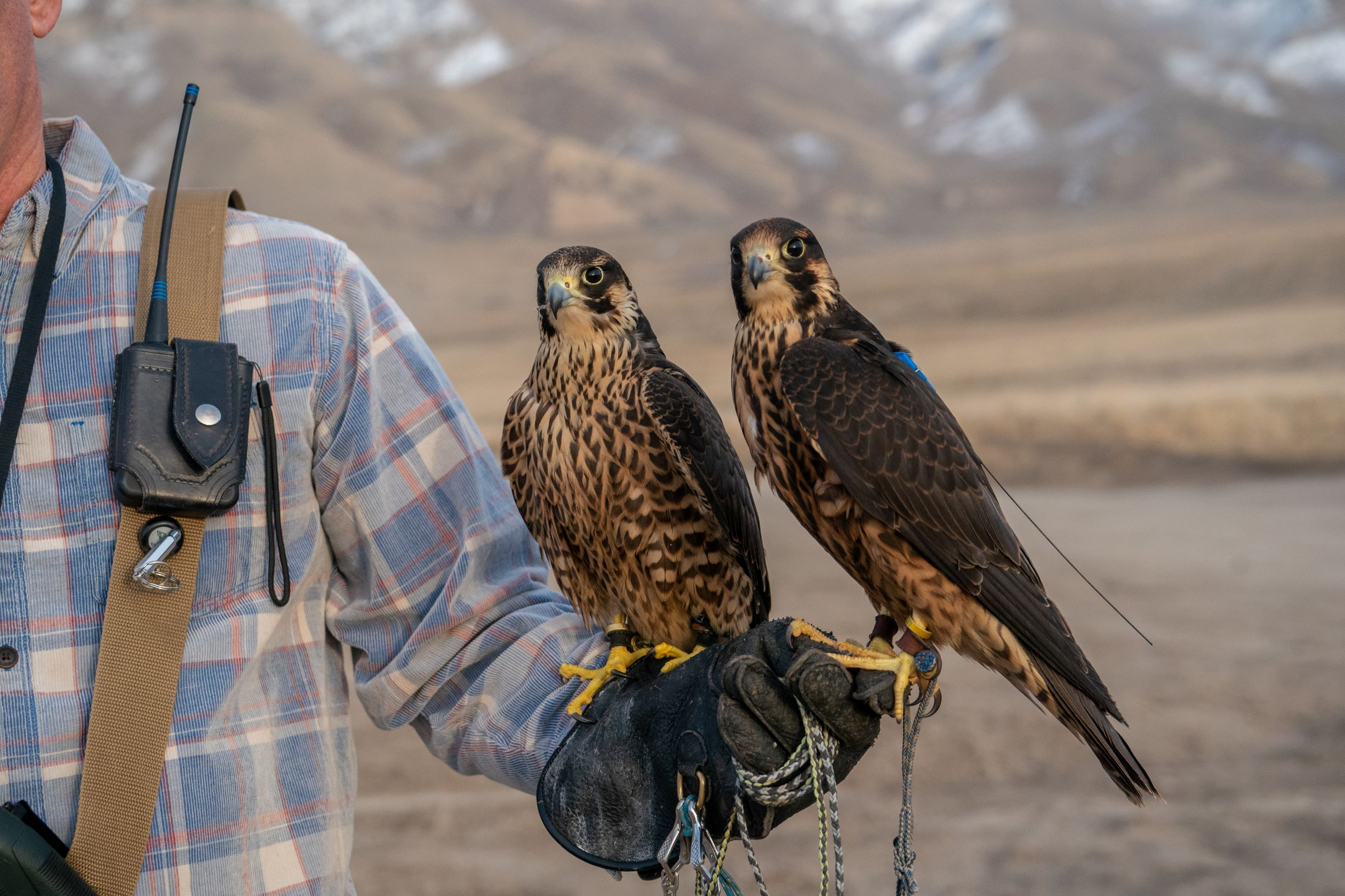
The peregrine falcon, known for extraordinary speed, played a different role. A peregrine can reach around 389 km/h during a hunting dive, making it the fastest animal in such a movement. Its vision is around eight times more powerful than human eyesight, allowing it to identify and pursue quarry at remarkable distances. Its hooked beak and powerful talons make it a highly efficient predator.
In traditional hunting, the faster peregrine could be particularly valuable when quarry escaped into open flight. The saker might excel closer to the ground, while a peregrine could continue an aerial pursuit. The falconer therefore did not simply ask which species was “best.” Different falcons had different strengths.
Falconry Was Passed From Father to Son
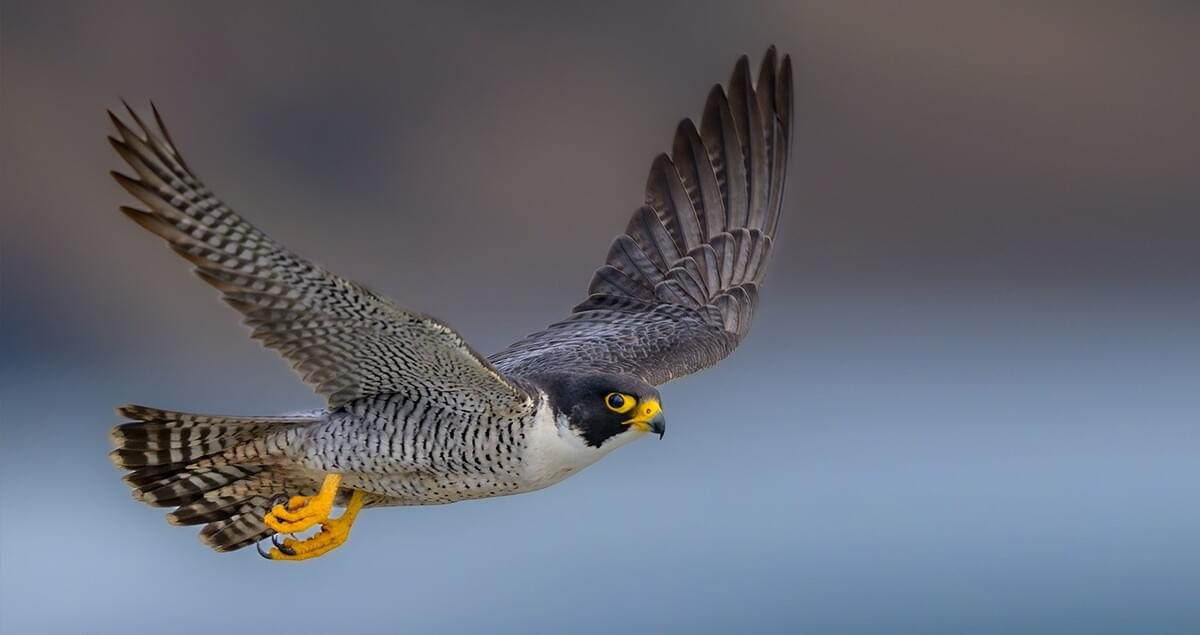
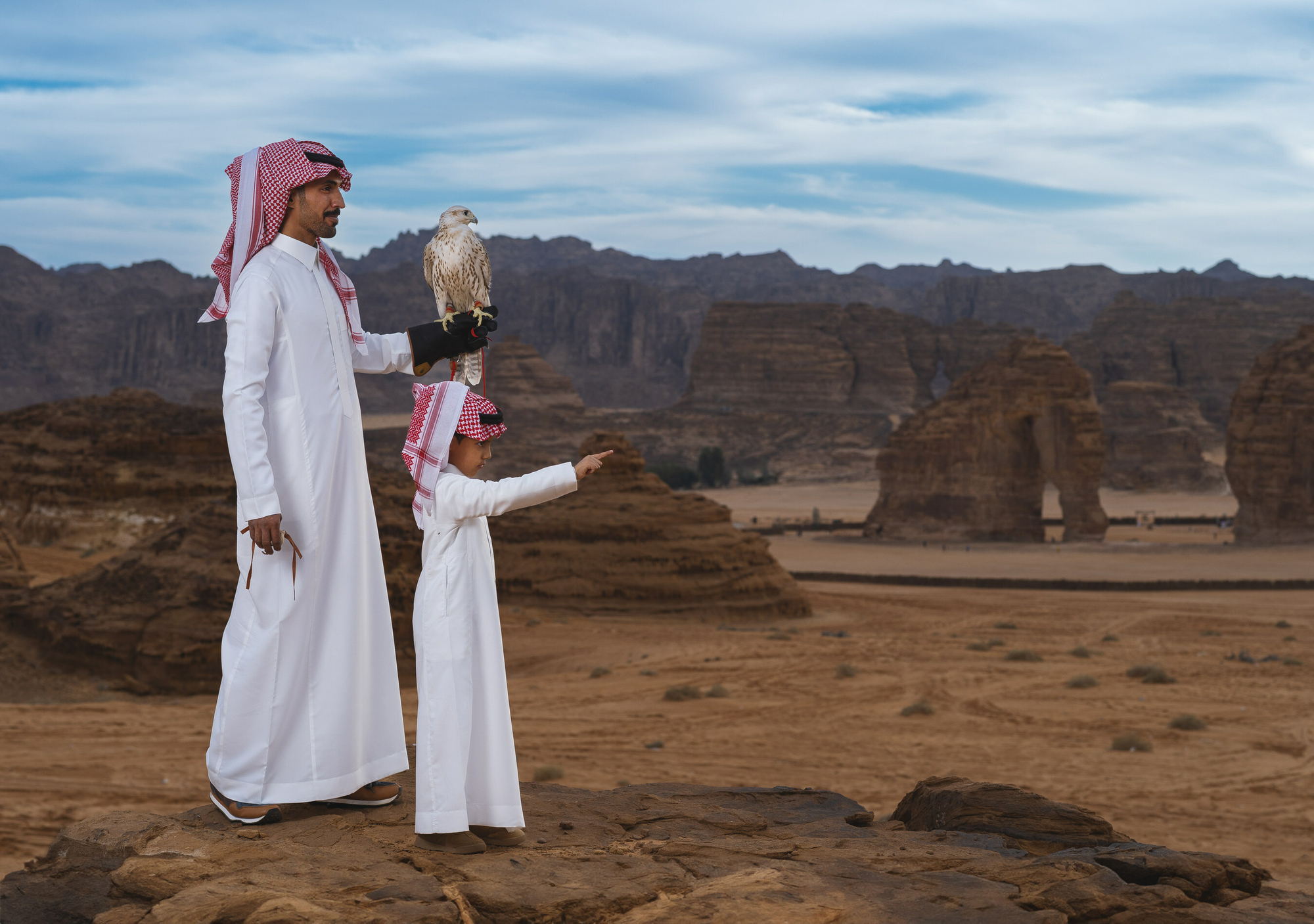
Falconry was traditionally learned inside families. A son could spend years observing his father and other experienced falconers before understanding the full practice. He had to learn how to hold a falcon correctly, recognize its mood, assess its weight and health, feed it, train it, read its behavior, and understand when it was ready to hunt. But the knowledge extended beyond the bird.
Falconers also needed to understand the desert. Tracking was especially important. Skilled hunters could follow quarry through difficult terrain and, according to older accounts, could sometimes distinguish individual houbara bustards by their tracks. This was knowledge built through repetition and experience rather than written instruction. The falcon was part of an entire education in desert life.
Falcon Training Began With “Manning”
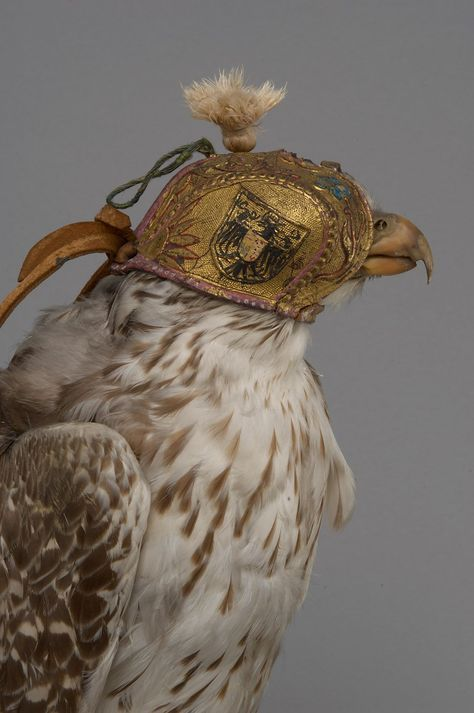
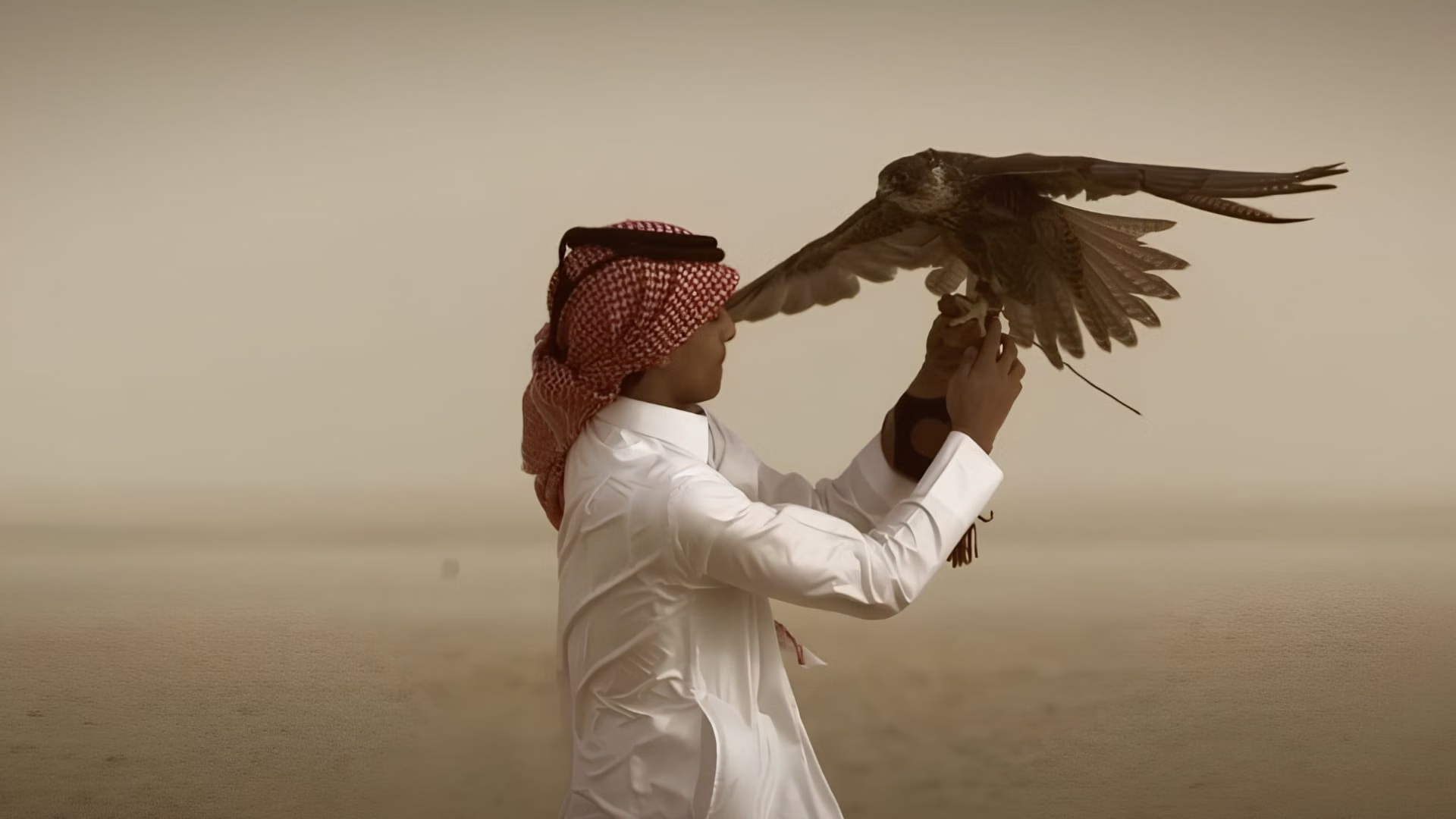
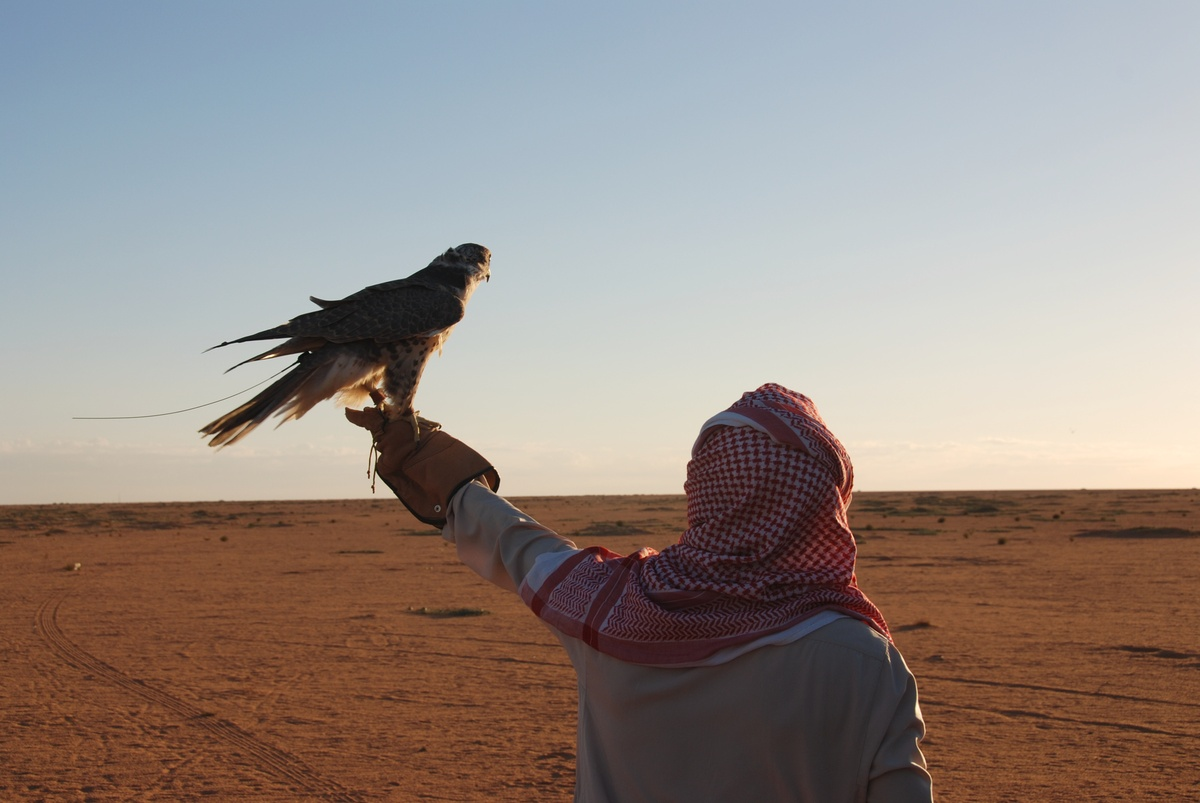
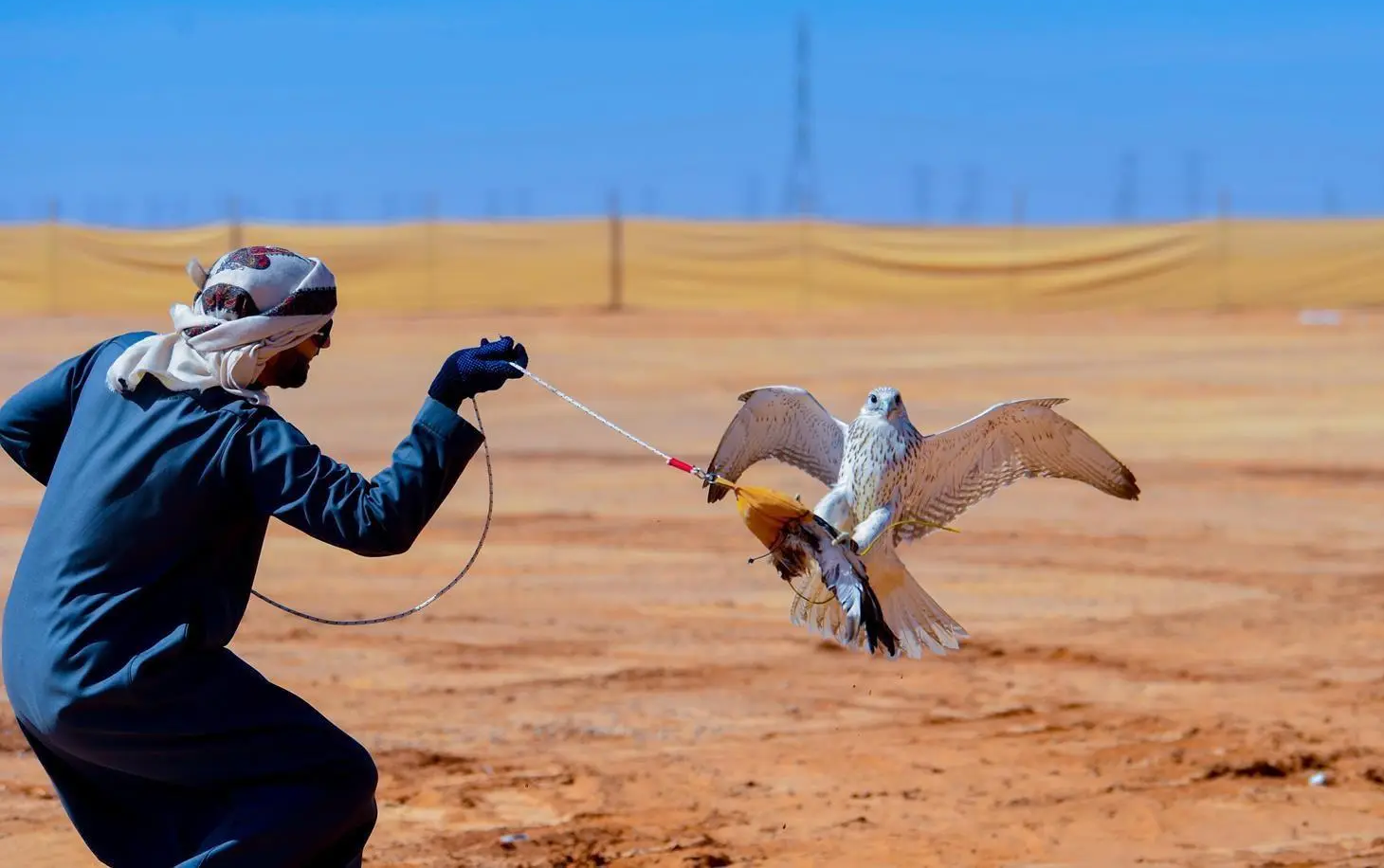
One of the most revealing parts of traditional falconry was the process of introducing a wild bird to human company. This early stage was known as manning. A newly captured falcon would be hooded and gradually exposed to the sounds and movements of people around the camp. The falconer would then encourage it to settle on the fist and begin accepting food. Over time, the bird learned to come to the fist, respond to a lure, and eventually work with the falconer in open flight. The process demanded patience and constant handling. Some birds accepted the change quickly. Others remained suspicious for much longer.
The Falconer Was Not Teaching the Falcon to Hunt
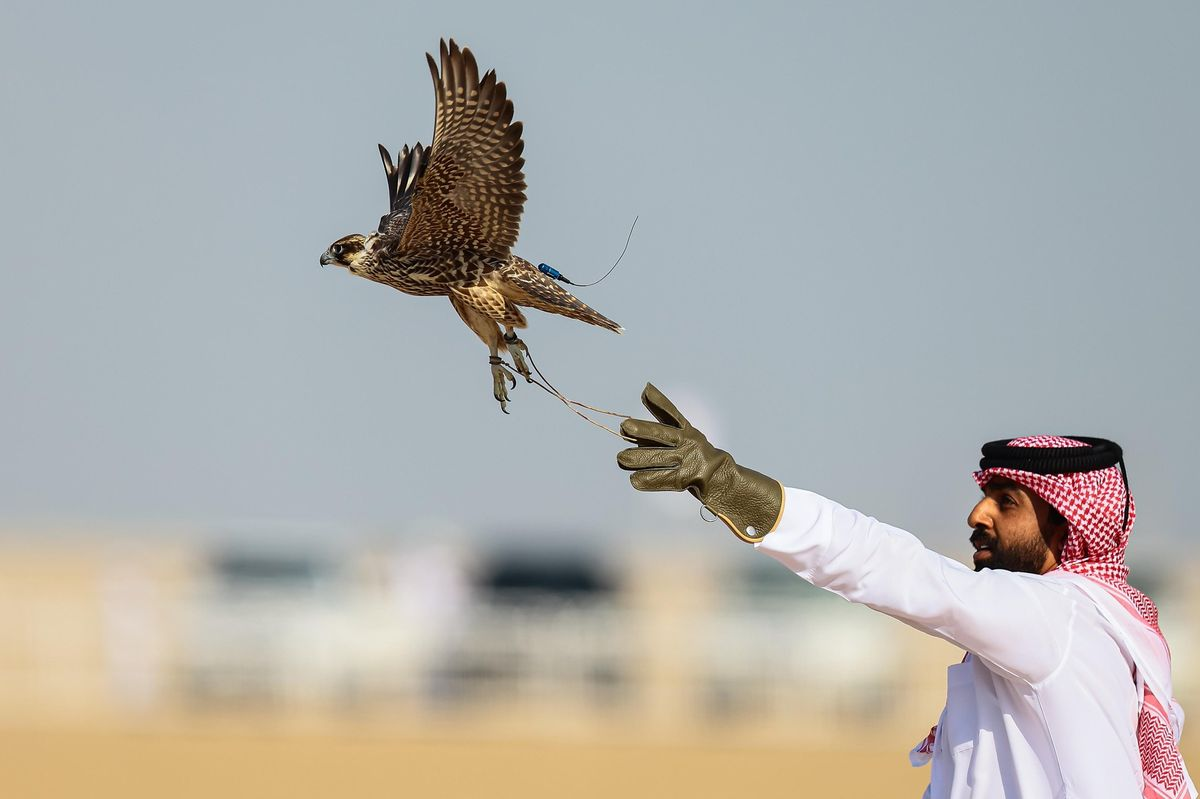
The word “training” can actually be misleading. A wild falcon that had survived independently already knew how to hunt. The falconer was not teaching it how to become a predator. The real task was overcoming the bird’s natural fear of humans. The falcon had to learn that it could sit on a human fist, accept food, travel with people, fly freely, and still return.
This distinction says something fundamental about falconry. The relationship depended on cooperation with a creature that retained its instincts. Traditional falconers did not necessarily want a bird to become completely tame. Too much tameness was thought to reduce its hunting edge. The goal was trust without removing the qualities that made the falcon formidable.
Falcon Owners Held a Place of Respect
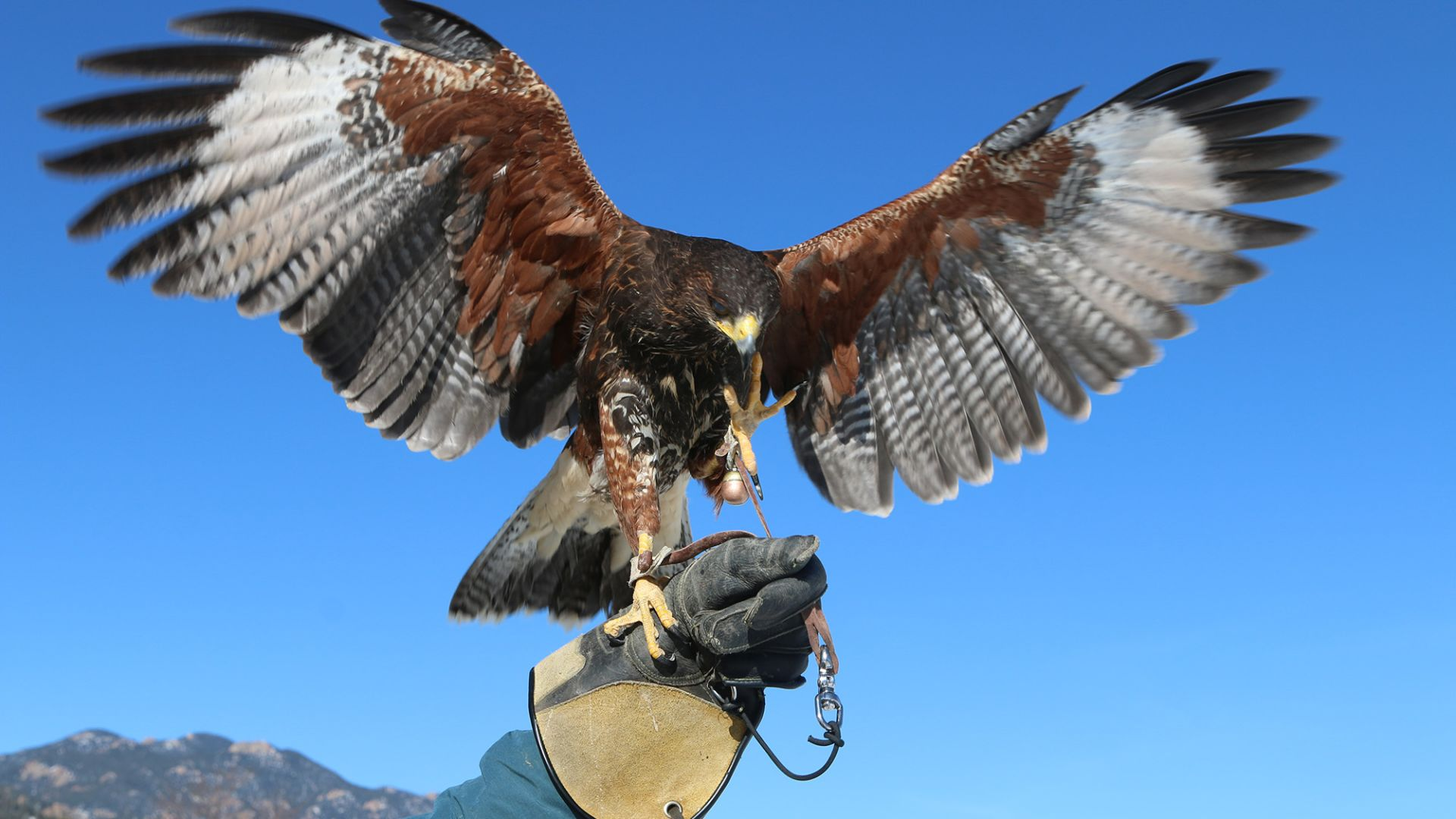
A successful falcon represented more than hunting ability. Falcon owners could be held in high regard within tribes and communities because keeping and working with a strong bird required patience, knowledge, resources, and skill. Falcons themselves became associated with strength, courage, endurance, and prestige. They also became valuable gifts.
Saudi historical accounts connect falcons with exchanges between tribal leaders and with reconciliation, adding a social and diplomatic meaning to the bird beyond its role in hunting. This helps explain why the falcon remains such a powerful Saudi symbol today.
The Falcon Became Part of Saudi National Memory
The falcon appears in the visual identity of Saudi Founding Day, alongside the Saudi flag, Arabian horse, palm tree, and traditional souq. Its inclusion reflects its historical connection with society during the era of the First Saudi State. The falcon represents a world of tribal relationships, hunting, exchange, courage, and prestige. Its place in modern Saudi symbolism therefore does not come from nostalgia alone. The falcon is recognizable because generations of Saudis already understood what the bird represented.

Houbara Hunting Tested Both Falcon and Falconer
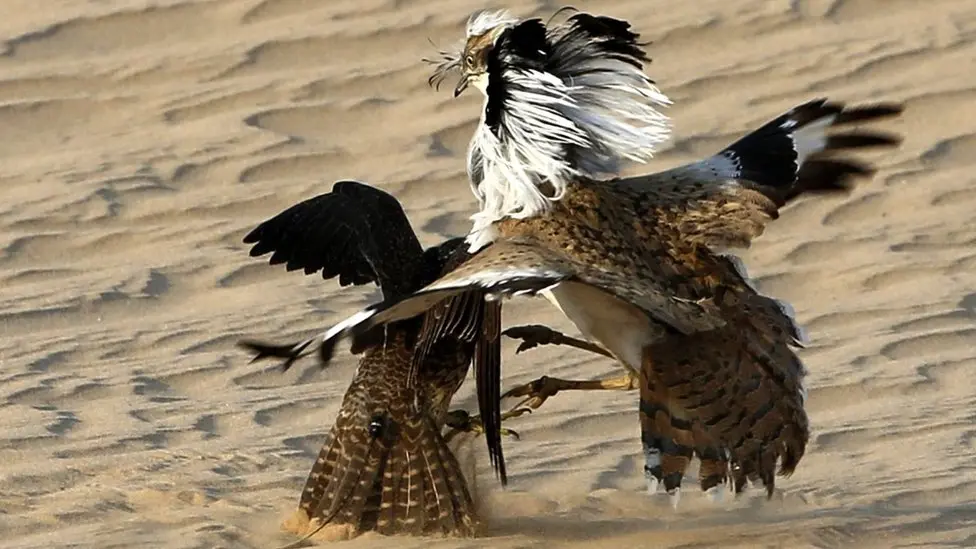
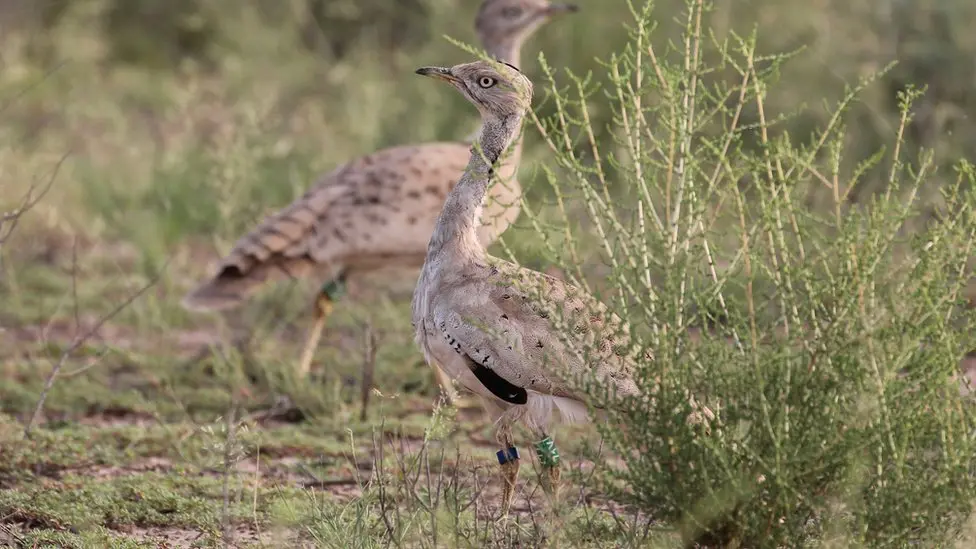
The houbara bustard became one of the best-known quarry birds in traditional Arabian falconry. Hunting it required considerable skill. A houbara could defend itself in several ways. It might attempt to intimidate an approaching falcon on the ground or escape into sustained flight. A long chase could stretch across several kilometres of broken desert terrain. This was where the different strengths of falcons mattered. A saker could be highly effective when the pursuit stayed closer to the ground, while the speed of a peregrine could become valuable if the houbara escaped into the air. The hunt tested the falcon, but also the judgment of the falconer.
Caring for the Bird Was an Art of Its Own
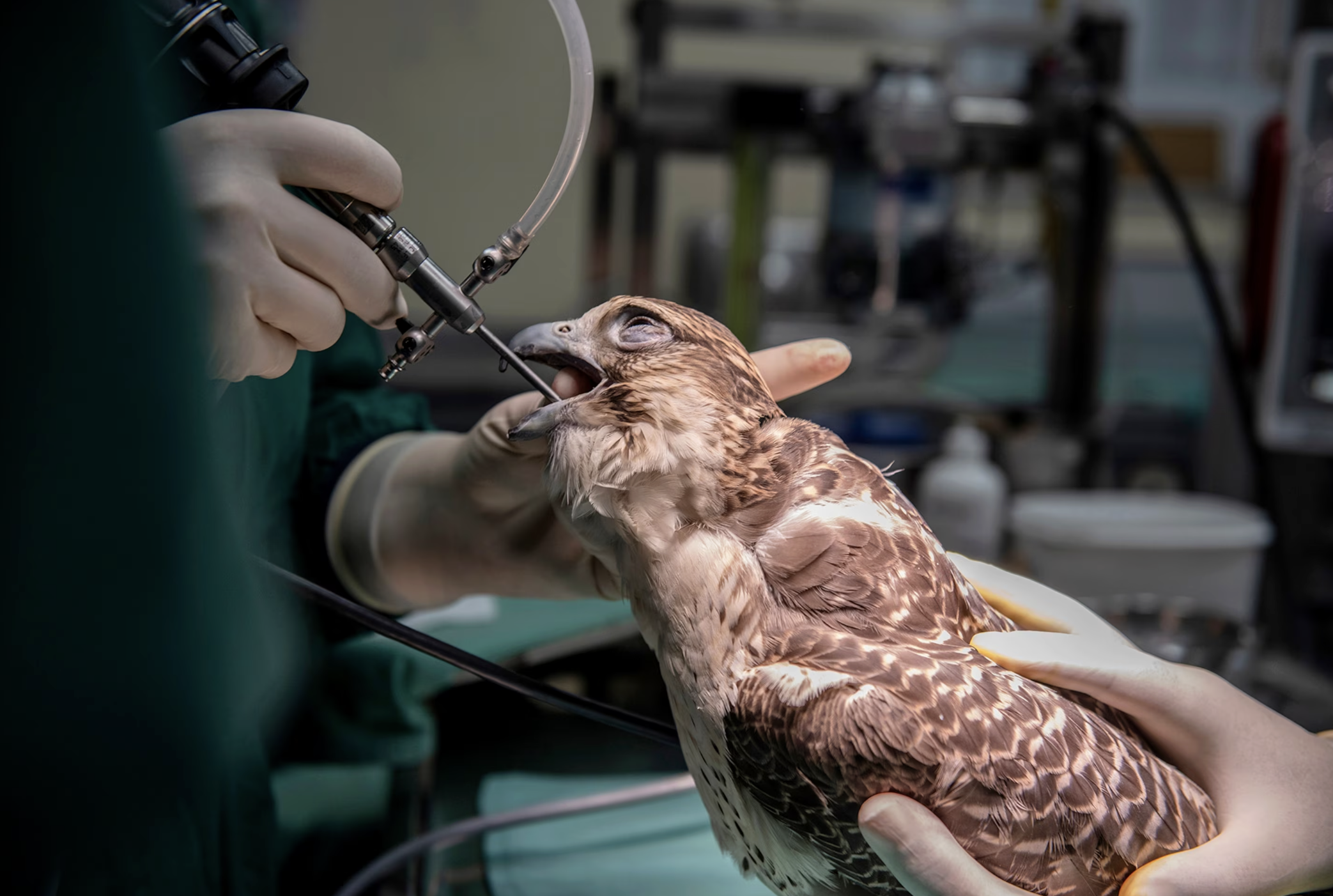
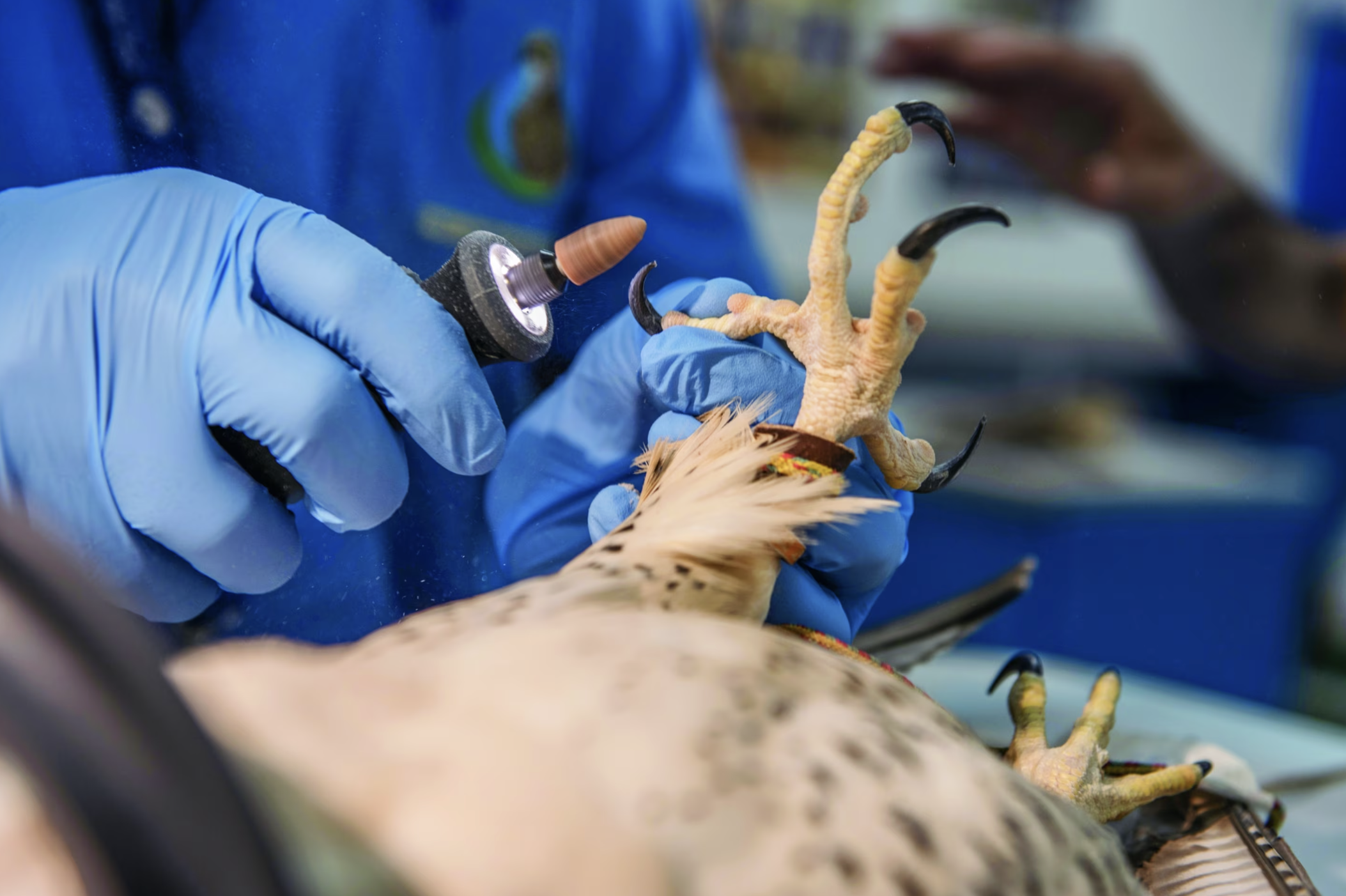
Falconers developed detailed practices for keeping their birds healthy. At the end of a day, falcons were fed, returned to camp, unhooded, and given time to settle and groom themselves. Injuries were carefully examined. Even damaged feathers could be repaired. Falconers traditionally collected naturally molted feathers and kept them. If an important flight feather later broke, a matching feather could be attached to the damaged shaft using a small internal support. The repair allowed the feather to function naturally again. This tiny technique reveals the depth of traditional falconry knowledge. A skilled falconer needed to understand the bird after the chase as well as during it.
Technology Changed the Desert Hunt
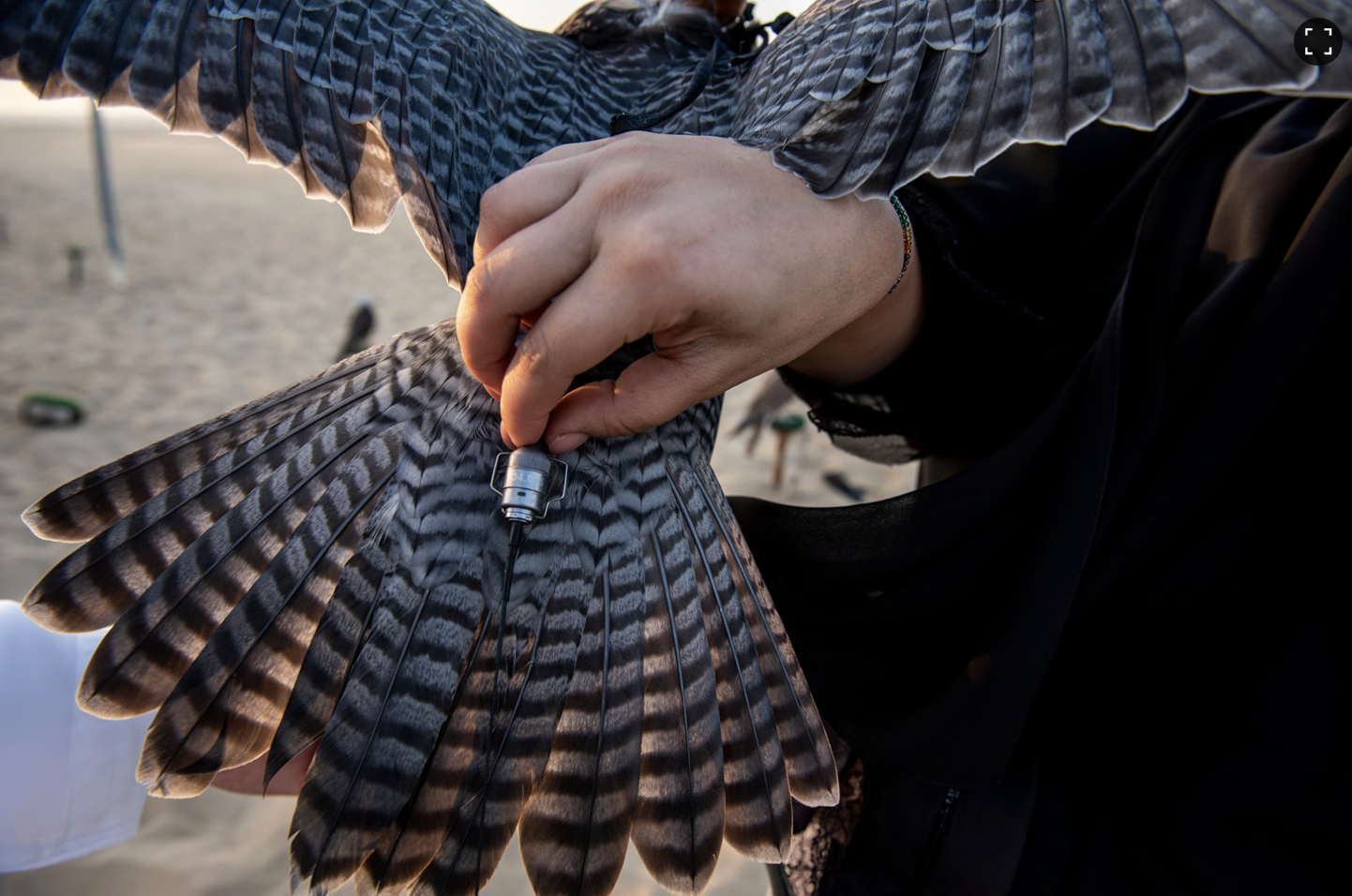
Modernization brought new tools into falconry. Radio transmitters could be attached to falcons so hunters could track birds that disappeared beyond sight. This was a major change. In earlier periods, a falcon that continued chasing quarry across the horizon could simply be lost. Four-wheel-drive vehicles also allowed falconers to follow birds over far greater distances. Yet the new technology sat beside older knowledge rather than immediately replacing it. Falconers still watched tracks, terrain, wind, and bird behavior. Ancient desert skills and modern equipment began working together.
Modernization Also Created Environmental Pressure
Modernization brought new pressures to the world of falconry. As prized falcons began commanding high prices, illegal trapping became more profitable across the Arabian Peninsula. Wild populations of saker, peregrine, and lanner falcons were increasingly affected by overtrapping and poaching.
Traditional quarry also came under pressure. Modern off-road vehicles allowed hunters to travel deeper into remote landscapes, while advanced tracking technology made it easier to follow both falcons and prey across long distances. The houbara bustard, one of the most important quarry birds in Arabian falconry, was particularly affected. Intensive hunting and the capture of birds for falcon training contributed to severe declines in its wild populations. This created a cultural challenge.
How could falconry remain active without placing the natural environment that sustained it under greater pressure? Saudi Arabia began developing a different answer.
The King Abdulaziz Festival Helped Shift Falconry Toward Racing
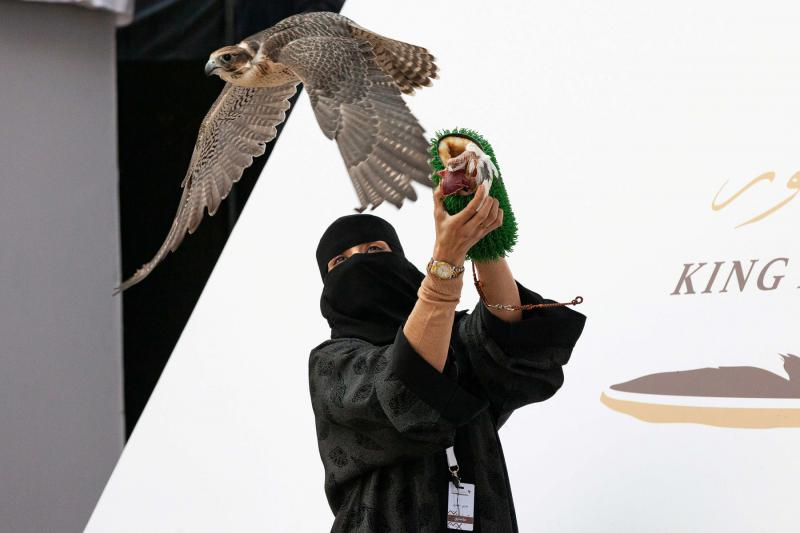
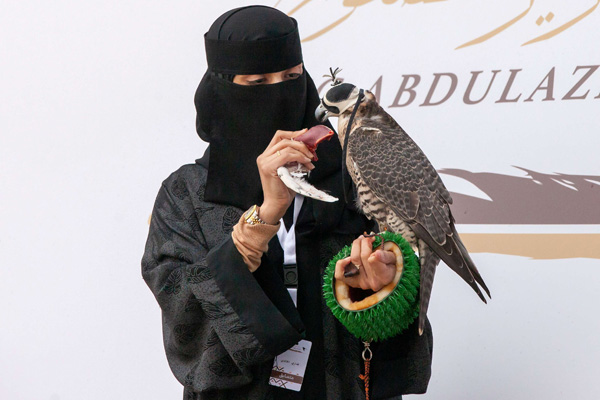
The King Abdulaziz Falconry Festival, launched in 2019, became one of the most important parts of the modern transformation. The festival helped move falconry from hunting toward organized racing. Falconers could still train birds, test their abilities, compete, exchange knowledge, and maintain the social world surrounding the practice without depending on hunting wild quarry. The main speed competition, Al-Milwah, sends falcons down a 400-meter course. Instead of chasing wild prey across the desert, the falcon races toward a lure. This created an environmentally safer way of continuing the competitive side of falconry.
Al-Mazayen Celebrates the Falcon Itself
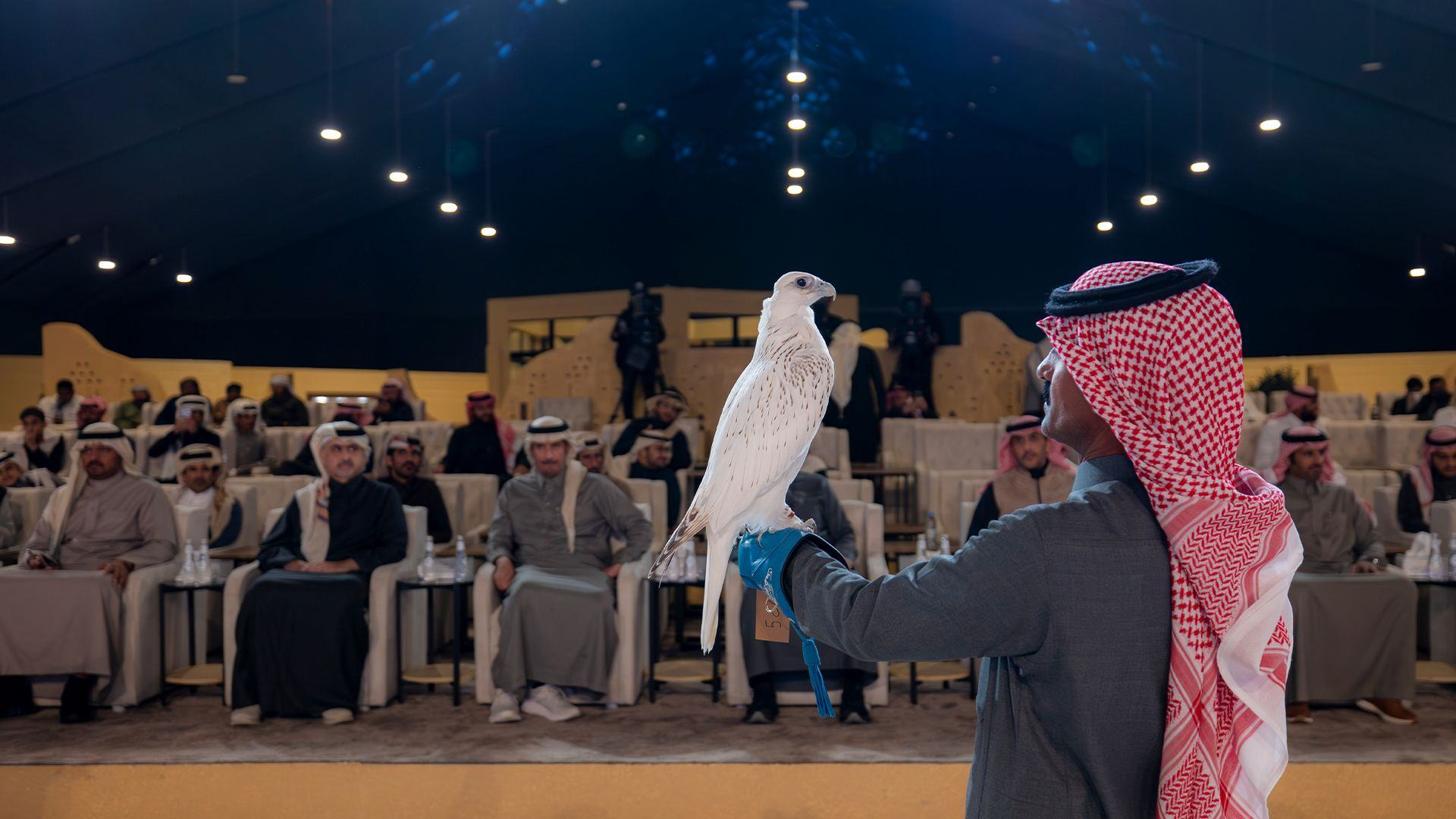
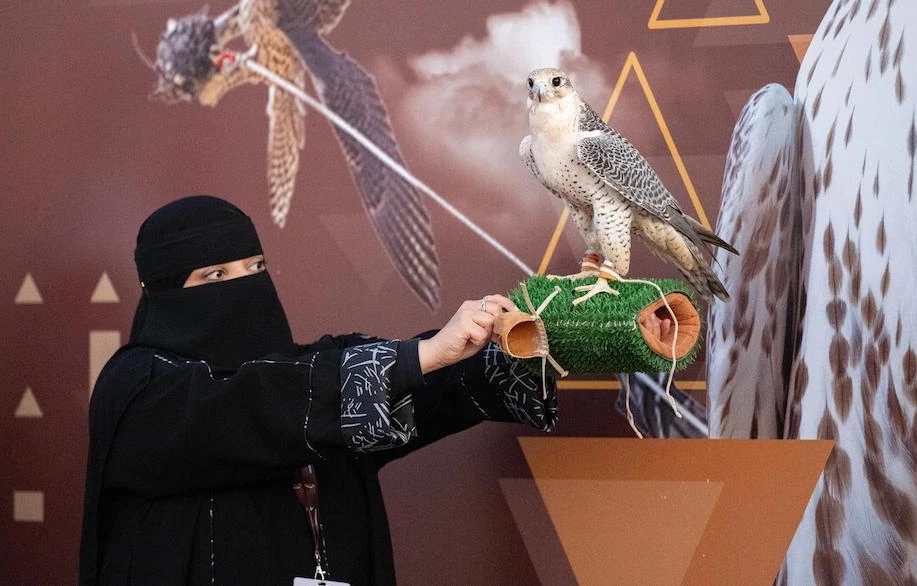
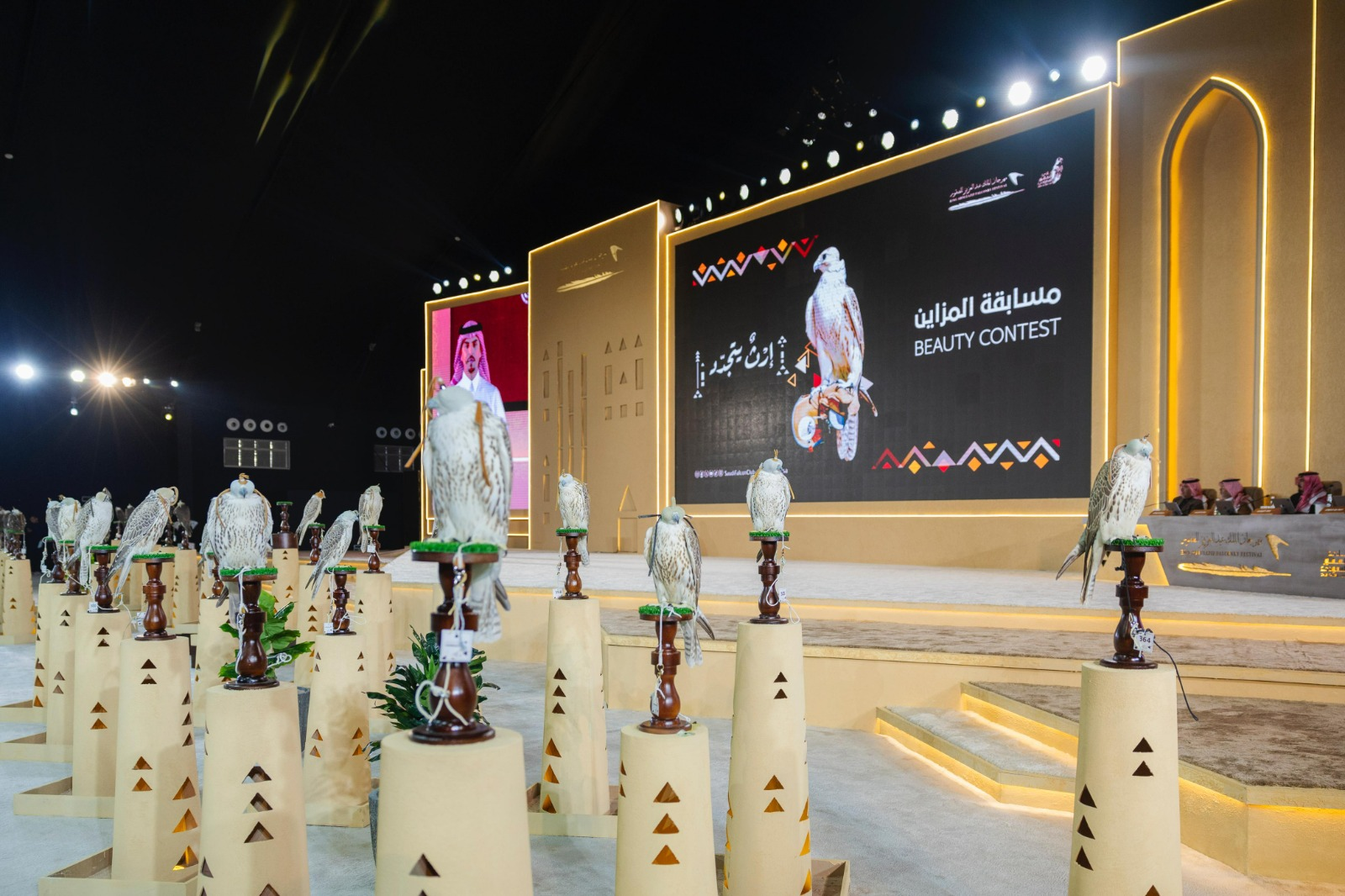
Speed is not the only quality celebrated at the King Abdulaziz Falconry Festival. Al-Mazayen competitions focus on the beauty and physical characteristics of falcons. These events preserve another traditional dimension of falcon culture: the ability to look closely at a bird and recognize quality in its body, feathers, head, proportions, and overall form. The festival therefore combines two older ideas in a modern setting. Al-Milwah asks what the bird can do. Al-Mazayen asks what makes the bird exceptional to look at.
Saudi Falconry Entered the Guinness World Records
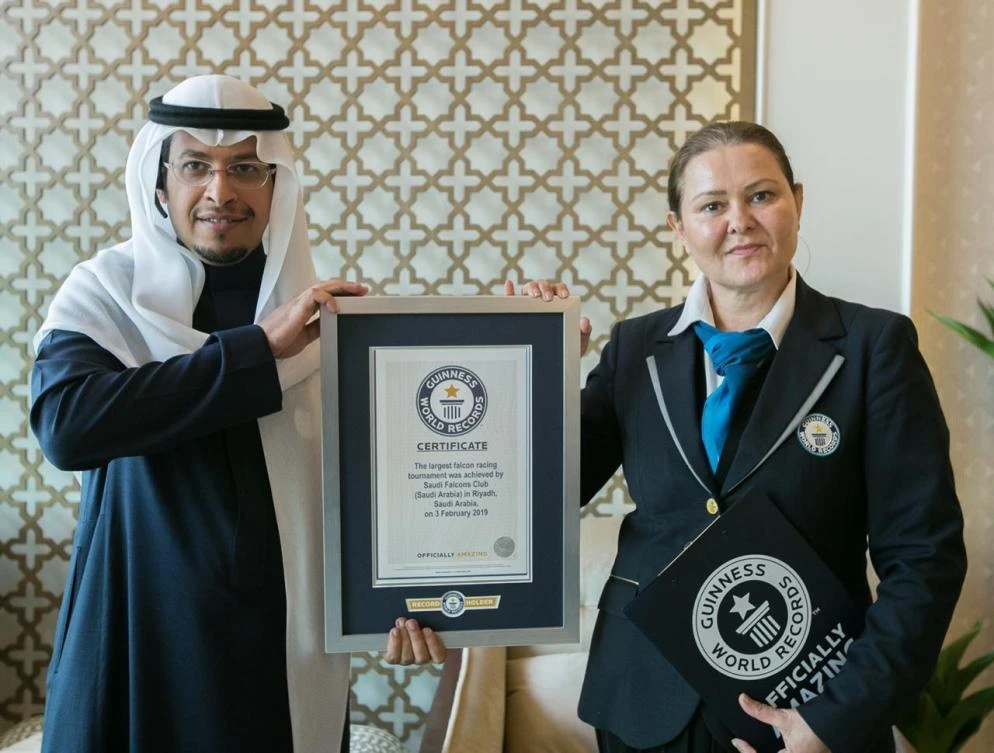
The scale of Saudi falconry today is visible in its international records. In 2023, the King Abdulaziz Falconry Festival achieved the Guinness World Record for the largest falcon racing tournament, with 2,654 participations. The following year, the AlUla Falcon Cup set another major record. Its total prize money reached SAR60 million, earning the Guinness World Record for the greatest prize money offered at a falcon racing tournament. These records reveal how dramatically the setting has changed. A skill once practiced in small hunting parties in the desert can now fill major competitive events watched by audiences from around the world.
Saudi Arabia Became a Global Falcon Marketplace
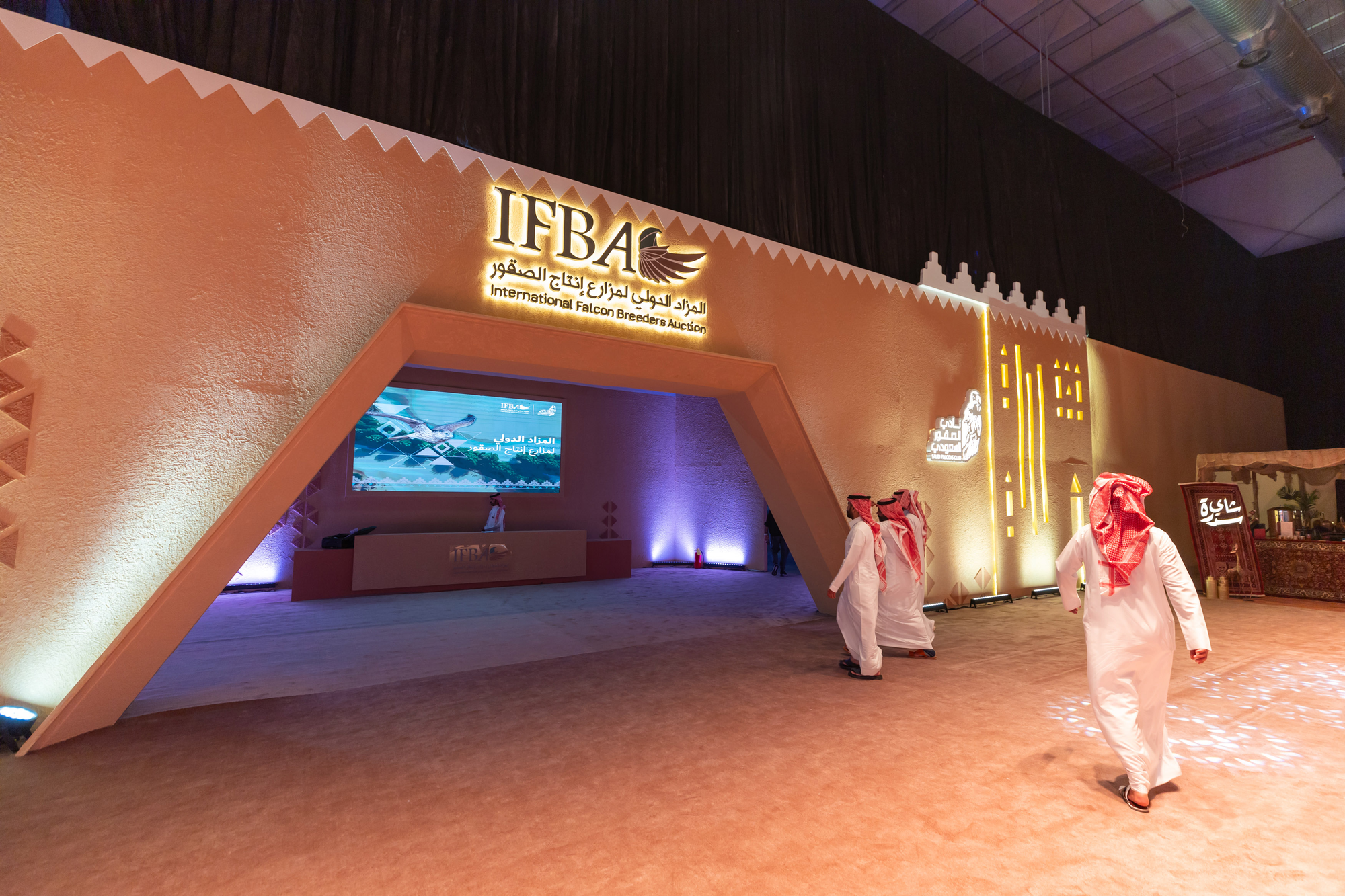
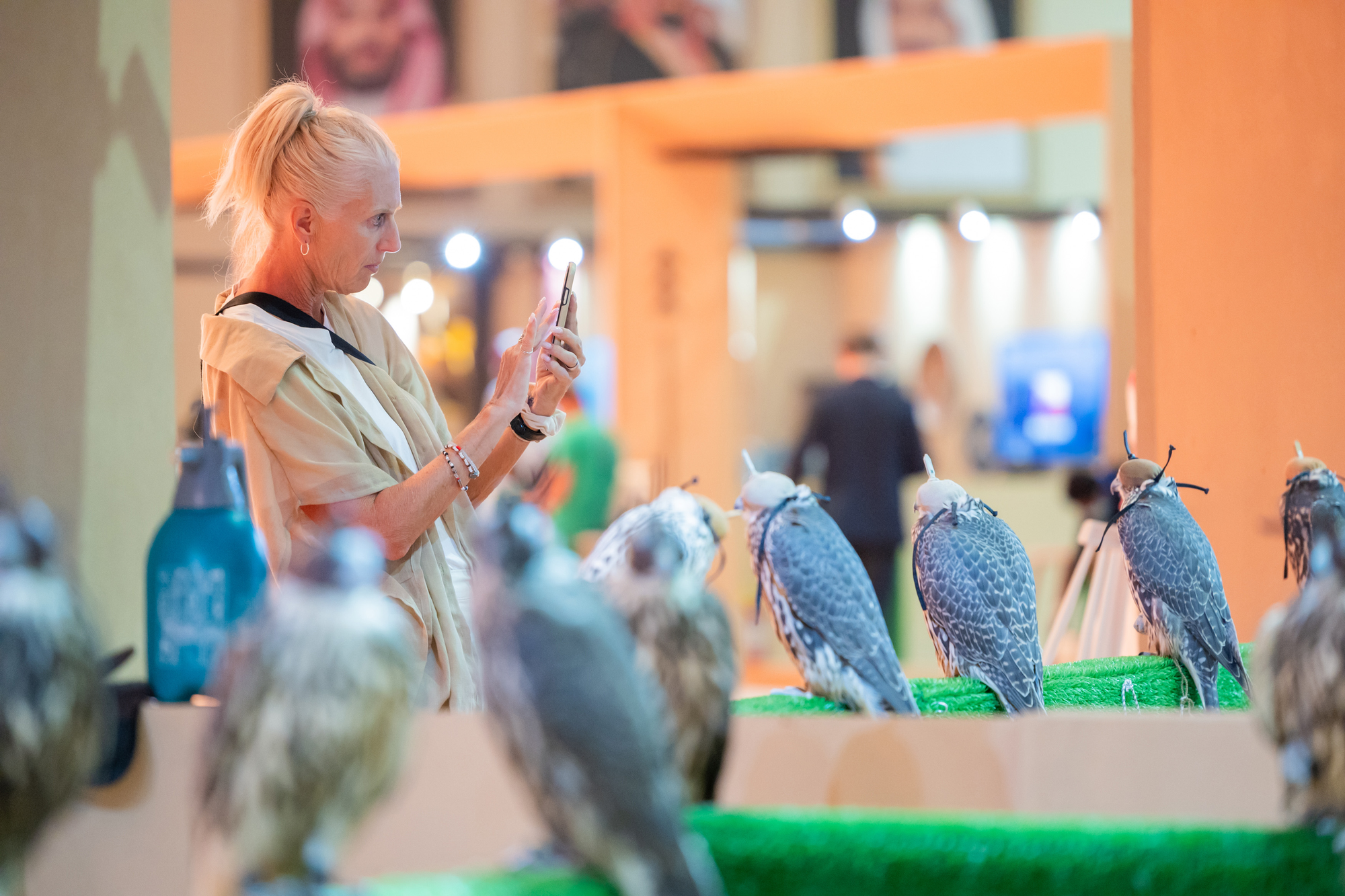
The Kingdom has also become a meeting point for international falcon breeders. The International Falcon Breeders Auction brings birds from specialist breeding farms in Saudi Arabia and abroad. In 2025, 1,103 falcons were sold, with total sales exceeding SAR13 million. Sixty-seven breeding farms from 23 countries participated. The international nature of the market can produce extraordinary prices. At a Saudi auction in 2021, an American-bred Ultra White Gyrfalcon sold for SAR1.75 million. The story shows how Saudi falconry has moved in both directions. Saudi falconers once followed migrating birds through the desert. Today, some of the world’s leading breeders bring their falcons to Saudi Arabia.
UNESCO Recognized Falconry as Living Human Heritage
In 2010, Saudi Arabia was one of the original countries included when UNESCO inscribed “Falconry, a Living Human Heritage” on the Representative List of the Intangible Cultural Heritage of Humanity. The phrase “living human heritage” is important. UNESCO was not preserving falconry as a museum object. Its value lies in the knowledge surrounding the practice: training, bird care, craftsmanship, relationships with nature, social gatherings, and the transfer of expertise between generations. Falconry is shared across many countries and cultures, but Saudi Arabia remains one of the places where the tradition continues to hold particularly visible cultural importance.
A New Generation Is Entering Falconry
Preservation depends on people continuing to practice the tradition. Modern Saudi falconry events increasingly include children and teenagers, allowing them to learn about bird care, species, equipment, and competition. The International Falcon Breeders Auction has even hosted a “Future Falconer” pavilion designed for younger visitors. Women have also become more visible within the sport. Saudi falconer Adhari Al-Khaldi became the first woman to compete in the King Abdulaziz Falconry Festival in 2019, and later festivals have included dedicated women’s rounds. The tradition that once moved primarily from father to son is therefore reaching a broader new generation.
The Hadad Program Returns Falcons to Nature
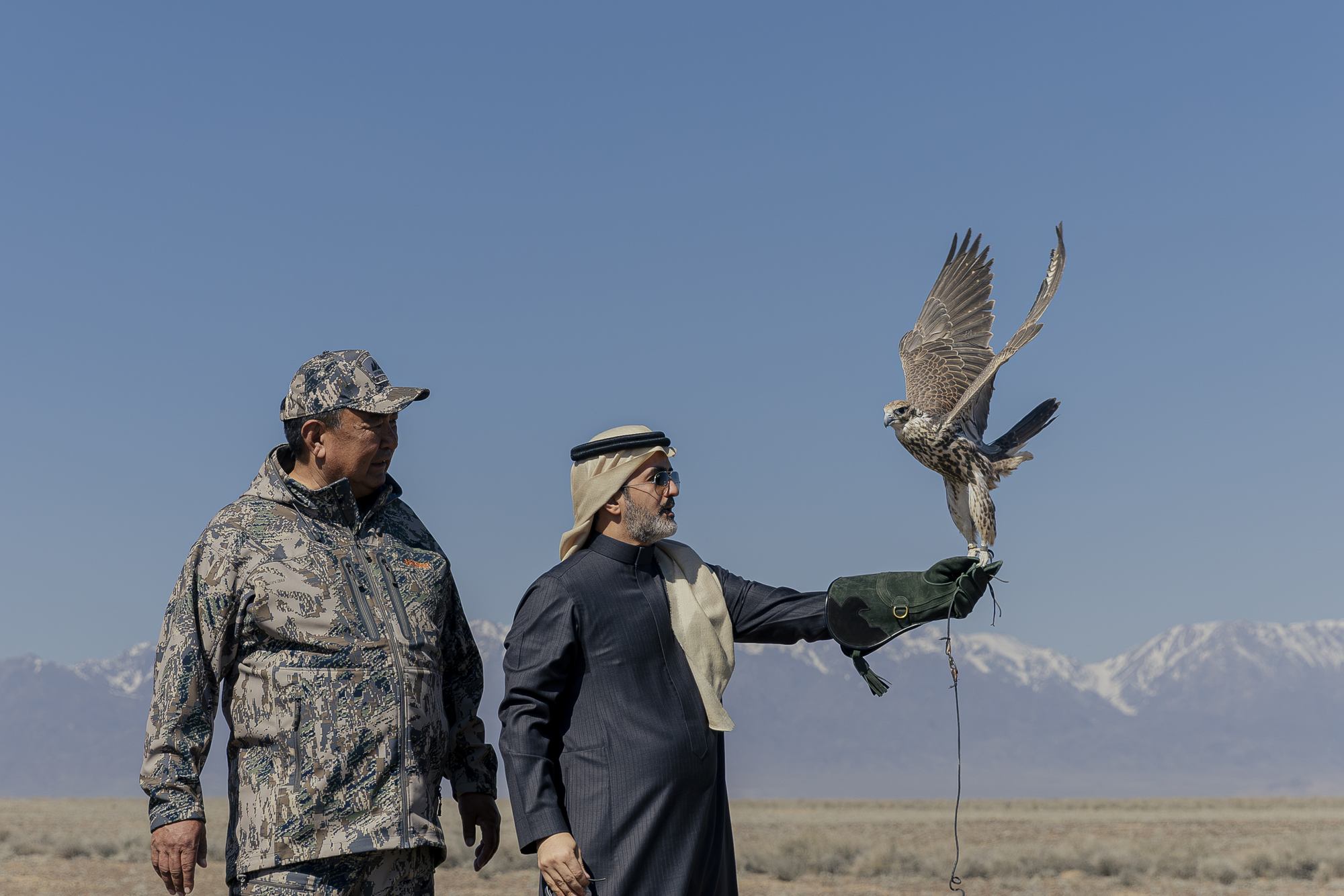
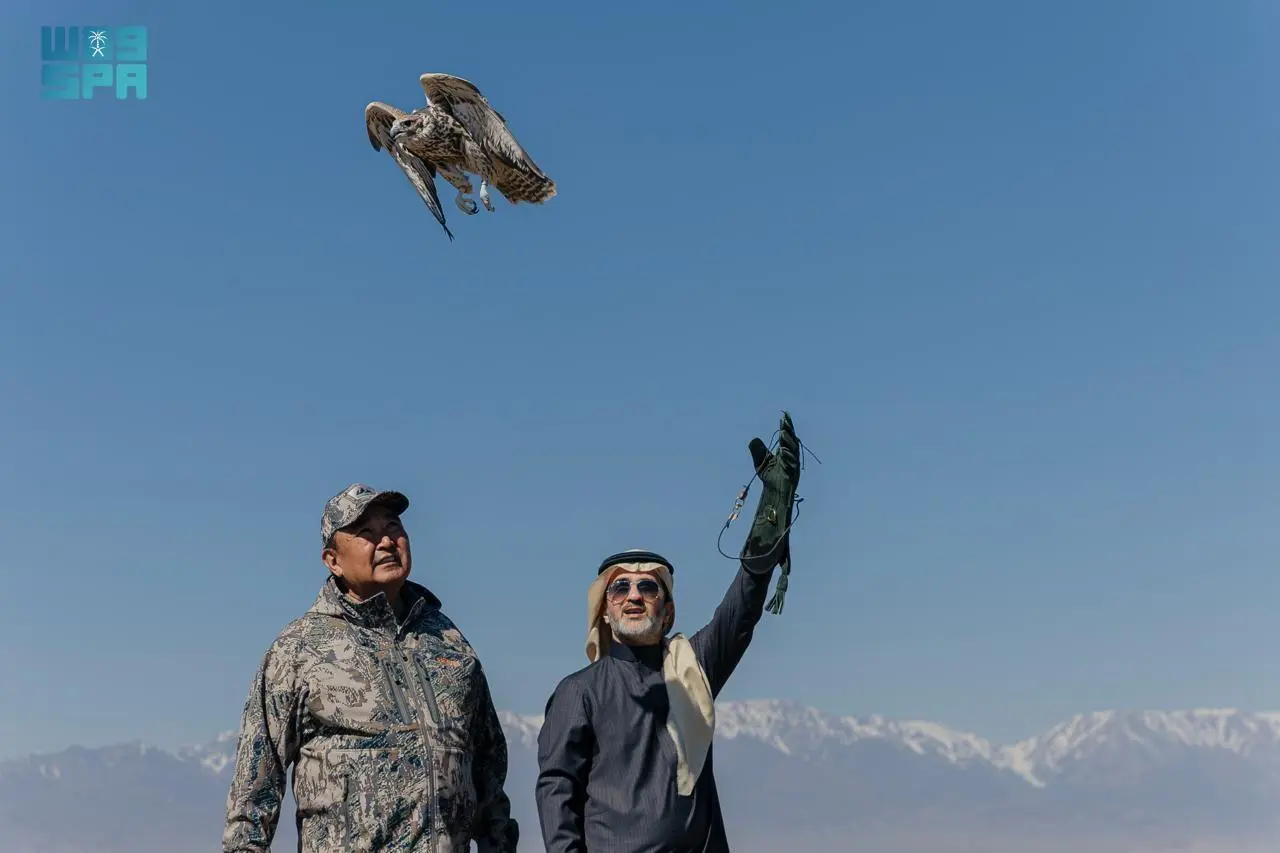
Preserving falconry now also means preserving wild falcons. The Hadad Program was established to return suitable birds to natural habitats. Its work includes health assessment, preparation for release, selection of appropriate environments, tracking, and post-release monitoring. Saudi conservation efforts have also extended internationally. In 2026, saker falcons were released in Altyn-Emel National Park in Kazakhstan, where tracking devices were used to monitor their movement after release. This represents a remarkable reversal of the old falconry story. For centuries, falconers brought wild birds into human care. Modern Saudi conservation programs are also taking carefully selected birds and returning them to the wild.
Saudi Falconry Is Becoming More Regulated
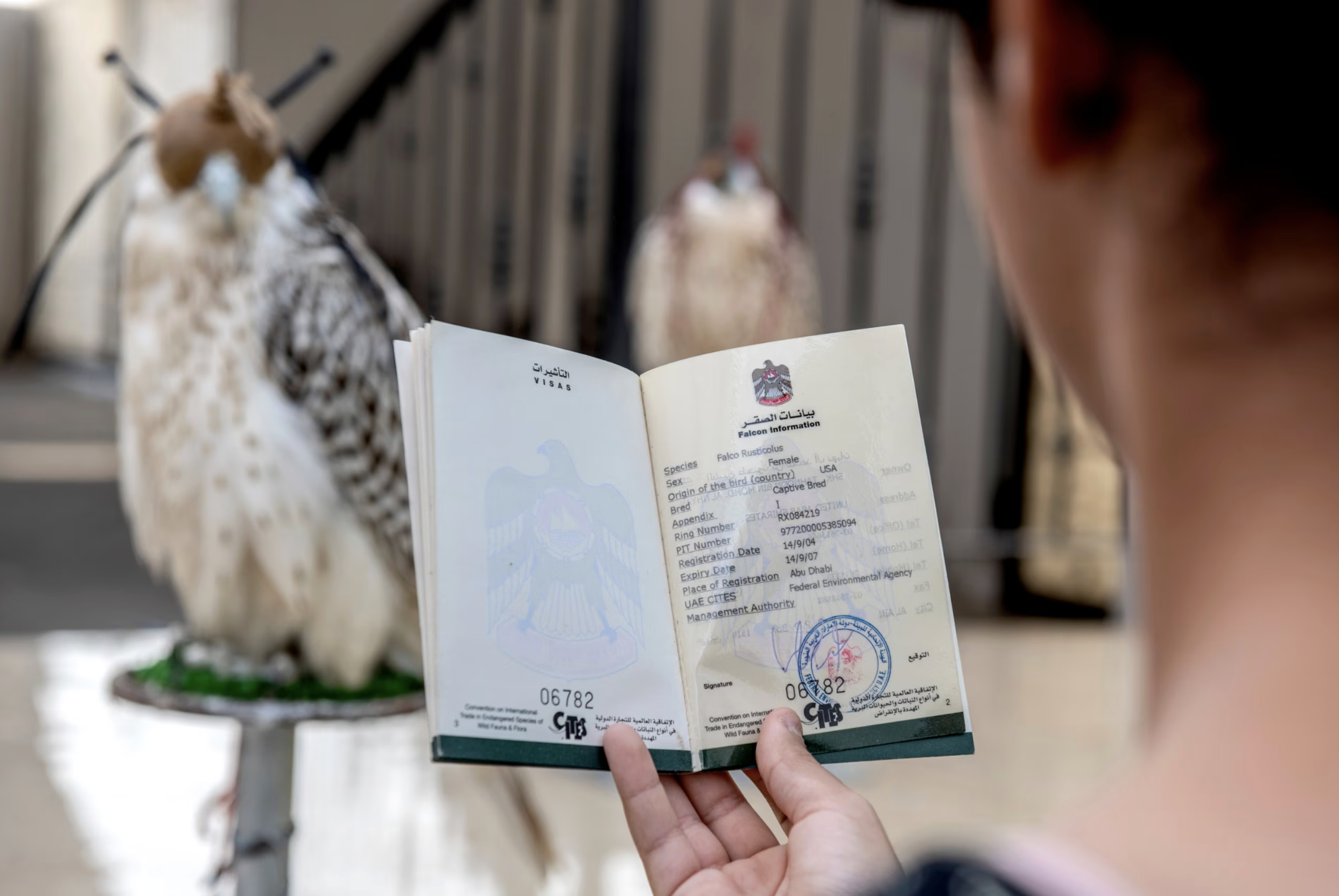
The modern system also places increasing emphasis on documentation and sustainable practice. Falcon ownership can involve registration and passports. Hunting operates through permits. Protected areas and threatened species are subject to environmental regulations. Even competitive falconry has become highly organized. Recent Saudi workshops have addressed the licensing of breeding centers and even anti-doping regulations for falcon competitions. This level of regulation shows how far the practice has moved from informal desert hunting. Falconry is now simultaneously heritage, sport, conservation work, breeding science, and a regulated economic sector.
From the Saudi Falcons Club to the National Center for Falcons
Institutional preservation accelerated with the establishment of the Saudi Falcons Club in 2017. The organization helped develop major festivals, auctions, competitions, education programs, and conservation initiatives. A further change came in 2026, when the regulatory framework for the National Center for Falcons was established. Its responsibilities extend across festivals, auctions, conservation releases, research, databases, breeding, investment, international cooperation, and the protection of falcons as a Saudi cultural and heritage legacy.
This gives falconry something its earlier practitioners could never have imagined: an entire modern institutional system built around preserving and developing the tradition.

From a Hunting Camp to a Global Heritage
Saudi falconry survived by evolving. Hunting gave way to racing, wild trapping to regulated breeding, and desert camps to global competitions, conservation programs, and record-breaking festivals.
Yet the heart of the tradition remains unchanged. The falcon still demands patience, knowledge, and trust. Once, it flew to help sustain life in the desert. Today, it carries the Kingdom's heritage onto the world stage.
Curious for More Cultural Gems Like This?
Subscribe to Saudi Cultures for weekly updates on events, heritage, and voices across the Kingdom.