In May 1927, a day after the Treaty of Jeddah, King Abdulaziz, known in Western sources as Ibn Saud, sent two Najdi horses to the British envoy [Sir Gilbert Clayton] with a letter praising them as among the most authentic horses of Najd. Ten years later, his Arabian horses reached London as a gift to King George VI. These stories, older than China’s modern panda diplomacy, open this article’s argument: a cultural gift speaks of identity, not wealth, and the purebred Arabian horse can become Saudi Arabia’s living ambassador in a new programme of cultural diplomacy.
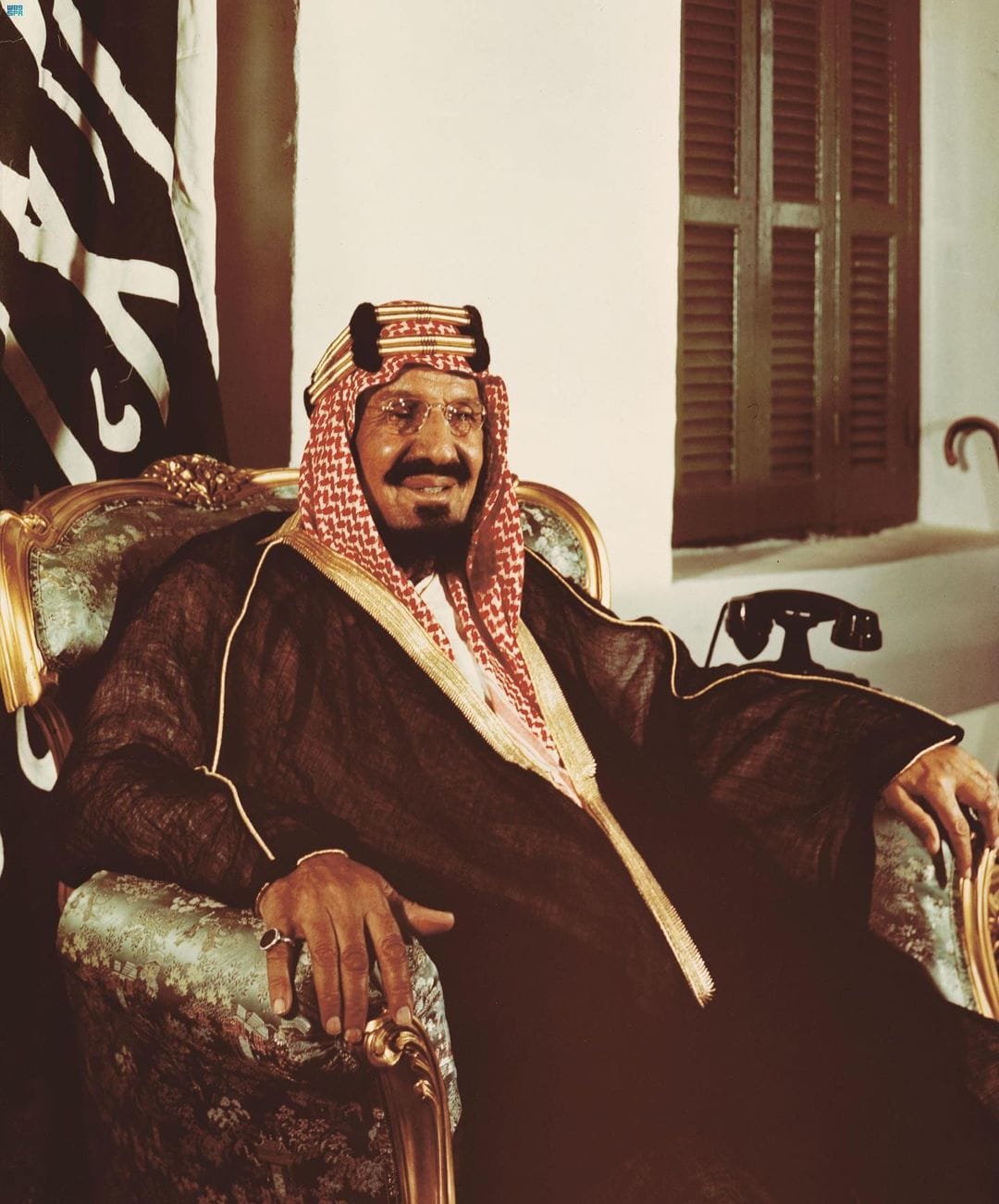
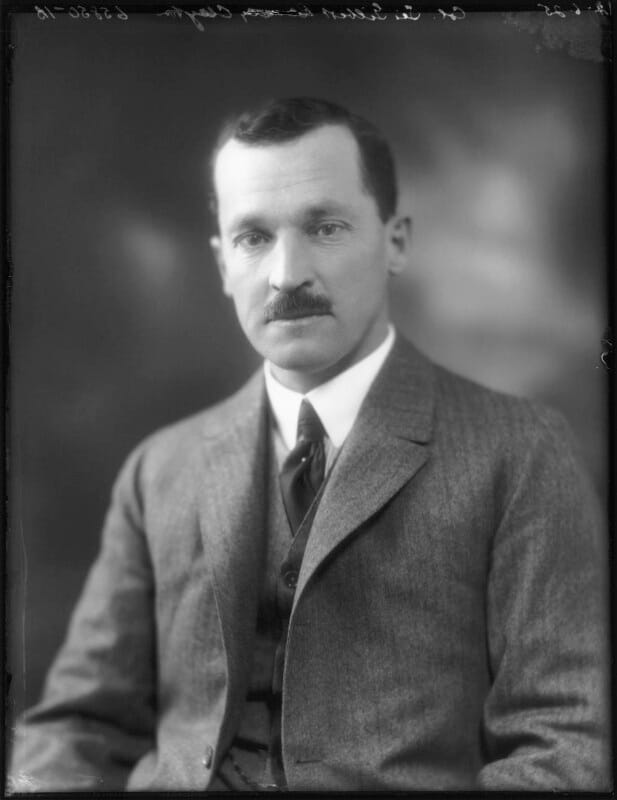
Ibn Saud-Abdulaziz bin Abdul Rahman bin Faisal Al Saud -King of Saudi Arabia (1876-1953), Brigadier-General Sir Gilbert Clayton- High Commissioner for Iraq and Commander-in-Chief therein (1875-1929)
When a Nation Speaks Through a Living Symbol
“تهادوا تحابّوا” — Tahādū, taḥābbū: “Exchange gifts, and you will love one another.”
The Prophet Muhammad ﷺ, narrated by Abū Hurayra. Recorded by al-Bukhārī in al-Adab al-Mufrad, and by Abū Yaʿlā and al-Bayhaqī; Ibn Ḥajar graded its chain of transmission as ḥasan (good) in Talkhīṣ al-Ḥabīr (as cited in Shaybat al-Ḥamd, 2023).
This saying captures, in four syllables, what anthropologists would later theorise and diplomats have always practised: a gift is not an end but a beginning. It creates affection, obligation and a bond that endures.
Some of the most memorable messages in diplomacy are never written down. A pair of giant pandas stepping off a plane in Washington, Moscow or Canberra says more about friendship than many joint communiqués. China understood this decades ago and turned a rare, gentle animal into one of the most recognisable instruments of soft power in modern history.
Saudi Arabia now has its own story to tell the world, and it is a story rooted in the desert, the mountains and the oasis. Under Vision 2030, the Kingdom has opened its heritage to visitors, invested in culture as a pillar of national identity, and placed conservation at the centre of its development plans. What remains to be imagined is a living symbol that might travel abroad on its behalf, quietly carrying a message of trust, care and shared values.
This article proposes exactly that: a structured Saudi programme of “heritage-animal diplomacy,” inspired by China’s panda model but grounded in Arabian tradition. It asks which Saudi symbol can carry that role, how the programme could work, and what safeguards it would need to succeed.
The Language of the Gift: Anthropology and Arabic Terms
In anthropology, a gift is never simply an object that changes hands. Marcel Mauss (1925/1990) showed that gift exchange is a “total social fact” governed by three obligations: to give, to receive, and to reciprocate. A gift therefore creates a relationship and a debt of honour that binds giver and receiver over time.
Diplomacy carries this logic between states. Iver Neumann (2021) argues that a diplomatic gift calls for a counter-gift, which in turn calls for a new gift, so that a gift received opens an ongoing exchange rather than closing a transaction. Gifts are thus a form of communication: they speak of rank, friendship and intention without words.
Arabic diplomatic culture made these meanings explicit in its vocabulary. In the Mamluk Sultanate, at least three types of diplomatic gift coexisted: presents exchanged between equals, tribute, and gifts that carried an encrypted message. Several Arabic terms named them, with overlapping meanings (Behrens-Abouseif, 2014, p. 22, as cited in Favereau, 2017, p. 70):
- hadiyya (هدية): a gift.
- taqdima (تقدمة): both “gift” and “tribute.”
- inʿām (إنعام): a gift granted by the sultan to a subordinate.
Because this terminology was not standardised, each gift had to be read in context. Mastering the “language of gifts” was essential in a social order built on hierarchy and rank, and every gift package mirrored the balance of power between the two parties (Favereau, 2017, p. 70). For a Saudi heritage-gift programme, the lesson is clear: the choice of word, animal and ceremony is itself the message.
What Makes a Gift Cultural?
The answer lies in cultural diplomacy, and the gift is one of its expressions. Milton Cummings (2003) defines cultural diplomacy as the exchange of ideas, information, art and other aspects of culture among nations and their peoples to foster mutual understanding. A gift becomes cultural when its value comes less from its price than from what it carries: a people’s heritage, values, skills and story. A gold watch says we can afford this; a purebred Arabian horse, a falcon or a bottle of Taif rose oil says this is who we are.
In this sense, the cultural gift is indeed more personal. It is personal not to the ruler but to the nation, because it offers something of a people’s identity. In Neumann’s (2021) terms, it is a “unique” gift, highly valued by both giver and receiver. This is why the panda moves audiences in a way that a trade agreement cannot, and why the Arabian horse, bred and named across generations of Arabian families, can do the same for Saudi Arabia.
Lessons from the Panda: How China Turned an Animal into an Ambassador
China’s panda diplomacy began as a gesture between allies. In the 1950s, Mao Zedong’s government started presenting pandas to friendly socialist states to build goodwill, and the first pair, Ping Ping and Qi Qi, arrived in the Soviet Union in 1957 to mark the 40th anniversary of the October Revolution.
The model matured over time. In 1984, under Deng Xiaoping, outright gifts gave way to long-term loans, and these loans usually came with joint conservation research, so that diplomacy and science moved together. Loans typically run for ten years at about US$1 million per year, host zoos cover food and care, and cubs born abroad are returned to China to join its breeding programme.
Three features explain why the model works:
- Rarity and ownership. Every panda abroad remains China’s. The animal is lent, not given, so the relationship must be renewed and nurtured.
- Conservation as a shared mission. Host institutions pay fees that support panda conservation in China, which gives the arrangement a moral purpose beyond politics.
- Timing as a signal. Analysts note that many loans have coincided with trade deals, and that the arrival or departure of pandas often mirrors the warmth of a bilateral relationship.
“For Saudi Arabia, the value of the panda model may lie less in the animal itself than in the thinking behind it. Three elements stand out: a distinctive living symbol that people can love, a conservation purpose that the world respects, and a thoughtful diplomatic protocol that gives each gift its meaning. Saudi heritage already holds the materials for each of these, waiting to be brought together in a form of its own.”
Older Than the Panda: The Arabian Roots of Gift Diplomacy
Gift exchange was a sine qua non of foreign policy in the Mamluk Sultanate (1250–1517), continuing older Roman, Sasanian, Arabic and Byzantine traditions (Behrens-Abouseif, 2014, as cited in Favereau, 2017, p. 70). Weapons and horse trappings were central to the Mamluk gift package. Diplomatic presents were treated as the property of the state treasury, the bayt al-māl, rather than of the sultan personally (Favereau, 2017, pp. 70–71). This principle anticipates the modern panda loan by seven centuries, and it offers a historical foundation for a Saudi model in which heritage animals are lent, not given.
Saudi Arabia’s Head Start: The Arabian Leopard and Princess Reema’s Leadership
Saudi Arabia does not begin from zero. It already has a living symbol with global recognition: the Arabian leopard, a critically endangered subspecies with fewer than 200 individuals believed to remain in the wild.
Her Royal Highness Princess Reema bint Bandar Al Saud, the Kingdom’s first female ambassador to the United States, has made this animal a personal cause. She founded Catmosphere, a non-profit for wild-cat conservation, and launched its global “Catwalk” campaign in 2021, in which Saudi missions and the Ministry of Foreign Affairs took part. On the first national Arabian Leopard Day, she and Prince Badr bin Farhan, Minister of Culture and Governor of AlUla, signed an MoU to support the Royal Commission for AlUla’s leopard conservation programme. She also launched The Arabian Leopard, a book documenting the Kingdom’s conservation efforts.
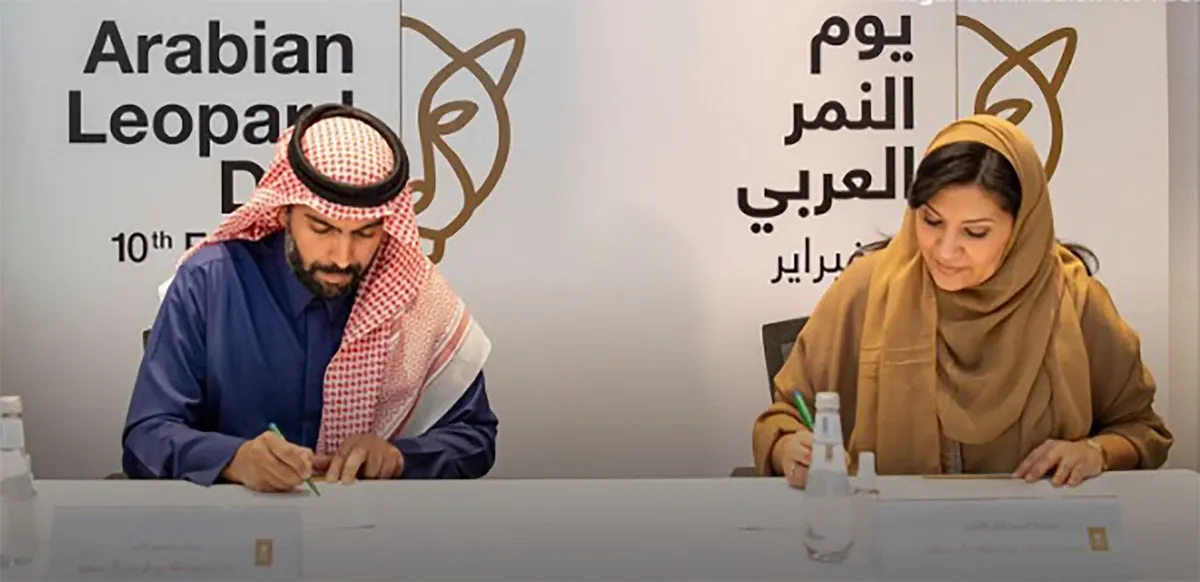
Meanwhile, the Royal Commission for AlUla committed US$25 million to the Arabian Leopard Fund, and breeding centres such as Taif’s have welcomed new cubs.
In other words, the Kingdom already has the three ingredients of the panda model: a charismatic species, a credible conservation mission and a senior diplomatic champion. What fosters that is a formal, ongoing programme that turns these achievements into lasting bilateral relationships.
Why the horse leads?
The Arabian horse is the only symbol that already has a Saudi diplomatic history behind it. King Abdulaziz presented King George VI with the mare Turfa for his coronation, gave the Queen of the Netherlands four Arabian horses, and sent twelve purebreds to King Abdullah of Jordan. A 1937 shipment to London of four horses and four camels was described as a token of friendship, and Turfa was reportedly trained as a riding horse for the young Princess Elizabeth.
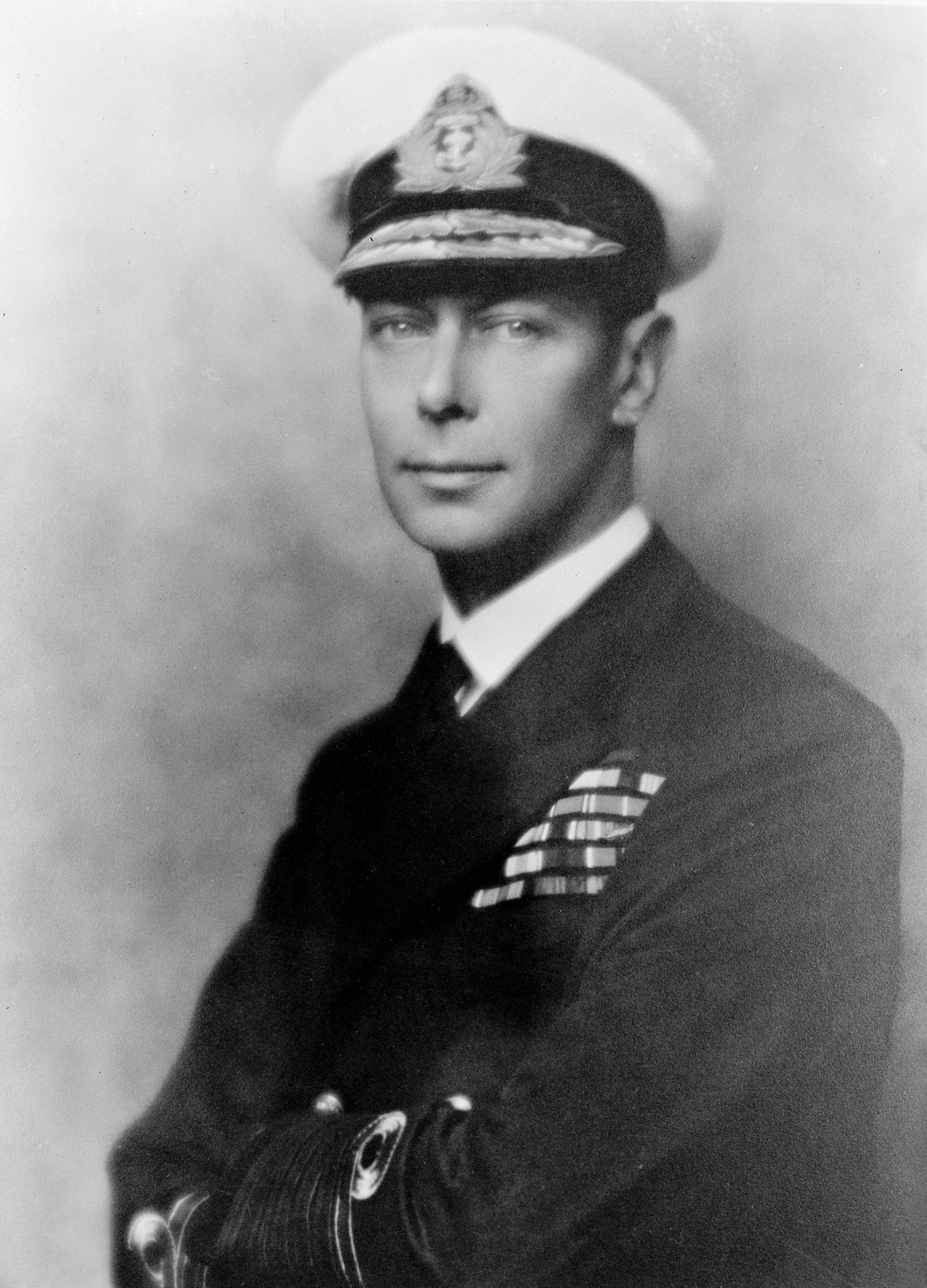
Gifts alongside hard diplomacy. The King’s horses also accompanied the most difficult negotiations of the founding era. Brigadier-General Sir Gilbert Clayton (1875–1929) served as Britain’s envoy to King Abdulaziz from 1925 to 1928, and was knighted in 1926 for concluding agreements with the ruler of Najd (Daly, 2004). On 20 May 1927 he signed the Treaty of Jeddah with Prince Faisal, acting for his father. The very next day, 21 May 1927 (20 Dhu al-Qaʿdah 1345), a letter from the Diwan of the King, on the letterhead of the “Kingdom of the Hejaz and Najd and its Dependencies,” presented Clayton with a stallion and a mare. The King described the stallion as a Saqlawi among “the most authentic horses of Najd” and the mare as a Kuhaylat al-Krush, and apologised that a month in the desert had dulled their looks (Aldahdah, 2023). The mare was probably Dafina, imported to England in June 1927 through Clayton for Lady Wentworth’s Crabbet Stud, in return for her hospitality to Prince Faisal (Aldahdah, 2023, citing Upton, 1989). The following year Clayton held fifteen meetings with the King in Jeddah, in May and August 1928, over the disputed desert border between Najd and British-mandated Iraq. An archive of 332 pages of British official papers on these talks, including four letters bearing the royal seal, was offered at Sotheby’s in London in 2010 (Sotheby’s, 2010). The papers show a King keenly aware of his people’s traditions yet fluent in the language of international law. Set beside that record, the gift of horses reads not as a courtesy but as part of the King’s diplomatic vocabulary: a sign of goodwill offered even while hard interests were being negotiated.
The practice passed to the next generation. During the 1938 visit of Princess Alice and the Earl of Athlone to Saudi Arabia, Crown Prince Saud presented the Earl with a gift of horses before taking the royal party on a two-day hunt (Oxford Centre for Islamic Studies, n.d.).
The institutional base also exists. The King Abdulaziz Arabian Horse Center in Dirab, founded in 1961, still keeps desert-bred horses descended from the founder’s own herd and is the Kingdom’s official registry. In 2016 it ranked first in the world for purebred Arabian foal registrations, with 3,137 births. Like the panda, these rare Saudi bloodlines can be lent rather than given, so the Kingdom keeps ownership and the relationship stays alive.
The camel, falcon and leopard still have roles. The camel is the deepest symbol of Saudi identity, celebrated in the 2024 Year of the Camel, which coincided with the UN’s International Year of Camelids. Falconry, inscribed by UNESCO with Saudi Arabia among the nominating states, is a ready-made bridge to countries that share the tradition. The leopard is the Kingdom’s conservation flagship. A smart programme uses the horse as the travelling ambassador and the other three as partners in its story.
The Proposal: The Al-Aṣīl Diplomacy Initiative
The proposed programme, the Al-Aṣīl Diplomacy Initiative (مبادرة الأصيل), would turn Saudi Arabia’s living heritage into a standing instrument of friendship. The word aṣīl means purebred, noble and rooted, which is exactly the message the Kingdom wants to send. It would rest on four connected pillars.
- The Aṣīl Ambassadors (horse loans). Selected horses of rare Saudi desert-bred lines would be lent, not given, to the national studs, royal stables or leading equestrian centres of partner countries. Loans of five to ten years would be timed to diplomatic anniversaries, state visits and major cultural seasons. Saudi Arabia would keep ownership, and foals would be registered in the Saudi studbook and shared under agreed terms.
- The Leopard Partnership (conservation twinning). No leopard would leave the Kingdom. Instead, partner zoos, universities and conservation bodies would “twin” with Saudi breeding and research programmes, host 10 February events at embassies, and fund joint fellowships. As with panda fees, partner contributions would flow into a Saudi conservation fund.
- Cultural Bridges (falcon and camel). Falconry exchanges would link Saudi Arabia with the many states that share the UNESCO inscription. Camel heritage, from rock art to poetry, would travel through exhibitions, festivals and parades like the Saudi presence at the 2024 Paris camel parade.
- The Story (language, naming and narrative). Every ambassador horse would receive an Arabic name chosen with meaning, and its arrival would be marked with a ceremony that introduces Arabic poetry, calligraphy, regional dress and hospitality. The animal opens the door; the story of Saudi people walks through it.
Governance. The initiative might be guided by a small steering committee drawing on the bodies that already hold its strengths: the Ministry of Foreign Affairs, the Ministry of Culture, the Ministry of Environment, Water and Agriculture through the King Abdulaziz Arabian Horse Center, the Royal Commission for AlUla, and the National Center for Wildlife. Embassy cultural sections could serve as its presence abroad, while the Saudi National Commission for Education, Culture and Science might offer a natural bridge to UNESCO.
A patron with credibility. Princess Reema bint Bandar’s long commitment to the Arabian leopard would make her a fitting honorary patron, linking the initiative to work the world already knows and respects.
Measuring success. The value of each loan could be traced through a few simple measures: visitors welcomed at the host site, media attention, interest in travel to Saudi Arabia, joint research, student and cultural exchanges, and the new partnerships that grow during the loan.
From the Desert to the World
Joseph Nye described soft power as the ability to attract rather than compel. China found that attraction in a panda. Saudi Arabia can find it in the noble horse its founder once sent to kings as a sign of friendship.
The timing could hardly be better. Culture is moving to the centre of the global development debate. At MONDIACULT 2025 in Barcelona, ministers of culture adopted an outcome document that reaffirms culture as a global public good and calls for it to become a stand-alone goal in the United Nations development agenda after 2030 (International Federation of Arts Councils and Culture Agencies [IFACCA], 2025). Such a goal would sit alongside the current seventeen Sustainable Development Goals, with the 2027 SDG Summit seen as the next milestone. A Saudi initiative that joins heritage, conservation and friendship between peoples would offer a living example of culture as a driver of sustainable development, and a timely Saudi contribution to that global conversation.
The Al-Aṣīl Diplomacy Initiative would not invent a new tradition. It would formalise an old one, connect it to the Kingdom’s conservation leadership on the Arabian leopard, and give embassies a living story to tell. When a Saudi horse with an Arabic name arrives in a foreign capital, it will carry more than a bloodline. It will carry the message that Saudi Arabia shares what it treasures, protects what it loves, and seeks friendships that last as long as a heritage.

Sources
- Aldahdah, E. (2023, November 9). Hujjah of Krush mare and Saqlawi stallion in the words of King Abd al-ʿAziz Aal Saud from 1927. Daughters of the Wind.
- Arab News. (2022, February 10). Saudi Arabia celebrates inaugural Arabian Leopard Day.
- Arab News. (2022, October 27). Saudi-led Catmosphere to hold its second ‘Catwalk’ with a focus on Arabian leopard.
- Arab News. (n.d.). Saudi Arabia’s efforts to protect Arabian Leopard documented by Princess Reema bint Bandar.
- Arab News Japan. (2023). Praise as UN adopts Feb. 10 as International Day of the Arabian Leopard.
- Arup, T. (2014). The rise and influence of koala diplomacy. The Sydney Morning Herald, via USC Center on Public Diplomacy.
- Australian Minister for Foreign Affairs. (2015, April 9). Australia sends koala envoys to Singapore [Media release].
- al-Bukhārī, M. ibn I. (n.d.). Al-Adab al-mufrad [الأدب المفرد]. (Original work composed 9th century CE). Hadith of Abū Hurayra: “Tahādū taḥābbū” [تهادوا تحابّوا].
- Cummings, M. C., Jr. (2003). Cultural diplomacy and the United States government: A survey. Center for Arts and Culture.
- Daughter of the Wind. (2013, September 5). On *Turfa as a ride for Queen Elizabeth, from the JAHS.
- Daly, M. W. (2004). Clayton, Sir Gilbert Falkingham (1875–1929), army officer and colonial administrator. In Oxford Dictionary of National Biography. Oxford University Press. https://doi.org/10.1093/ref:odnb/32440
- Favereau, M. (2017). [Review of the book Practising diplomacy in the Mamluk Sultanate: Gifts and material culture in the medieval Islamic world, by D. Behrens-Abouseif]. Bulletin critique des Annales islamologiques (BCAI), 31, 70–72. Institut français d’archéologie orientale (IFAO). http://www.ifao.egnet.net
- Gartrell, A. (2015). Taxpayers slugged $130,000 for Julie Bishop’s koala diplomacy. USC Center on Public Diplomacy.
- Gulf News. (2021). Saudi envoy to US launches global wild cat group.
- International Federation of Arts Councils and Culture Agencies. (2025, October 15). ACORNS 465: Our shared vision at MONDIACULT 2025: There is no future without culture. IFACCA.
- Kontinentalist. (n.d.). Panda diplomacy: Gifting pandas to further China’s politics.
- Mauss, M. (1990). The gift: The form and reason for exchange in archaic societies (W. D. Halls, Trans.). Routledge. (Original work published 1925)
- Ministry of Environment, Water and Agriculture. (n.d.). King Abdulaziz Arabian Horse Center. Kingdom of Saudi Arabia.
- Neumann, I. B. (2021). Diplomatic gifts as ordering devices. The Hague Journal of Diplomacy, 16(1), 186–194. https://doi.org/10.1163/1871191X-BJA10061
- NPR. (2025, January 24). The debut of new pandas in D.C. marks the latest chapter in China’s ‘panda diplomacy’.
- Nye, J. S. (2004). Soft power: The means to success in world politics. PublicAffairs.
- Oxford Centre for Islamic Studies. (n.d.). Journey of a lifetime: Princess Alice’s historic trip to the Kingdom of Saudi Arabia [Exhibition leaflet].
- Saudipedia. (2024, December 23). What were King Abdulaziz’s gifts?
- Saudipedia. (n.d.). King Abdulaziz Arabian Horse Center.
- Saudipedia. (n.d.). Year of the Camel 2024.
- Shaybat al-Ḥamd, ʿA. (2023, October 7). Ḥadīth: Tahādū taḥābbū [حديث: تهادوا تحابوا]. Alukah Network.
- Sotheby’s. (2010). Ibn Saud, King Abdul Aziz—Clayton, Sir Gilbert: An important and substantial archive of three files of British official papers concerning a series of fifteen meetings between Clayton … and King Abdul Aziz Ibn Saud in May and August 1928 (Lot 160). In Travel, atlases, maps & natural history [Auction catalogue, sale L10401]. London: Sotheby’s.
- UNESCO. (2016). Decision 11.COM 10.B.15: Falconry, a living human heritage. Intergovernmental Committee for the Safeguarding of the Intangible Cultural Heritage.
- United Nations. (n.d.). International Day of the Arabian Leopard, 10 February.
- United Nations Environment Programme. (2024). First commemoration of the International Day of the Arabian Leopard.
- University of Western Australia. (2024, June). China’s long history of panda diplomacy.
- Upton, P. (1989). The Arab horse. The Crowood Press.