In Al-Baha, history is written across mountainsides in stone. Old houses rise from rocky slopes, forts overlook valleys, and agricultural terraces trace the contours of a landscape shaped by generations of settlement. Dhee Ayn may be the region's most recognizable heritage village, but beyond it lies a much larger collection of historic communities, each carrying a different part of Al-Baha's story.
How Many Heritage Villages Are There in Al-Baha?
Al-Baha is home to 72 classified heritage villages, according to SPA, part of a wider count of roughly 194 archaeological and heritage sites across the region's mountains, valleys, and Tihama plain. The 72 figure refers specifically to villages, not the larger number of individual buildings, forts, and mosques also registered across Al-Baha.
Documentation keeps expanding. In June 2025, the Heritage Commission added 499 new architectural heritage sites in Al-Baha as part of a nationwide push, and by January 2026 similar registration work across Al-Baha, Aseer, and Makkah helped the Commission reach its target of 50,000 registered urban heritage assets nationwide.
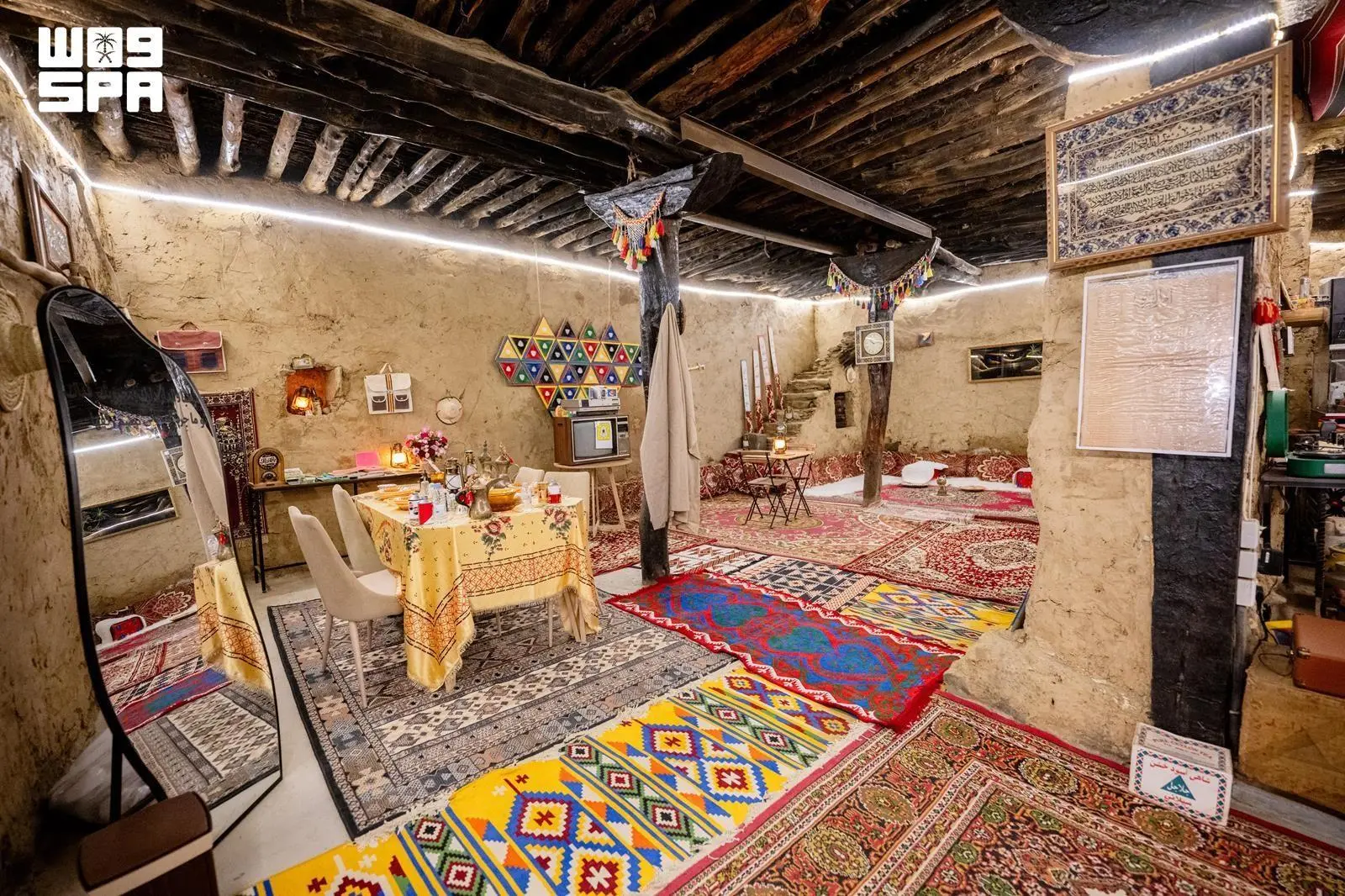
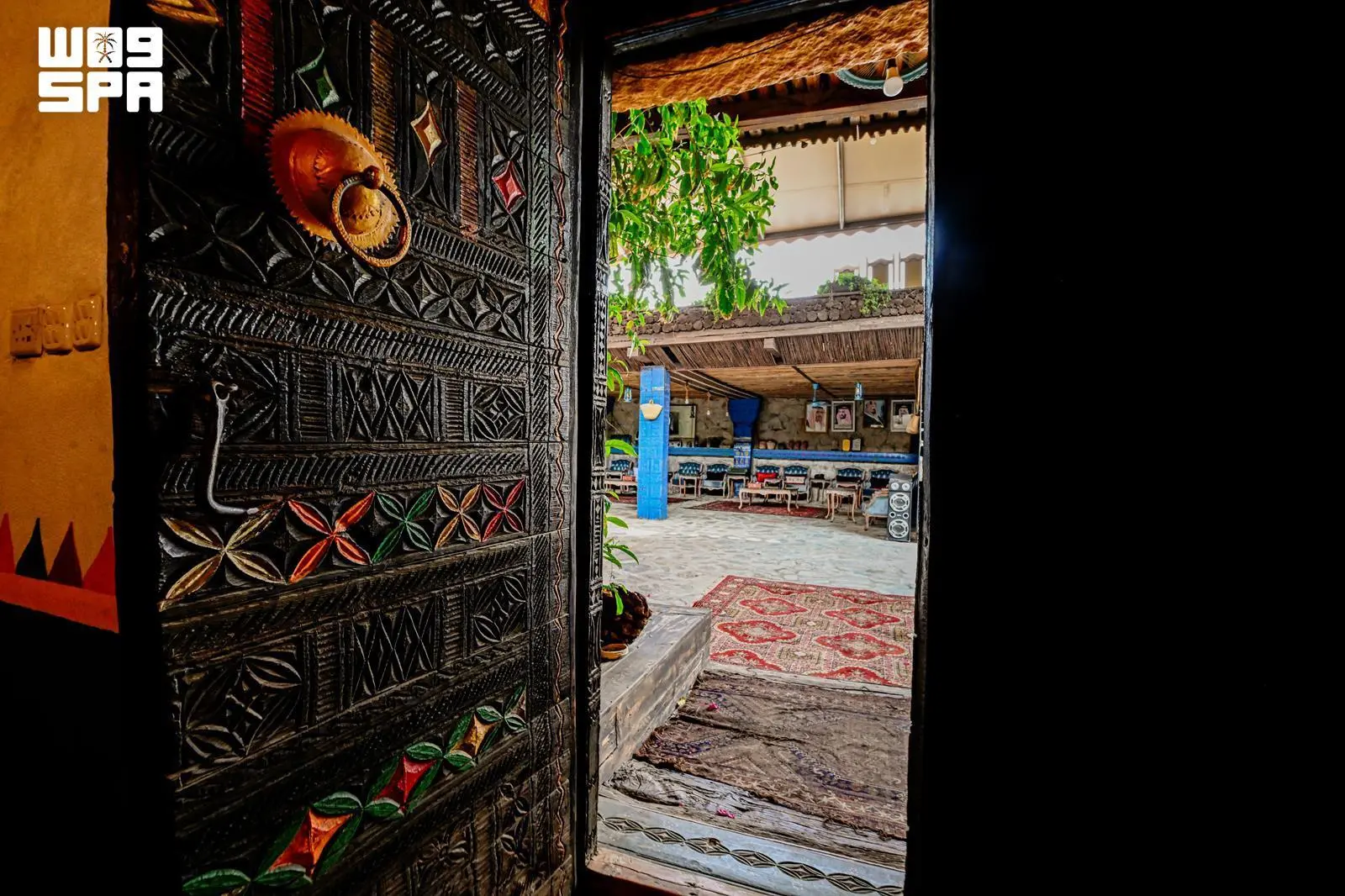
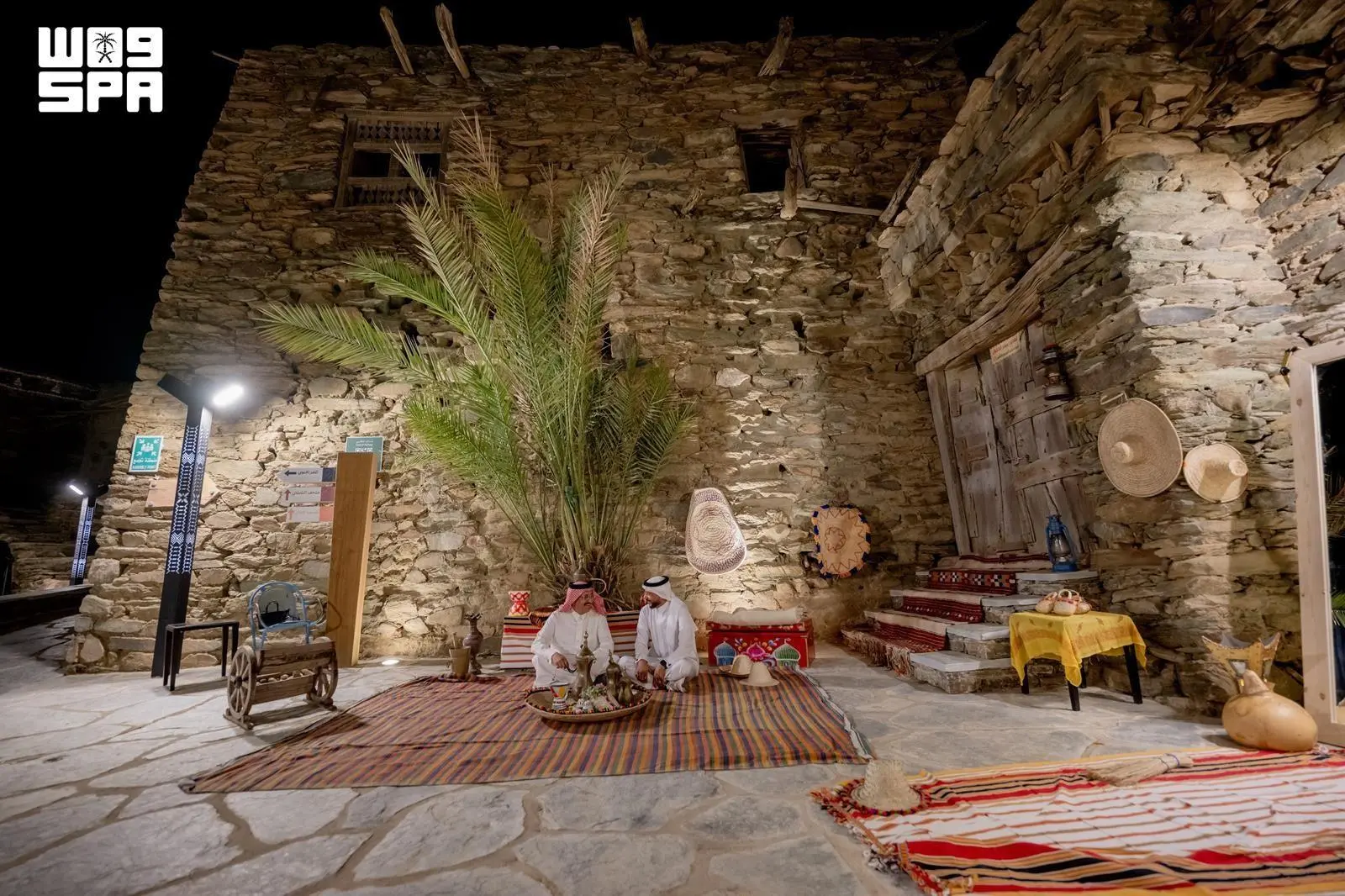
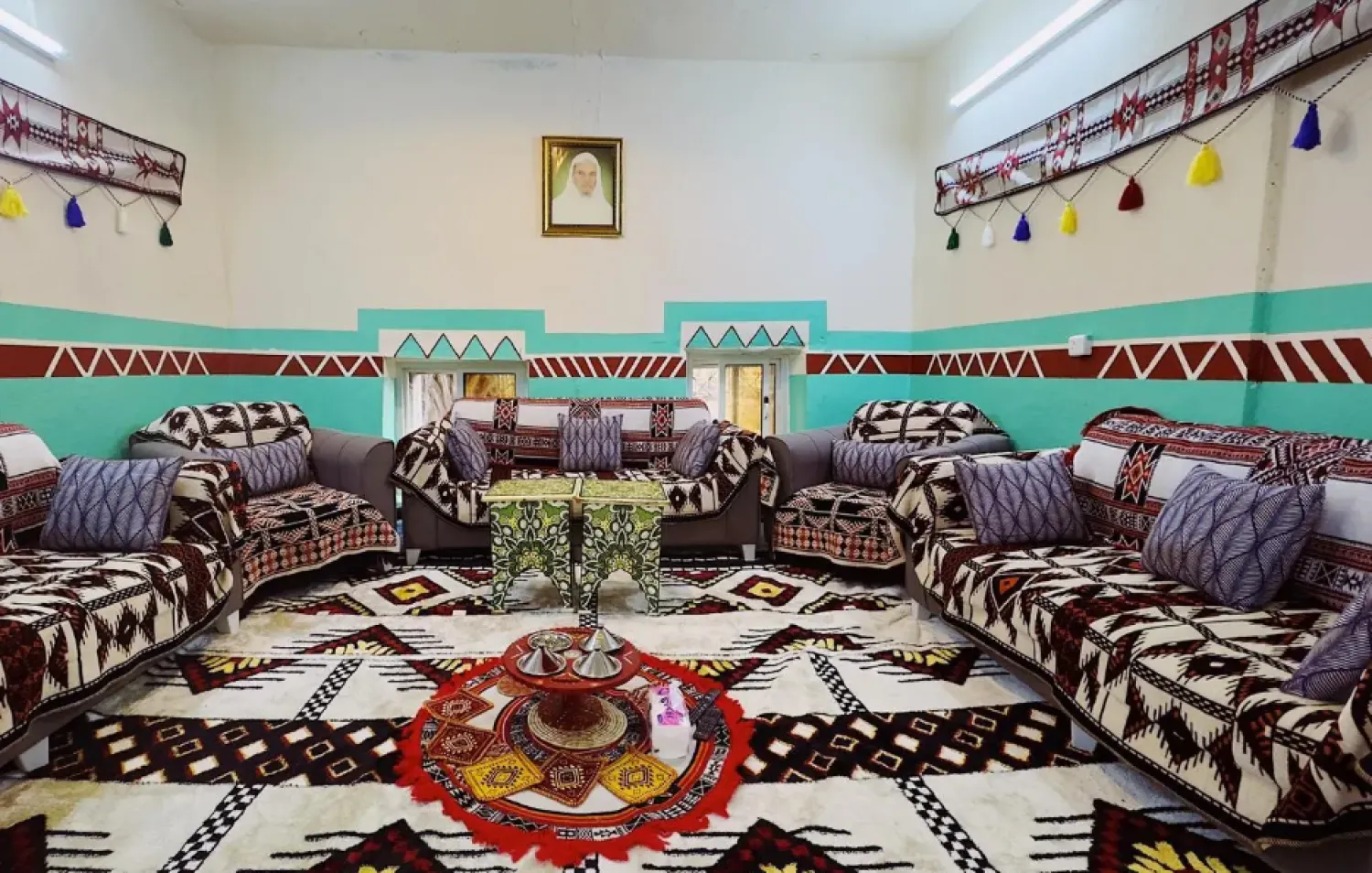
Traditional Al-Baha heritage interiors featuring colorful woven rugs, wooden ceilings, earthen walls, and a carved wooden doorway.
Why Dhee Ayn Has International Heritage Significance
Any journey through Al-Baha's heritage begins with Dhee Ayn. Located in Al-Makhwah Governorate, the village is distinguished by multi-story stone houses built on a rocky elevation above a spring-fed oasis that has long supported orchards and fruit trees. The settlement, also transliterated as Zee Ain, Thee Ain, or Dhi Ayn, developed above a perennial spring that sustained orchards and agricultural terraces below, linking water, farming, and settlement in one cultural landscape. This relationship helped earn Dhee Ayn a place on Saudi Arabia’s UNESCO World Heritage Tentative List, both individually and as part of the proposed Rural Cultural Landscapes of the Sarawat Mountains.
Its multi-story stone houses rise directly from a rocky outcrop above the oasis, creating one of the region’s most recognizable views. The village shows how communities adapted difficult mountain terrain for long-term settlement, using elevation for housing and the spring-fed land below for cultivation. Its story is ultimately one of water making life possible in an otherwise demanding landscape.
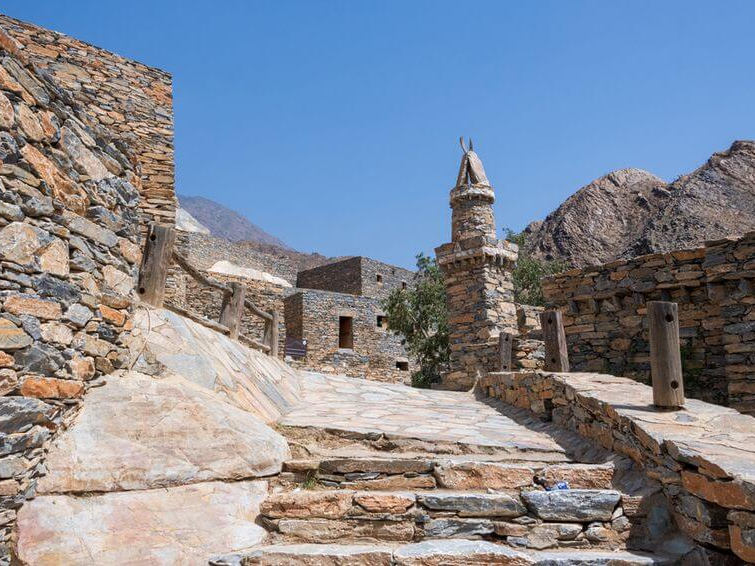
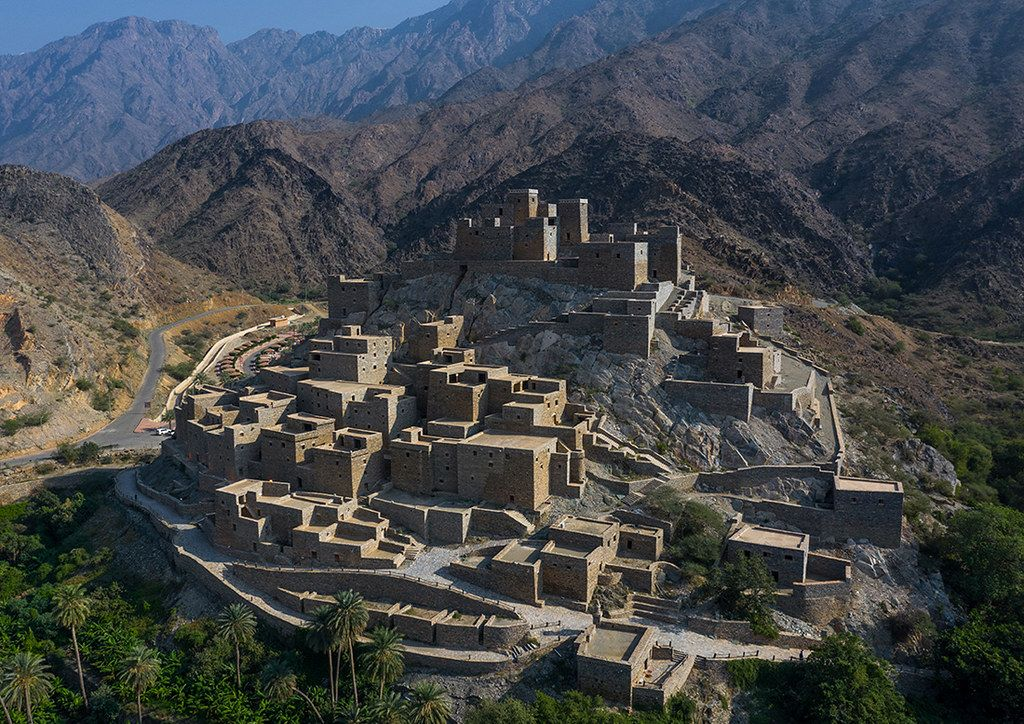
Stone houses, mosque, and mountain landscape of Dhee Ayn Heritage Village in Al-Makhwah, Al-Baha.
The Tribes Behind the Stone
Behind the architecture is a lineage. Al-Baha's mountains and valleys are the ancestral territory of the Ghamid and Zahran tribes, often traced back to the ancient South Arabian kingdoms that once extended influence across the peninsula. The stone houses and forts scattered across the region were shaped, generation after generation, by families who still carry these tribal names today. A fort also marks which lineage held a hillside; a mosque's foundation stone can record which community built it. These are living tribal landscapes, not abandoned relics.
Al-Atawilah: Where Trade Shaped Village Life
In Al-Qura Governorate, Al-Atawilah developed as an important commercial and political center. Its historic Rubu’ Quraysh Market brought people into the village for trade, while Al-Othman, Damas, and Al-Mashyakha forts reflected its administrative and defensive importance. The old mosque and an early primary school add further evidence that the village was also a center of worship, learning, and community affairs.
Its tightly connected multi-story stone houses spread across hills above valleys draining toward Wadi Baydah. Today, the Al-Atawilah Heritage Festival brings activity back into this historic setting through crafts, food, hospitality customs, bridal traditions, performances, and reenactments such as Al-Assah, the traditional village guards. Al-Atawilah matters because it preserves the memory of a village that served as a regional meeting point for trade, authority, and social life.
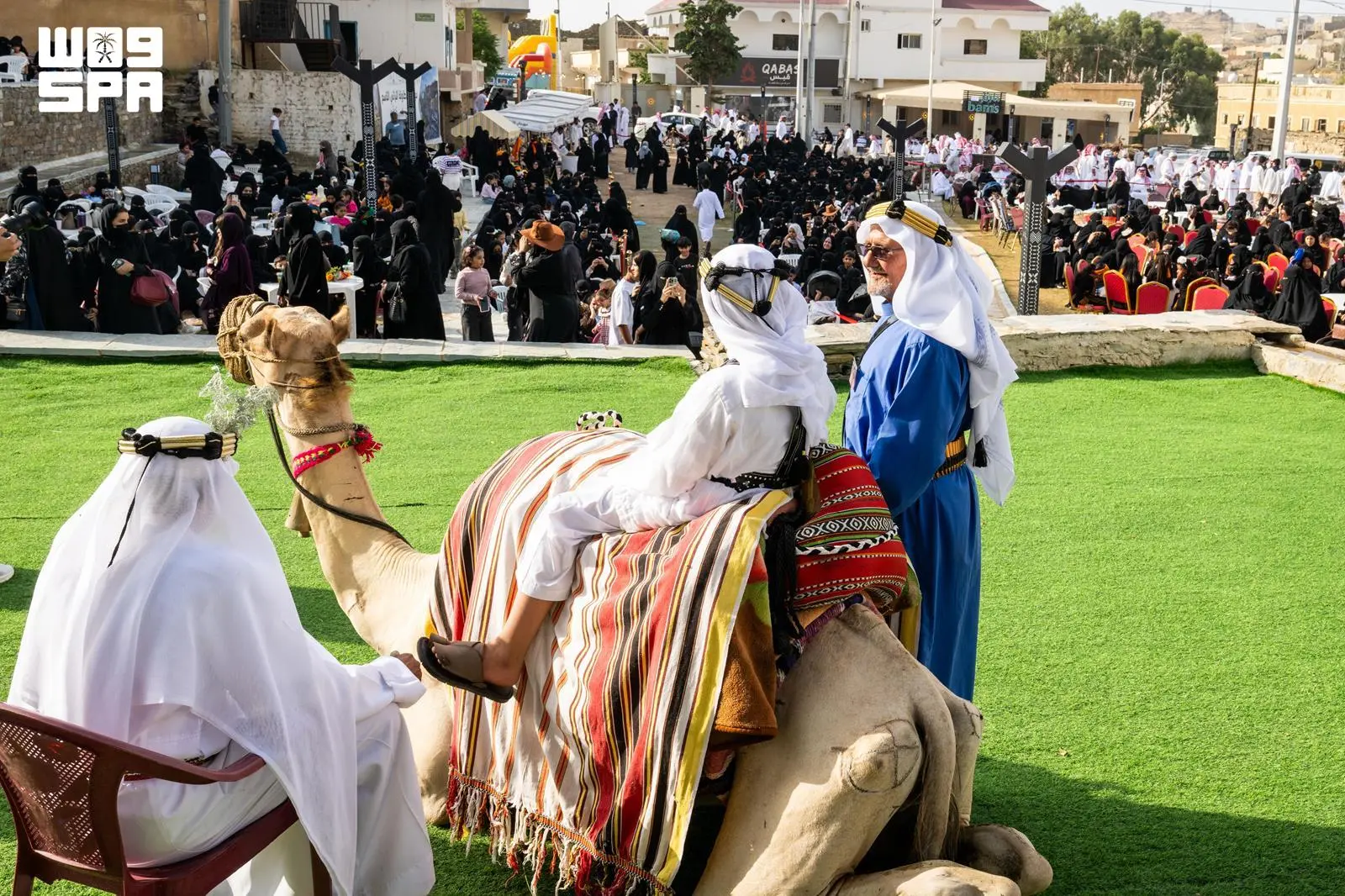
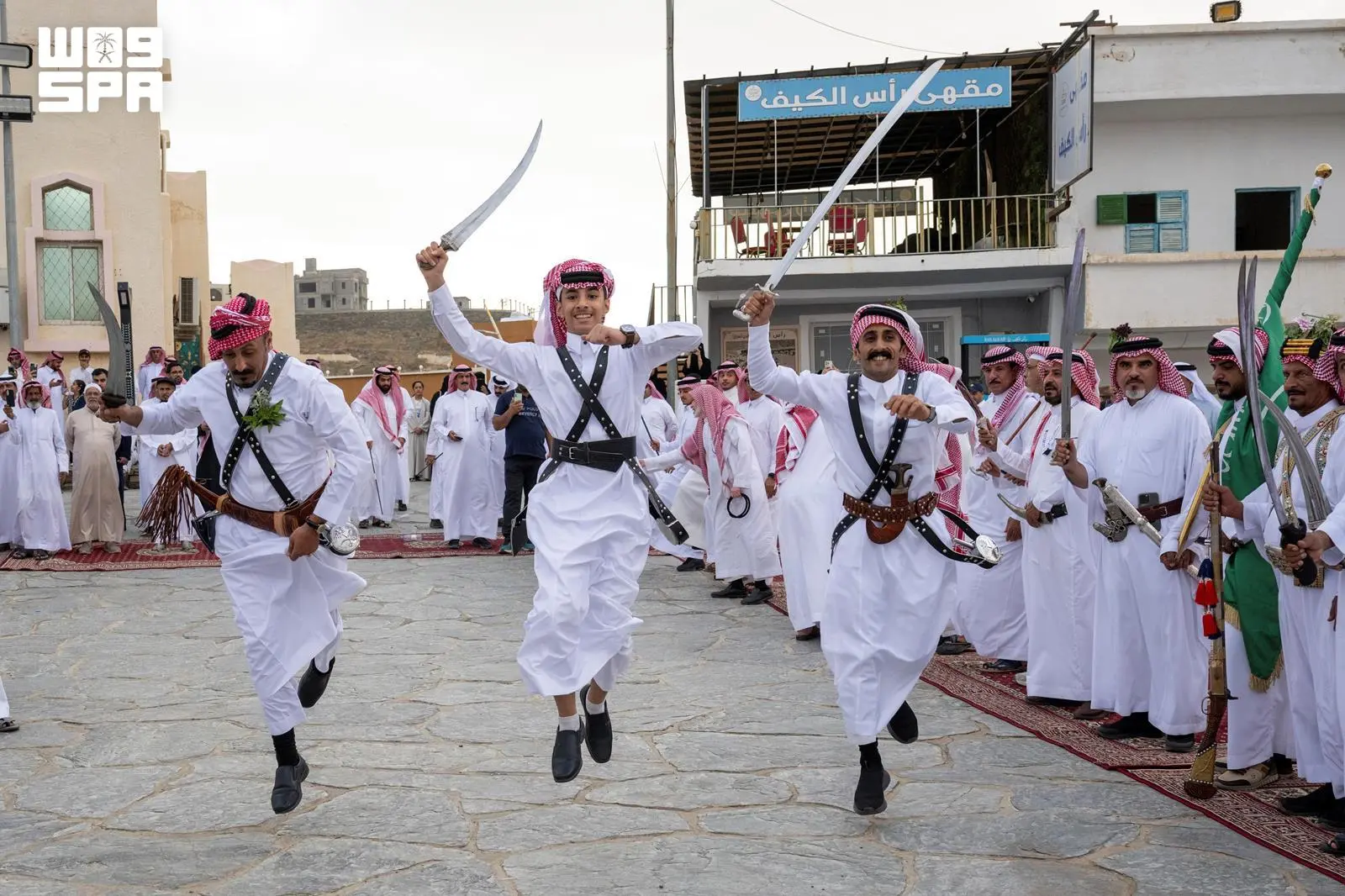
Al-Atawilah Heritage Festival in Al-Baha, featuring a camel procession and traditional sword performances.
The Land of a Thousand Towers
Fortification runs through nearly every village here, and it has a scale easy to miss when looking at one settlement at a time. Around four thousand stone watchtowers are scattered across Al-Baha province, many dating to local emirates that once governed the area. Most served a dual purpose: watching for threats, and storing crops and tools safely out of reach of weather and animals.
Al-Mald's Twin Forts, Baran's terraced hillsides, and Shabraqah's clustered houses are individual expressions of the same defensive and agricultural logic, repeated across thousands of towers and hundreds of villages, less scattered ruins than one coherent system for living safely in difficult terrain.
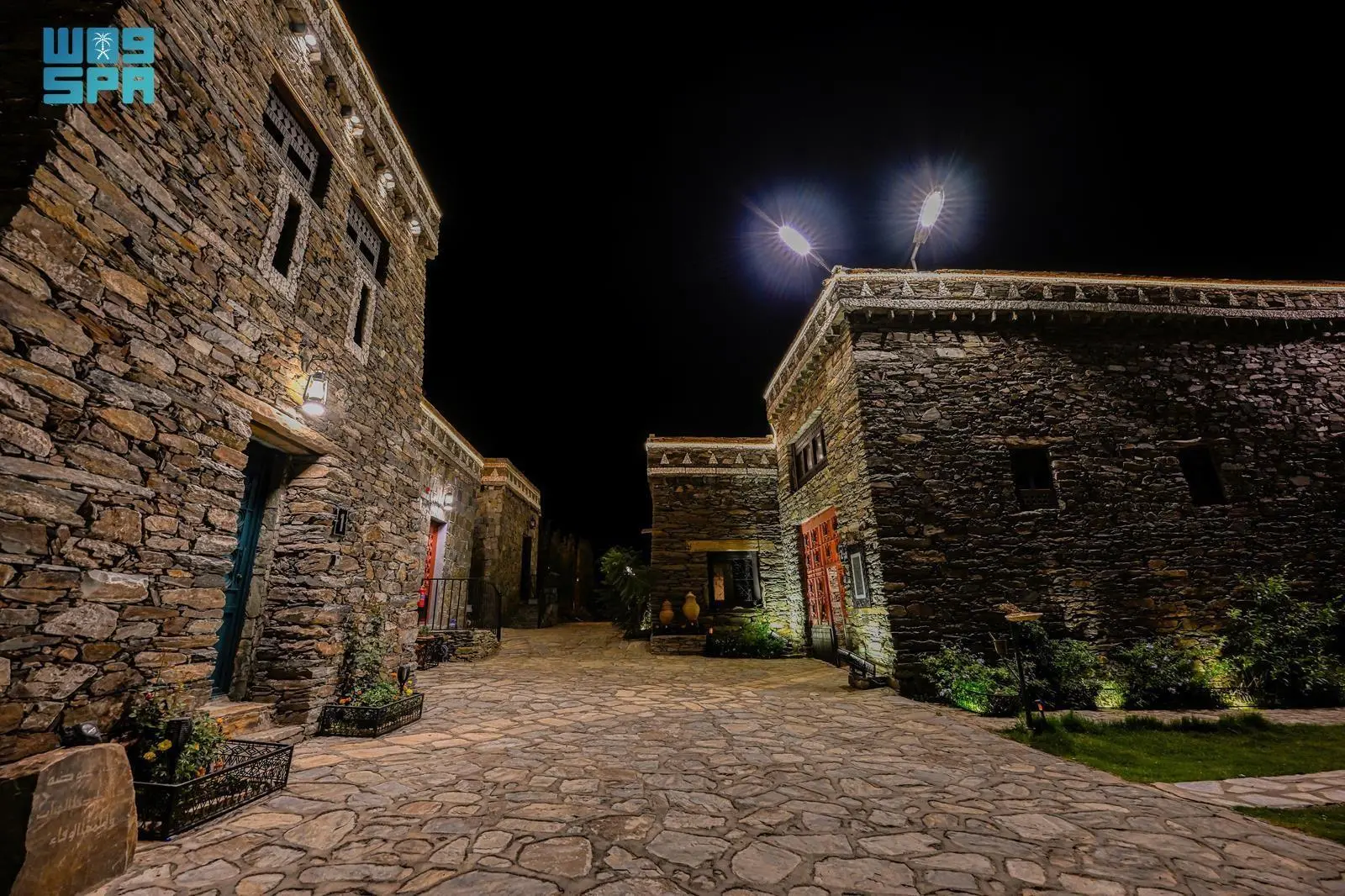
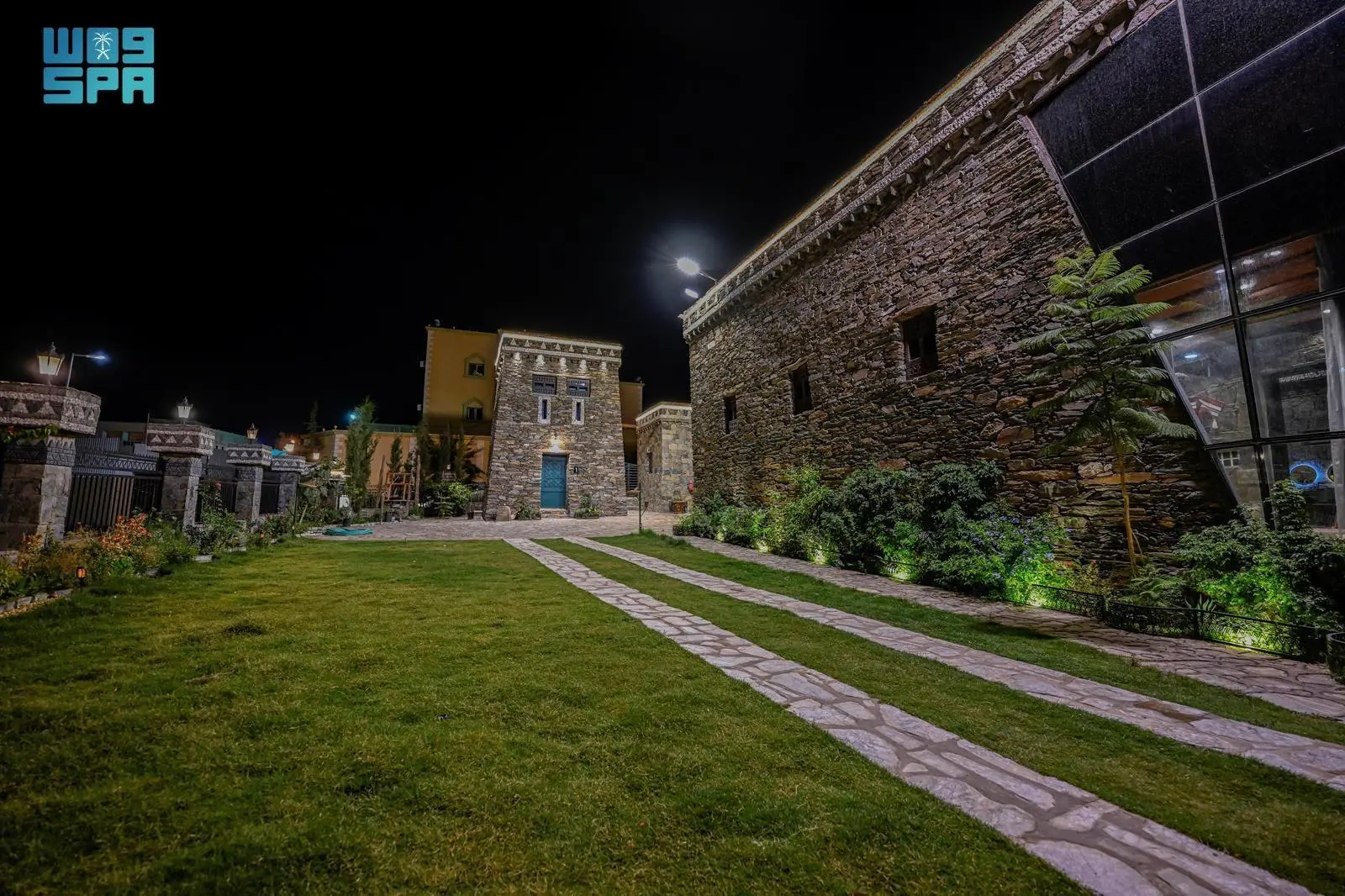
Illuminated traditional stone houses and courtyards in an Al-Baha heritage village at night.
Al-Mald: The Village of the Twin Forts
A few kilometers south of Al-Baha city, Al-Mald is best known for two almost identical stone towers standing side by side above Wadi Al-Mald. Known as the Twin Forts or Forts of the Two Brothers, they were built around 400 years ago for observation and were later used for food storage. Their position also overlooked a route leading toward Aseer, while a nearby building was reportedly used for commercial dealings and tribal reconciliation.
The village’s historic mosque adds another layer to its story. Built in 1364 AH/1945, it served not only for prayer but also for Quranic education, writing instruction, community meetings, and dispute resolution; one wooden column still records its construction date. Al-Mald is important because its forts, mosque, houses, and route reveal how a small village combined security, storage, trade, education, worship, and reconciliation within one compact landscape.
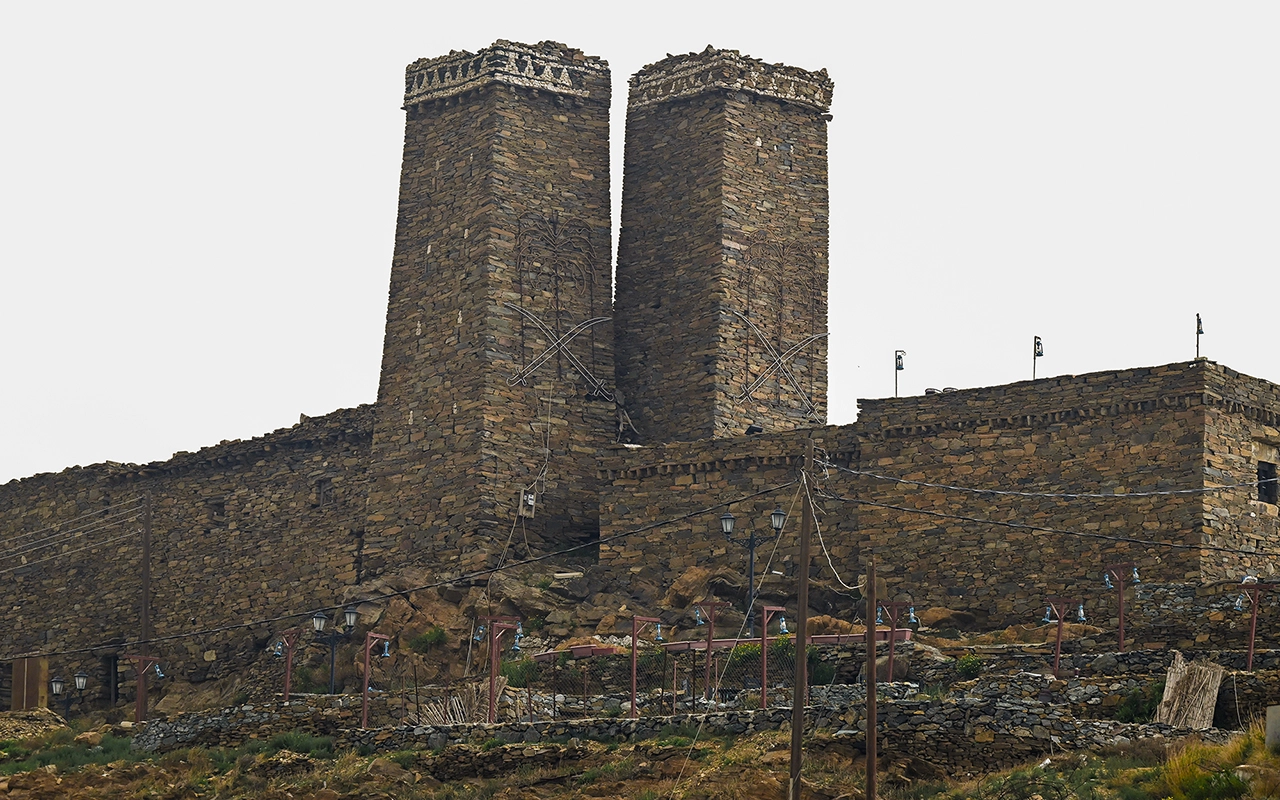
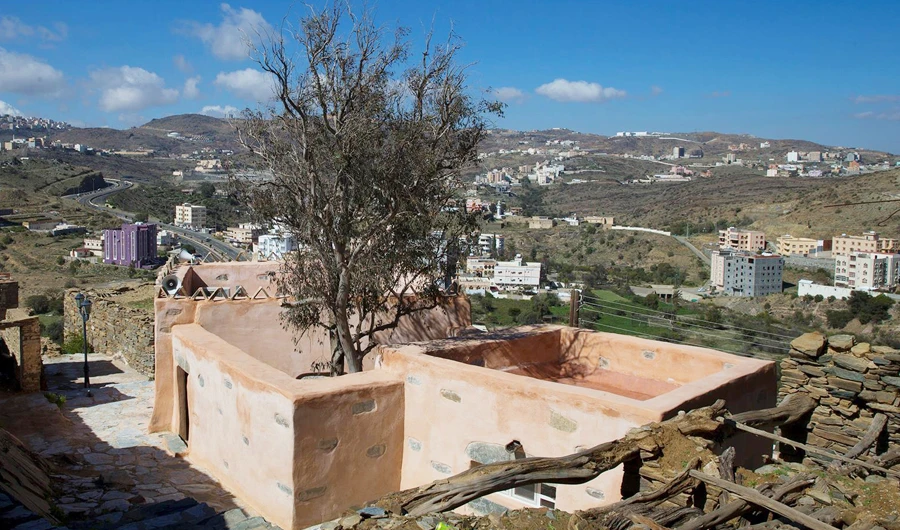
Al-Mald’s historic Twin Forts and historic mosque overlooking the mountainous landscape of Al-Baha.
Al-Khalaf and Al-Khalif: Traces of Early Islamic Al-Baha
In Qilwah Governorate, the neighboring settlements of Al-Khalaf and Al-Khalif preserve some of the most important archaeological evidence in Tihama Al-Baha. Researchers have documented residential remains, fortifications, cemeteries, the remains of Al-Khalaf Mosque, and 27 inscriptions dating from roughly the first half of the third century AH to the second half of the fifth century AH. Written in different styles of Kufic script, including square, foliated, and floral forms, the inscriptions provide rare written evidence for communities that lived here more than a thousand years ago.
“Archaeological discovery has unveiled a rich past, a bygone glory, and a vibrant, continuous civilization... There is no greater evidence of this than the magnificent calligraphic models found inscribed on its stones and the beautiful architectural structures.”
Dr. Ahmed Al-Zayla'i, Professor of Archaeology at King Saud University and researcher in the village of Al-Khalif
Nearby, Dughaifiqah Well survives about 100 meters west of Al-Khalaf near the foot of the mountain. Historically known for its abundant water, it was once connected by a covered passage to a residential quarter that has since disappeared. Archaeologist Dr. Ahmed Al-Zayla’i has described such discoveries as evidence of a rich past that remained largely absent from written historical sources. The importance of Al-Khalaf and Al-Khalif lies in how archaeology has helped restore a missing chapter of Tihama Al-Baha’s early Islamic history.
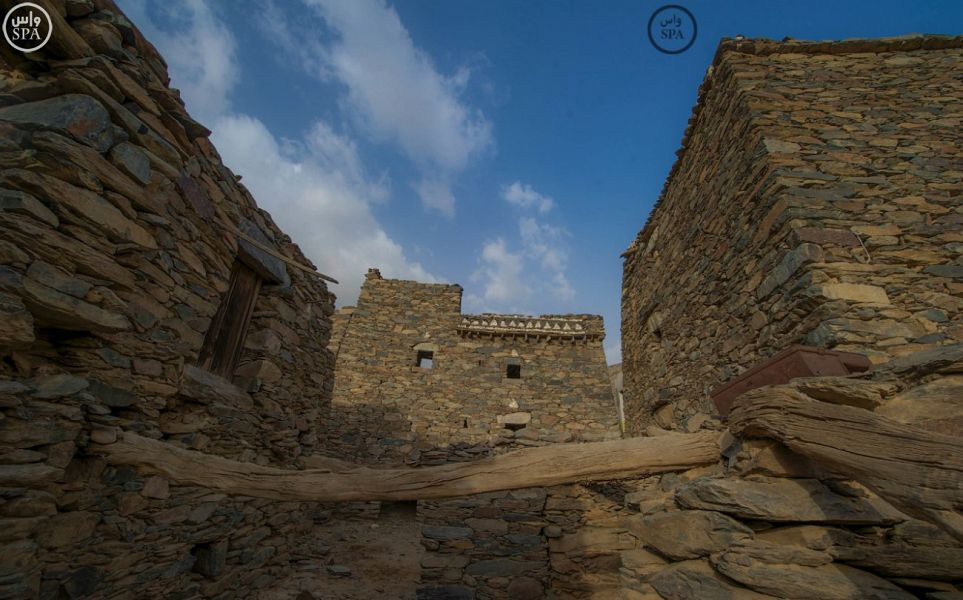
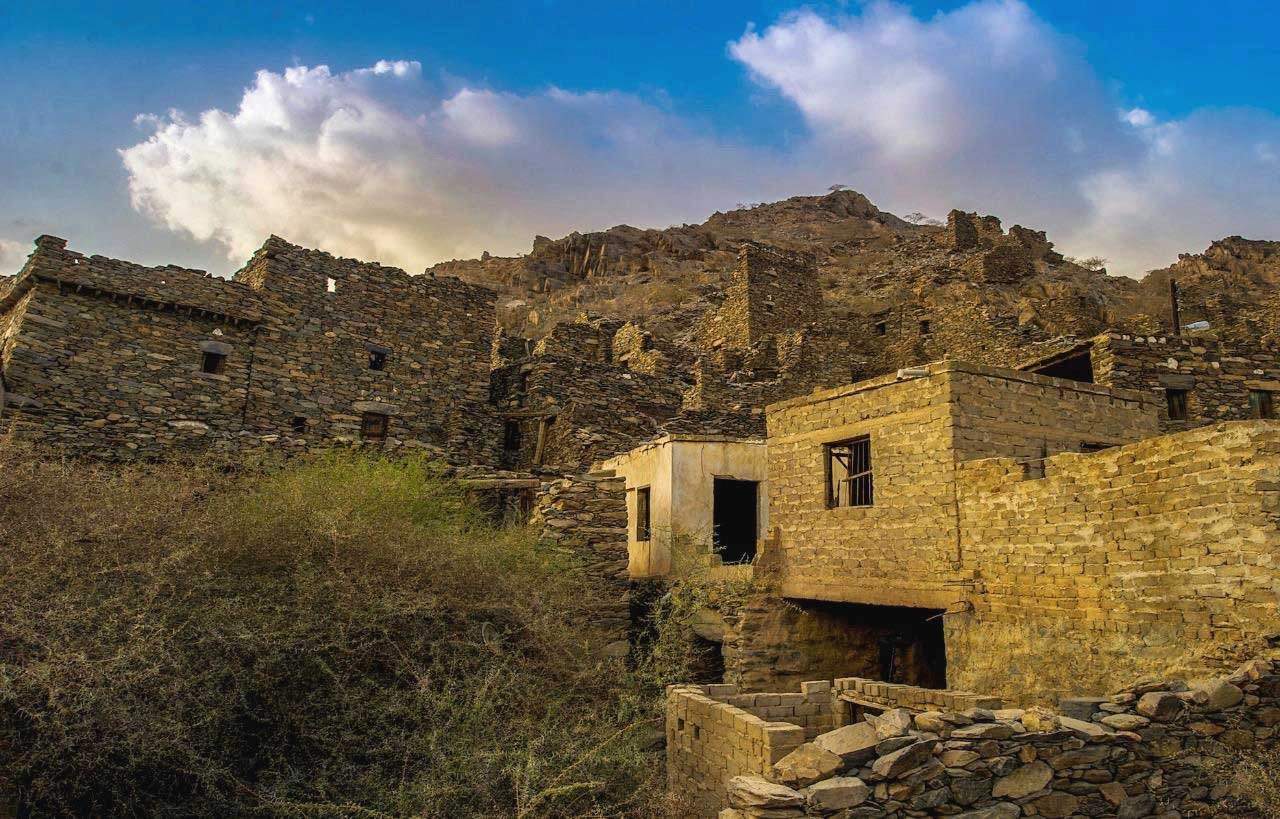
Historic stone buildings and archaeological remains of Al-Khalaf and Al-Khalif in Qilwah, Al-Baha.
Baran: Five Centuries of Mountain Architecture
In the mountains of Qilwah Governorate, Baran Heritage Village is estimated to be around 500 years old. Its significance comes not from one famous event, but from the way it preserves the working landscape of a mountain community. Agricultural terraces surrounding the settlement once supported local livelihoods, showing how residents transformed steep slopes into productive farmland.
The village’s three- and four-story buildings use local stone, sidr timber, and white marw stone, with narrow paths connecting the houses. Baran was later entered into the National Urban Heritage Register, recognizing the value of its combined architecture and agricultural setting. Its story is one of adaptation: people shaped the mountain for farming while building homes from the same landscape around them.
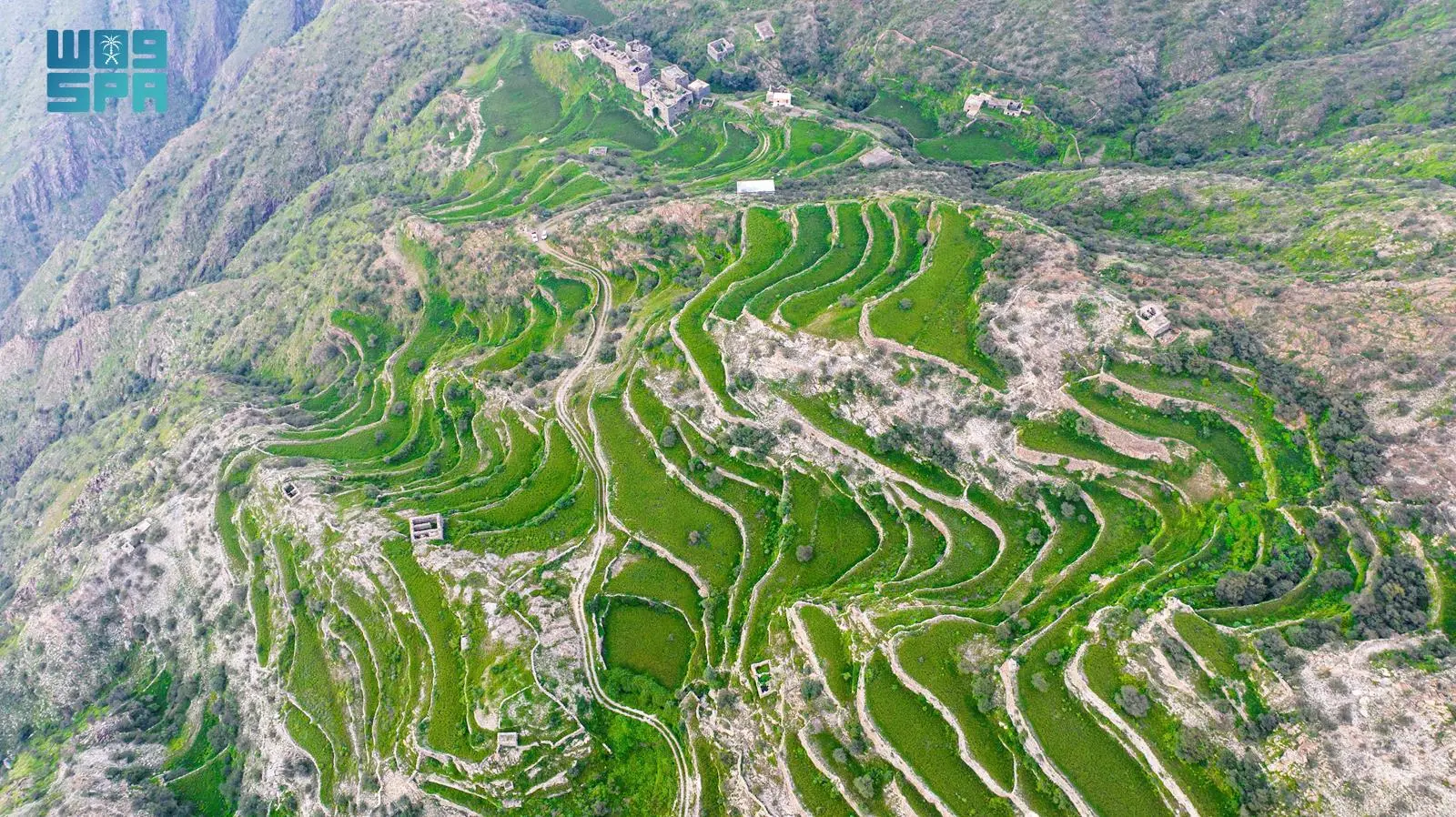
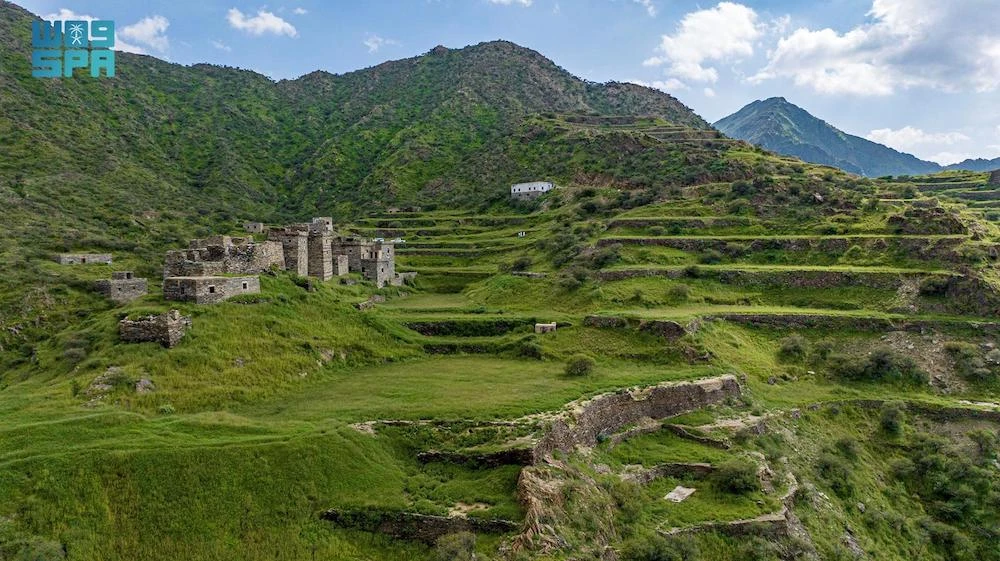
Green agricultural terraces and stone ruins of Baran Heritage Village in the mountains of Qilwah, Al-Baha.
Shabraqah and Subayhah: The Rhythm of the Weekly Markets
About 15 km northwest of Al-Baha city, Shabraqah occupies a mountainside in Bani Hasan Governorate. Its houses were built so closely together that the old settlement appears almost like a single fortified structure, with a high square tower rising above the clustered buildings. Decorative doors, windows, and wooden balconies add detail to an otherwise strongly defensive form. North of Al-Atawilah in Al-Qura Governorate, Subayhah overlooks Wadi Nidl and is distinguished by Al-Harshan Fort and its traditional Tuesday market. The market placed the village within Al-Baha’s wider cycle of weekly trading days, when different settlements became temporary gathering points for people from surrounding areas.
Its traditional stone buildings follow the slope of the terrain in a compact pattern common across the region. But Subayhah’s strongest story lies in its market tradition rather than its architecture alone. A fort explains how a community protected itself; the Tuesday market explains how it remained connected to the wider region.
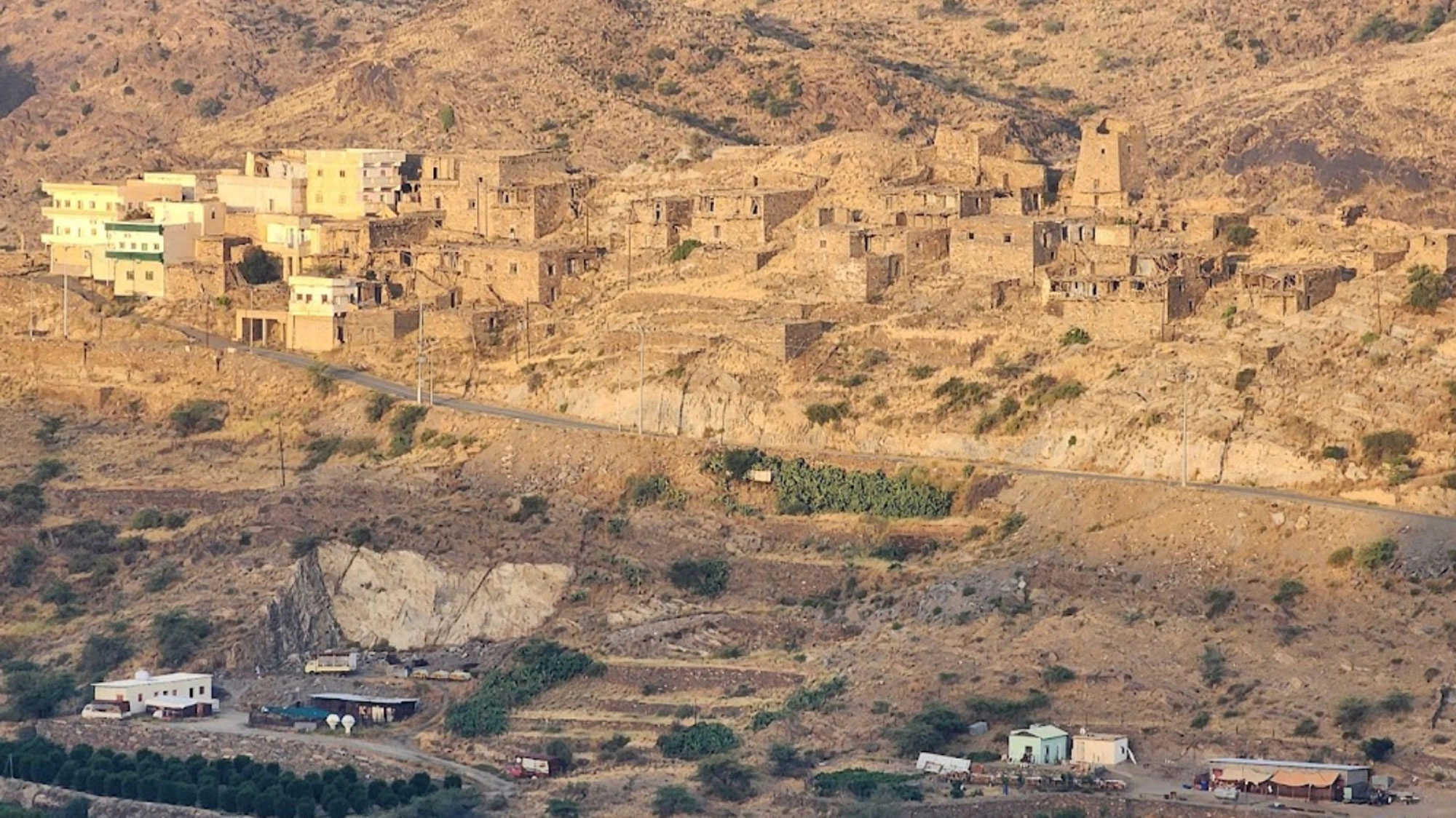
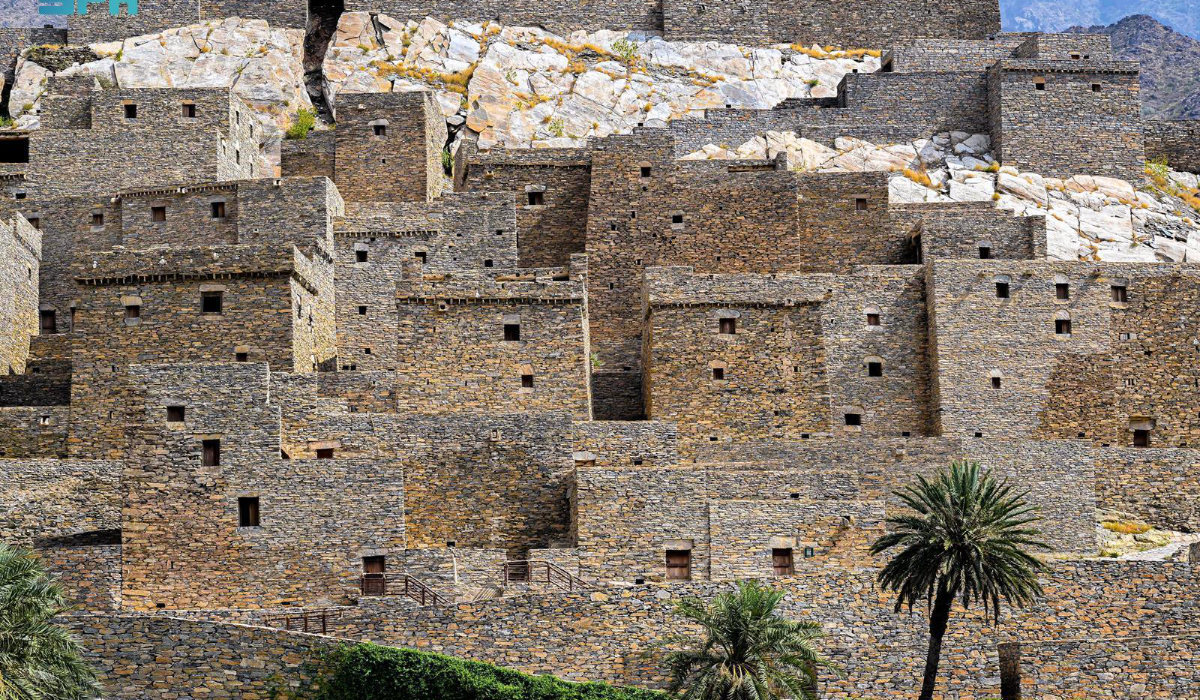
Hillside stone settlements of Shabraqah and Subayhah, two heritage villages in Al-Baha linked to the region’s traditional weekly markets.
Bani Muhammad: An Old Settlement in Wadi Quraysh
Around one kilometer north of Al-Atawilah, Bani Muhammad lies in Wadi Quraysh and is also associated with the name Bani Makhzum. The settlement was not a single undifferentiated community: historical descriptions identify several smaller groupings within it, including al-Afif, al-Sawaghah, al-Ali, al-Banan, al-Kishan, and Al Zahi.
Its mostly one- and two-story houses follow the natural slope and stand close together, though many are now partly ruined or abandoned. That condition makes Bani Muhammad especially relevant to the preservation story. Its importance lies in showing how the physical village also reflected a social landscape, with smaller community groupings embedded within the wider settlement.
Al-Mousa: When a Heritage Village Lives Again
Al-Mousa Heritage Village tells one of Al-Baha’s strongest modern preservation stories. Restoration began in 2021 through efforts by village residents with private support, and the revived settlement later helped inspire the creation of the nonprofit Al-Dar Heritage Association in 2024. Rather than stopping at physical conservation, the village became a setting for festivals, heritage events, and community programming.
At the 2025 Al-Dar Festival, visitors encountered traditional food preparation, storytelling, poetry, folk performances, heritage clothing and jewelry, bridal traditions, children’s activities, and an exhibition supporting around 70 craftspeople. Restored houses now serve as museums, hospitality spaces, and cultural venues. Al-Mousa shows the difference between saving old buildings and giving a heritage village an active cultural life again.
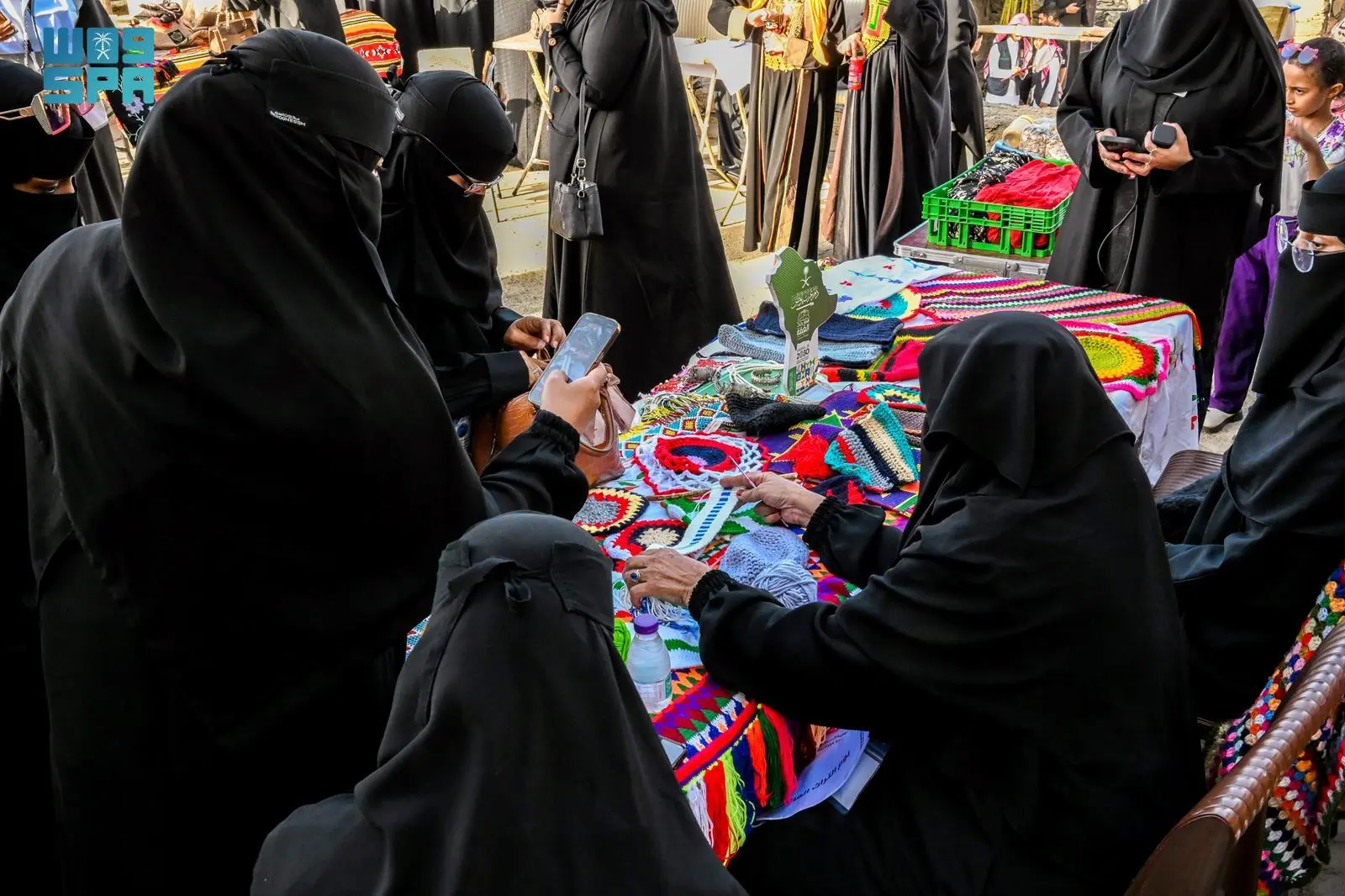
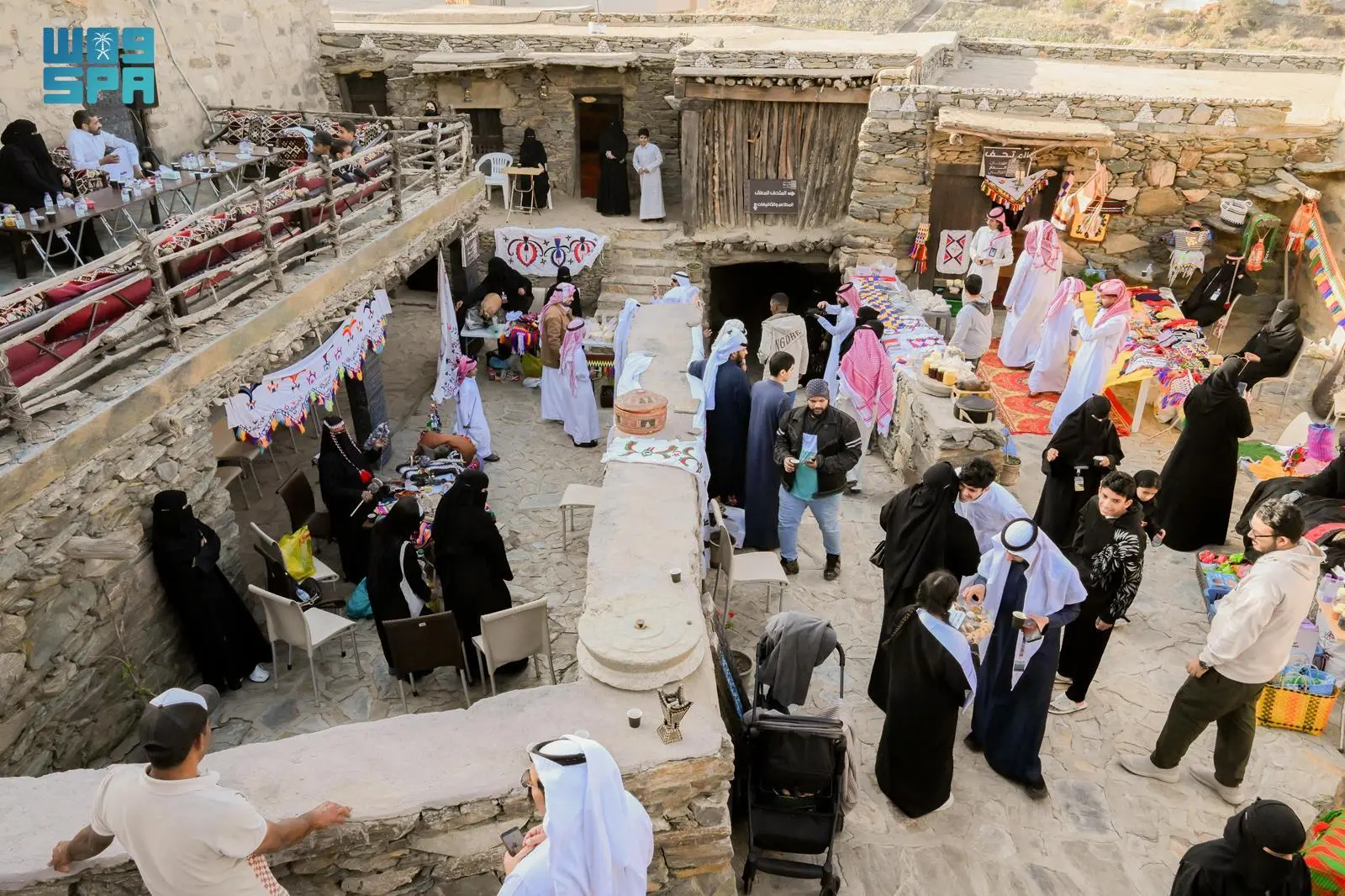
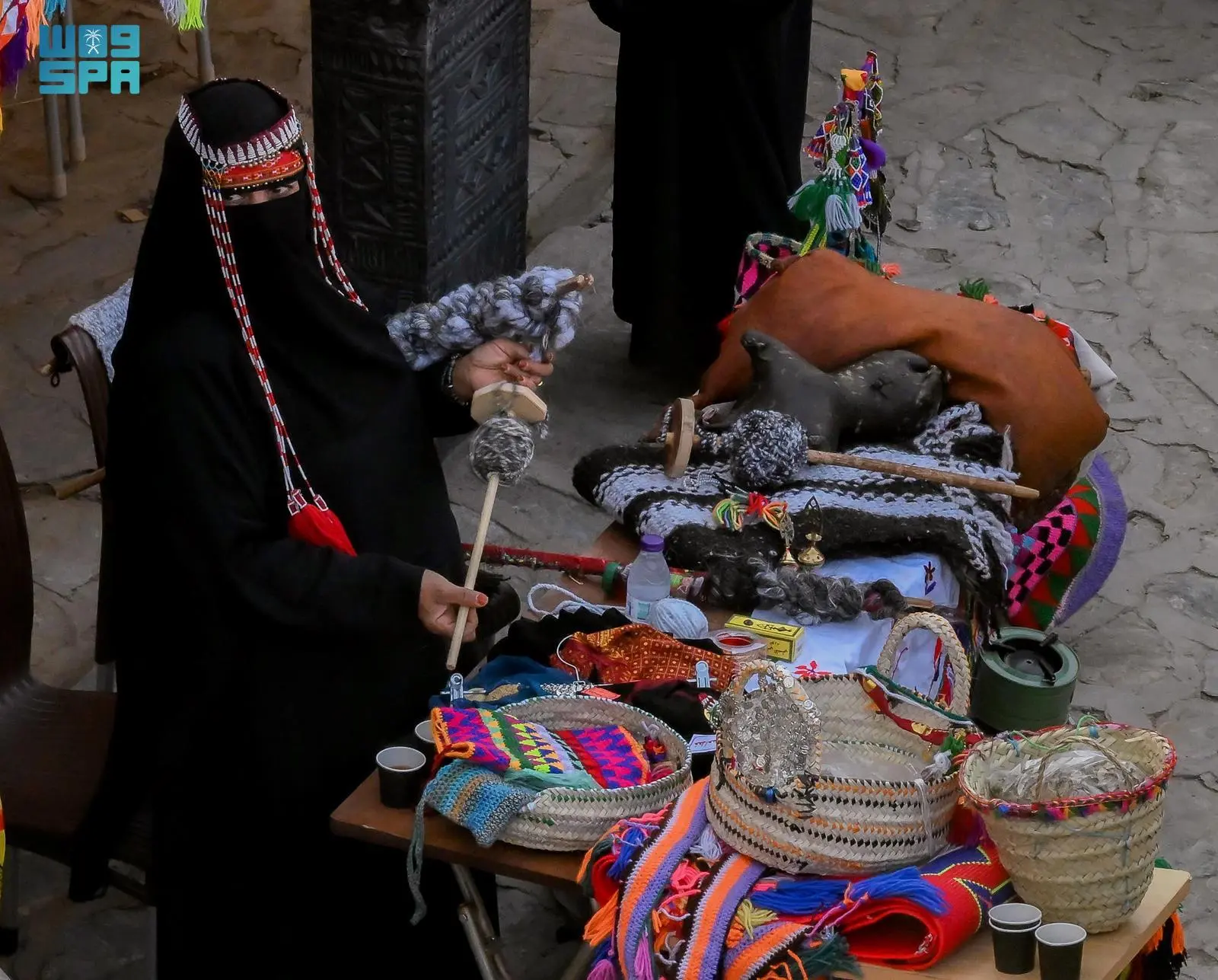
Craftspeople, traditional handicrafts, and visitors at Al-Dar Festival in Al-Mousa Heritage Village, Al-Baha.
Traditions That Outlast the Stone
Some of Al-Baha's richest heritage was never built from stone. Highland men here are known for wearing crowns woven from fresh flowers and herbs, a Sarawat tradition that has become one of the most recognizable customs associated with this part of Saudi Arabia, far beyond the villages themselves.
Women's craft traditions run just as deep, if less visible in most heritage accounts. Festival reenactments at Al-Atawilah have recreated the daily work once carried out by women, gathering firewood and water, washing clothes by hand, preparing coffee, using original tools inside the village's own alleyways. This is the domestic labor and craft knowledge that kept these villages running for centuries, and that festivals now work to keep visible.
Also Read: Rijal Alma: The Painted Village in the Clouds
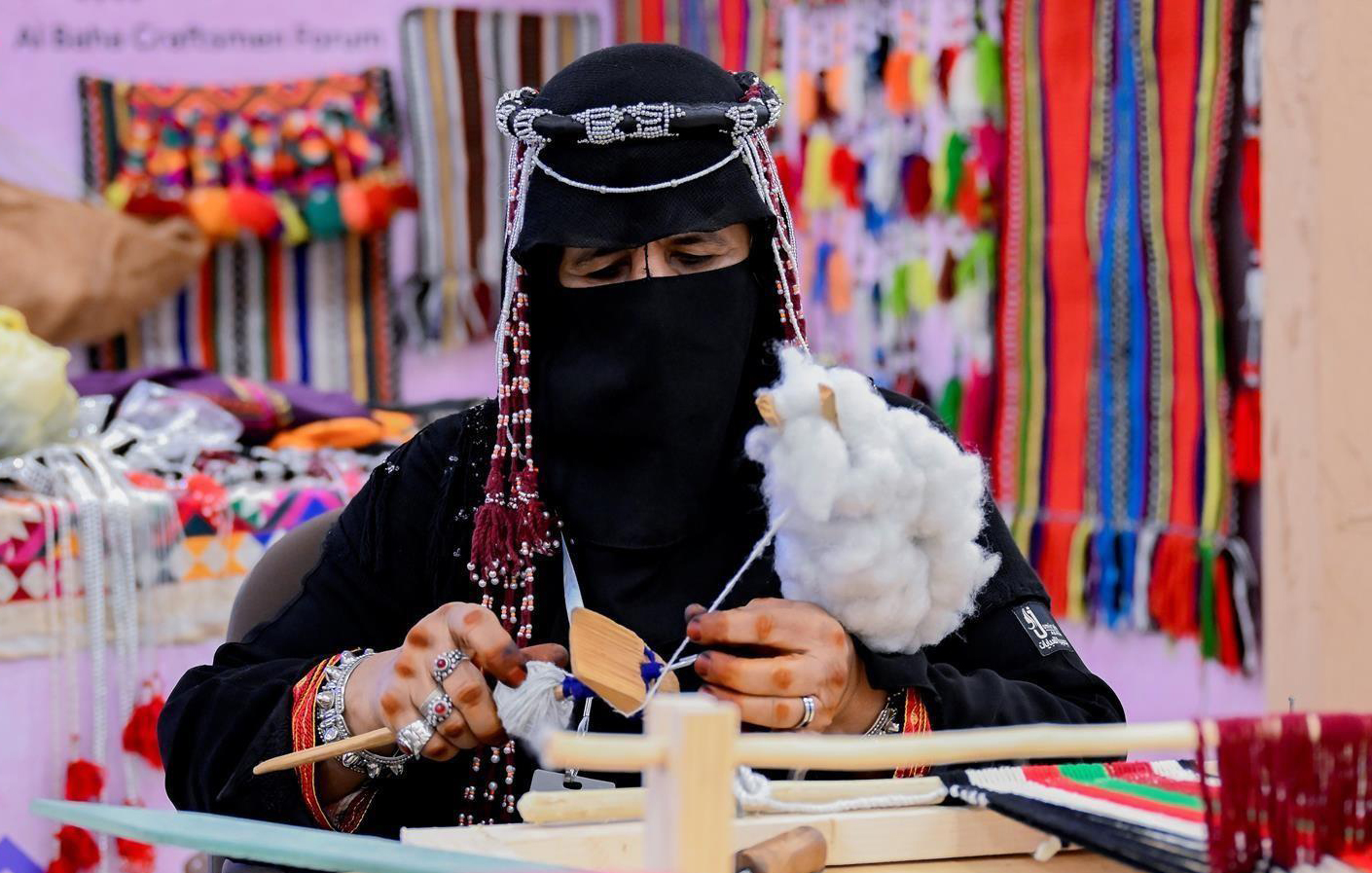
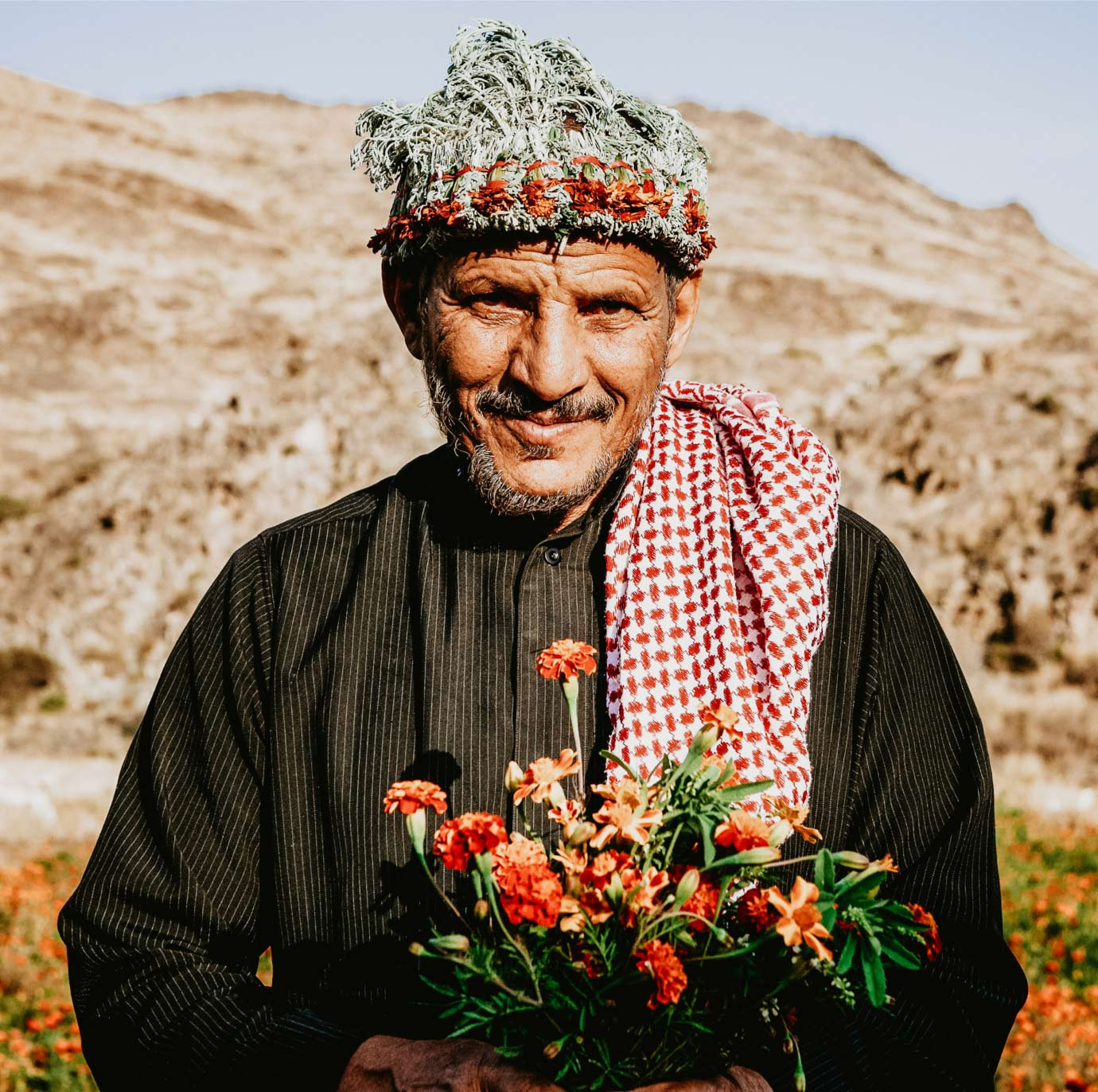
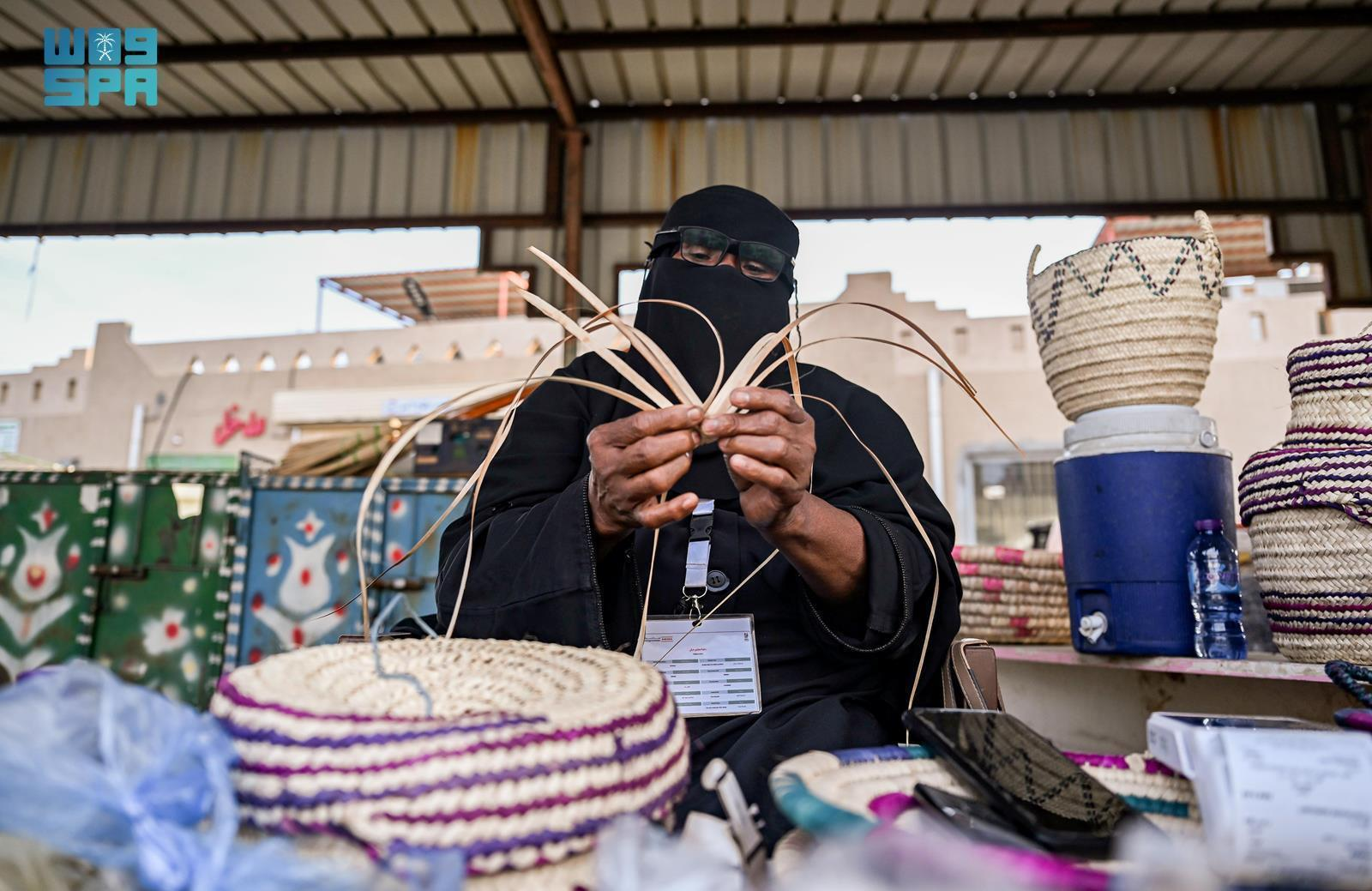
Al-Baha cultural traditions featuring women practicing traditional crafts and a highland man wearing a crown woven from fresh flowers and herbs.
Museums Keeping the Villages Alive
A handful of small museums now anchor the villages for visitors who want more than a walk through old stone. The Heritage Commission opened the Dhee Ayn Museum near the village's visitor center, offering context alongside the paved walkways now leading through the settlement. At Al-Mald, a local resident has turned part of the village into what's informally known as the Two Brothers Museum, named for its twin towers, gathering artifacts tied directly to the site.
These museums matter because they translate stone into narrative, giving visitors, and younger generations from the villages themselves, a way to understand why these buildings were built and what community life inside them once looked like.
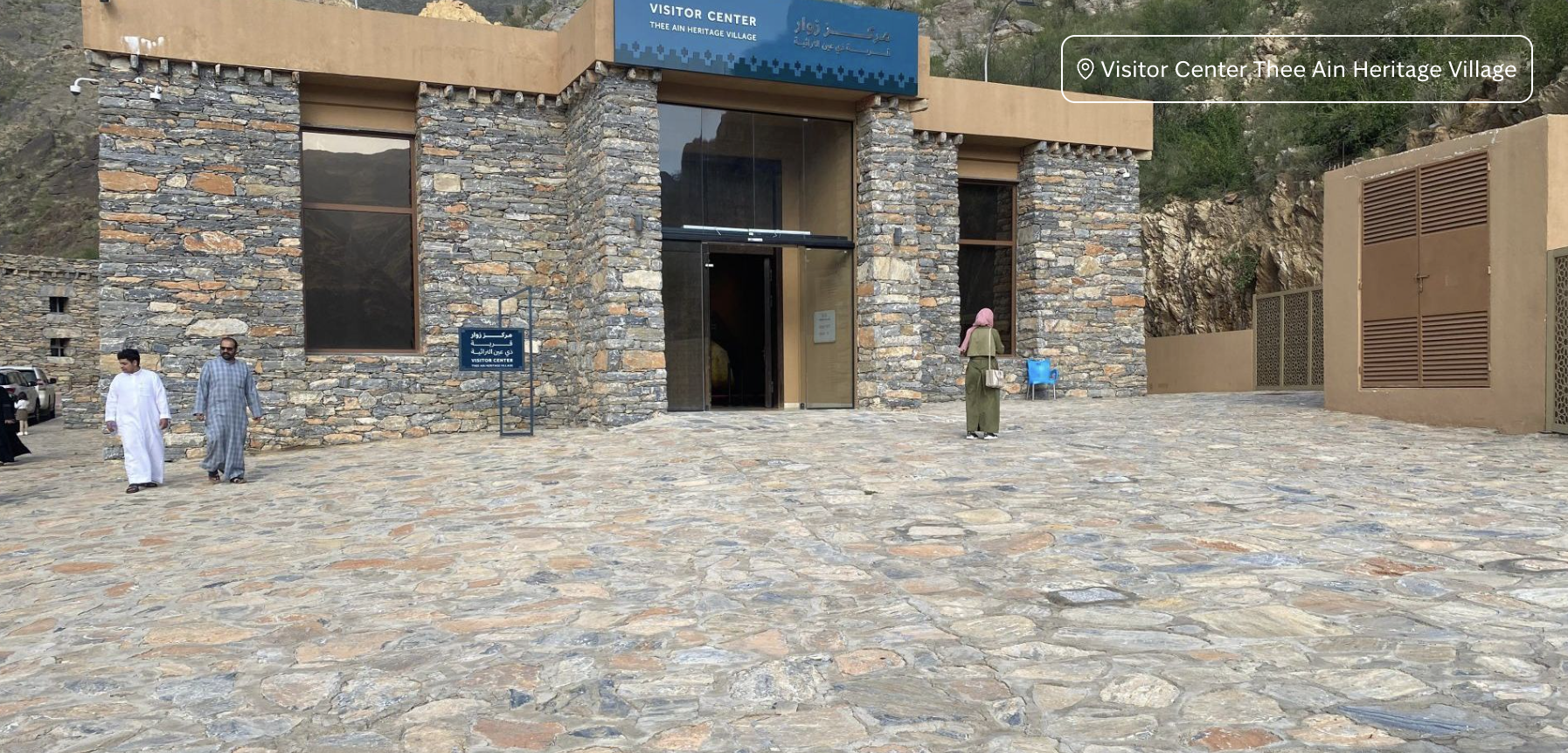
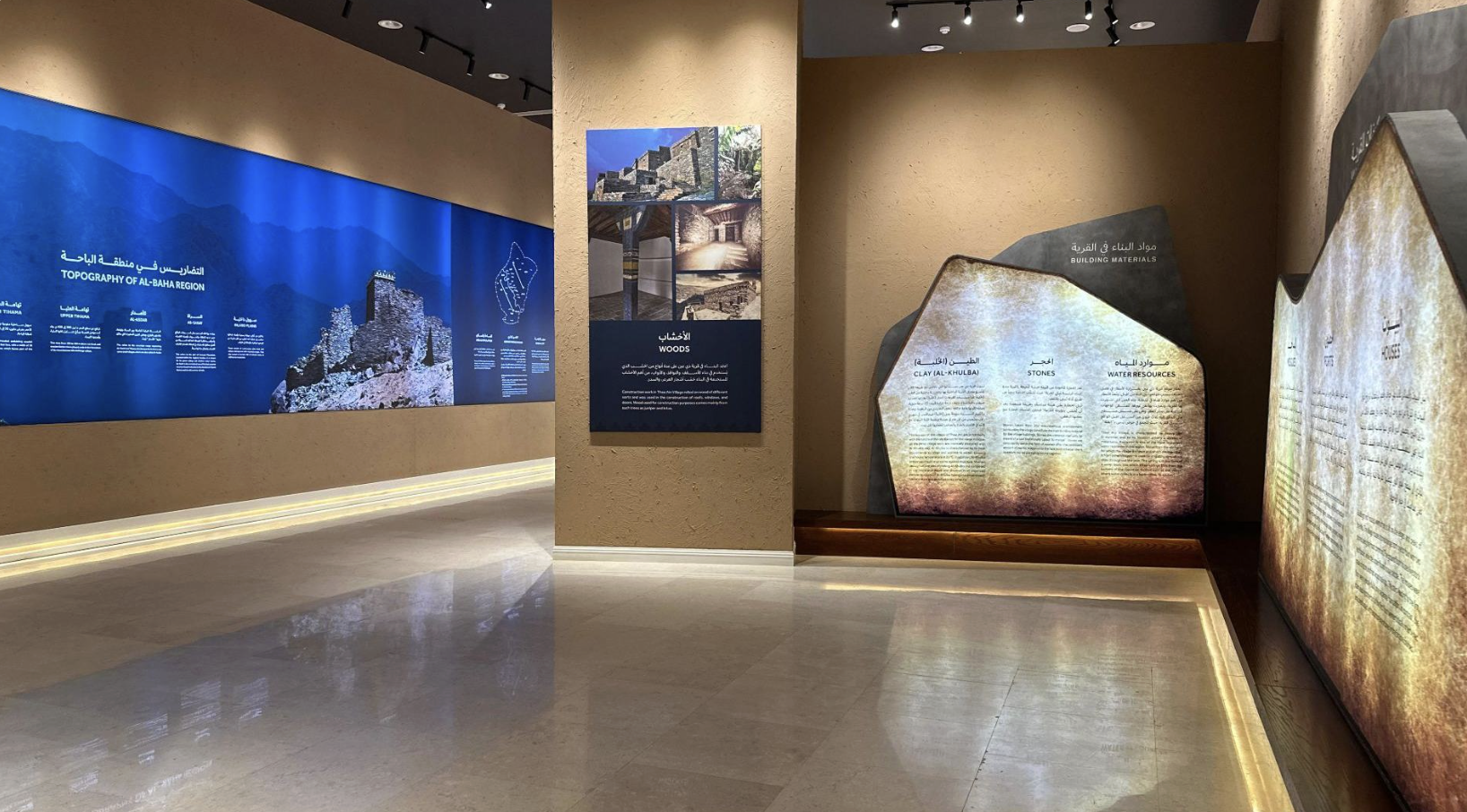
Dhee Ayn Visitor Center and museum exhibits explaining the heritage village’s architecture and history in Al-Baha.
What Is Being Restored in Al-Baha Today?
Al-Mousa is part of a much broader movement. In August 2026, SPA reported that more than 70 historical sites across Al-Baha were undergoing development and rehabilitation through partnerships between government and local residents, a distinct figure from the 72 heritage villages themselves, since not every village is currently under active restoration.
Documentation continues alongside restoration. The June 2025 addition of 499 sites in Al-Baha was part of a nationwide batch of 5,969, and by January 2026 further work across Al-Baha, Aseer, and Makkah pushed the national register to its 50,000-asset target. Preservation, in other words, is not one project but many: documentation, registration, conservation, rehabilitation, and cultural activation, all happening at once.
Beyond Dhee Ayn, Another Al-Baha Comes Into View
Dhee Ayn deserves its place among Saudi Arabia's most recognizable heritage villages. But it is one part of a much wider landscape, one with Kufic inscriptions surviving on stone, twin forts still overlooking an old trade route, weekly markets that once connected neighboring communities, flower crowns and coffee rituals that never needed a building to survive, and centuries-old houses now finding new life as museums and gathering spaces.
Stone can preserve the shape of a village for centuries. The tribes, crafts, markets, and rituals that filled those villages are what preserve its meaning.
Sources
Research for this article draws on the Saudi Press Agency (SPA), Saudipedia, UNESCO World Heritage Centre Tentative Lists, and Heritage Commission registration announcements published between 2025 and 2026.