A flash of gunpowder, a controlled leap, and generations of knowledge meet in Taasheer. Closely rooted in Taif, this Hijazi tradition transforms the imagery of an older martial world into a performance of skill and celebration. Its rifles, chants, traditional dress, and precise movements remain part of a cultural language that continues to live in western Saudi Arabia.
What is Taasheer?
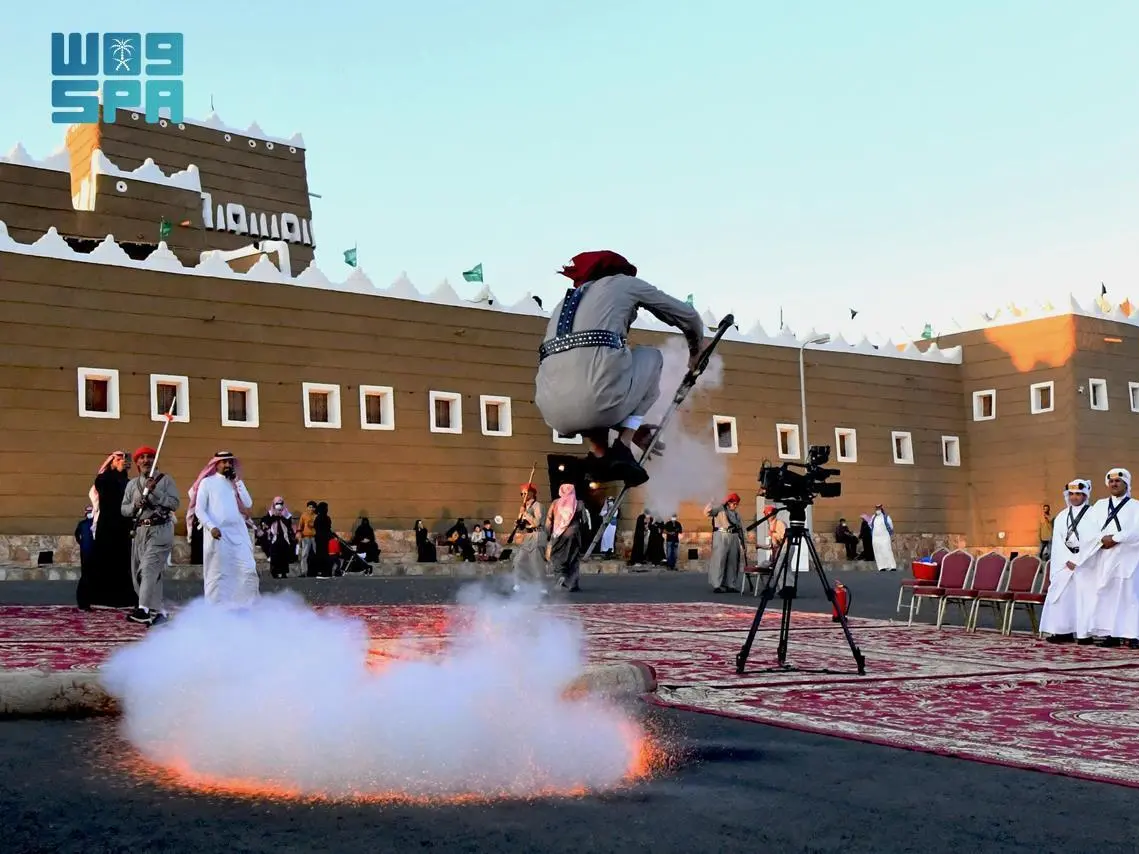
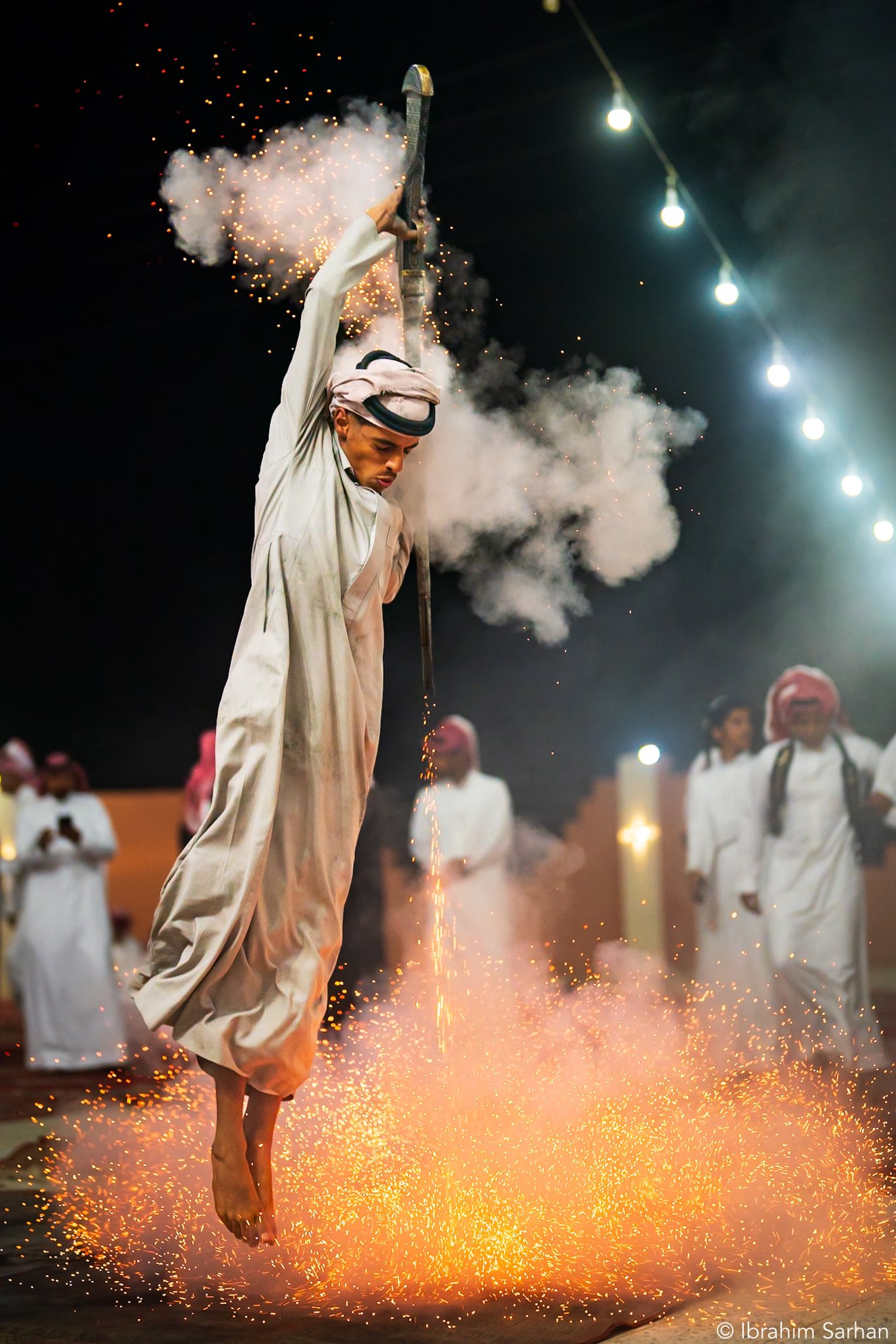
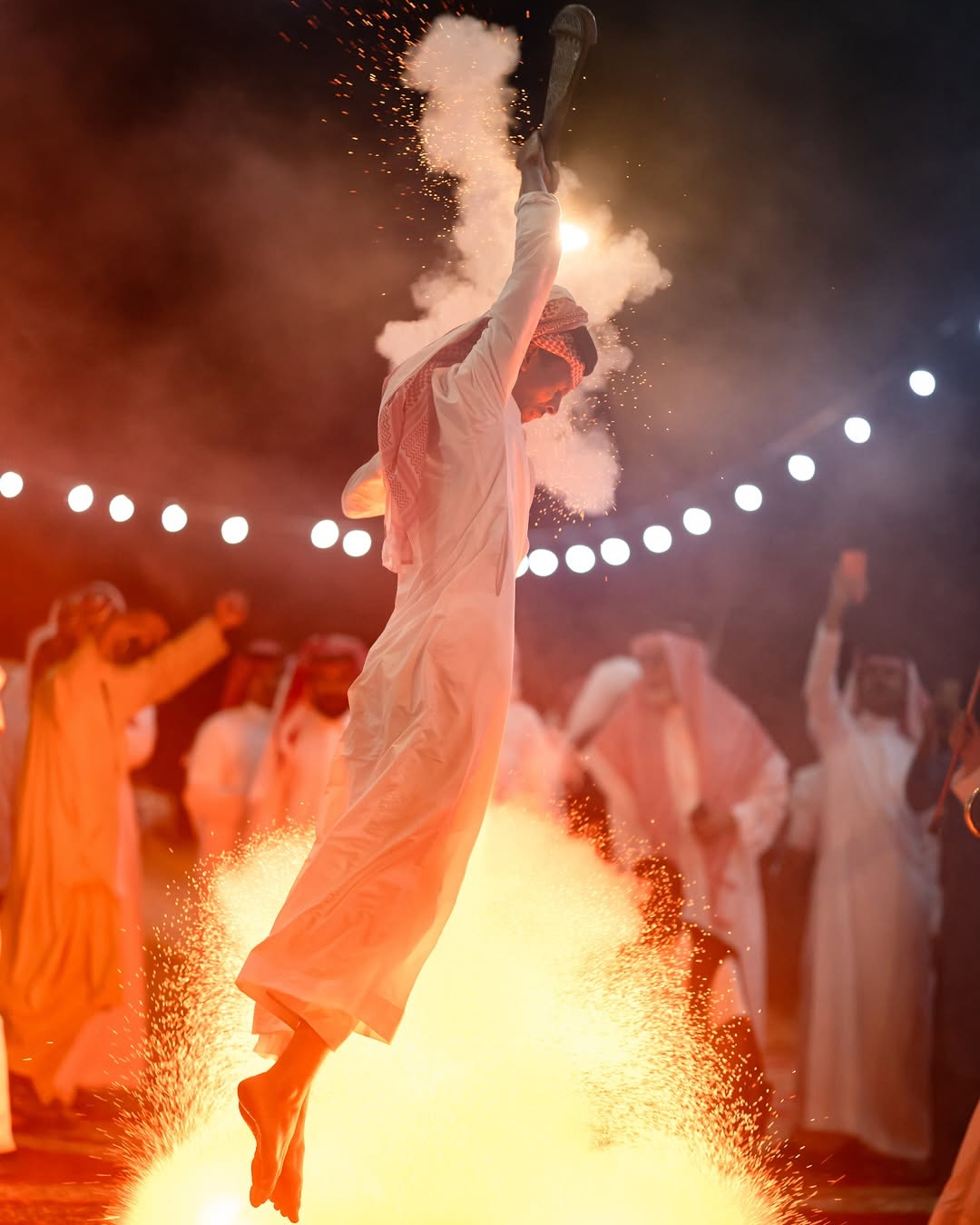
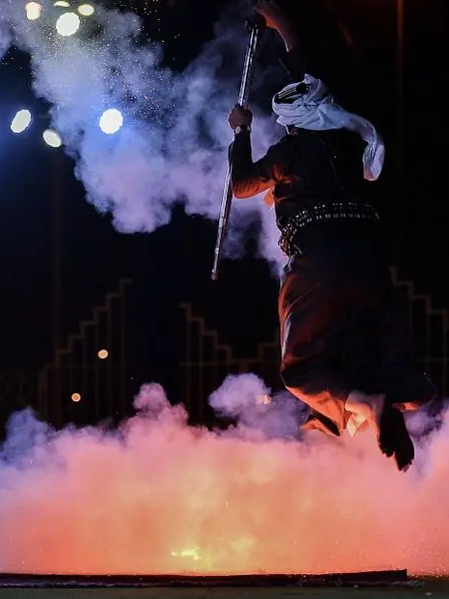
Taasheer, sometimes spelled Tashir, is a traditional performing art associated with western Saudi Arabia, particularly Taif and the wider Makkah Region. The performance combines movement, traditional dress, chanting or poetry, and skilled handling of a traditional rifle known as the maqmaʿ. Its most recognizable moment comes when a performer jumps while directing the rifle toward the ground, producing a dramatic burst of gunpowder, sparks, and smoke beneath him.
Because of this striking movement, international media sometimes describe Taasheer as a “fire dance” or gun-jumping dance. Saudi heritage sources, however, offer a more culturally precise understanding. Taasheer is best described as a weapon dance with martial roots. Its identity comes from more than the gunpowder blast. The performer’s balance, timing, posture, clothing, chants, and relationship with the surrounding group all contribute to the tradition.
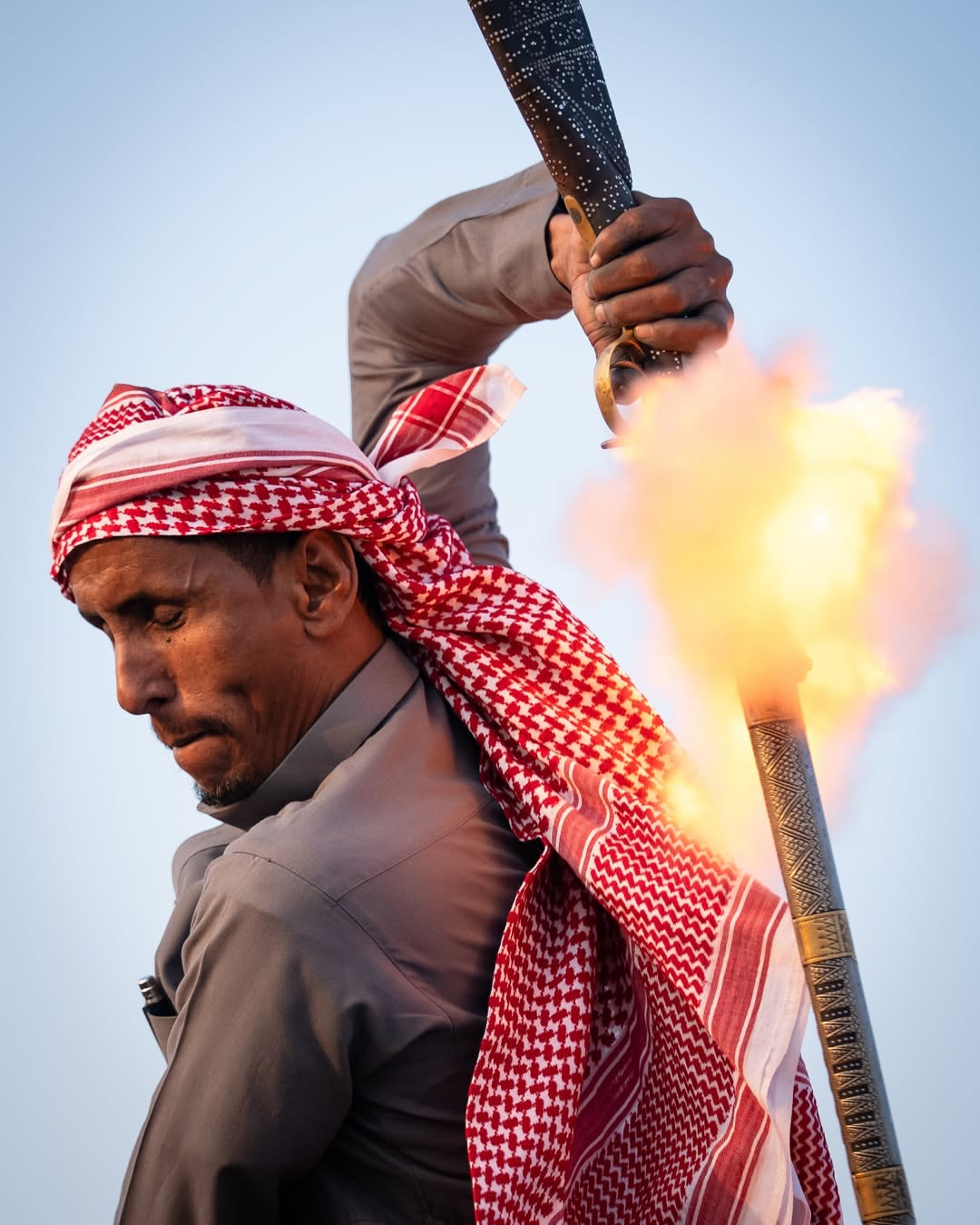
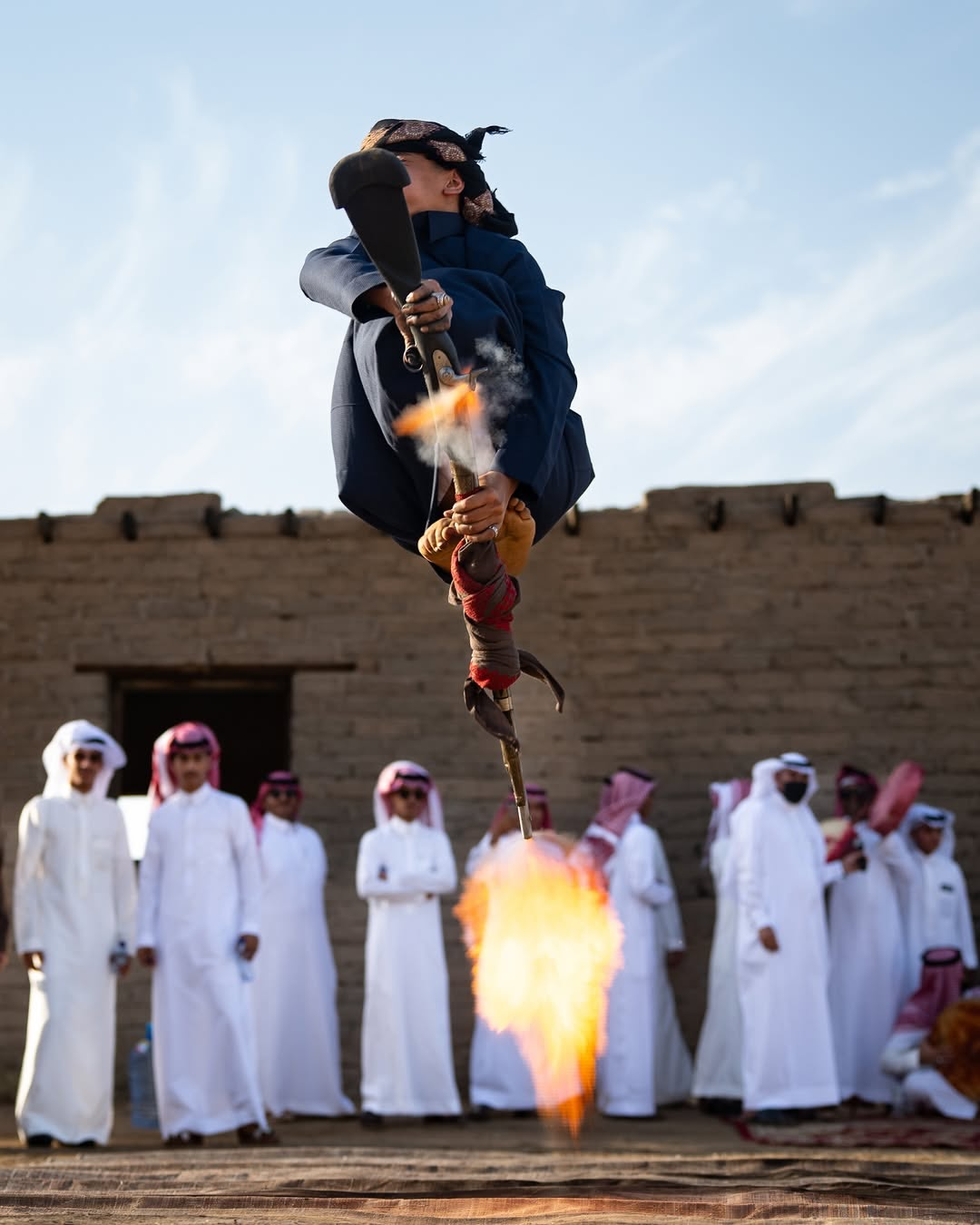
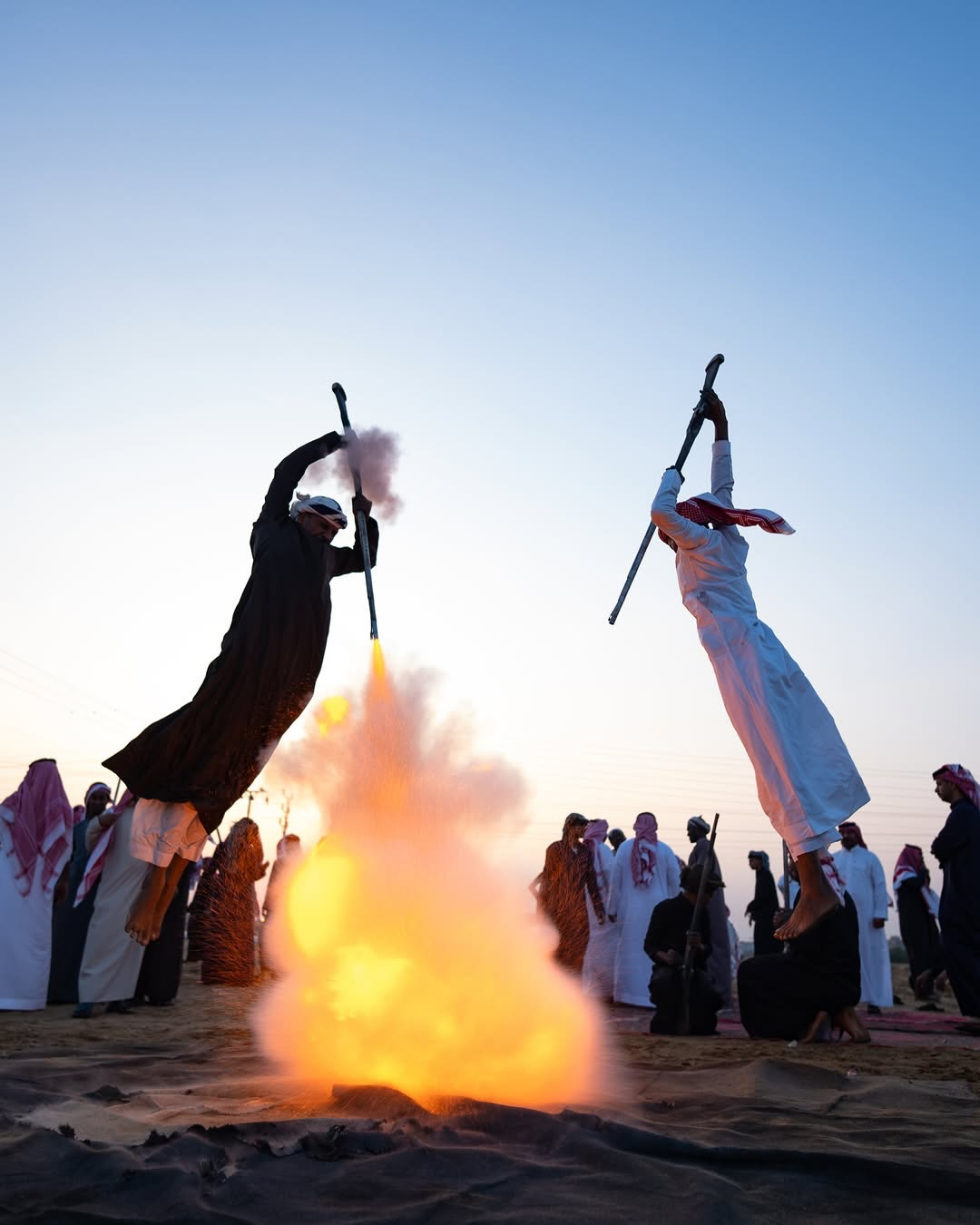
Photo Credits: Ibrahim Sarhan
Taasheer has sometimes been called a gun-jumping dance outside Saudi Arabia because the performer leaps as the powder charge is discharged toward the ground. This is a descriptive English term rather than the traditional Saudi name of the art.
Where Did the Taasheer Dance Originate?
The strongest documented connection places Hijazi Taasheer in western Saudi Arabia, especially Taif Governorate in the Makkah Region. Taif is particularly important when discussing Tashir dance origin because Saudi Arabia's national intangible cultural heritage documentation identifies Taasheer among the traditional performing arts practiced in the governorate. Local practitioners also describe it as part of Taif's inherited cultural identity. This makes Taasheer different from traditions that are practiced more widely across the Kingdom. It belongs to the cultural landscape of the Hijaz, but its association with Taif is especially strong.
Some accounts connect the tradition with communities in the broader Makkah Region, including areas of Tihamah and al-Shafa. However, reliable sources do not provide an exact year or century in which Taasheer first appeared. What can be said with confidence is that Taasheer has been transmitted across generations and that its roots lie in an older martial culture of western Arabia, developed organically as a tribal military parade and morale-boosting war ritual before battles.
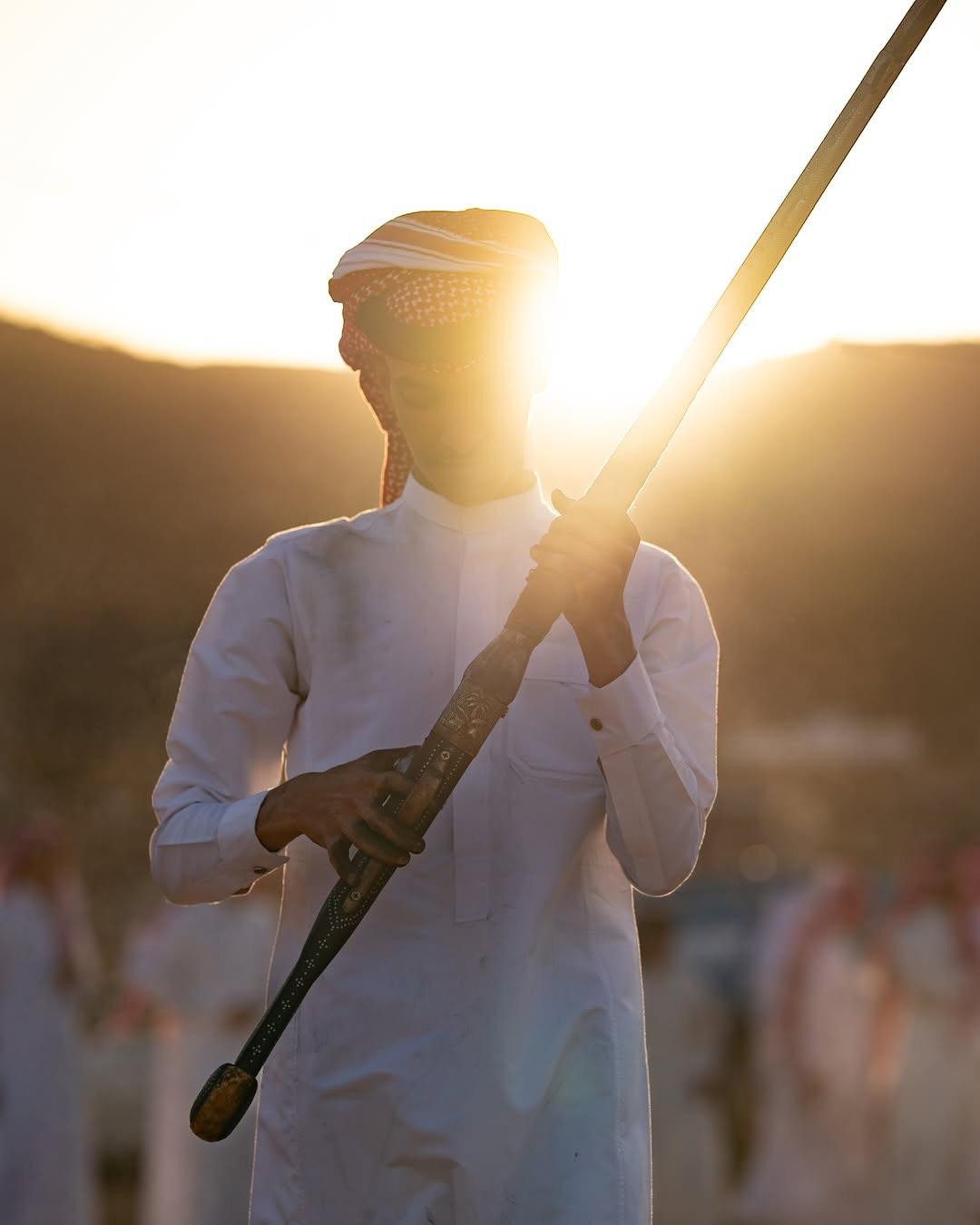
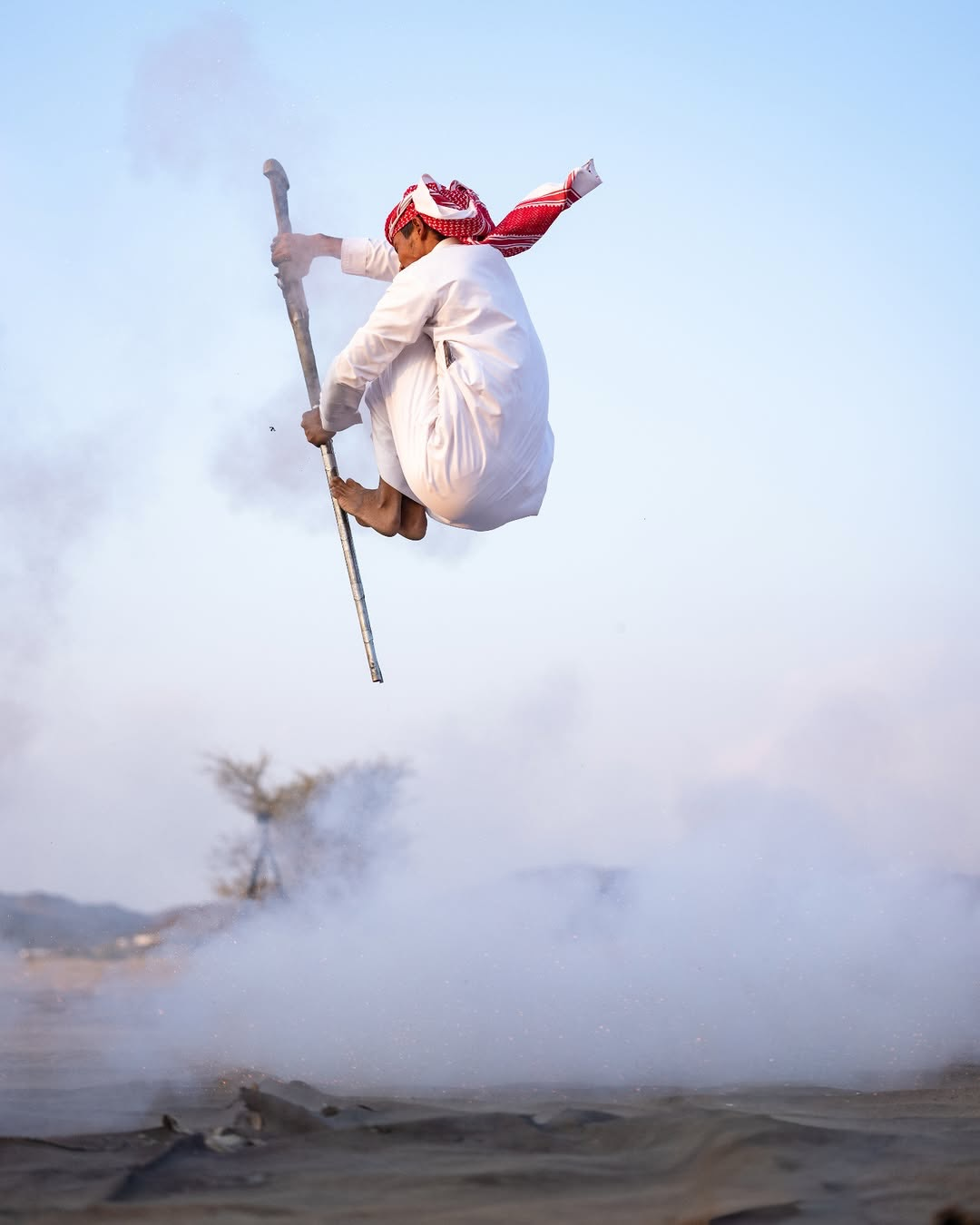
Photo Credits: Ibrahim Sarhan
The History of Taasheer: From Battle Display to Celebration
The Taasheer dance history is closely linked to martial display. Early Taasheer performances resembled military demonstrations intended to encourage warriors and display readiness. Practitioners interviewed in Taif have also connected the older tradition with motivating fighters before battle and projecting confidence toward opponents. This historical background explains why international reports sometimes call it the Taasheer war dance. Yet that label describes only part of its story.
Taasheer is no longer performed as preparation for warfare. Over generations, its function changed. The same visual vocabulary of courage, control, weapon handling, and coordinated movement became part of social celebration. Today, Taasheer may appear at weddings, Eid gatherings, festivals, cultural exhibitions, national occasions, and heritage events. The martial memory remains visible, but the meaning of the performance has changed. The arena is now one of celebration rather than combat.
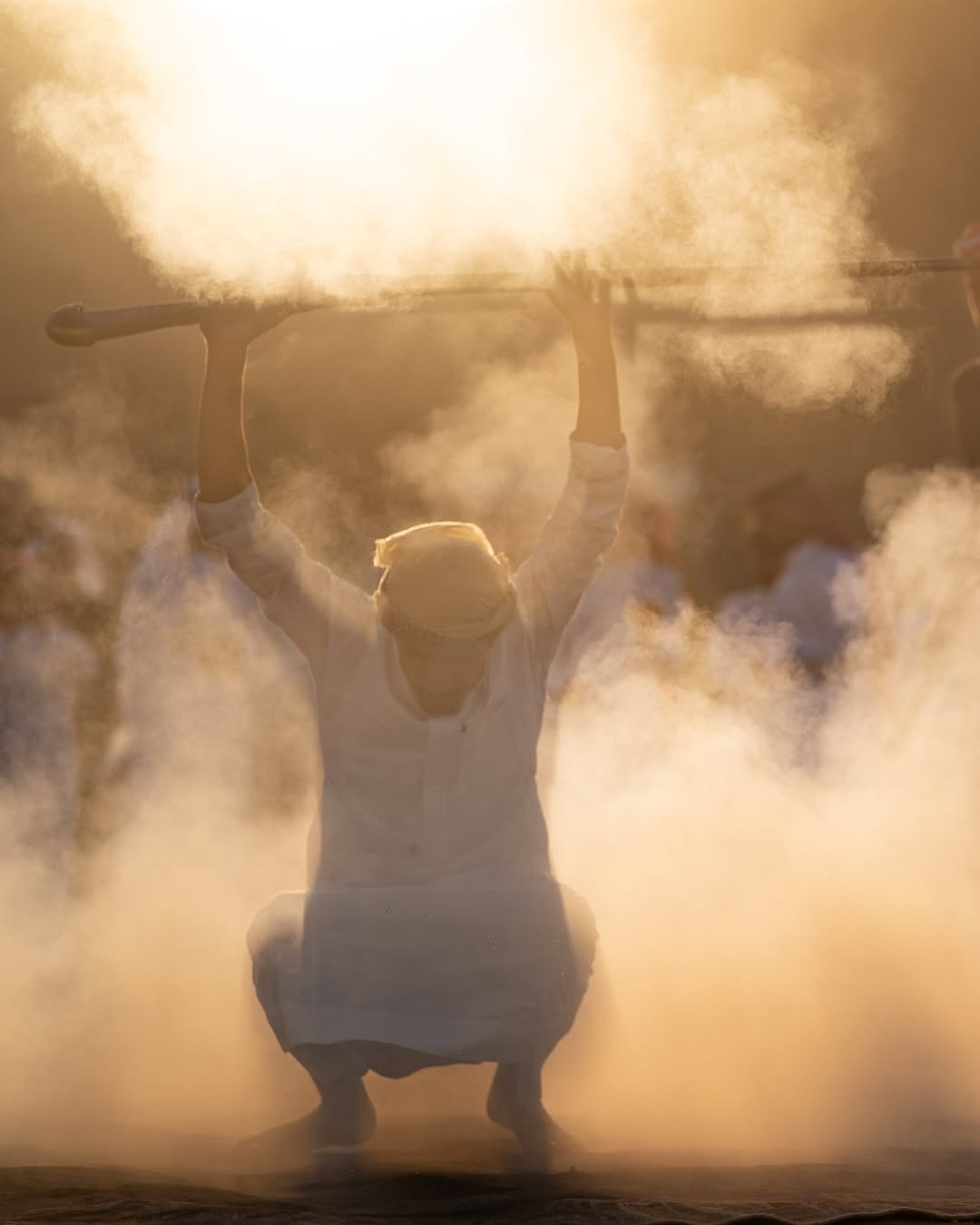
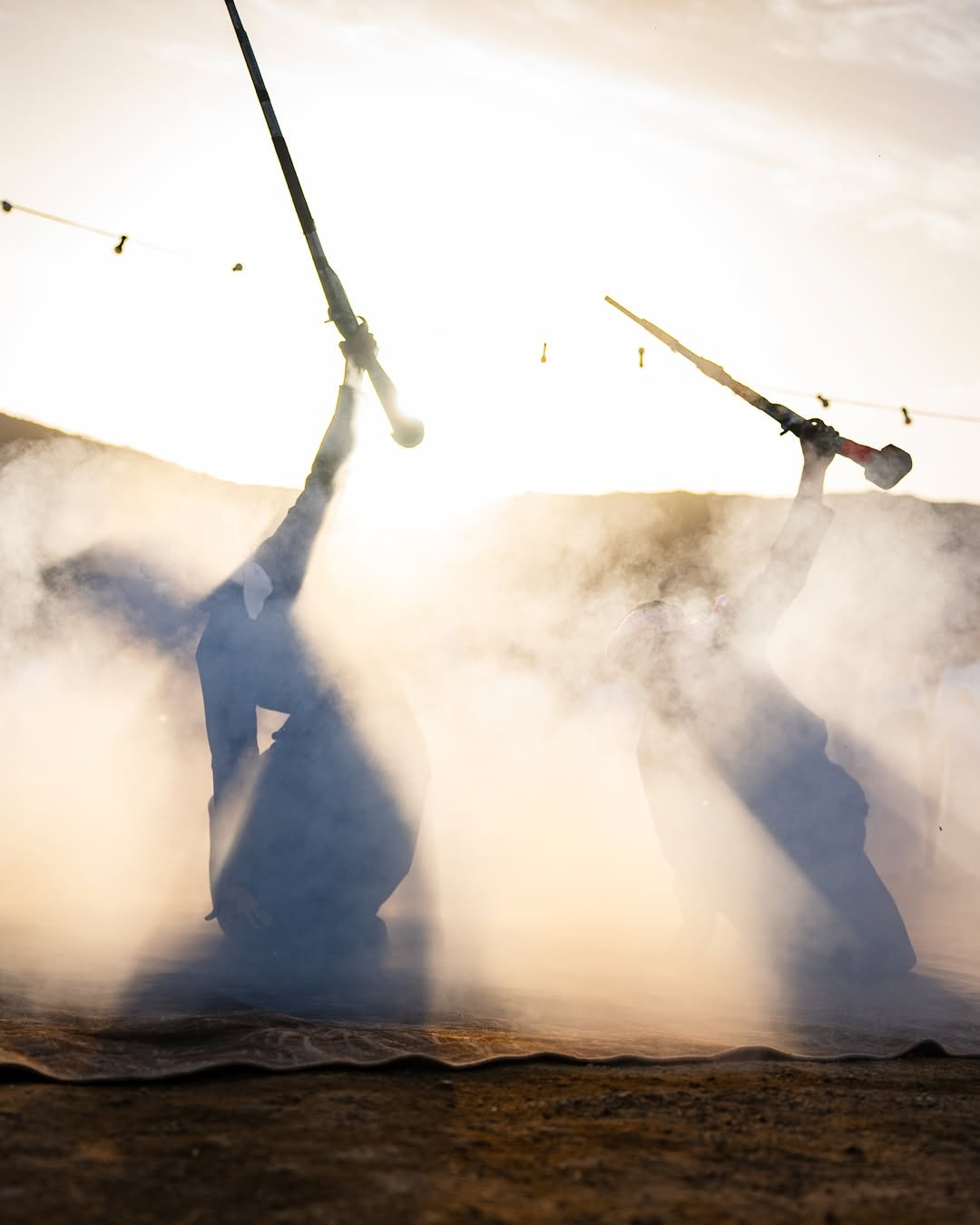
Photo Credits: Ibrahim Sarhan
How is Taasheer Performed?
A Taasheer performance depends on timing and physical control. The performer enters the performance space holding the maqmaʿ rifle. He may begin with controlled rhythmic movements, including repeated bouncing or preparation through the knees and lower body.
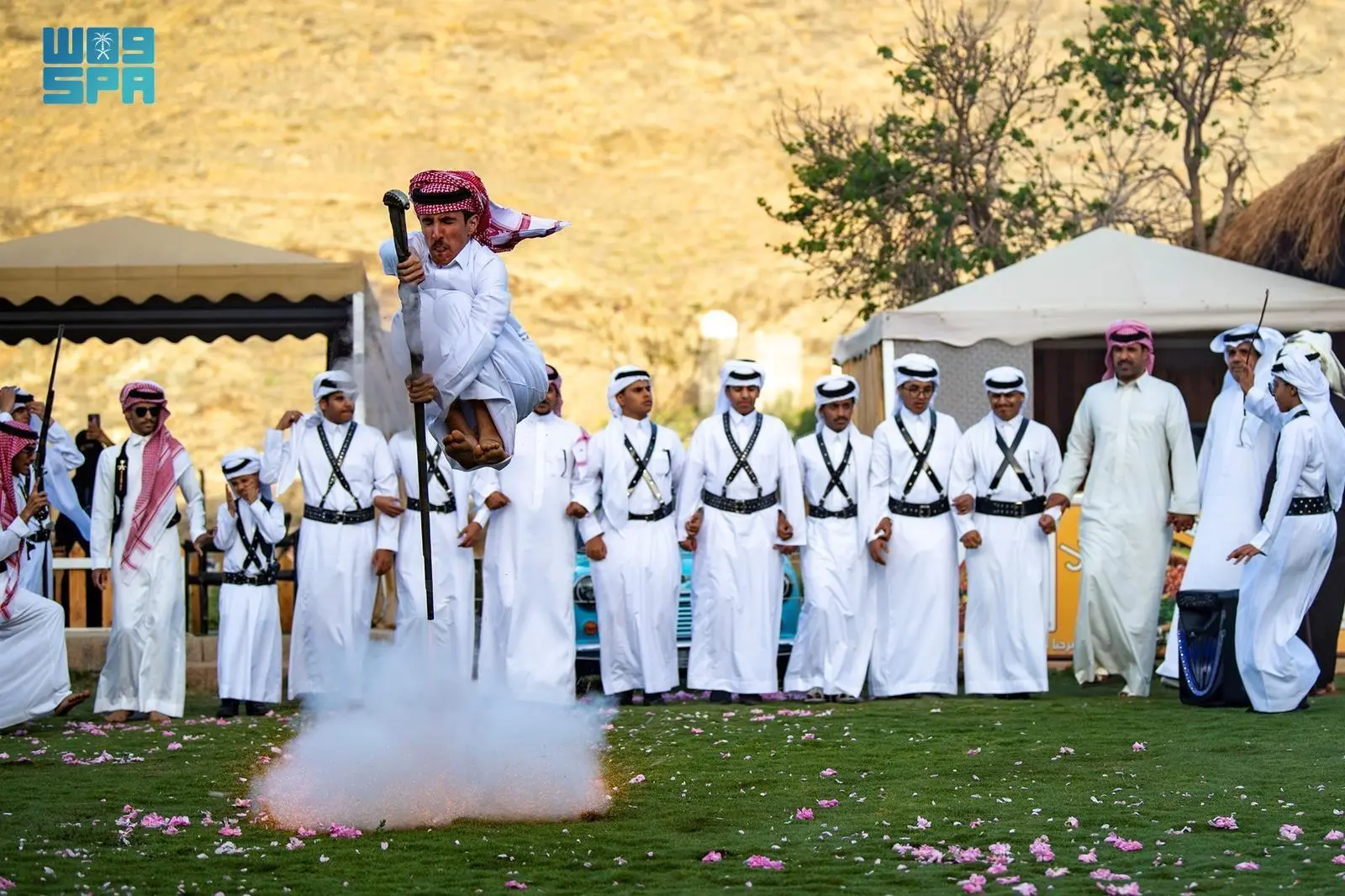
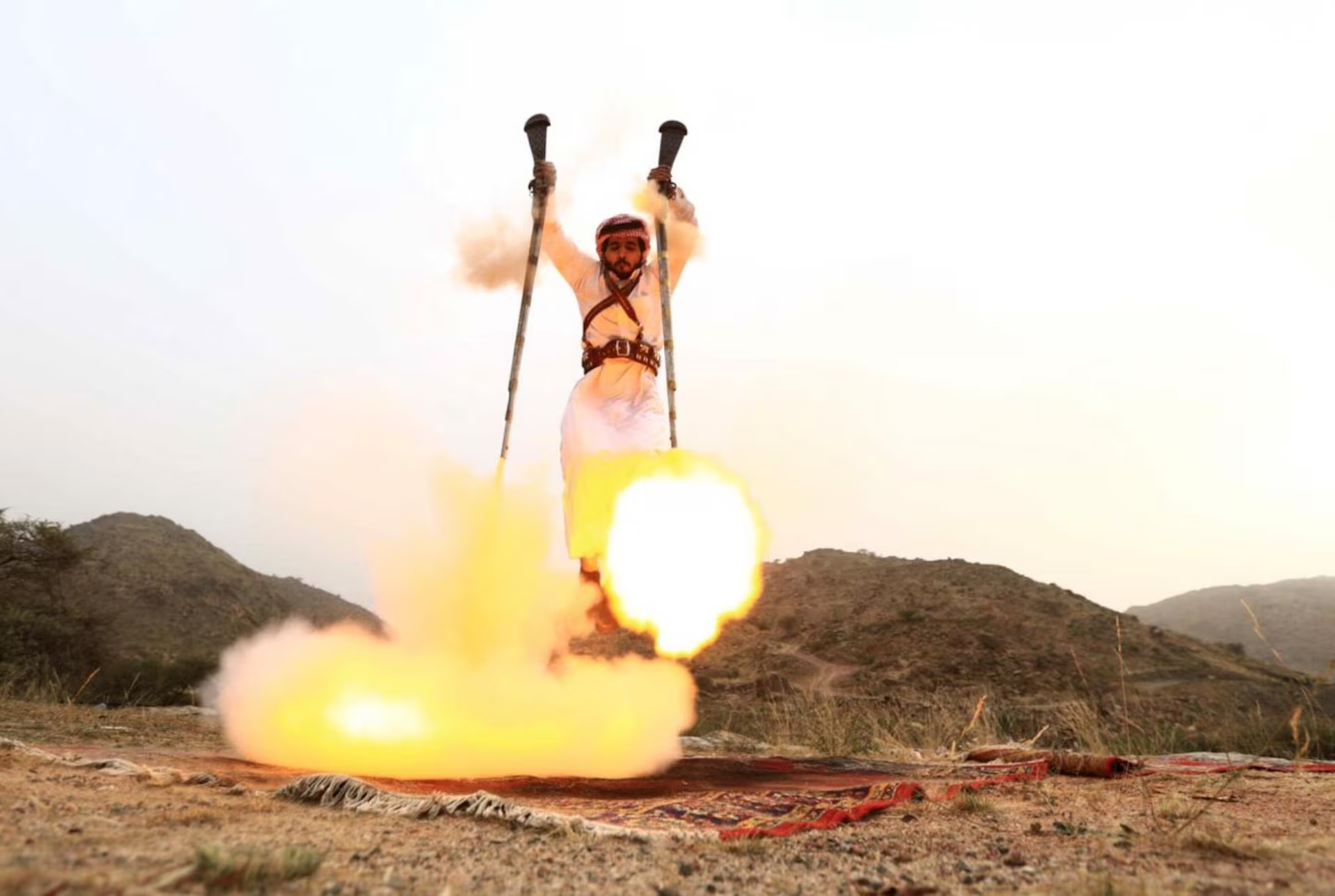
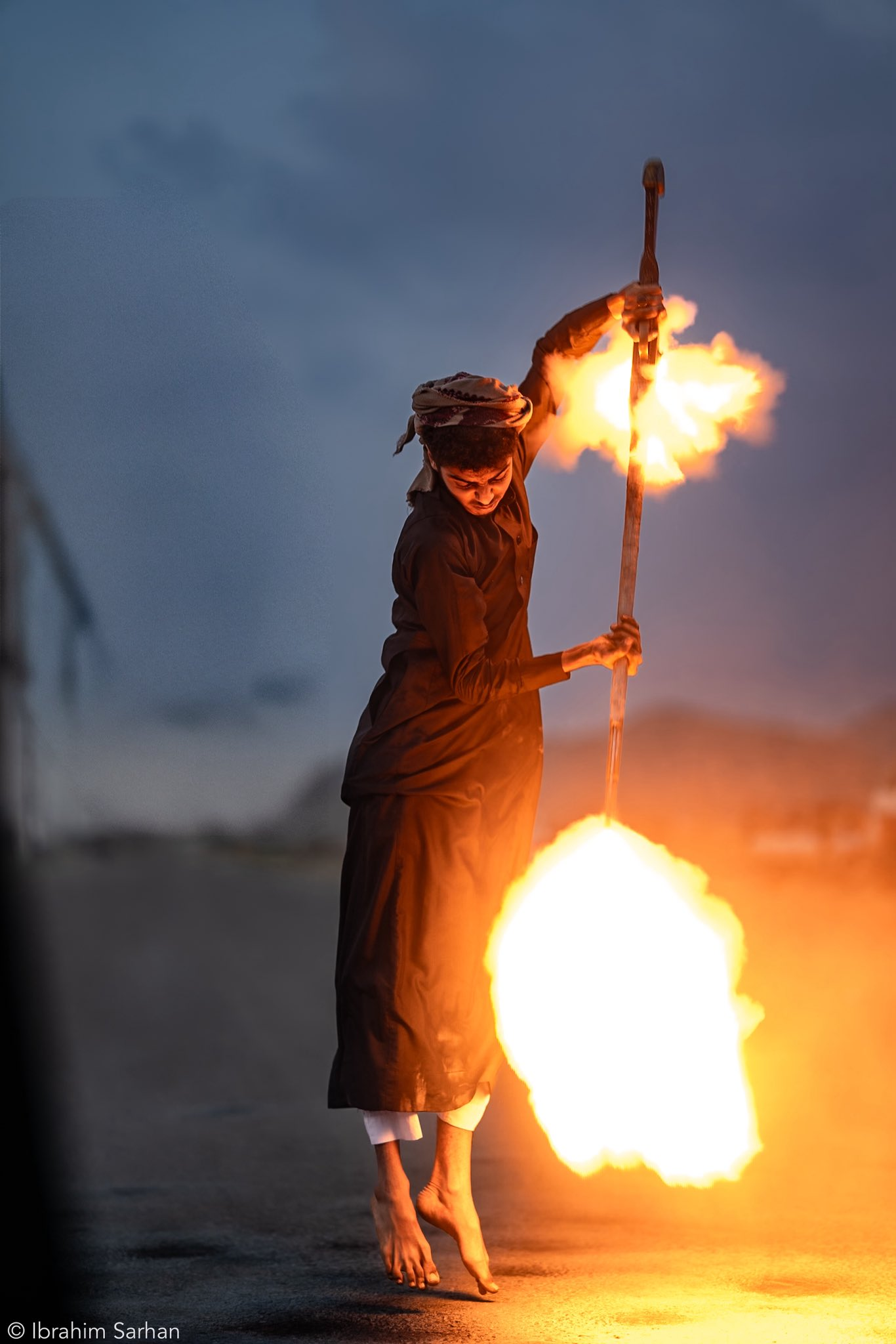
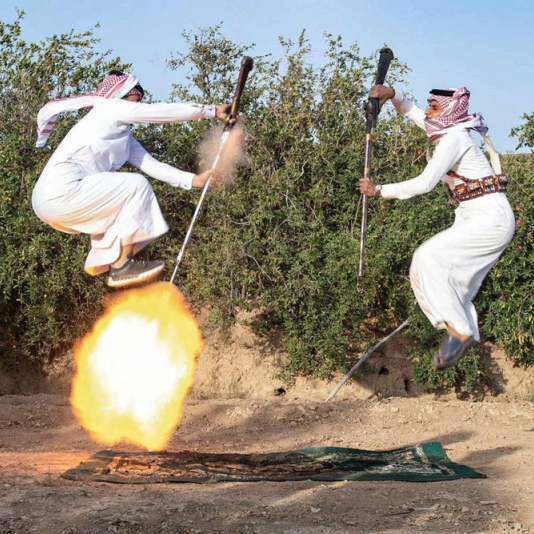
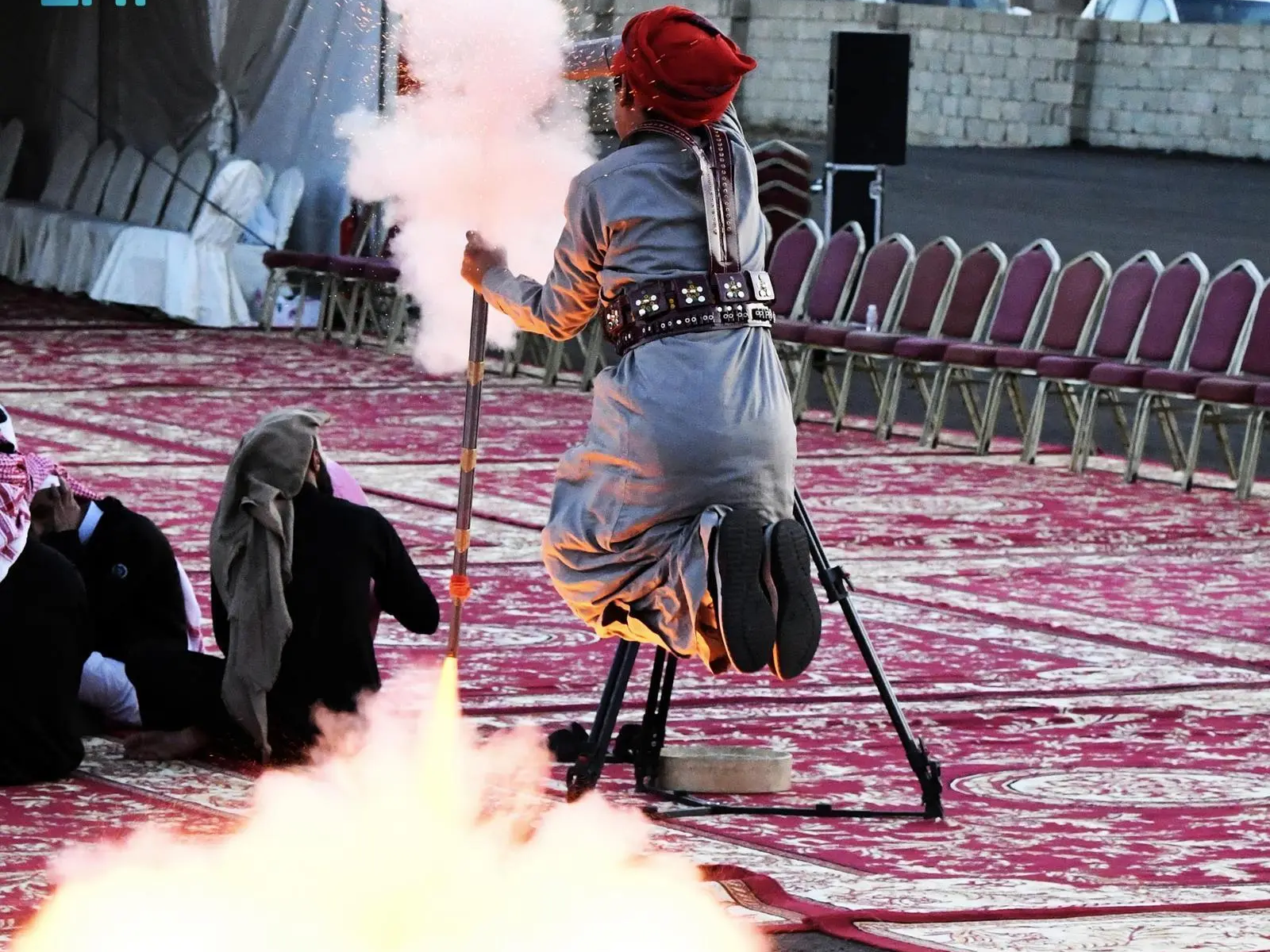
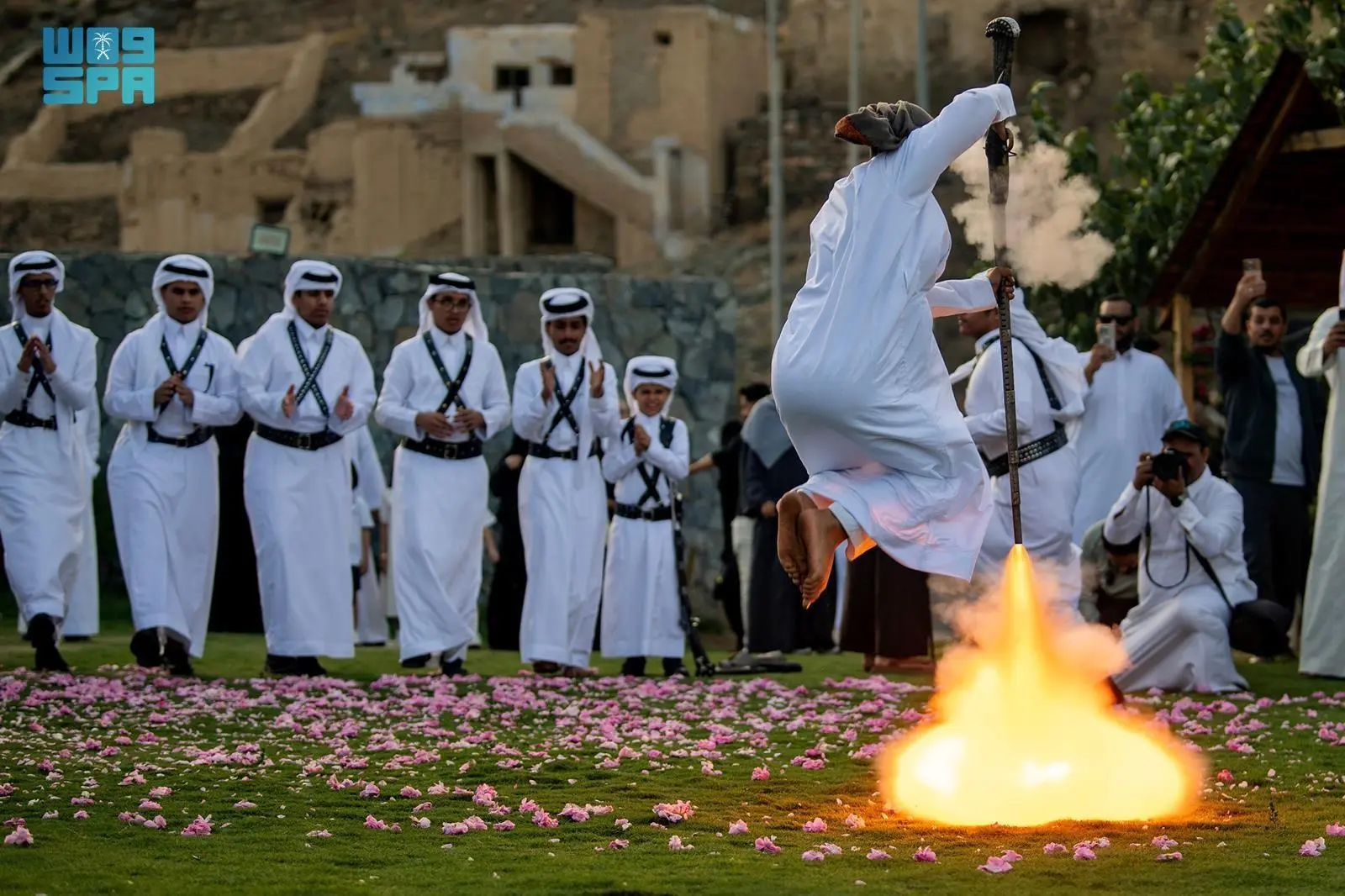
The body remains balanced as the performer prepares for the defining movement. He then leaps into the air while directing the rifle downward. The powder charge is discharged toward the ground, creating a sudden flash, burst of sparks, smoke, and sound below him.
The movement must be coordinated carefully. The jump and discharge are not separate actions. They form one choreographed moment. Performers may enter individually, in pairs, or as part of larger groups. In some settings, men stand in rows before taking turns entering the central space.
Different performers may also demonstrate different techniques, meaning that traditional Taasheer should not be understood as one identical sequence repeated every time. Its power comes from a combination of discipline, experience, rhythm, and confidence.
Why Do Taasheer Performers Jump Over Gunpowder?
The jump is the most recognizable visual element of Taasheer. The performer coordinates his movement with the discharge so that the burst appears directly beneath him. The resulting flash, smoke, and sound intensify the physical movement and turn a single leap into a dramatic display.
For the performer, however, the effect depends on control rather than surprise. The movement demonstrates balance, timing, agility, and familiarity with the traditional performance. This is also why the phrase gun-jumping dance has become common in international descriptions of Taasheer. It captures the most striking visual moment, but it does not fully explain the cultural meaning surrounding it.
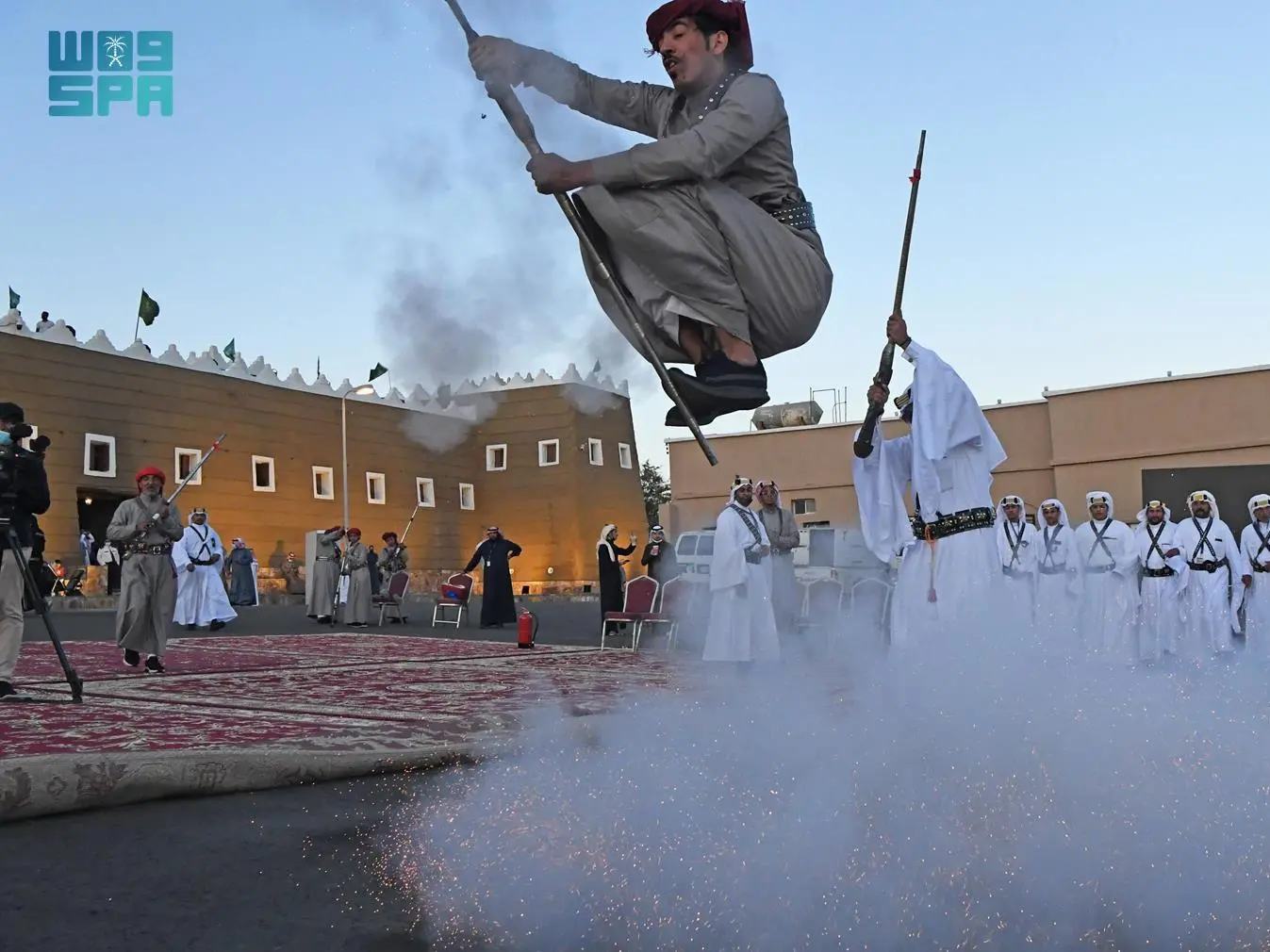
Another important clarification concerns ammunition. Some reports have described Taasheer as involving “live ammunition,” but reliable accounts describe the performance as using gunpowder charges without conventional bullets or projectiles. The cultural focus is on the flash, sound, movement, and traditional weapon handling.
The Maqmaʿ Rifle: The Symbol at the Center of Taasheer
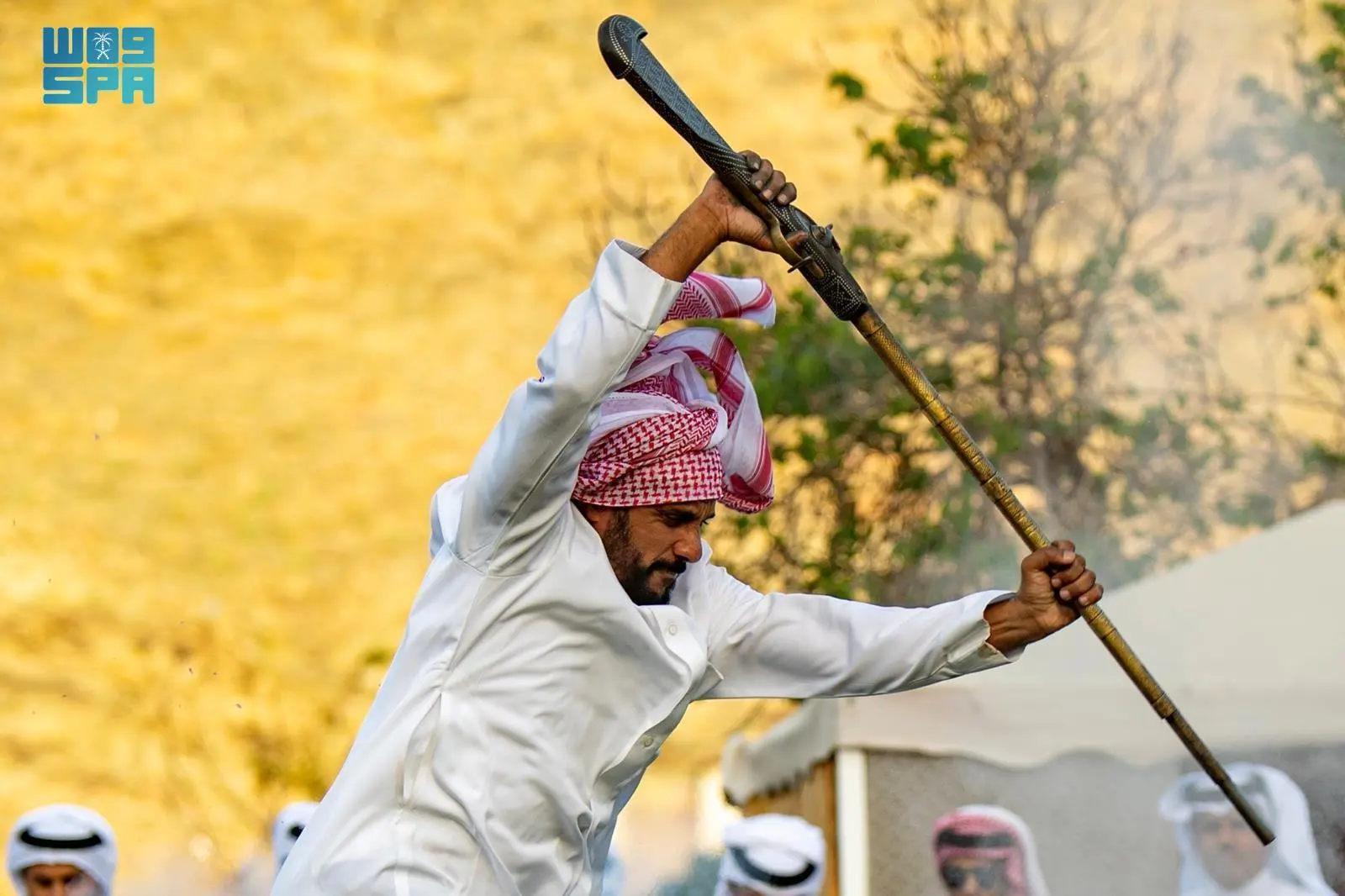
The traditional rifle used in Taasheer is commonly called the maqmaʿ. It is not simply carried as decoration. The rifle shapes the choreography itself. Its direction, movement, weight, timing, and discharge are integrated into the performer’s actions. This distinguishes Taasheer from other forms of Saudi dance in which weapons may have a different ceremonial function.
Historically, weapons in Arabian folk traditions could represent courage, horsemanship, preparedness, and martial skill. In Taasheer, that symbolism survives within a peaceful cultural performance. The maqmaʿ therefore connects the dance to an older social world while also giving contemporary Taasheer its unmistakable visual identity.
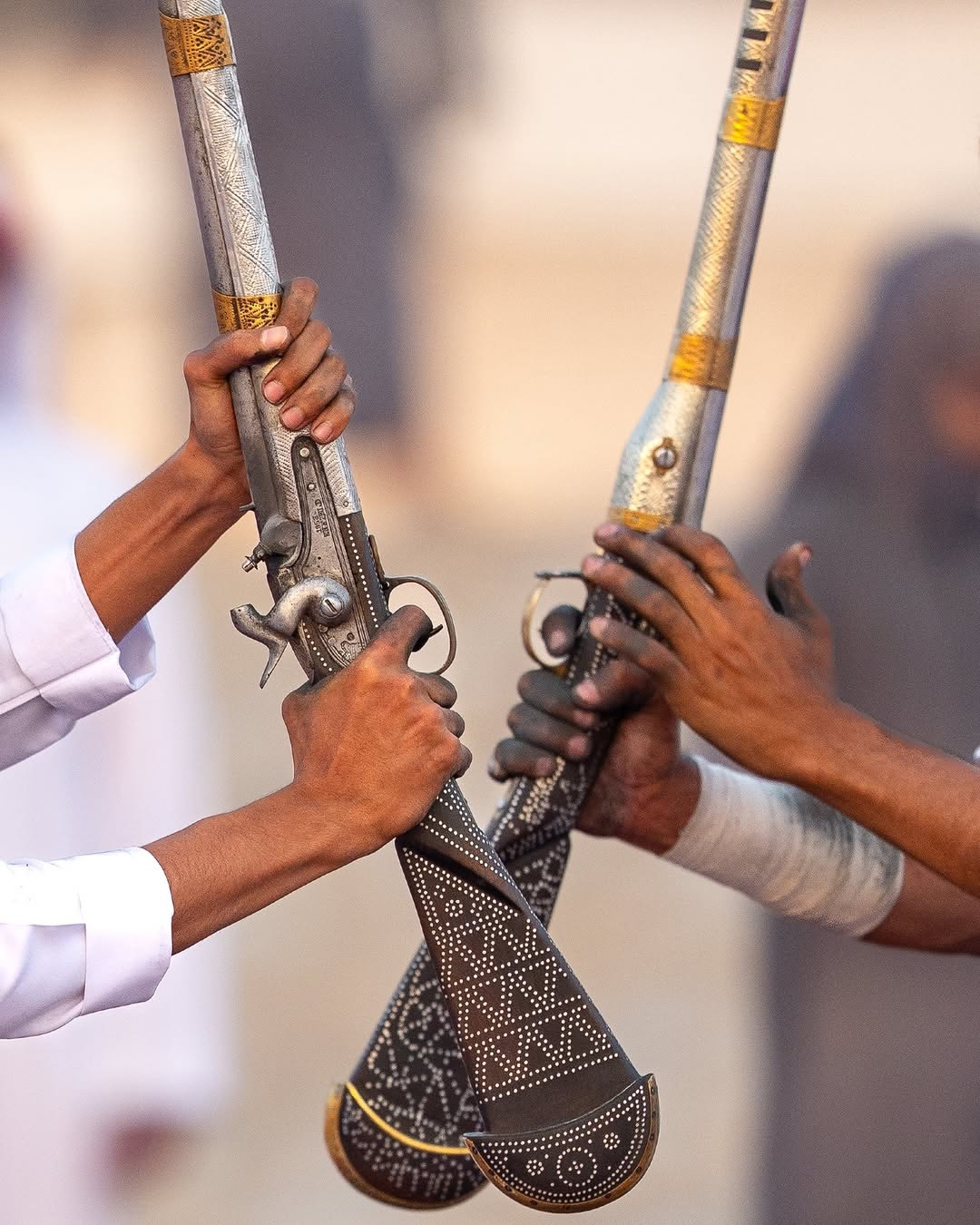
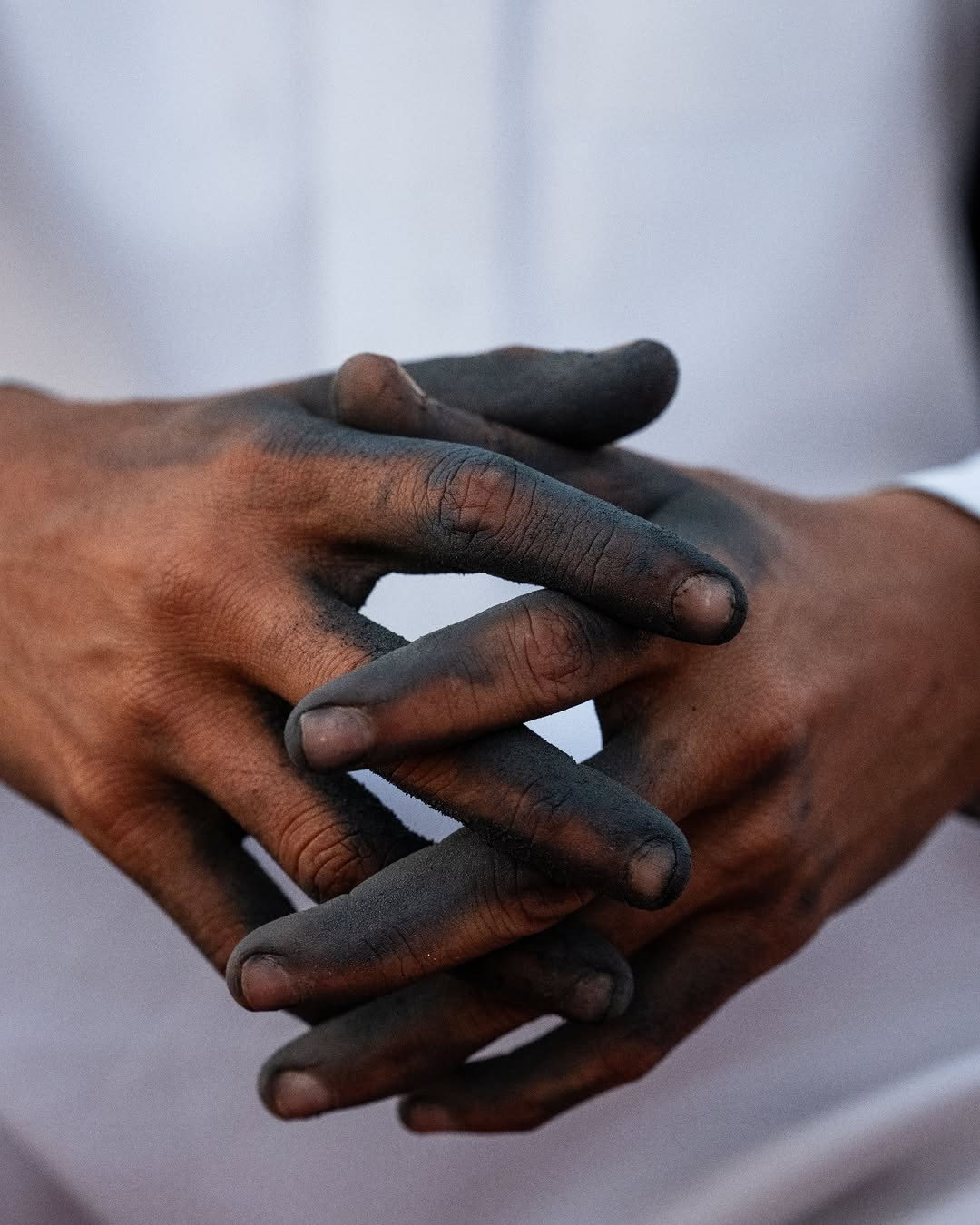
Photo Credits: Ibrahim Sarhan
Taasheer Movements and Performance Techniques
Saudi heritage documentation records several named Taasheer movements.
- Harakat al-Janb
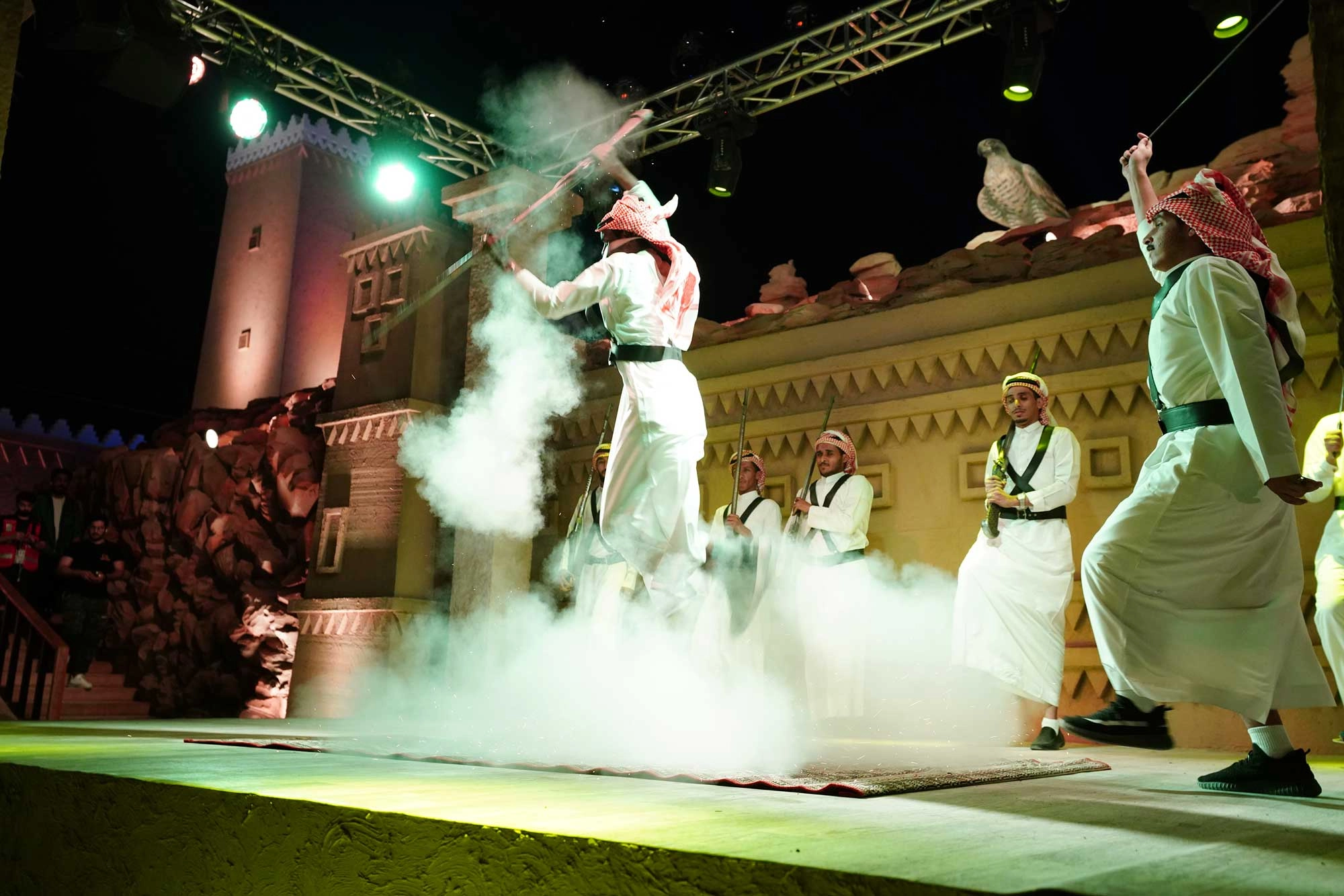
Harakat al-Janb, or the side movement, involves movement toward the right or left. Like other Taasheer techniques, its effectiveness depends on controlling the body while handling the rifle.
- Al-Kaft
Al-Kaft is a more advanced movement in which the rifle is maneuvered beneath the performer's feet. It demonstrates how Taasheer can involve considerably more than just the famous downward discharge.
- Harakat al-Khalf
Harakat al-Khalf, or the backward movement, is described as one of the more difficult techniques. Such movements are associated with performers who have developed substantial experience and control.
Together, these techniques show that Taasheer is not simply a single jump repeated over and over. It contains a vocabulary of movement that experienced practitioners learn, demonstrate, and pass forward.
Poetry, Chants, and Sound in Traditional Taasheer
The explosive sound of the rifle may attract the most attention, but Taasheer also belongs to Saudi Arabia's oral and musical traditions. Performances can be accompanied by a form of folk chanting known as al-Rajaz, while related local terminology includes al-Radh or al-Radhah.
The words commonly revolve around themes such as pride and honor. The chants help structure the atmosphere of the performance as participants enter the space. They also connect physical movement with oral expression. This is important when understanding Taasheer as a complete cultural form. It is not simply a weapons demonstration. Traditional clothing, group formation, chants, movement, timing, and the maqmaʿ all contribute to its identity.
For global audiences looking for an Arab dance centered on dramatic physical movement, Taasheer may appear visually unusual. Within Saudi culture, however, it belongs to a much wider tradition in which poetry, rhythm, dress, and group participation often work together.
What Do Taasheer Performers Wear?
Traditional clothing gives Taasheer another layer of regional identity. In the Makkah Region, participants have been seen wearing garments associated with local Hijazi traditions, including the muthawlaq, also rendered as mudhawlaq in English transliteration. This is a loose traditional male garment with long, wide sleeves.
Performers may also wear the decorated muqassab agal and traditional belts or accessories. The clothing contributes strongly to the visual character of the performance. When the wide garment moves with the performer, the effect of the jump becomes more pronounced. Combined with the rifle, headwear, group formation, smoke, and sparks, the clothing creates the recognizable image of Hijazi Taasheer.
Also Read: Dressed by Region: Traditional Clothing in Hejaz, Western Saudi Arabia
How Children Learn Taasheer in Taif
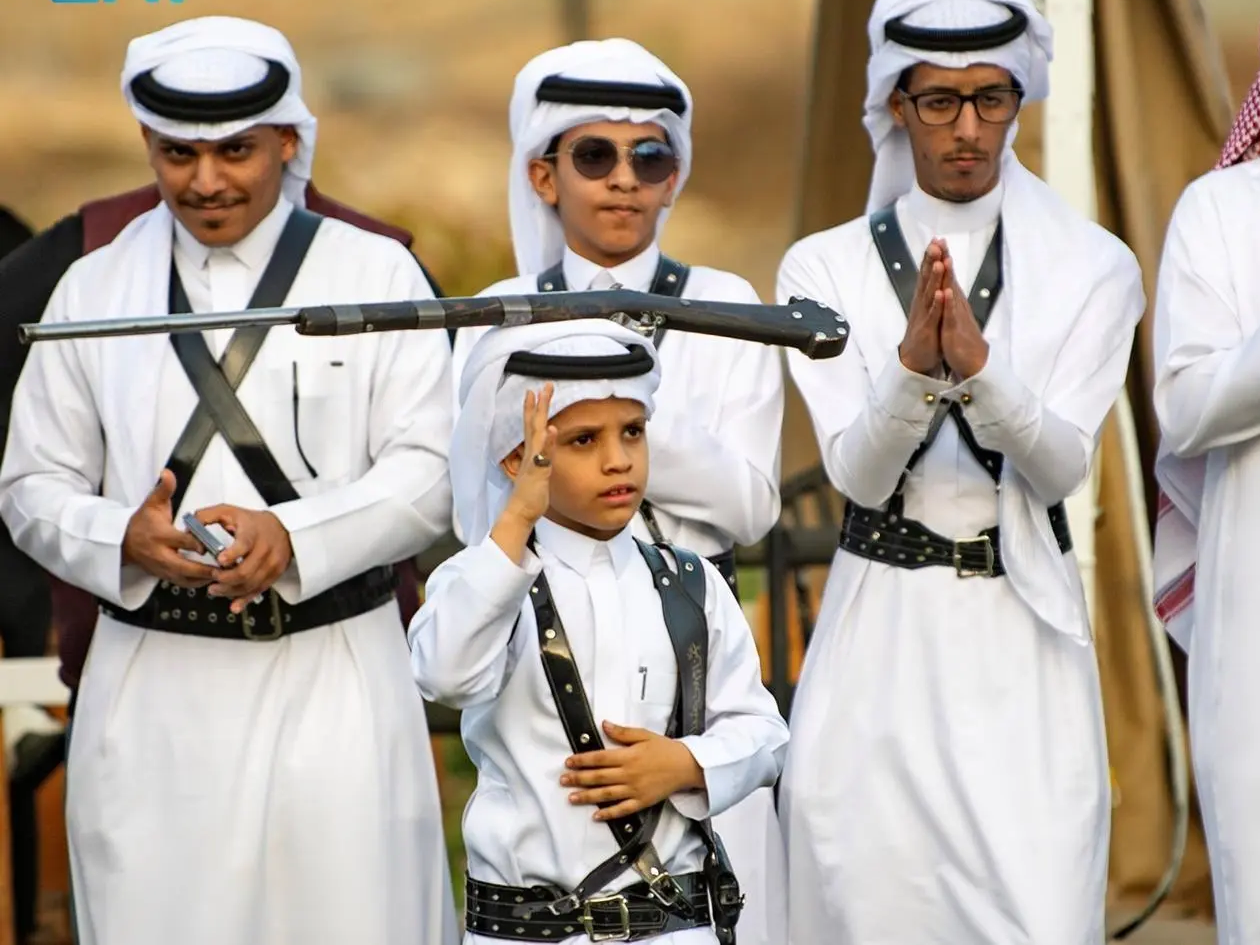
One of the most important parts of Taasheer's survival is intergenerational teaching. Practitioners interviewed in Taif have spoken openly about the responsibility of teaching the tradition to younger family and community members. Young boys reportedly begin by learning the movements using an unloaded weapon. The purpose is to develop familiarity, posture, rhythm, and control before more advanced participation. This teaching process reveals something essential about living heritage.
Taasheer survives because people continue to practice it, but practice alone is not enough. Someone must teach the next performer where to stand, how to move, how to coordinate the body, how to respond to chants, and how to understand the cultural setting in which the performance belongs. Adults in Taif have described this process as a way of ensuring that future generations will continue what earlier generations passed to them. In that sense, preservation happens person by person.
When Is Taasheer Performed Today?
Modern Taasheer has moved far beyond its historical martial setting. It can now appear at:
- Weddings
- Eid celebrations
- Cultural festivals
- Heritage events
- National occasions
- Public folklore performances
- Community celebrations
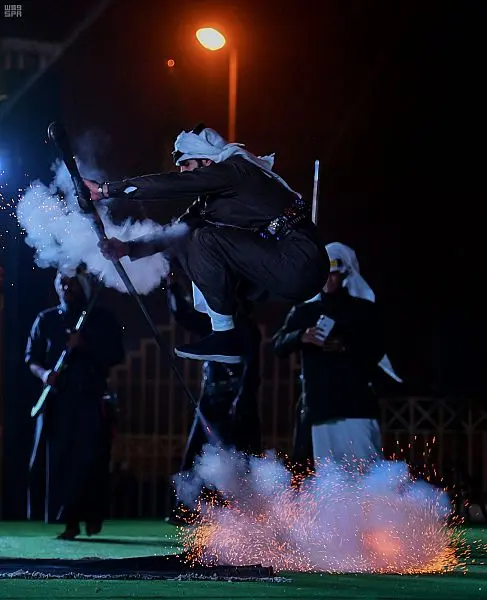
In April 2026, the Saudi Press Agency documented Taasheer performances during Taif’s rose season, where the traditional Hijazi dance appeared among the city’s rose farms during the flowering and harvest period. The performances brought Taasheer into one of Taif’s most recognizable seasonal settings, alongside the agricultural traditions surrounding the famous Taif rose.
How Saudi Arabia Is Preserving Taasheer
Taasheer is being preserved through both community practice and institutional documentation. Saudi Arabia's Mawroothna national intangible cultural heritage initiative has documented the tradition among the performing arts of Taif. National festivals and folklore programs have also given Taasheer a public platform.
Intangible heritage cannot be preserved in the same way as a building or archaeological object. Its survival depends on knowledge. The movements must be remembered. The chants must be performed. Traditional terminology must remain understood. Younger practitioners must learn from experienced ones.
This creates two connected forms of preservation. The first happens within communities, where knowledge moves from one generation to another. The second happens through documentation, festivals, cultural programs, and heritage institutions that record the tradition and make it visible to wider audiences. Together, they help keep traditional Taasheer part of Saudi Arabia's living cultural landscape.
Taasheer vs. Almezmar vs. Saudi Ardah
Saudi Arabia's traditional dances reflect different regional histories and performance styles.
| Tradition | Main Feature | Regional Association |
|---|---|---|
| Taasheer | Rifle, jumping movements, gunpowder discharge | Taif and the Makkah Region |
| Almezmar | Sticks, drums, chanting, group movement | Hijaz |
| Saudi Ardah | Swords, drums, poetry | Najd and Saudi national heritage |
Taasheer is a Hijazi dance, but it should not be treated as another name for Almezmar or Ardah. Each tradition has its own movement vocabulary, performance tools, regional connections, and cultural meaning. Together, they show the diversity hidden inside the broad idea of a Saudi dance.
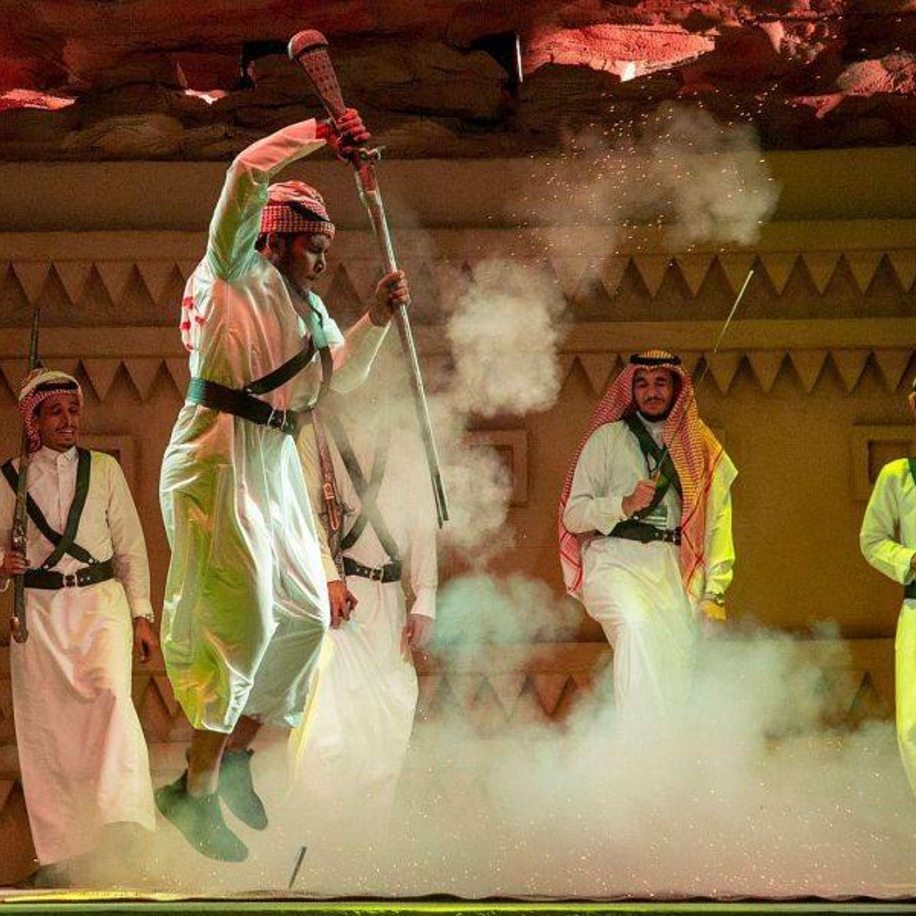
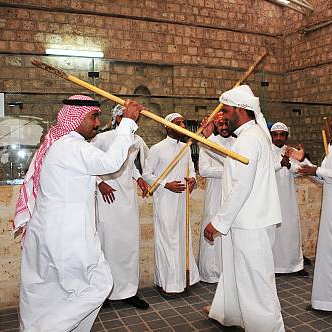
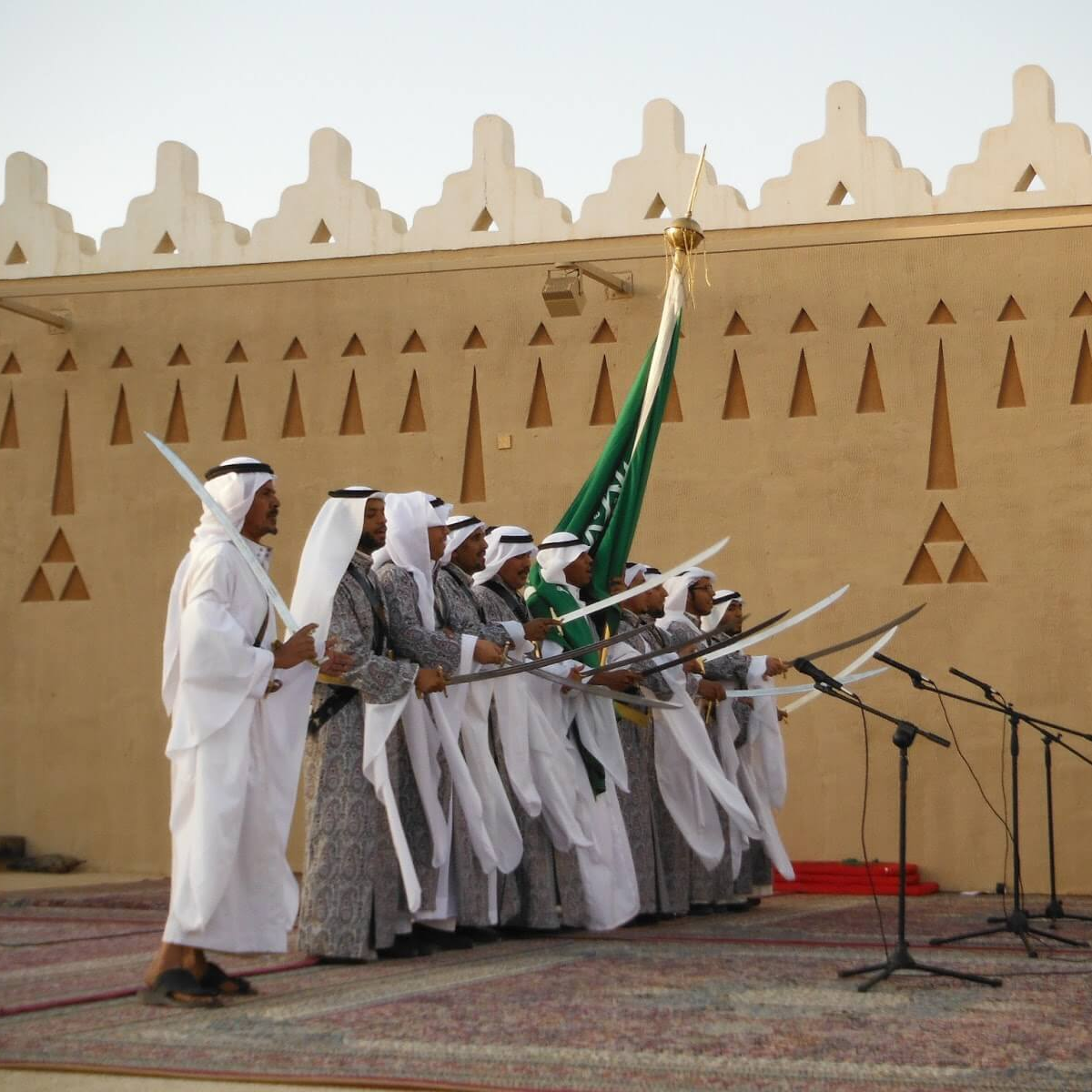
Taasheer, Almezmar, and Saudi Ardah traditional dances shown side by side.
Taasheer and the Continuity of Hijazi Heritage
Taasheer carries the memory of an older martial world into a very different Saudi present. Its rifles no longer announce preparation for battle. Today, the same tradition appears in spaces shaped by weddings, Eid celebrations, heritage festivals, community gatherings, and cultural tourism.
Yet the performance remains recognizable because its essential knowledge continues to move from one generation to the next. The jump still demands control. The chants still carry pride. The traditional clothing still connects the performer with place. The maqmaʿ still gives Taasheer its unmistakable identity.
That continuity is what makes Taasheer more than a dramatic display of sparks and smoke. It is a living Hijazi tradition carried by practitioners who continue to perform it, teach it, and adapt it to the cultural life of modern Saudi Arabia.
Curious for More Cultural Gems Like This?
Subscribe to Saudi Cultures for weekly updates on events, heritage, and voices across the Kingdom.